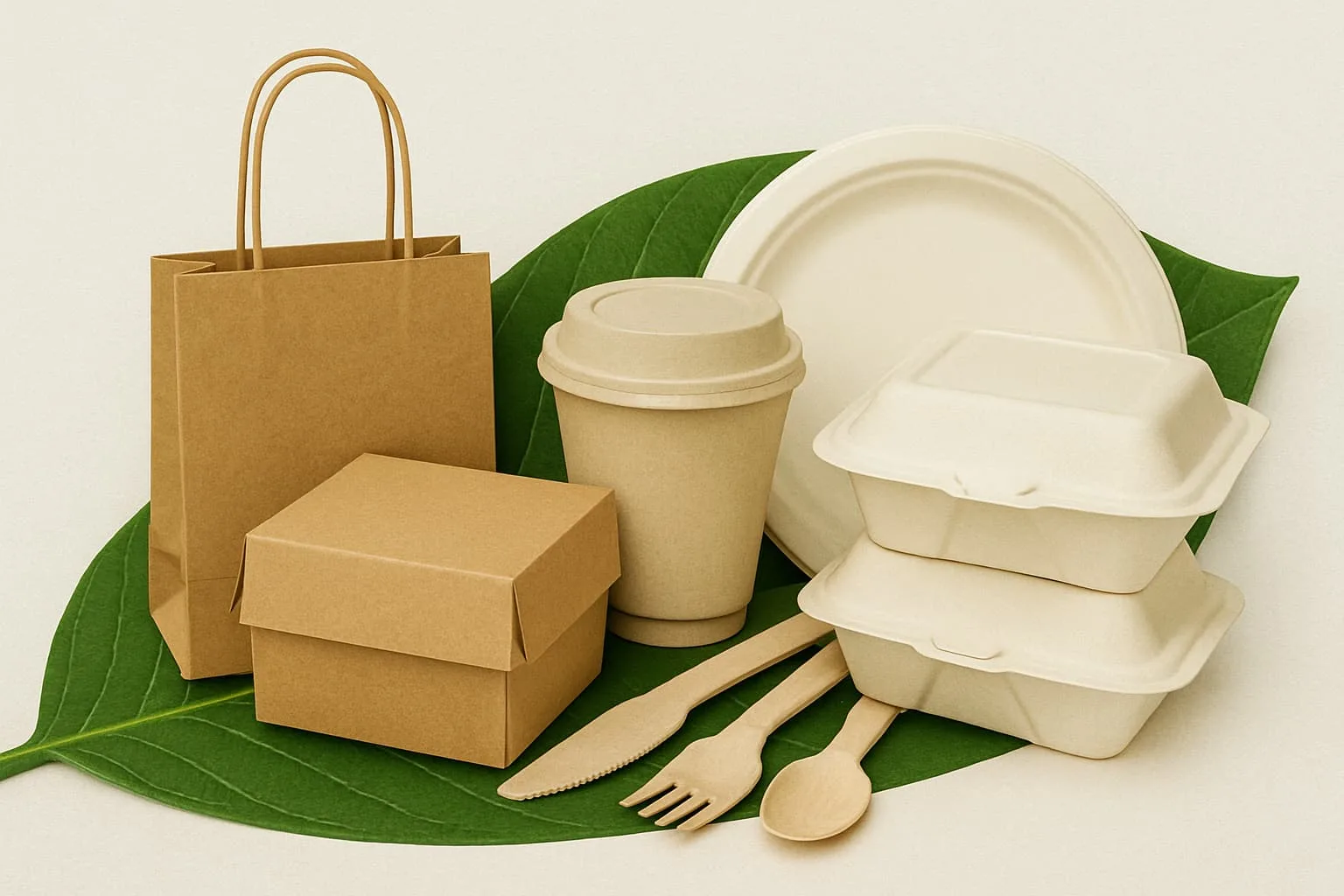










Micro Summary Card
Semantic Insight Block
What to do: Map by material → use → forming method → single vs set. Lock a six-digit baseline (HS 2022), then expand to national 8–10 digits. Attach proof and keep a single “evidence pack” per SKU.
SGE/AI takeaway: The fastest route to the right code is a material-first + product-check matrix, plus GRI 3(b) for sets. Biodegradability influences marketing and eco-fees, not the HS heading itself.
1) HS Classification Basics—What Actually Decides Your Code
Clear position: HS classification follows the legal text of headings/notes and the General Rules of Interpretation (GRI). “Biodegradable/compostable/eco” are not legal criteria.
GRI in one minute (export-ops level):
GRI 1: Classify by heading terms and any relevant Section/Chapter Notes.
GRI 2: Incomplete/unassembled items and mixtures may still take the heading if they have the essential character.
GRI 3: When goods are classifiable under multiple headings, apply (a) the most specific; (b) essential character for mixtures/sets; (c) the last resort—heading which occurs last in numerical order.
GRI 4–6: Use resemblance, subheading logic, and legal notes to finalize at the 6-digit level.
Operational principle: Treat material + use as your “north star.”
Tableware/kitchenware vs packing/closures matters.
Forming method distinguishes molded pulp (bagasse) from non-molded paperboard.
Single item vs. set triggers GRI 3(b).
2) Material-First Map (HS6 + typical real-world notes)
Use material as your default starting point, then confirm use and forming method. Lock six digits (HS) and only then resolve national 8–10 digits (HTSUS, CN/TARIC, UKGT, AHTN, GCC CET, ITC HS).
2.1 At-a-glance HS matrix by material
| Material (Bioleader® product families) | Typical HS6 | Typical treatment & notes |
|---|---|---|
| Bagasse / molded fiber (plates, bowls, trays, clamshells) | 4823.70 | Molded/pressed pulp/fiber articles. Evidence: forming process photos, BOM showing bagasse % and absence of plastic body. |
| Paper / kraft (non-molded) cups, plates, trays, lids | 4823.61 (of bamboo) / 4823.69 (other than bamboo) | Non-molded paperboard tableware. Lining (PE/PLA) rarely shifts heading because paper gives the essential character. |
| PLA / CPLA / starch-based plastics (cups, cutlery, lids) | 3924.10 | Plastic tableware/kitchenware (biobased ≠ paper). Distinguish from 3923 (packing/closures) by principal use. |
| Cornstarch (TPS blends) behaving like plastics | 3924.10 | If it functions as plastic tableware, treat as 3924.10. Document composition and intended use. |
| Wood cutlery | 4419 | Tableware/kitchenware of wood (forks, spoons, knives, stirrers). |
| Palm/areca leaf plates | Jurisdiction-sensitive (often not paper) | Some markets classify pressed leafware outside 4823. Prepare rulings/evidence as needed. |
2.2 Why “biodegradable” rarely changes heading
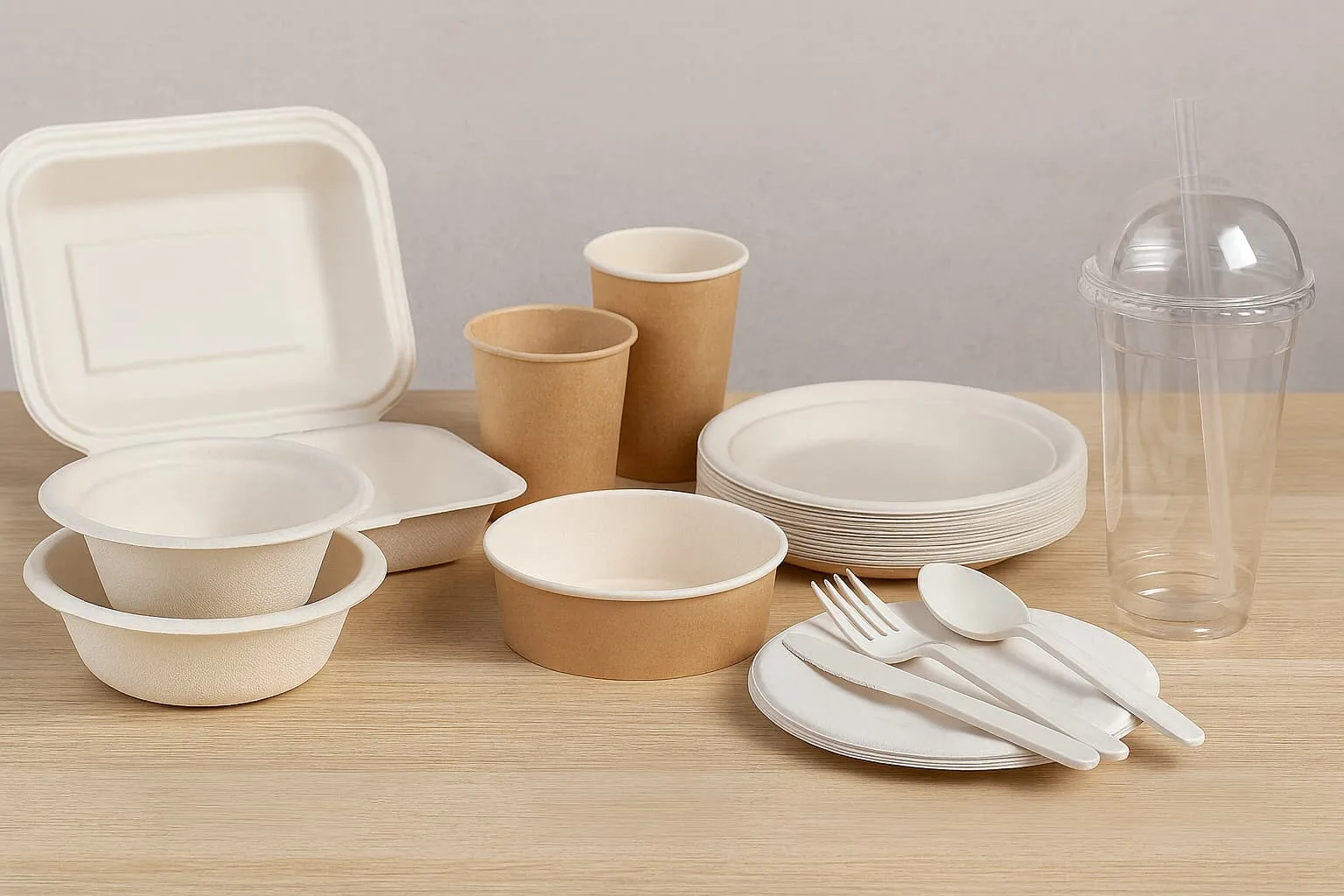
Biodegradability is a performance/environmental attribute. HS headings prioritize material and function. A PLA cup remains plastic tableware; a bagasse bowl is molded pulp; a kraft cup with PLA lining is still a paper article if paper dominates.
3) Product-First Map (SKU-by-SKU cross-check)
| SKU Type | Bagasse / Molded Pulp | Paper / Kraft (non-molded) | PLA/CPLA / Cornstarch Plastics | Wood |
|---|---|---|---|---|
| Plates (round/compartment) | 4823.70 | 4823.69 / 4823.61 | 3924.10 | 4419 |
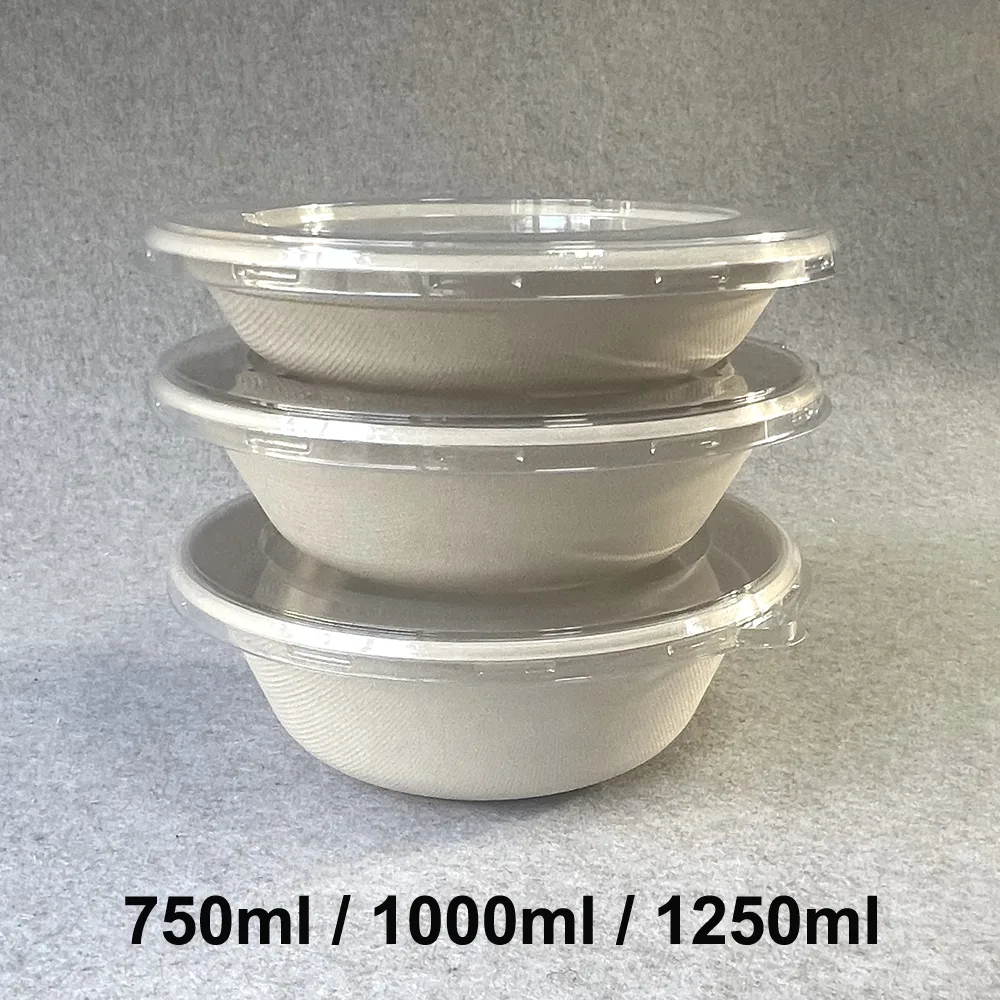
| Bowls (w/ or w/o lids) | 4823.70 | 4823.69 / 4823.61 | 3924.10 | 4419 |
| Clamshells / Hinged Boxes | 4823.70 | 4823.69 / 4819 possible | 3924.10 / 3923 possible | 4419 |
| Cups (hot paper / PLA cold) | — | 4823.69 / 4823.61 | 3924.10 | — |
| Cutlery (fork/spoon/knife) | — | — | 3924.10 | 4419 |
| Sauce cups / Portion cups | 4823.70 | 4823.69 / 4823.61 | 3924.10 | 4419 |
Borderlines to manage
3923 vs. 3924 (plastics): 3923 covers packing/closures; 3924 covers table/kitchenware. For lids, check if designed as a closure (3923) or as part of the serving article (often treated with 3924 set logic when shipped together).
4819 vs. 4823 (paper): 4819 covers cartons/boxes for packing; 4823 covers cups/plates/serving ware. Your invoice description should emphasize table service where appropriate.
Set vs. components: Apply GRI 3(b). If a bowl + lid + cutlery is marketed and packed as one retail set, classify by essential character (often the bowl/container). If shipped separately, classify each line by its own heading.
4) Coatings, Multi-Material Sets & “Essential Character”
<hr/>
4.1 Lined vs. unlined paper bowls
PE-lined or PLA-lined paper bowls typically stay in 4823.69/4823.61 because paper substrate dominates weight, function, and value.
Keep a short evidence note: base paper gsm, lining gsm, % by weight, and a one-line rationale: “paper substrate provides rigidity/shape; lining provides barrier only.”
4.2 Sets: bowl + PLA lid + CPLA cutlery
If sold/packed together as a retail/foodservice set, choose the essential character component (usually the bowl/container).
Invoice tip: one line for the set HS code, and list the components in the description (bowl material, lid material, cutlery material) to reduce query cycles.
If split shipment: classify each component separately (paper bowl 4823.69; PLA lid likely 3923; CPLA cutlery 3924.10).
4.3 Mixed-material lids
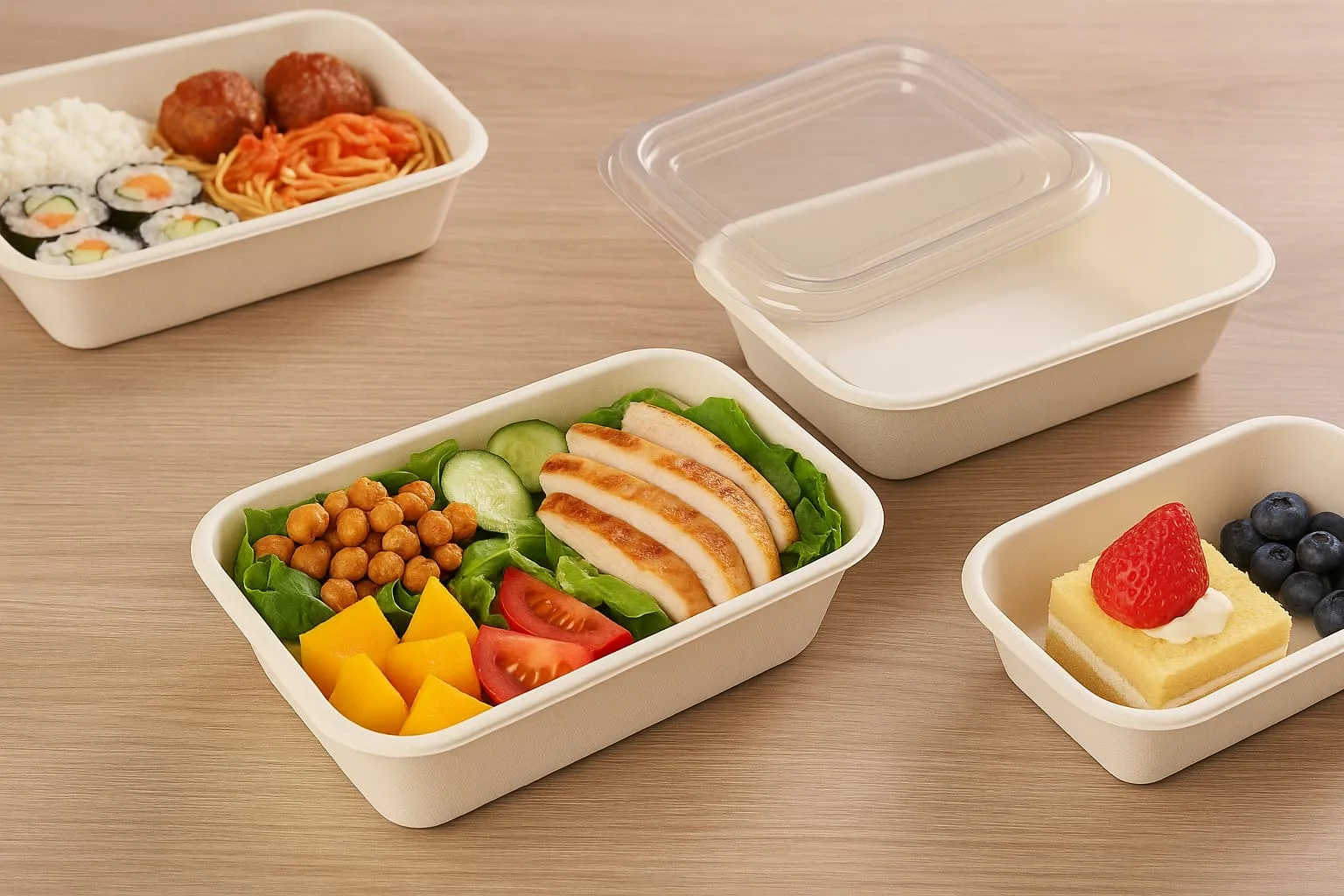
Paper lid on bagasse bowl shipped as a set → classify by essential character (generally the bowl).
Sold separately → each material on its own HS (paper lid 4823.69; PLA lid 3923/3924 depending on design and principal use evidence).
|
|

5) 2025 Policy Tailwinds—What’s Pushing Demand (and Compliance Data)
<hr/>
Executive view: Global policy is moving brands away from conventional plastics and toward fiber-first and certified compostables where fit-for-purpose. Three forces shape purchasing and HS documentation behavior in 2025:
Plastic-reduction and single-use rules
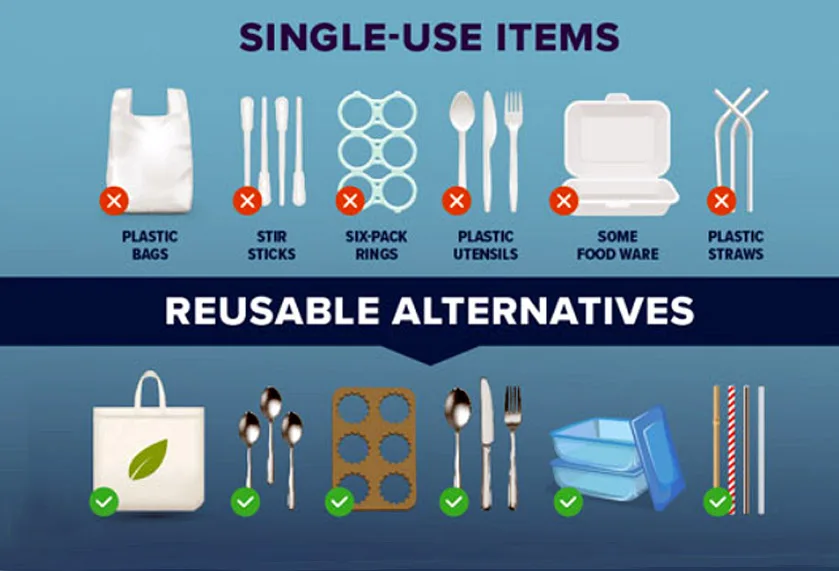
Many jurisdictions maintain bans or restrictions on select plastic items (cutlery, plates, straws), with performance-based carve-outs for fiber/compostable solutions in controlled settings.
Implication: More SKUs will be paper/fiber dominant, reinforcing 4823.x / 4823.70 usage, and growing 3924.10 for bioplastic tableware where fiber is not feasible (e.g., clear cold cups).

Single Use Plastics ban
Plastic taxes & eco-fees
Taxes tied to polymer content and recycled content raise TCO for plastic packaging. Although tableware is not always taxed the same way as packaging, the boardroom effect is similar: demand tilts to molded fiber/paper.
Action: Finance teams require clearer material % and weights per SKU to compute liabilities—making your evidence packs indispensable.
EPR (Extended Producer Responsibility)
EPR schemas require SKU-level data (material, mass, recyclability/compostability testing, labeling).
HS codes are not EPR categories, but consistent HS logic and material proofs simplify portal filings and reduce disputes on declarations.
Data & ops reality: Buyers now benchmark unit cost + eco-fees + logistics + duty. HS impacts landed cost and whether a SKU fits a region’s plastic policy. Accurate HS is part of commercial strategy.
6) Country Playbook—From 6 Digits to National 8/10 Digits
<hr/>
Keep a simple, repeatable routine: ① lock HS6, ② derive national suffixes, ③ check trade remedies/fees, ④ archive screenshots.
| Market | Where you’ll spend time | Typical notes you’ll capture on file (no links in page) |
|---|---|---|
| United States (HTSUS) | 4823.70 (molded pulp); 4823.69/4823.61 (paper cups/plates); 3924.10 (plastic tableware); 4419 (wood) | Watch Chapter Notes and any special programs; document whether lids are closures (3923) or tableware parts; note Sec. 301/other chapters if applicable. |
| European Union (CN/TARIC) | 482370 (molded pulp); 482369/482361 (paper); 392410 (plastic tableware); 4419 (wood) | Confirm VAT/eco-fees locally; PPWR/EPR drive data requests (material %, mass). |
| United Kingdom (UKGT) | Suffix alignment with CN-style; plastic tax considerations separate from HS | Maintain material weights for PPT/EPR where relevant. |
| ASEAN (AHTN) | Similar HS6 logic; country-level suffixes vary | Duty and documentation vary; keep COO and description precise. |
| GCC (Common External Tariff) | Six-digit lock, national suffixes by member state | Practical focus on invoice description and material declarations. |
| India (ITC HS) | Six-digit logic consistent; park 8-digit alignment early | Account for local standards/testing where required by buyer. |
Pro move: For a new composite SKU (e.g., bagasse bowl with clear bioplastic window-lid), consider seeking a binding classification in the largest target market first, then cascade the logic to others.
7) Bioleader® Casebook—Worked Examples You Can Reuse
<hr/>
Case 1: Bagasse 9″ plate
Likely 4823.70 (molded pulp).
Evidence pack: forming process photos, material declaration (bagasse %), mass per unit.
Invoice note: “Molded fiber (bagasse) tableware—plate, round, food-contact tested.”

Case 2: Kraft paper salad bowl + PLA lid (retail set)
Classify under 4823.69/4823.61 by GRI 3(b) if the bowl imparts essential character (rigidity/shape).
Invoice: “Paper salad bowl set with PLA lid; essential character: paper bowl.”
If lid shipped separately: lid → 3923 (closure) or 3924 depending on market practice and design.
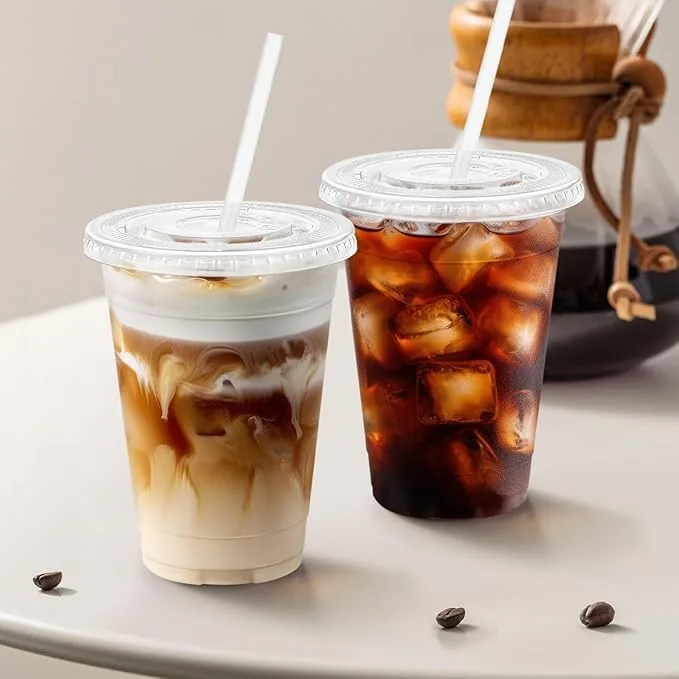
Case 3: PLA cold cup + lid + straw (set)
Typically 3924.10 (tableware of plastics) when the cup dominates.
For components shipped alone: cup → 3924.10; lid → 3923/3924; straw → typically 3924 if treated as tableware accessory (check local practice).
Case 4: CPLA cutlery set
3924.10 for plastics; 4419 if wood.
Evidence: composition, heat resistance, intended use.
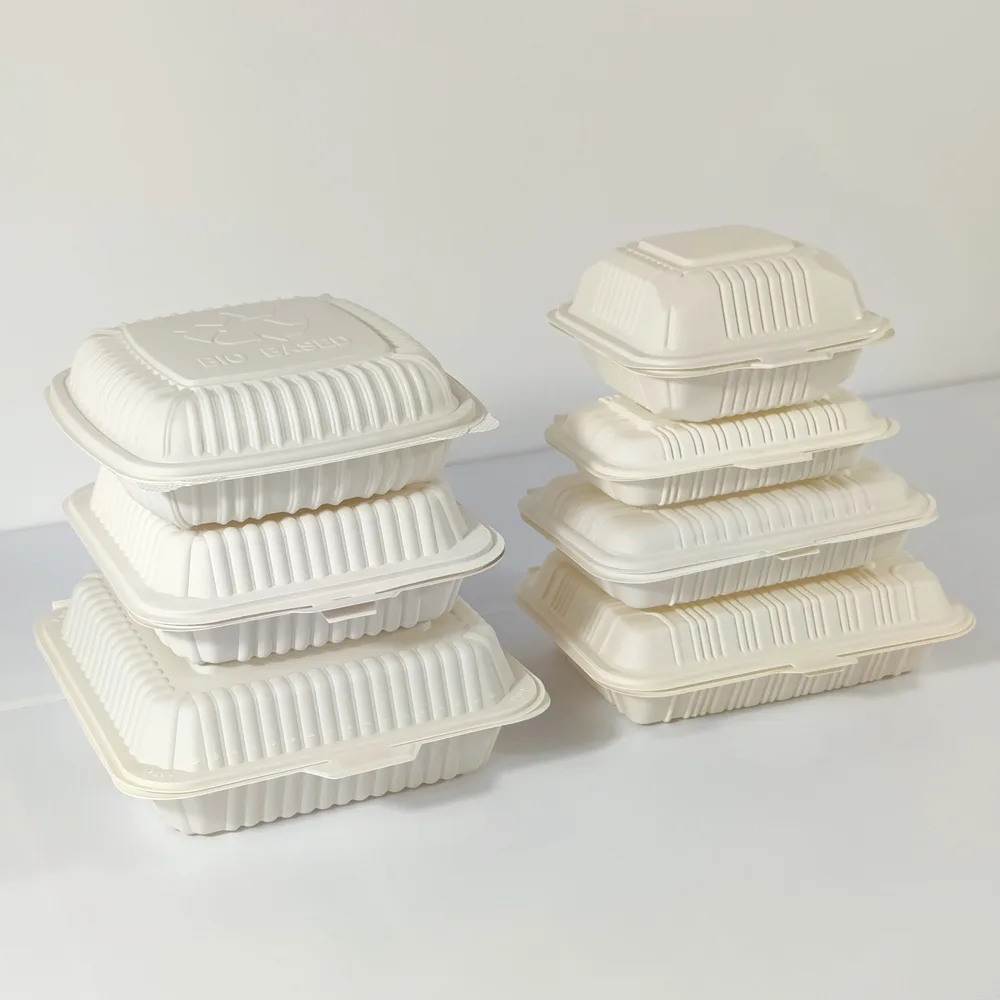
Case 5: Cornstarch clamshell (TPS/PLA blend)
If plastic-like tableware, 3924.10.
Evidence: blend ratio, mechanical behavior, intended use.
Case 6: Paper soup container (non-molded)
4823.69 (paper cups/containers for table service).
Evidence: base paper gsm, lining gsm (if any), leakage/heat performance test summary.
8) Decision Tools—Flowchart, Templates & Checklists
<hr/>
8.1 One-page flow
Material? → Use (tableware vs packing)? → Forming (molded vs non-molded)? → Single vs set (GRI 3(b))? → HS6 lock → National suffix → Trade remedies/eco-fees → Evidence pack archived.
8.2 Evidence pack checklist (attach to each SKU)
Material declaration (bagasse %, paper gsm, polymer type).
Forming method (molded pulp vs paperboard converting).
Component list for sets (who gives essential character).
Photos in use (to establish principal use).
Mass/weights for EPR/plastic taxes where applicable.
Proposed HS6 and national 8–10 digit mapping.
Internal approval log (date, owner, market).
8.3 Invoice & packing list template (fields to include)
Product name + short functional descriptor.
Intended use: tableware/kitchenware vs packing.
Material & lining (with % or gsm where helpful).
HS code (6+ national digits), COO.
Net/gross weights per SKU.
Set contents (if applicable).
Compliance tags (e.g., “food-contact tested,” “compostable standard ref” where available).
9) Operations & Risk Control—Keep Audits Boring
<hr/>
Binding rulings: For high-volume, multi-material sets or new designs, a binding classification in your lead market reduces downstream disputes.
Post-entry / post-clearance: Maintain a single “source of truth” for HS and evidence. Reuse the same rationale across distributors to avoid fragmentation.
Cross-market consistency: Keep six digits constant across geographies; only the suffixes change.
Change management: Re-validate when you alter materials (e.g., switch from PE lining to PLA lining) or re-bundle components; it may affect essential character.
10) Frequently Asked Questions (Buyer Search Intent)
<hr/>
Q1. Is “biodegradable” a valid reason to choose a different HS code?
No. HS headings are decided by material and use, not marketing terms like “compostable” or “eco-friendly.”
Q2. What’s the HS code for bagasse plates and bowls?
Typically 4823.70 for molded pulp/molded fiber articles used as tableware.
Q3. Do PLA cups and CPLA cutlery share the same heading?
Yes. They are usually in 3924.10 (tableware of plastics). Composition and use matter more than biobased content.
Q4. If a paper bowl is PLA-lined, does it move to plastics?
Usually no. Paper provides essential character; the lining provides a barrier. Expect 4823.69/4823.61 for non-molded paper articles.
Q5. How do I classify a retail set (bowl + lid + cutlery)?
Apply GRI 3(b). Classify by the component that imparts the essential character (commonly the bowl/container). If shipped separately, classify each component individually.
11) Strategic Conclusion—Turn HS from a Risk into a Margin Lever
<hr/>
Accurate HS classification is now commercial strategy. It affects landed cost (duty + eco-fees), time-to-market, and audit exposure. A material-first map with product cross-checks and a predictable evidence pack is the fastest, repeatable way to win classification discussions across customs zones. For Bioleader®’s portfolio—bagasse molded fiber, kraft paper bowls and cups (with/without PLA lining), PLA/CPLA cutlery and cups, and selected woodware—this guide standardizes the HS logic your sales, logistics, and compliance teams can use in quotes, invoices, and tenders. Build once, reuse everywhere, keep audits boring.
Appendix—Practical Tables You Can Copy Into Your CMS
A1. Material vs HS6 quick lookup
| Material family | HS6 | One-line rationale |
|---|---|---|
| Molded bagasse (plates/bowls/trays/clamshells) | 4823.70 | Molded pulp/fiber tableware. |
| Paper cups/plates/trays (non-molded) | 4823.69 / 4823.61 | Paperboard tableware; bamboo vs other distinctions apply in suffix. |
| PLA/CPLA cups & cutlery | 3924.10 | Plastic tableware; biobased origin doesn’t change heading. |
| Wood cutlery | 4419 | Table/kitchenware of wood. |
A2. Borderline reminder (ops checklist)
| Issue | Watchpoint | What to document |
|---|---|---|
| Plastics: 3923 vs 3924 | Packing/closures vs tableware | Principal use, product photos, marketing copies emphasizing service/consumption. |
| Paper: 4819 vs 4823 | Cartons vs tableware | Functional description: cup/plate/bowl for serving; exclude transport/outer packaging. |
| Sets vs single items | GRI 3(b) essential character | Bill of materials; which component gives rigidity/shape/primary function. |
| Lining | Essential character remains paper | Substrate gsm vs lining gsm; purpose of lining (barrier). |
Reference
World Customs Organization – Harmonized Commodity Description and Coding System (HS) – https://www.wcoomd.org/
United States International Trade Commission – Harmonized Tariff Schedule of the United States (HTSUS) – https://hts.usitc.gov/
European Commission – Combined Nomenclature (CN) & TARIC Database – https://ec.europa.eu/taxation_customs/dds2/taric
Wikipedia – Harmonized System – https://en.wikipedia.org/wiki/Harmonized_System
Bioleader – The Difference Between Cornstarch and Sugarcane Pulp Tableware – https://www.bioleaderpack.com/the-difference-between-cornstarch-and-sugarcane-pulp-tableware/
United Nations Statistics Division – International Merchandise Trade Statistics (IMTS) – HS Codes – https://unstats.un.org/unsd/trade/classifications/
International Trade Centre (ITC) – Market Access Map: HS Codes & Tariffs – https://www.macmap.org/
World Bank – Harmonized System and Trade Data Overview – https://wits.worldbank.org/
Semantic Closed-Loop Insight Block
How to classify biodegradable tableware fast (repeatable method)
- Identify material (bagasse molded pulp / non-molded paper / PLA-family plastics / wood / leafware).
- Confirm use: tableware/kitchenware vs packing/closures.
- Check forming method: molded vs converted paperboard.
- Is it a set? Apply GRI 3(b) essential character.
- Lock HS6, then derive national 8–10 digits for the destination market.
Why this approach wins in 2025
Plastic-reduction rules, EPR reporting, and plastic taxes force clearer bill-of-materials and material percentages. A material-first approach speeds up customs clearance, reduces audit risk, and stabilizes landed costs for B2B buyers.
What to prepare as evidence (once, then reuse)
- Material declaration (substrate gsm / polymer type / weight %).
- Forming process proof (molded pulp vs non-molded paperboard converting).
- In-use photos demonstrating table service (vs transit packing).
- Set composition where applicable; rationale for essential character.
- Proposed HS6 + national suffix; internal approval snapshot.
Options when facing ambiguity
- Seek a binding ruling in the lead market for the SKU, then cascade.
- Split set components into separate lines if the buyer’s market treats closures distinctly.
- Where fiber and transparent display are both required, consider paper + bioplastic window lids and document roles clearly.
Considerations for pricing & margin
HS drives duty, which impacts price ladders for distributors. Combine HS with eco-fees (EPR/plastic taxes) to present a single landed-cost view. This is crucial for multi-market quotes and long-term supply agreements.
Trend signals to watch (for 2025 planning)
- Growing preference for molded fiber in quick-service and catering segments.
- Selective adoption of bioplastic tableware where clarity or high barrier is essential (cold beverages, sealed salads).
- More granular EPR reporting and eco-modulated fees increasing the value of accurate material data.
Buyer’s rationale (why choose Bioleader®)
End-to-end portfolio across bagasse, kraft/paper (PE/PLA-lined and uncoated), PLA/CPLA, and woodware; SKU-level documentation packs; stable HS logic; and manufacturing scale fit for distributors, foodservice chains, and OEM/ODM projects.