Top Use Cases For Sustainable Takeaway Utensils | Bioleader® Insights

Actionable coverage of sustainable takeaway utensils: eco-friendly, biodegradable, compostable materials, performance data, and compliance under EN13432 & ASTM D6400. Includes BPI/TÜV references and Food-Contact Tested guidance for safe deployment. Buyer-focused: manufacturer insights, bulk/wholesale buying playbooks, OEM/ODM customization tips, full size range selection.

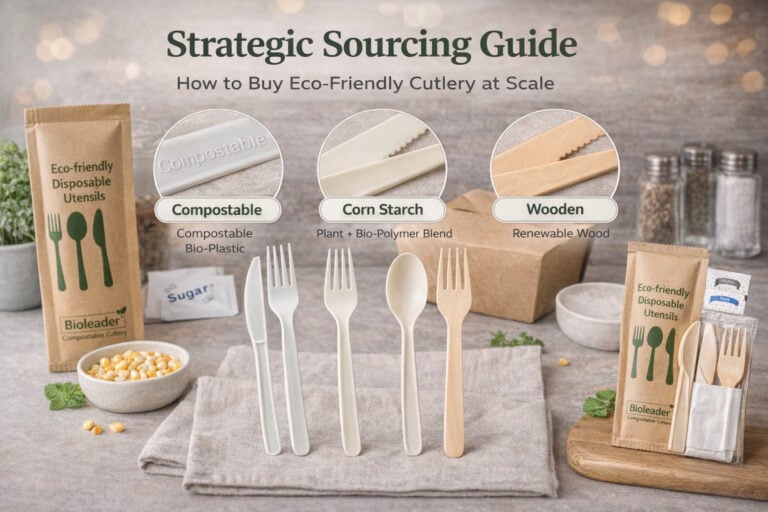
With the global push to reduce plastic waste, many consumers and businesses are asking a crucial question: What is the best material for eco-friendly forks and spoons? The answer isn’t one-size-fits-all—but understanding your options is the first step toward building a more sustainable lifestyle or food service operation.

sustainable takeaway utensils — Quick Summary
  • Items displayed (articles): 12
  • Last updated: 2025-05-17
  • Includes test data, compliance guides, buyer FAQs, and real-world use cases.

Editor’s Picks: Top Sustainable Takeaway Utensils Guides 2026

FAQ of Bioleader's Eco-friendly Disposable Tableware

What are the dimensions it comes in?

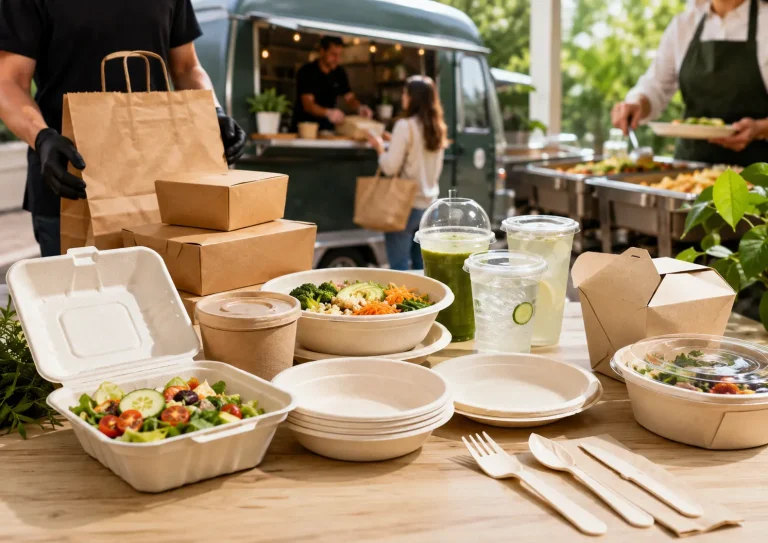
As for the to go bowls, these are available in different capacities of 500ml,750ml,1000ml,1090ml,1200ml,1300ml, and 1500ml , sustainable takeaway utensils. This implies that it serves a range of meals, that is, when it is served in a small salad one portion comes with it, and when it is served in larger portions many servings are included — sustainable takeaway utensils.

What are the available sizes?

We provide several dimensions with different volumetric capacities starting from 500ml up to 1500ml which would suffice various needs for portions.

FSC-certified Wood Paper Materials: Kraft Paper and White Cardboard Paper

Our to go bowls with lids are made from two main types of materials: Kraft paper and white cardboard paper. Kraft paper is brown and more coarse than most papers and has high toughness and some water-resistant properties which make it good for holding medium-to-heavy and medium-hot food items. Conversely, the white cardboard paper provides an aesthetic appeal even as it remains tough. Both of these materials can be recycled and are environmentally friendly – a fact that helps in the packaging design that conforms to the current green principles and yet maintains the needed standard.

2. Bamboo

Fast-growing, renewable resource Strong, stylish, and naturally antibacterial Fully compostable at home or industrial sites Best for: sustainable forks and spoons for takeaway or upscale events

Scientific Research

According to the Environmental Protection Agency (EPA), disposable plastic utensils contribute to over 40 billion pieces of waste annually in the U.S — sustainable takeaway utensils. alone. In contrast, compostable materials like cornstarch PLA break down within 90–180 days in industrial composting conditions. A 2023 study from the University of California, Davis, revealed that bamboo and PLA utensils generate 68% less greenhouse gas emissions compared to petroleum-based plastics over their life cycle.

Related Insights

🚀Ready to Go Green and Choose ?

Join the global movement toward zero-waste packaging.


Bioleader® offers:

  • 📦 Bulk order support & fast delivery

  • ✍️ Custom branding and OEM solutions

  • 🌍 Worldwide eco-packaging compliance

Get the Catalogue Products List  & Contact Us Now! 👉

Contact us Below

Click or drag files to this area to upload.You can upload up to 5 files.
The more details you share, the faster and more accurate our quotation will be.