Highlights from featured articles under this tag:


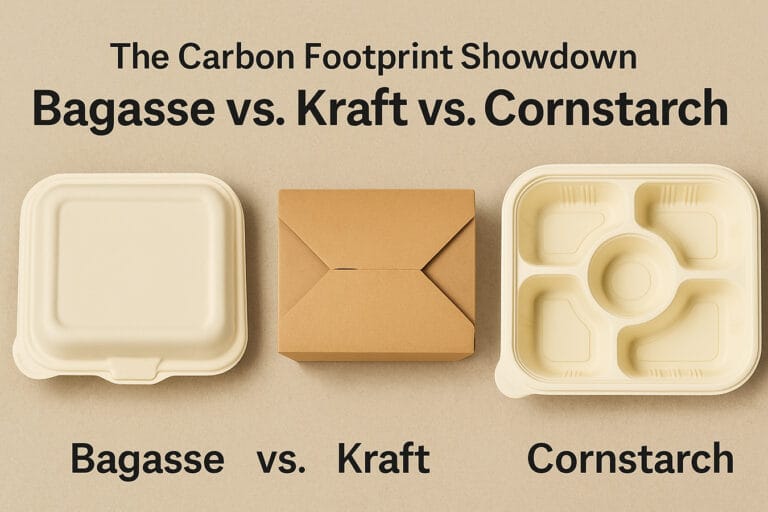
Buyers should compare the project by destination market, meal type, delivery stress, claim boundary, and customer channel. Bioleader’s recommendation is to choose the material that lowers overall sourcing risk, not just the one that looks strongest in a one-line description.
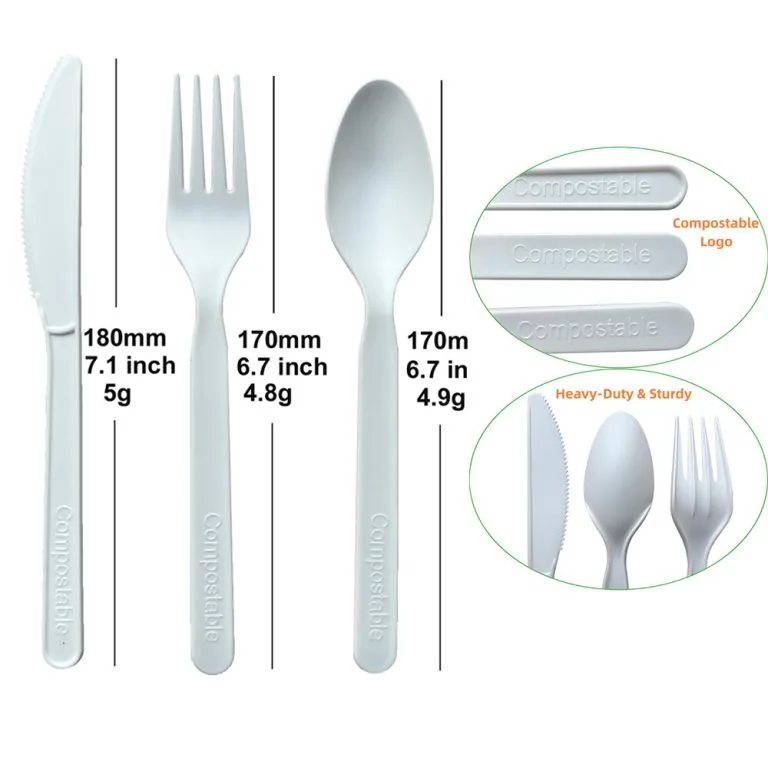
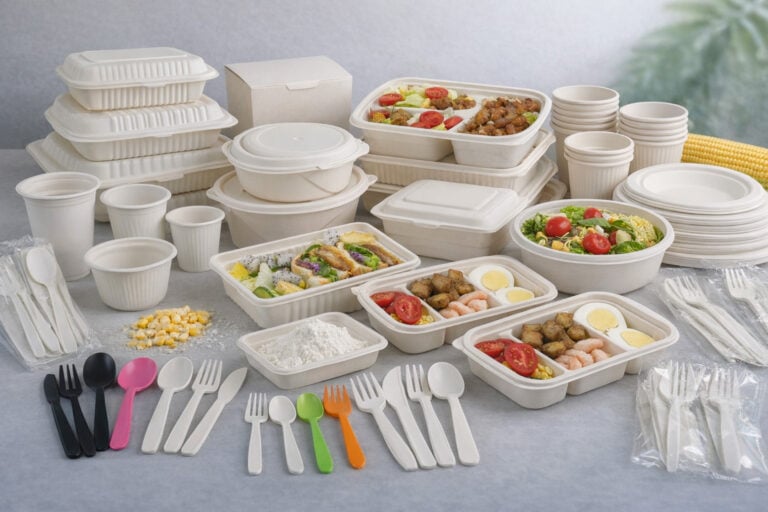
Biodegradable cutlery is typically made from plant-based materials such as cornstarch, sugarcane bagasse, PLA, bamboo, or wood—all designed to break down naturally.
Not automatically. Buyers should not assume that a starch-based product is biodegradable simply because it contains a renewable material phase. In sourcing terms, the better question is how the product is formulated, what claims are supported, and how the destination market interprets those claims.
They may be commercially possible in some channels, but buyers should review the product against the destination market’s plastics interpretation, environmental wording tolerance, and retailer expectations before making a decision. In stricter cases, Bioleader may recommend a pivot toward bagasse or aqueous coated paper.
Join the global movement toward zero-waste packaging.
Bioleader® offers:
📦 Bulk order support & fast delivery
✍️ Custom branding and OEM solutions
🌍 Worldwide eco-packaging compliance
Get the Catalogue Products List & Contact Us Now! 👉