Pulp Molding Technology: Strategic Overview | Bioleader®

Actionable coverage of pulp molding technology: eco-friendly, biodegradable, compostable materials, performance data, and compliance under EN13432 & ASTM D6400. Includes BPI/TÜV references and Food-Contact Tested guidance for safe deployment. Buyer-focused: manufacturer insights, bulk/wholesale buying playbooks, OEM/ODM customization tips, full size range selection.
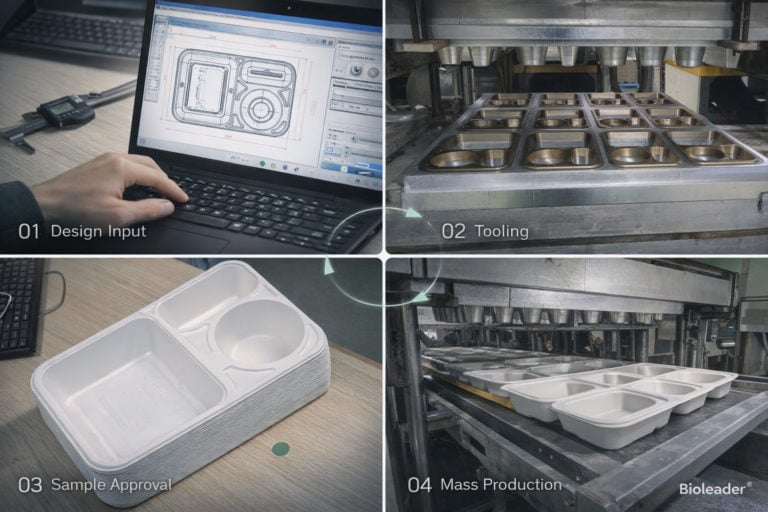
Quick Summary: Custom bagasse tableware development is not just about adding a logo or changing the shape of a stock item. In 2026, successful molded pulp customization depends on design validation, tooling strategy, sample approval, MOQ planning, and mass production control. Buyers who start with a drawing or physical sample still need to confirm mold feasibility, dimensional tolerance, stacking logic, and production repeatability before commercial launch. This guide explains how custom sugarcane bagasse tableware moves from concept to scalable production, with a focus on tooling choices, timeline control, and the technical checkpoints that determine whether a custom project succeeds or fails.
pulp molding technology — Quick Summary
  • Items displayed (articles): 12
  • Last updated: 2026-03-22
  • Includes test data, compliance guides, buyer FAQs, and real-world use cases.

Editor’s Picks: Top Pulp Molding Technology Guides 2026

FAQ of Bioleader's Eco-friendly Disposable Tableware

Are they safe for microwave heating?

Yes, these compostable bowls can be used in the microwave to reheat the food in the same container in which it was packed.

Can these containers hold liquids?

Yes, our paper food containers are leakproof and hold solid and liquid foods including thick soups sauces, and creamy dishes too.

Are the containers available with a logo impression on them?

Definitely! Print Gems , pulp molding technology. Our to go salad containers are available printed with your logo or artwork. This is a nice chance to make your business while safe packaging supplies are being delivered.

What surface roughness is considered acceptable for premium molded pulp trays?

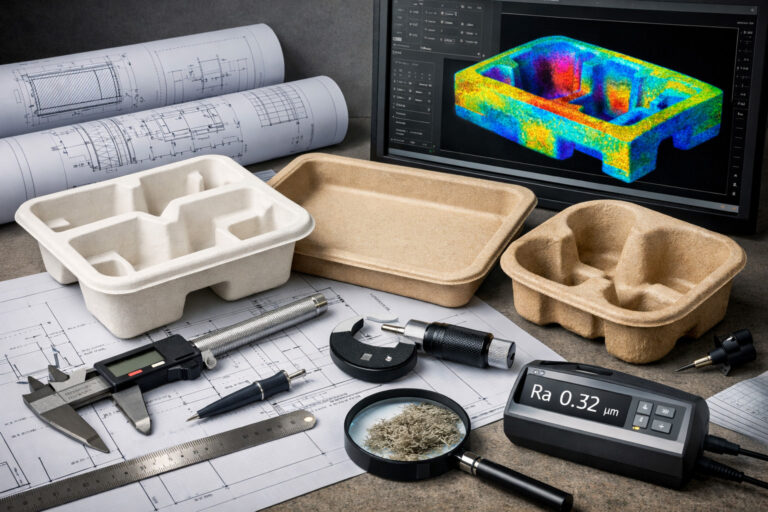
In industrial production, a surface roughness range of approximately 2.3–6 μm (Ra) is widely regarded as optimal , pulp molding technology. Below this range, visual and tactile improvements become marginal, while tooling and process complexity increase significantly. This range also supports direct printing and hot stamping without surface coatings — pulp molding technology.

What makes a molded pulp tray “high quality” from an engineering perspective?

A high-quality molded pulp tray is defined by controlled surface roughness, structural stiffness, and manufacturing repeatability. These characteristics are achieved through precision tooling, optimized fiber-length architecture, controlled pulp preparation, and CTQ-regulated forming processes—not by post-treatment or coatings.

Related Insights

🚀Ready to Go Green and Choose ?

Join the global movement toward zero-waste packaging.


Bioleader® offers:

  • 📦 Bulk order support & fast delivery

  • ✍️ Custom branding and OEM solutions

  • 🌍 Worldwide eco-packaging compliance

Get the Catalogue Products List  & Contact Us Now! 👉

Contact us Below

Click or drag files to this area to upload.You can upload up to 5 files.
The more details you share, the faster and more accurate our quotation will be.