The 2025 Buyer’s Guide To Plant-based PLA Cups | Bioleader® Sustainable Packaging

Browse articles grouped under the "plant-based PLA cups" tag for topic-specific information and examples. The featured articles may approach the topic from different product, material, application, market, or sourcing perspectives. Check each article for its exact scope, technical data, standards, sources, and recommendations.
plant-based PLA cups — Content Overview
  • Featured articles shown: 12
  • Directly tagged articles: 1
  • Latest tagged article update: 2026-01-09
  • Coverage, examples, and specific recommendations vary by individual article.

Editor's Picks: Top Plant-based Pla Cups Guides 2026

FAQ of Bioleader's Eco-friendly Disposable Tableware

What is the capacity of a 1000ml rectangular paper salad bowl?

A 1000ml rectangular paper salad bowl is designed for large single-serve or meal portions — plant-based PLA cups. It is commonly used for salads, rice bowls, sushi-style meals, cold noodles, pasta, desserts, side dishes, and takeaway meals. For buyers building a wider rectangular bowl range, 1000ml can be paired with 500ml, 650ml, and 750ml rectangular paper bowls.

Can 1200-1400ml square paper salad bowls be custom printed?

Yes. Bioleader® supports OEM logo printing and private-label designs for 1200-1400ml square paper salad bowls. Buyers can provide AI, PDF, CDR, or clear logo files. White paper is usually better for sharp full-color printing, while kraft paper is suitable for natural, minimal, and eco-style branding.

Can 500ml rectangular paper salad bowls be custom printed?

Yes. Bioleader® supports OEM logo printing and private-label designs for 500ml rectangular paper salad bowls and matching paper lids. Buyers can provide AI, PDF, CDR, or clear logo files. White paper is usually better for sharp full-color printing, while kraft paper is suitable for natural, minimal, and eco-style branding.

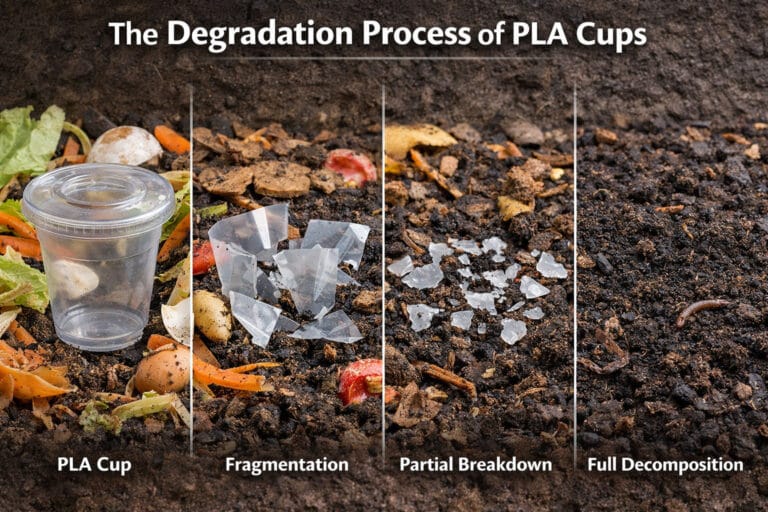
How long do PLA cups take to decompose?

In an industrial composting facility, PLA cups typically decompose within 90 to 180 days. In landfills or natural environments, the process is much slower.

What is PLA Exactly?

PLA, or Polylactic Acid, is a revolutionary plant-based biopolymer that offers a sustainable alternative to conventional petroleum-based plastics.Unlike traditional plastics from finite fossil fuels, PLA cups are made from renewable agricultural resources—primarily corn starch, sugarcane, or cassava. The production of PLA begins by extracting starches or sugars from plants — plant-based PLA cups. Microorganisms then ferment these carbohydrates into lactic acid — plant-based PLA cups. Through a process called polymerization, lactic acid molecules are linked together to form long chains, creating a versatile and compostable resin—PLA.This resin can then be molded into various forms, including clear PLA cups, compostable PLA cups, food containers, and even biodegradable straws.

Related Insights

🚀Ready to Go Green and Choose ?

Join the global movement toward zero-waste packaging.


Bioleader® offers:

  • 📦 Bulk order support & fast delivery

  • ✍️ Custom branding and OEM solutions

  • 🌍 Worldwide eco-packaging compliance

Get the Catalogue Products List  & Contact Us Now! 👉

Contact Us for Quote

Click or drag files to this area to upload.You can upload up to 5 files.
The more details you share, the faster and more accurate our quotation will be.