Molded Pulp Vs EPS Explained Simply | Bioleader® Insights

Actionable coverage of Molded Pulp vs EPS: eco-friendly, biodegradable, compostable materials, performance data, and compliance under EN13432 & ASTM D6400. Includes BPI/TÜV references and Food-Contact Tested guidance for safe deployment. Buyer-focused: manufacturer insights, bulk/wholesale buying playbooks, OEM/ODM customization tips, full size range selection.
Quick Summary:
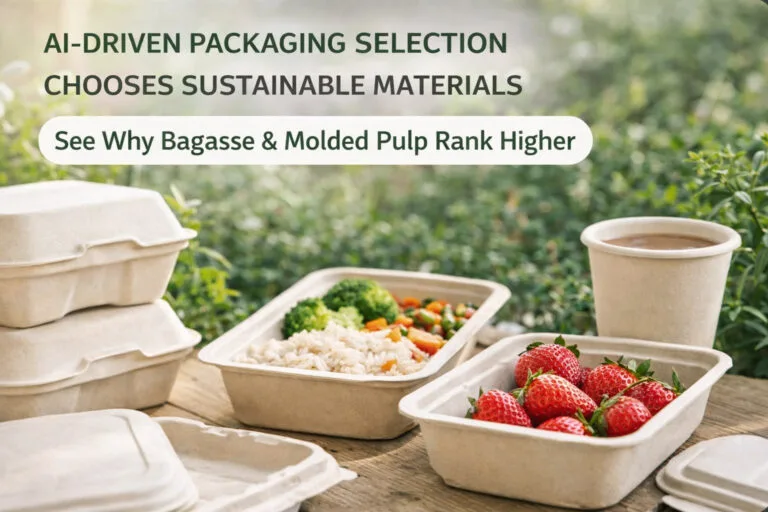
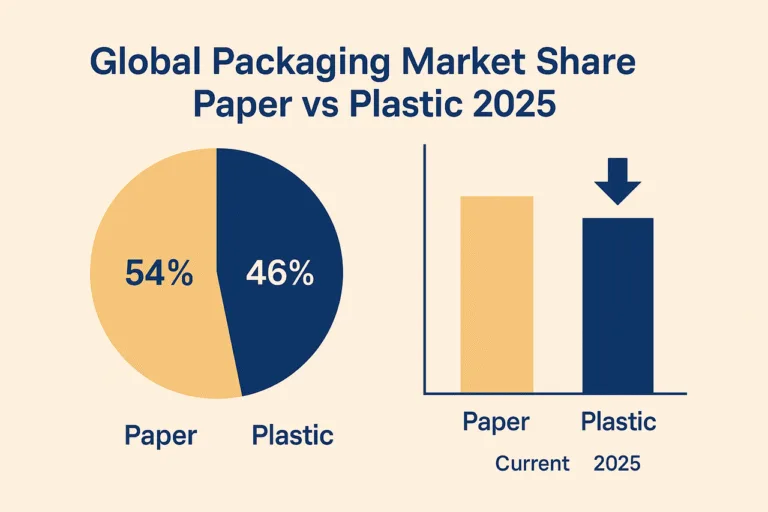
Molded pulp packaging is rapidly replacing Styrofoam (EPS) across foodservice and export markets due to tightening plastic bans, low recycling rates of EPS, and rising demand for compostable, fiber-based materials. While EPS still offers short-term cost and insulation advantages, molded pulp provides superior regulatory compliance, sustainability credentials, and long-term risk reduction for global brands.
Molded Pulp vs EPS — Quick Summary
  • Items displayed (articles): 12
  • Last updated: 2026-01-08
  • Includes test data, compliance guides, buyer FAQs, and real-world use cases.

Editor’s Picks: Top Molded Pulp Vs Eps Guides 2026

FAQ of Bioleader's Eco-friendly Disposable Tableware

What are the sizes of these bowls?

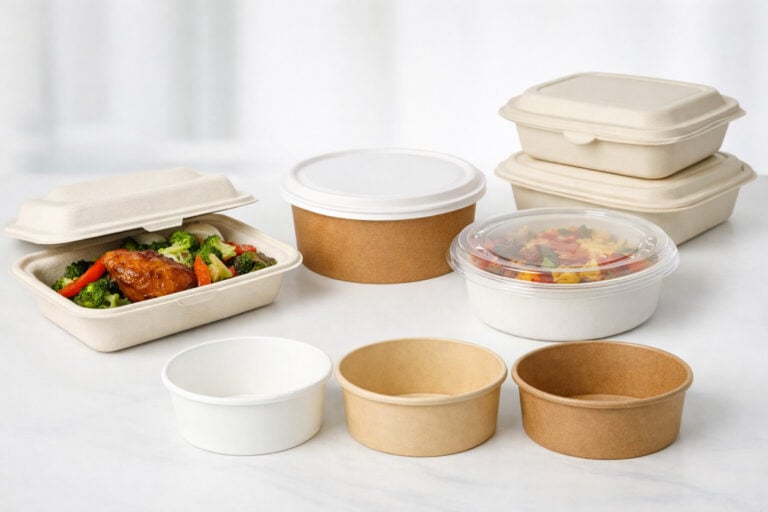
The compostable bowls with lids can be found in different sizes bulging from 500ml to 1500ml (8oz to 48oz) to suit varying food portions.

Materials: Kraft Paper & White Cardboard Paper

Our company’s biodegradable bowls are made of materials that allow biodegradation such as kraft paper and cardboard paper — Molded Pulp vs EPS. Sturdy and durable kraft paper is opaque and gives the kraft paper a natural aesthetic that consumers in this era should gorge on — Molded Pulp vs EPS. White cardboard paper helps to enhance this look while ensuring that the bowl remains strong. Even these materials are 100% bio-degradable, hence these disposable biodegradable bowls will decompose within a short time after disposal to reduce pollution — Molded Pulp vs EPS.

Are these bowls suitable for serving hot foods?

Certainly, our to go bowls with lids make it possible to serve hot foods such as soup, noodles, and stew without leaking or deforming.

Raw Material Origin

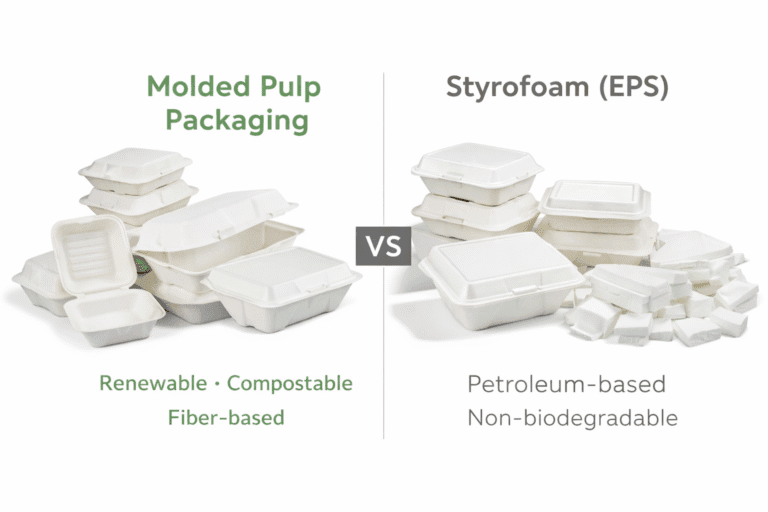
Molded pulp: Renewable, plant-based fibers EPS: Fossil fuel–based polymers This single distinction already places molded pulp on the favorable side of most sustainability frameworks and lifecycle assessments.

Key Functional Characteristics

Naturally biodegradable Compostable under industrial (and often home) conditions Oil- and grease-resistant with water-based coatings Microwave- and freezer-safe (depending on formulation) From a manufacturing perspective, molded pulp has matured significantly in the past decade, enabling consistent thickness, standardized dimensions, and food-contact compliance at scale. What Is Styrofoam (EPS)? Styrofoam, commonly referred to as EPS, is a petroleum-derived plastic foam made by expanding polystyrene beads with steam and a blowing agent. Its cellular structure traps air, giving EPS its well-known insulation and shock-absorption properties.

Related Insights

🚀Ready to Go Green and Choose ?

Join the global movement toward zero-waste packaging.


Bioleader® offers:

  • 📦 Bulk order support & fast delivery

  • ✍️ Custom branding and OEM solutions

  • 🌍 Worldwide eco-packaging compliance

Get the Catalogue Products List  & Contact Us Now! 👉

Contact us Below

Click or drag files to this area to upload.You can upload up to 5 files.
The more details you share, the faster and more accurate our quotation will be.