Kraft Paper Packaging Supplier 101: What It Is, When To Use, And How To Choose | Bioleader® Sustainable Packaging
Actionable coverage of kraft paper packaging supplier: eco-friendly, biodegradable, compostable materials, performance data, and compliance under EN13432 & ASTM D6400. Includes BPI/TÜV references and Food-Contact Tested guidance for safe deployment. Buyer-focused: manufacturer insights, bulk/wholesale buying playbooks, OEM/ODM customization tips, full size range selection.
kraft paper packaging supplier — Quick Summary
Items displayed (articles): 12
Last updated: 2025-07-10
Includes test data, compliance guides, buyer FAQs, and real-world use cases.
FAQ of Bioleader's Eco-friendly Disposable Tableware
What are compostable plastic spoons and forks made of?
Compostable plastic spoons and forks are typically made from plant-based materials such as cornstarch, PLA (polylactic acid), or CPLA. These materials are biodegradable and designed to break down into natural elements in composting environments.
Can biodegradable forks and spoons be used for hot foods?
Yes, many biodegradable forks and spoons are designed to withstand hot foods, especially those made from CPLA. Always check the product specifications for maximum temperature limits.
How long does BPI compostable cutlery take to decompose?
Under commercial composting conditions, BPI compostable cutlery typically decomposes within 90 to 180 days, depending on local facility standards and materials used.
1. Raw Material Sourcing
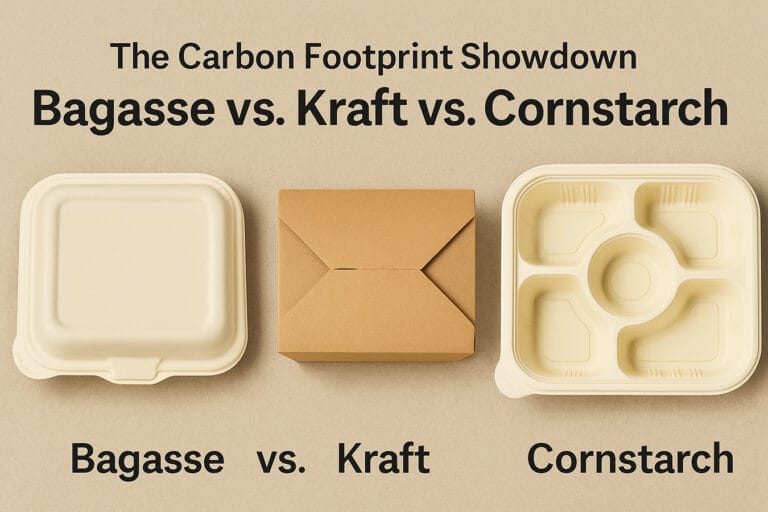
Kraft Paper: Made from trees harvested from responsibly managed forests (FSC-certified) or recycled fiber streams. Trees absorb carbon dioxide during growth, contributing to a net-zero or even net-negative carbon footprint when sustainably sourced , kraft paper packaging supplier. Plastic: Derived from fossil fuels. Oil drilling, refining, and monomer production emit high levels of GHGs, and the extraction process disrupts land and aquatic ecosystems.
2. Manufacturing Process
Kraft Paper: Requires pulping and heat pressing at relatively low temperatures. Energy consumption is significantly lower than plastic molding. Plastic: Requires polymerization, pelletizing, and high-temperature injection molding — kraft paper packaging supplier. PS and PET manufacturing release toxic VOCs and require 2–3 times more energy — kraft paper packaging supplier.