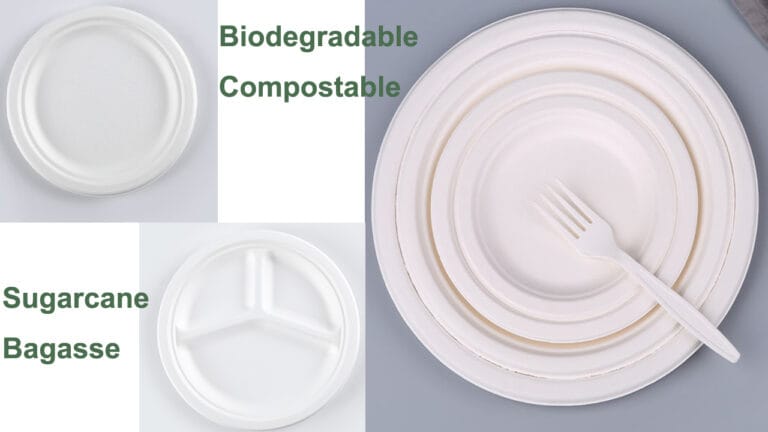
FAQ of Bioleader's Eco-friendly Disposable Tableware
How long does it take for eco-friendly cutlery to decompose?
Under industrial composting conditions, most eco-friendly cutlery decomposes within 90 to 180 days, depending on the material and local composting standards.
What are compostable plastic spoons and forks made of?
Compostable plastic spoons and forks are typically made from plant-based materials such as cornstarch, PLA (polylactic acid), or CPLA. These materials are biodegradable and designed to break down into natural elements in composting environments.
What are Earth Friendly Utensils Disposable Cutlery made from?
Earth Friendly Utensils Disposable Cutlery is made from renewable plant-based materials like cornstarch or PLA, making them biodegradable and compostable.
4. Bamboo Paper Plates
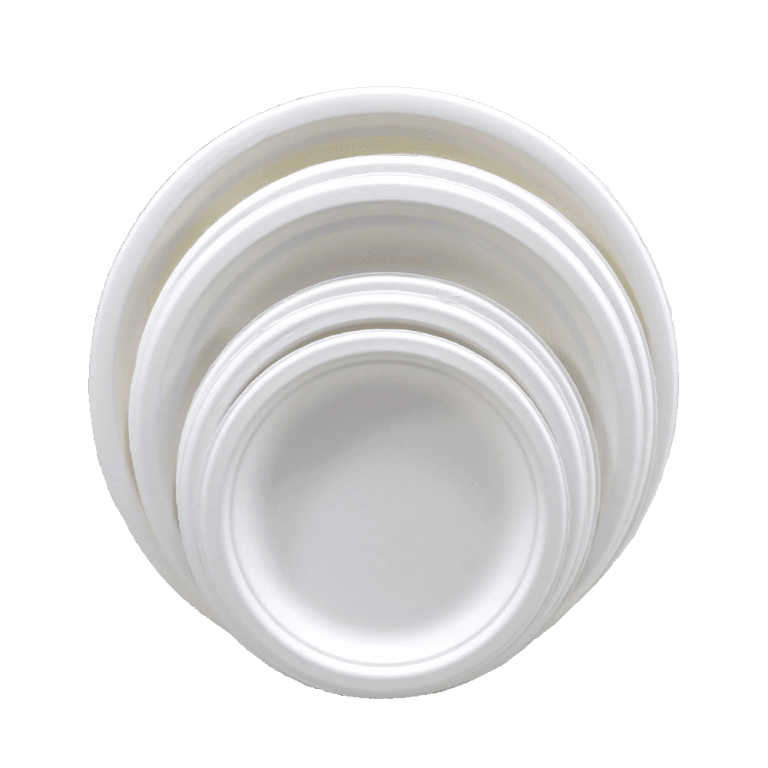
Material: Made from bamboo pulp or sometimes bamboo fibers, which are compressed into plates — High-temperature resistant plates. Use: Often used for eco-friendly or upscale catering events, these plates offer a natural look and durability. Environmental Impact: 100% biodegradable and compostable, making them an excellent eco-friendly alternative — High-temperature resistant plates.
1. Standard Paper Plates
Material: Typically made from wood pulp (paperboard) and coated with a layer of wax or plastic to make them moisture-resistant. Use: Common for everyday use at parties, picnics, or casual dining. Environmental Impact: Non-biodegradable when coated with plastic. If coated with wax, they are more biodegradable but still not ideal for composting , High-temperature resistant plates.