Highlights from featured articles under this tag:


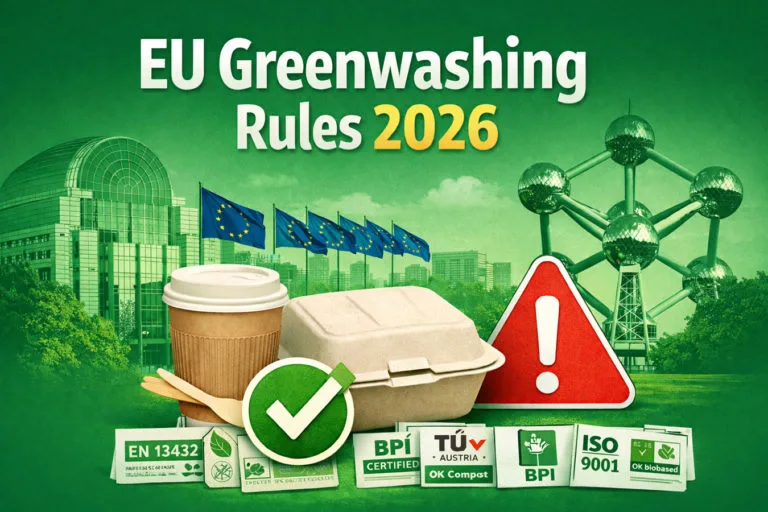
EU Member States had until 27 March 2026 to transpose Directive (EU) 2024/825. The rules will apply from 27 September 2026. Packaging artwork, product-page copy, labels, icons, and distributor listings should therefore be reviewed before the application date.
One example is marketing a plastic composite containing bamboo powder as though the finished article were made entirely from natural bamboo. Other examples include calling a package “eco-friendly” without defining the benefit, presenting industrially compostable packaging as home compostable, or describing packaging as recyclable without considering actual collection and processing conditions.
Greenwashing means making something look greener than the facts justify. The environmental impression communicated to the buyer or consumer is broader or stronger than the evidence behind the claim.
Bioleader® supports product-specific review based on material, product type, selected components, destination market, and intended claim. Depending on the item, buyers can review available food-contact, compostability, PFAS-related, quality-management, and technical documents before approving packaging wording or artwork.
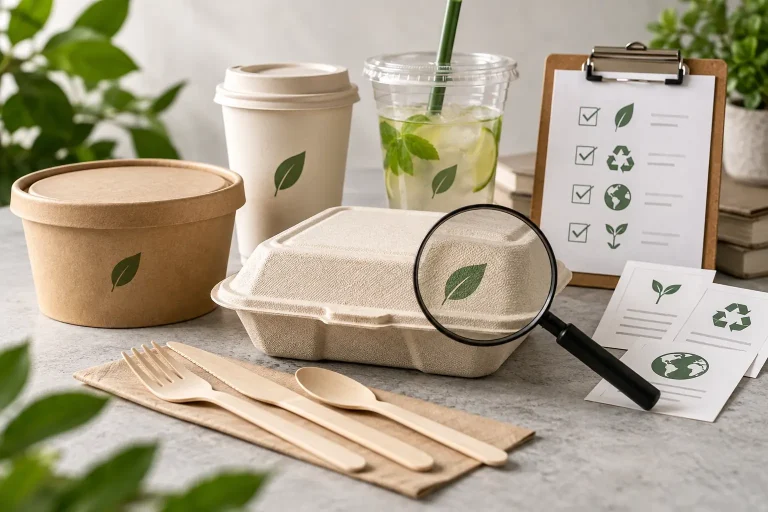
Look for vague environmental terms, missing material information, unclear certification scope, unsupported plastic-free or compostable statements, misleading nature imagery and claims that ignore coatings, lids or other components. Ask what the finished product contains, which evidence supports the claim and whether the statement applies in the destination market.
Join the global movement toward zero-waste packaging.
Bioleader® offers:
📦 Bulk order support & fast delivery
✍️ Custom branding and OEM solutions
🌍 Worldwide eco-packaging compliance
Get the Catalogue Products List & Contact Us Now! 👉