Highlights from featured articles under this tag:


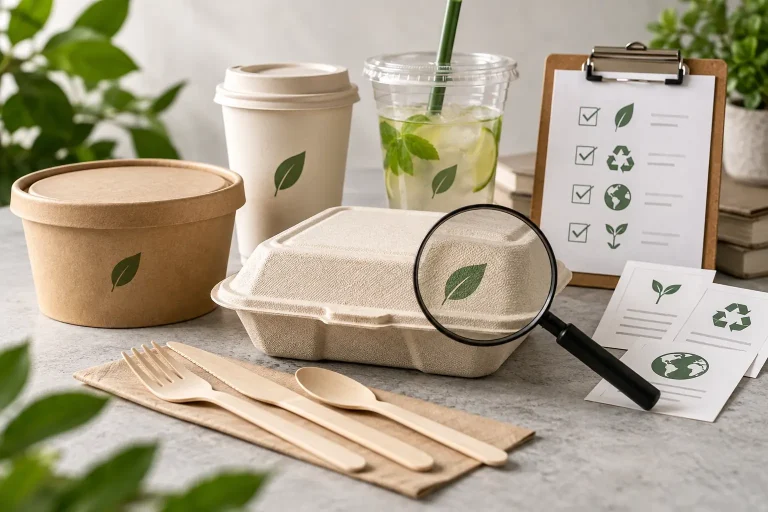
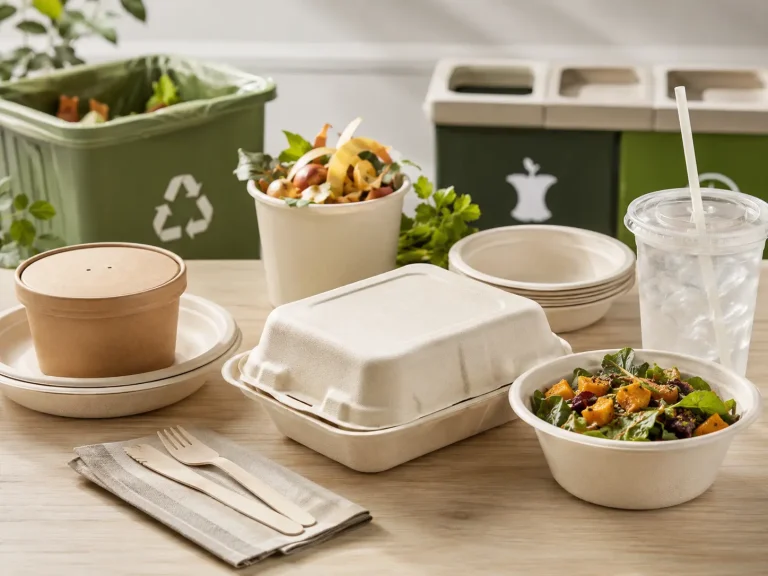
One example is marketing a plastic composite containing bamboo powder as though the finished article were made entirely from natural bamboo. Other examples include calling a package “eco-friendly” without defining the benefit, presenting industrially compostable packaging as home compostable, or describing packaging as recyclable without considering actual collection and processing conditions.
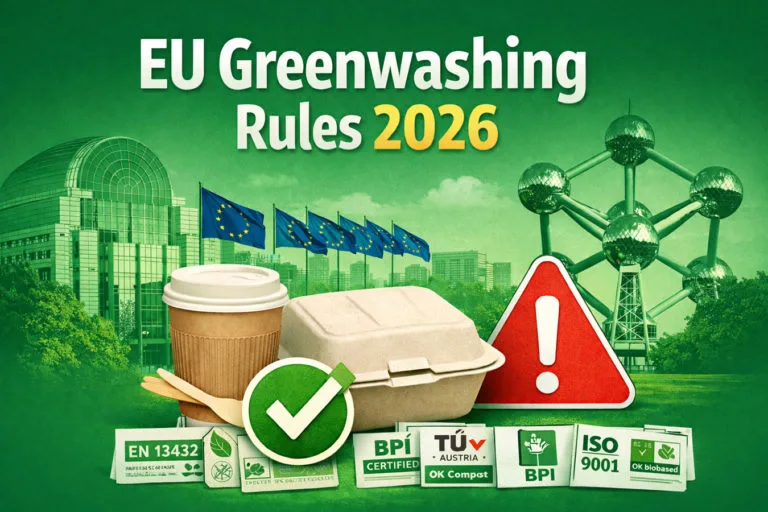
The main adopted changes come from Directive (EU) 2024/825. From 27 September 2026, consumer-facing generic environmental claims and sustainability labels will face tighter controls. Packaging buyers should verify that claims are specific, clearly qualified, supported by relevant evidence, and limited to the correct product and component scope.
Bioleader® supports product-specific review based on material, product type, selected components, destination market, and intended claim. Depending on the item, buyers can review available food-contact, compostability, PFAS-related, quality-management, and technical documents before approving packaging wording or artwork.
Companies may greenwash because of competitive pressure, consumer demand for sustainable products, weak internal claim controls or oversimplification of technical information. Greenwashing can be intentional, but it can also happen when a genuine material property or certificate is incorrectly expanded into a much broader marketing claim.
Greenwashing means making something look greener than the facts justify. The environmental impression communicated to the buyer or consumer is broader or stronger than the evidence behind the claim.
Join the global movement toward zero-waste packaging.
Bioleader® offers:
📦 Bulk order support & fast delivery
✍️ Custom branding and OEM solutions
🌍 Worldwide eco-packaging compliance
Get the Catalogue Products List & Contact Us Now! 👉