FAQ of Bioleader's Eco-friendly Disposable Tableware
What materials are biodegradable plastic forks and spoons made from?
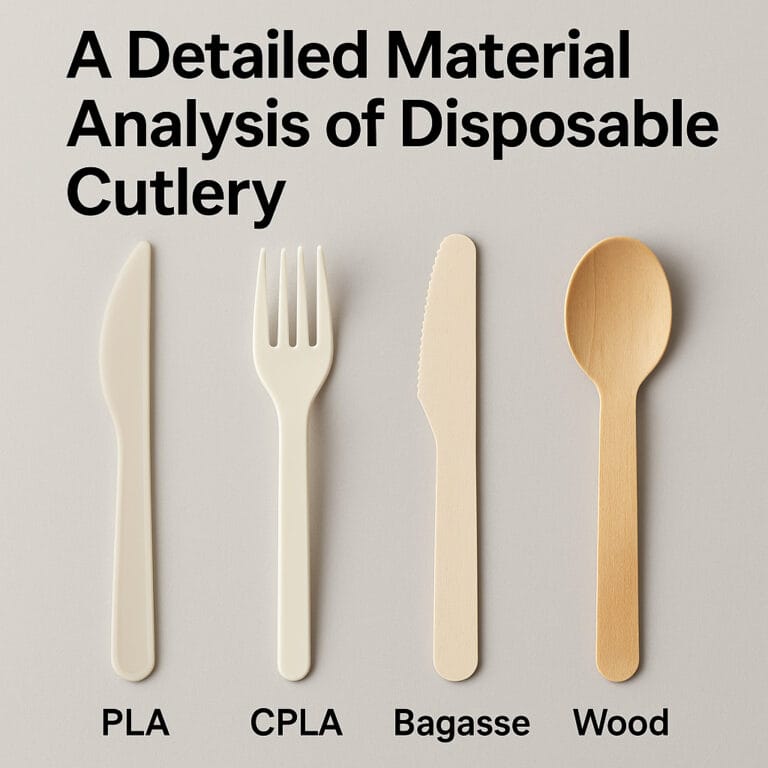
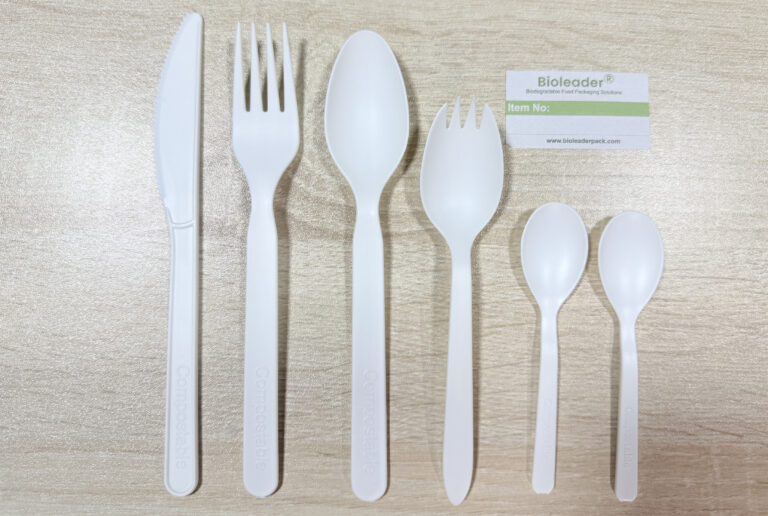
Biodegradable plastic forks and spoons are usually made from plant-based bioplastics such as cornstarch, PLA, or CPLA, which naturally break down in composting conditions.
Can businesses customize BPI compostable cutlery packaging?
Absolutely. BPI compostable cutlery offers customizable packaging options, including logo printing and tailored designs to support branding and marketing needs.
Can biodegradable forks and spoons be used for hot foods?
Yes, many biodegradable forks and spoons are designed to withstand hot foods, especially those made from CPLA , Food Contact Standard. Always check the product specifications for maximum temperature limits.
Where PEF Creates the Most Value
Packaging requiring enhanced oxygen protection for longer shelf life Beverage and sensitive food formats where barrier performance directly impacts product quality Bio-based resin strategies aiming to reduce carbon footprint while maintaining performance Important clarification for buyers: PEF is best viewed as a bio-based, high-barrier polymer platform — Food Contact Standard. It should not be automatically assumed to be a compostable substitute for foodservice disposables. Its role is typically closer to PET replacement strategies in barrier-critical packaging , Food Contact Standard. Buyer Action Checklist: How to De-Risk PLA/CPLA Sourcing After the 2026 Update Request updated compliance statements referencing Announcement No.
How Mineral Additives Enable Crystallization
Inorganic particles can function as heterogeneous nucleation sites, accelerating crystallization kinetics and improving structural stability at elevated temperatures. Calcium sulfate & talc: frequently applied as nucleating agents to support faster crystallization and improved thermal windows. Engineering precision matters: performance depends on particle dispersion, particle size distribution, formulation ratios, and controlled processing (molding parameters and, where applicable, annealing strategy).