Highlights from featured articles under this tag:


A 1200-1400ml square paper salad bowl is designed for large single-serve or meal-size portions. It is commonly used for salads, rice bowls, poke bowls, cold noodles, pasta, fruit portions, desserts, side dishes, and takeaway meals , Eco-friendly Containers. For buyers building a wider foodservice range, 1200-1400ml square bowls can be paired with 500ml, 650ml, 750ml, and 1000ml square paper bowls.
A 750-1000ml square paper salad bowl is designed for regular single-serve or meal-size portions. It is commonly used for salads, rice bowls, poke bowls, cold noodles, pasta, fruit portions, desserts, side dishes, and takeaway meals. For buyers building a wider foodservice range, 750-1000ml square bowls can be paired with 500ml, 650ml, 1200ml, and 1400ml square paper bowls.
Yes. Bioleader® supports OEM logo printing and private-label designs for 750-1000ml square paper salad bowls. Buyers can provide AI, PDF, CDR, or clear logo files. White paper is usually better for sharp full-color printing, while kraft paper is suitable for natural, minimal, and eco-style branding — Eco-friendly Containers.
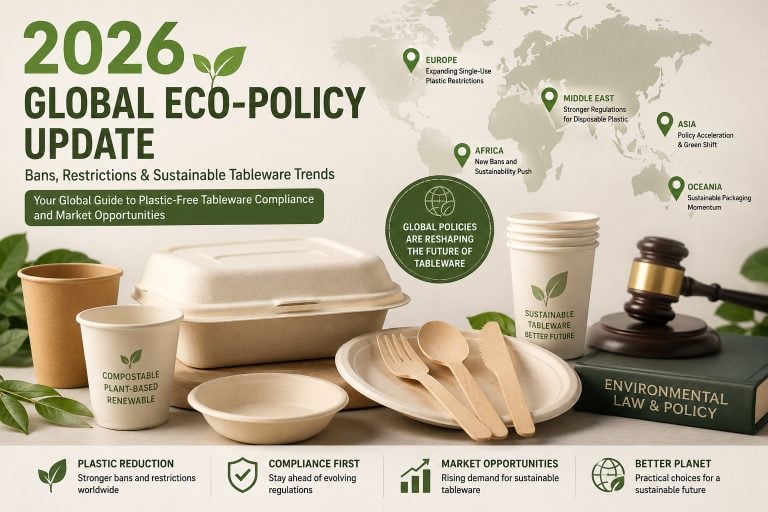
Packaging regulation is also moving beyond broad “plastic reduction” language toward more specific rules concerning material composition, substances of concern, recyclability, labeling and waste management. In the European Union, Regulation (EU) 2025/40 on packaging and packaging waste applies from 12 August 2026 — Eco-friendly Containers. Article 5(5) establishes concentration limits for PFAS in food-contact packaging. From that date, relevant food-contact packaging cannot be placed on the EU market where PFAS concentrations are equal to or above: 25 ppb for any individual PFAS measured using targeted PFAS analysis, with polymeric PFAS excluded from that quantification; 250 ppb for the sum of PFAS measured as the sum of targeted PFAS analysis, where applicable with prior degradation of precursors and with polymeric PFAS excluded from that quantification; or 50 ppm for PFAS including polymeric PFAS, subject to the additional total-fluorine provisions in Article 5(5).[6] Japan takes a different regulatory approach.
Often problematic because recycling facilities use optical scanners, which fail to detect black plastic, making recycling difficult. Usually not compostable, as black plastic is generally petroleum-based.
Join the global movement toward zero-waste packaging.
Bioleader® offers:
📦 Bulk order support & fast delivery
✍️ Custom branding and OEM solutions
🌍 Worldwide eco-packaging compliance
Get the Catalogue Products List & Contact Us Now! 👉