Biodegradable Coating Cups Water-based Resin Coatings: Key Facts & Insights

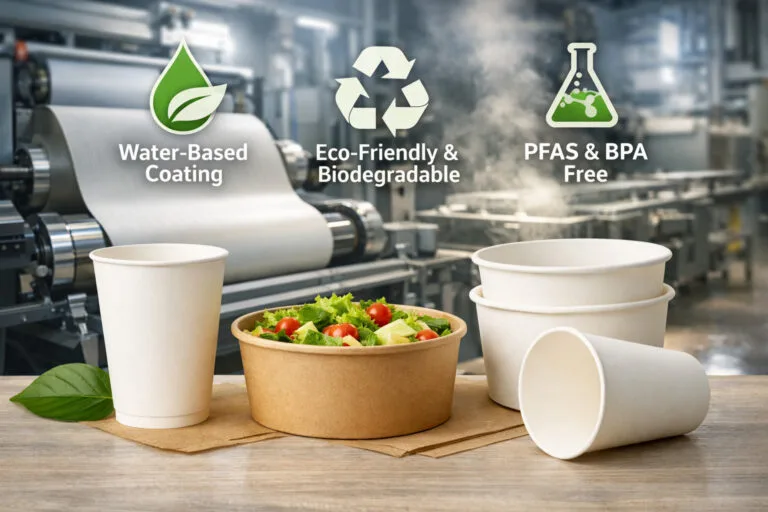
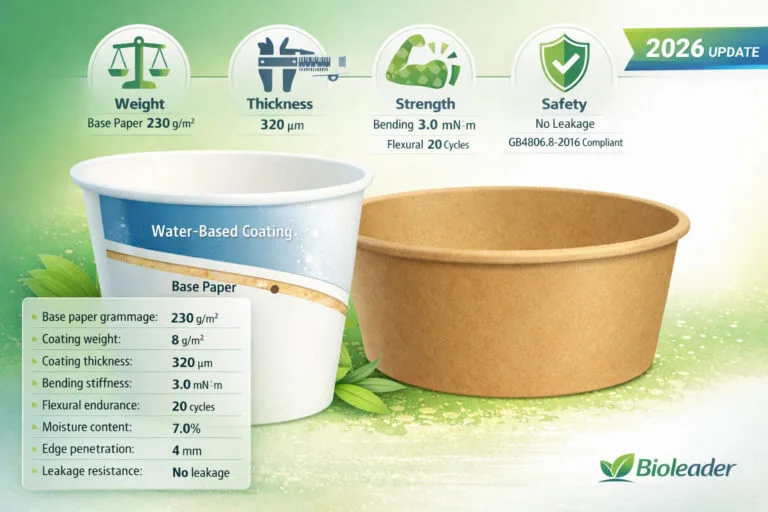
Actionable coverage of Biodegradable coating cups Water-based resin coatings: eco-friendly, biodegradable, compostable materials, performance data, and compliance under EN13432 & ASTM D6400. Includes BPI/TÜV references and Food-Contact Tested guidance for safe deployment. Buyer-focused: manufacturer insights, bulk/wholesale buying playbooks, OEM/ODM customization tips, full size range selection.
Biodegradable coating cups Water-based resin coatings — Quick Summary
  • Items displayed (articles): 12
  • Last updated: 2026-01-10
  • Includes test data, compliance guides, buyer FAQs, and real-world use cases.

Editor’s Picks: Top Biodegradable Coating Cups Water-based Resin Coatings Guides 2026

FAQ of Bioleader's Eco-friendly Disposable Tableware

1. What are sugarcane bagasse molded pulp trays made from?

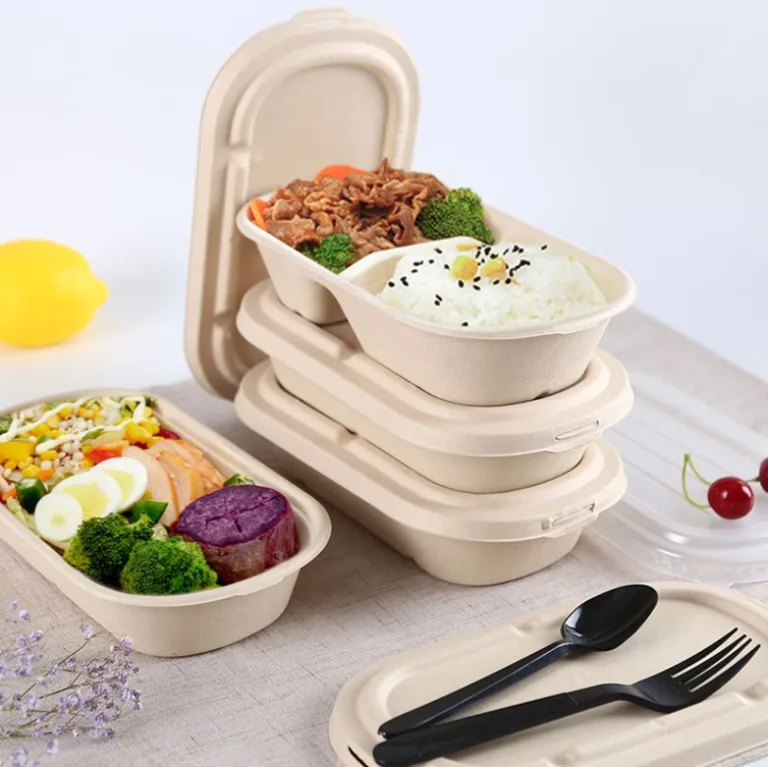
They are made from bagasse, the fibrous residue left after sugarcane stalks are crushed for juice. This agricultural waste is molded into strong, durable trays that are compostable, biodegradable, and plastic-free.

2. What materials are available for disposable food trays with lids?

Common materials include sugarcane bagasse, kraft paper, aluminum, PET, PP, and PLA. For eco-conscious businesses, bagasse and PLA trays are preferred due to their compostable and biodegradable properties.

Eco-Friendly, Compostable, and Biodegradable

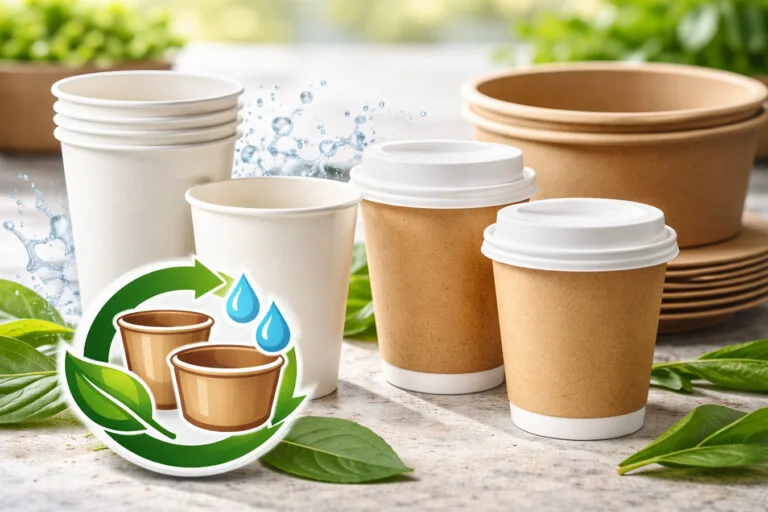
Our molded pulp trays are fully compostable and biodegradable — Biodegradable coating cups Water-based resin coatings. They naturally break down within a few months, supporting a circular economy and reducing landfill burden. This makes our sugarcane pulp trays an excellent choice for eco-conscious consumers and businesses looking to adopt sustainable practices.

3.1 EN13432 Certification: Compostability and Biodegradability in Packaging

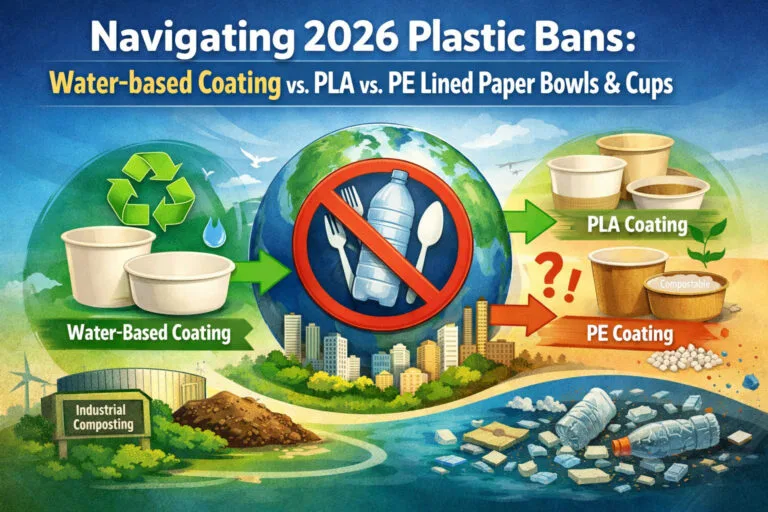
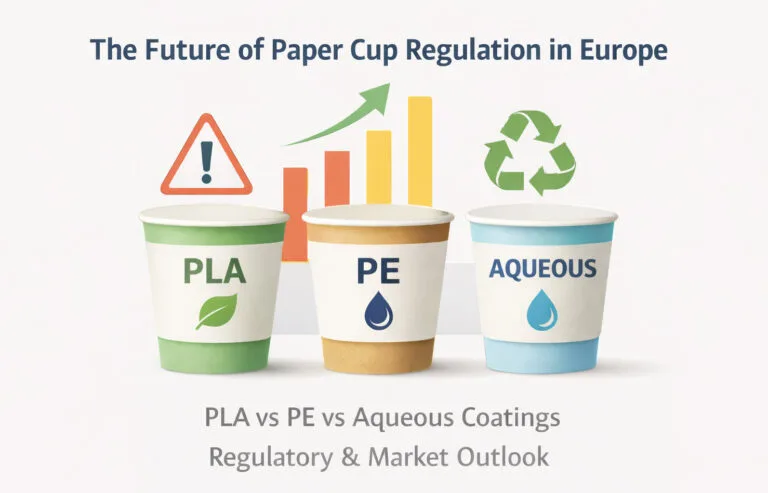
Din EN13432 Seek Lable The EN13432 standard is a European regulation that sets the criteria for the compostability and biodegradability of packaging materials. Under EN13432, packaging materials must decompose into natural substances within a set period (typically 12 weeks) when subjected to industrial composting , Biodegradable coating cups Water-based resin coatings. The material must also meet specific criteria regarding the absence of harmful residues in the compost. Water-based coatings are well-suited for meeting EN13432 certification requirements due to their biodegradable nature — Biodegradable coating cups Water-based resin coatings.

2.1 What is EPR and Its Impact on Packaging Manufacturers?

Extended Producer Responsibility (EPR) is an environmental policy approach that holds manufacturers responsible for the entire lifecycle of their products, particularly their packaging. The principle behind EPR is that producers are responsible for the collection, recycling, and disposal of the packaging material once the product reaches the end of its life. This policy has gained global traction, especially in the European Union and North America, as a means to reduce waste and promote recycling. EPR regulations force companies to rethink their packaging designs, focusing on recyclability, compostability, and the environmental impact of their materials.

Related Insights

🚀Ready to Go Green and Choose ?

Join the global movement toward zero-waste packaging.


Bioleader® offers:

  • 📦 Bulk order support & fast delivery

  • ✍️ Custom branding and OEM solutions

  • 🌍 Worldwide eco-packaging compliance

Get the Catalogue Products List  & Contact Us Now! 👉

Contact us Below

Click or drag files to this area to upload.You can upload up to 5 files.
The more details you share, the faster and more accurate our quotation will be.