Bagasse Plates Manufacturer: Expert Summary Guide | Bioleader® Guide

Actionable coverage of bagasse plates manufacturer: eco-friendly, biodegradable, compostable materials, performance data, and compliance under EN13432 & ASTM D6400. Includes BPI/TÜV references and Food-Contact Tested guidance for safe deployment. Buyer-focused: manufacturer insights, bulk/wholesale buying playbooks, OEM/ODM customization tips, full size range selection.
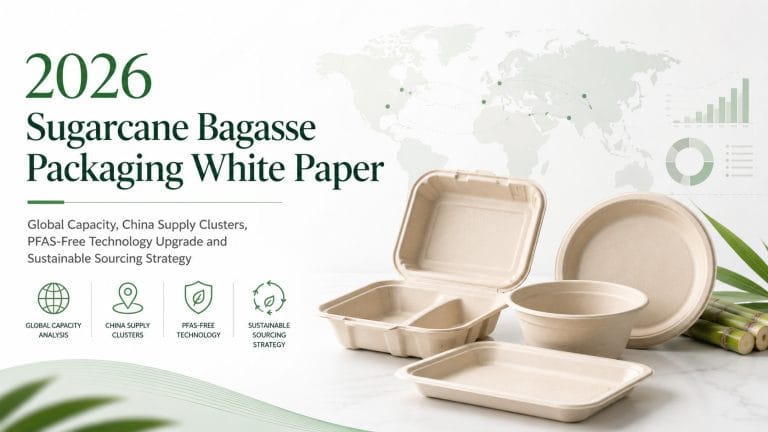
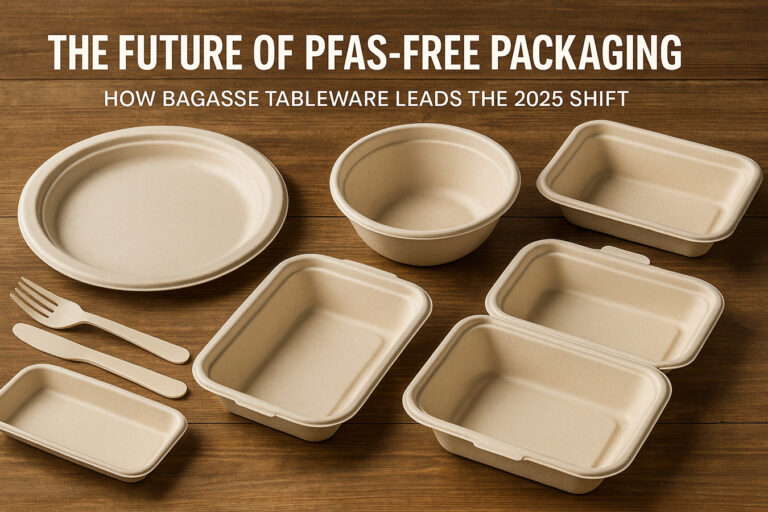
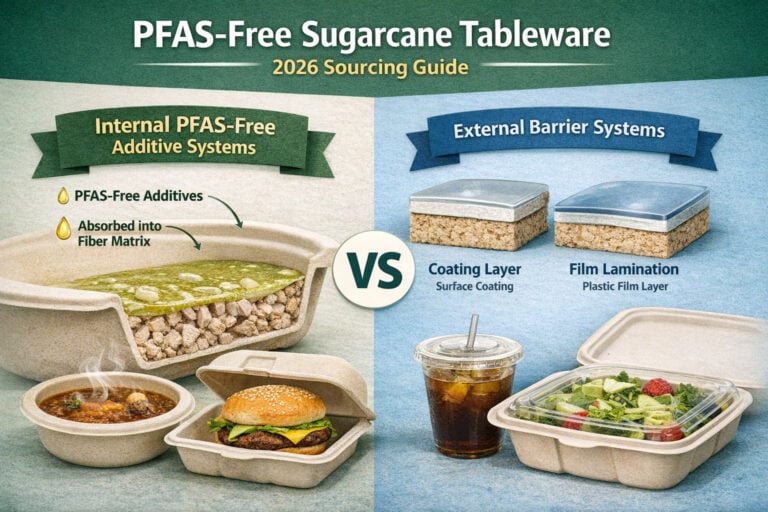
Quick Summary: PFAS-Free sugarcane tableware is now a procurement threshold rather than a sustainability label. For most hot takeaway and foodservice applications, high-performance internal additive systems offer the best balance of fluorine-free grease resistance, scalable production, compliance, and cost. Low-temperature internal additive systems remain suitable for cold-chain, ambient, and low-grease uses, while physical barrier systems such as lamination and surface coatings are now better reserved for niche high-barrier applications due to higher cost, added processing complexity, and greater repulpable and regulatory pressure.
bagasse plates manufacturer — Quick Summary
  • Items displayed (articles): 12
  • Last updated: 2026-03-19
  • Includes test data, compliance guides, buyer FAQs, and real-world use cases.

Editor’s Picks: Top Bagasse Plates Manufacturer Guides 2026

FAQ of Bioleader's Eco-friendly Disposable Tableware

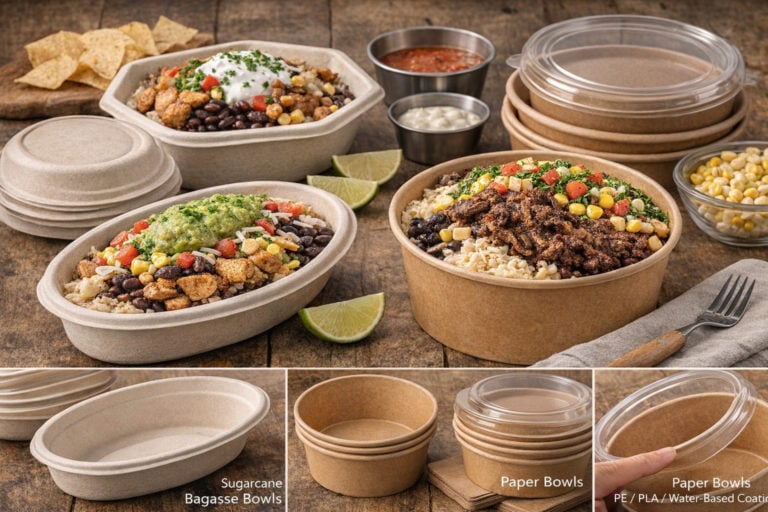
What are the sizes of these bowls?

The compostable bowls with lids can be found in different sizes bulging from 500ml to 1500ml (8oz to 48oz) to suit varying food portions.

Do the lids fit tightly?

Yes, The lids can be placed firmly on the containers ensuring no spillage while carrying or dragging around.

Can I have their logo printed on my souvenirs?

Of course, Yes. Such businesses have the option of having margarita salad bowls with their brand name on them or any other posters since we customize them. For any further details on branding options, you can reach us.

Comparative Life Cycle Assessment

A critical aspect of evaluating any product’s sustainability is its life cycle assessment (LCA) — bagasse plates manufacturer. Comparative LCAs have revealed that the environmental impact of biodegradable plates—whether made from bagasse, cornstarch, or other materials—is markedly lower than that of traditional ceramics or plastics. For example, a study comparing ceramic plates with corn-starch biodegradable plates found that ceramics, when used less than 50 times, had an environmental impact up to five times higher than that of single-use biodegradable options. This analysis underscores the efficiency of eco-friendly plates in reducing resource consumption and carbon emissions across their lifecycle.

Definition and Importance

Biodegradable plates are designed to break down naturally by microorganisms, such as bacteria and fungi — bagasse plates manufacturer. Unlike traditional plastic plates, which persist in the environment for hundreds of years, these eco-friendly plates decompose within months—often under industrial composting conditions — bagasse plates manufacturer. The transformation process reduces landfill burdens and minimizes harmful residues that can leach into soil and water systems. This attribute makes biodegradable plates not only an environmentally responsible choice but also a crucial component in the broader strategy of sustainable waste management.

Related Insights

🚀Ready to Go Green and Choose ?

Join the global movement toward zero-waste packaging.


Bioleader® offers:

  • 📦 Bulk order support & fast delivery

  • ✍️ Custom branding and OEM solutions

  • 🌍 Worldwide eco-packaging compliance

Get the Catalogue Products List  & Contact Us Now! 👉

Contact us Below

Click or drag files to this area to upload.You can upload up to 5 files.
The more details you share, the faster and more accurate our quotation will be.