FAQ of Bioleader's Eco-friendly Disposable Tableware
How long does it take for bio plastic cutlery to decompose?
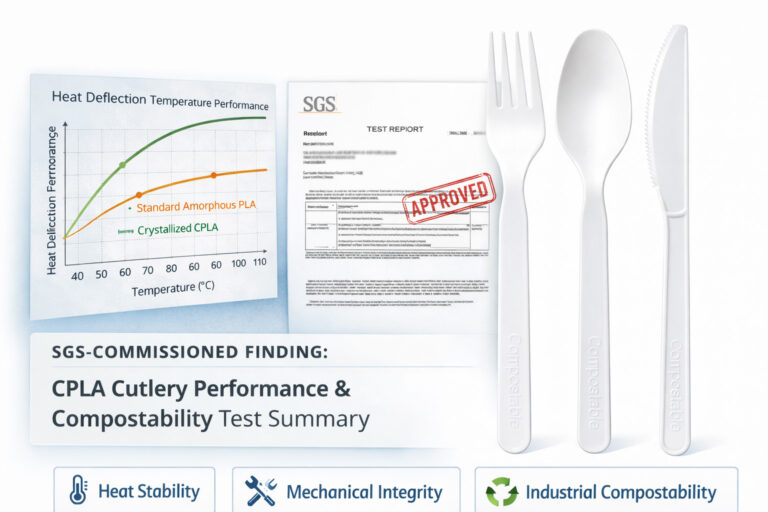
Under industrial composting conditions, bio plastic cutlery generally decomposes within 90 to 180 days, depending on the material and composting environment , ASTM compostability.
Is BPI compostable cutlery suitable for hot foods?
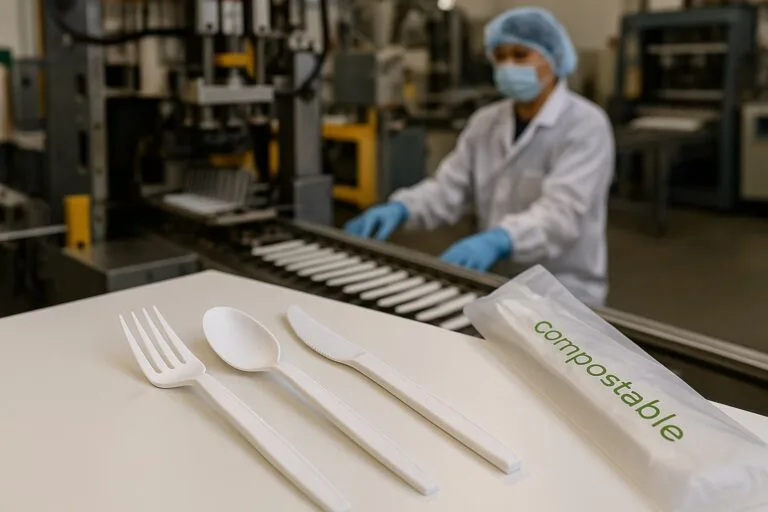
Yes, BPI compostable cutlery is designed for strength and durability, making it suitable for use with both hot and cold foods in restaurants, catering, and events — ASTM compostability.
How long does BPI compostable cutlery take to decompose?
Under commercial composting conditions, BPI compostable cutlery typically decomposes within 90 to 180 days, depending on local facility standards and materials used — ASTM compostability.
Table 1: Lab vs. Field Composting Performance (illustrative ranges)
Material / Format Lab (ASTM D6400/D6868) – Disintegration Window Field (Industrial) – Observed Window Operational Notes Bagasse clamshells & bowls ~90 days 90–120 days Reliable if not heavily coated; fragments screen cleanly PLA cold cups ~90 days 120–150 days Performs better in consistently thermophilic piles; nesting slows wetting Cornstarch cutlery ~90 days 120–160 days High stiffness slows disintegration; works if shred/chip pre-processing exists Kraft bowls with thin compostable lining ~90 days 120+ days (variable) Outcome depends on lining chemistry and thickness; edges and laminate seams are slow points Actionable takeaway: When evaluating SKUs, consider wall thickness, nesting behavior, and coating composition alongside the base material. The difference between passing and failing in the field can be as simple as adjusting a lining thickness or vent pattern. Buyer’s Dual-Layer Compliance Model Leading procurement teams now adopt a layered approach that treats lab validation and field validation as complementary risk controls.
Step 2: Field Testing Evidence
Request field trial summaries at industrial facilities or pilot windrows. At minimum: temperature/moisture logs, retrieval intervals, photographic evidence, residue weights, and operational comments. Checklist – Field Validation Site type and climate noted; season documented. Placement replicates realistic nesting/stacking.