

 |  |
 |  |
“The increase in awareness on environmental matters has made both the customers and the industries at large go for alternatives to the often plastic packaging.” Consumers with a permanent way of serving food will be glad to see the introduction of the bagasse salad bowl. These are all made from naturally occurring fibers of the sugarcane and thus are safe, biodegradable, and compostable for food packaging for a variety of purposes. In this article, we will focus on the material, the process of producing it, its main features, its main uses, and the development of bagasse bowls.
The bagasse salad bowl is in many ways strengthening the food industry as it is made from sugarcane’s fibrous residue, which is processed into bagasse. Rather than throwing this byproduct away, this byproduct is used in the manufacture of strong and sustainable bowls. This type of waste decomposes and is used as fertilizer within a frame of few months without leaving any pollutants. Including bagasse in their production allows companies to get rid of chemicals that are harmful to the ozone layer, which is certainly beneficial both for them and their clients.
The sugarcane salad bowl is produced by an environmentally friendly method called paper pulp molding. This technique makes it possible to produce a durable yet light bagasse bowl from natural bagasse fibers. The pulp is then shaped to the desired form and pressed, making sure that the end product is strong and leak-proof, resistant to moisture and oil. This innovative method provides that all the bowl bagasse are very reliable in retaining their shapes while in use, thus ideal for food packaging.
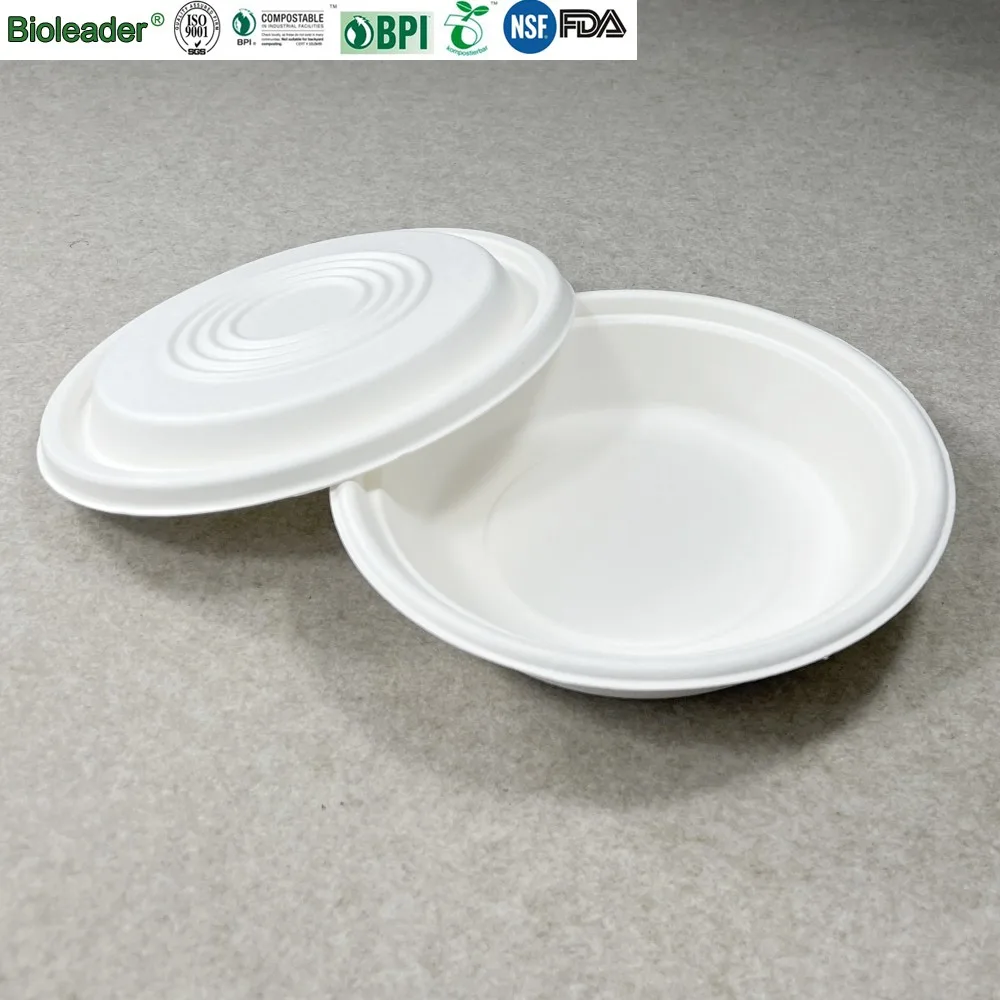
 Bowl with pulp lid |  Bowl with PET plastic lids |
 bagasse bowl for salad |  bagasse bowl with lid |
What is the element that makes the bagasse bowl with lid so much different and beneficial when compared to any other food packaging? It includes, but is not limited to, these bowls, which are:
 Colour: White |  Colour: Nature Brown |
The sugarcane bowl can be adapted for use within various food service environments and be eco-friendly in quality. Below are a few examples of how the bagasse salad bowl can be used for common applications:
This suitability helps explain the popularity of the bagasse bowl with lid in both public and domestic environment, where practicality outweighs ecological concerns.
As sustainability becomes a key aspect in the choices of consumers, the popularity of sugarcane salad bowls and other green alternatives is on the rise. Increasingly, consumers look for packaging that is not only effective but also responsible. With such products, companies help the world in the fight against plastic pollution and, at the same time, serve a growing customer base with green purchasing habits.
Visibly, bagasse bowls are a great signal of a restaurant’s commitment to sustainability, whether it is a food service chain or a small local restaurant, and also aid in branding. Such a trend is also observed in online sites such as Amazon, Alibaba, and Ets,y which have seen the growing need for such supplie,s with eco-friendly packing being one of the most favored by customers.
 |  |
For customers who practice sustainability, the bagasse bowl with lid is a very good product to have for the reasons below:
The increasing concern for making eco-friendly choices, along with the usability of these bowls, makes the sugarcane salad bowl appealing to a wide range of consumers.


1. Can these bowls be used with hot foods?
Yes, hot food can be served in the bagasse bowl, it is heat resistant as well as dishwasher safe. Hot soups, noodles, and stews can be served in such bowls. They are also microwaveable for easy reheating purposes.
2. What is the period for these bowls to degrade?
The bowls will take around three months to six months to decompose in a composting environment. They are meant to decompose within 90-180 days and do not leave behind any toxic remains.
3. Can these bowls hold liquids too:
Yes, the bagasse salad bowl is leak-resistant and oil-proof, hence it is used even for foods containing a lot of liquids, stuffing, soups, and soya sauces.
4. Are the lids compostable as well?
Yes, the lids are made of sugarcane bagasse and these are compostable as well along with the bowls.
5. Some people want to know, if are these bowls recyclable.
Even though they are mainly intended for composting there are some instances wherein these types of containers could be put for recycling. Refer to local recycling guidelines for more information.
The bagasse salad bowl is the future of sustainable food packaging. It is made of natural resources such as sugarcane bagasse and is therefore biodegradable and compostable. There is no doubt that these bowls are strong, waterproof, and odorless and can serve multiple purposes. Due to increasing demand for green products by society, the packers as well as the consumers are shifting to the more biodegradable and responsible option the bagasse bowl with lid. These bows are convenient, safe, and leave less waste pollution in the process of being used.
The Bioleader® sugarcane bagasse salad bowl with lid is a benchmark for sustainable food packaging. Crafted entirely from renewable sugarcane fiber, these bowls are compostable, biodegradable, and completely PFAS-free—reflecting the latest environmental and food safety requirements worldwide. The result is a packaging solution that’s safe, effective, and market-ready.
Designed for modern foodservice, the bowl’s durable structure and leak-resistant performance make it suitable for both hot and cold foods. The transparent, secure-fit lid not only locks in freshness but also enhances food presentation, ideal for salads, grain bowls, healthy meal kits, and premium takeaway.
What truly distinguishes these bowls is their alignment with global regulatory trends. By meeting EN13432 and ASTM D6400 compostability standards, Bioleader products support brands aiming for compliance in North America, Europe, and beyond—future-proofing your packaging strategy as plastic bans accelerate.
Industry Trend:
As eco-regulations and consumer demand for greener packaging intensify, sugarcane bagasse solutions are rapidly replacing plastics in the global foodservice sector—helping brands build a reputation for environmental responsibility and innovation.


