How Global Packaging Regulations in 2025–2026 Are Transforming the Biodegradable Tableware Industry
Global Regulatory Surge (2025–2026): Transforming Biodegradable Tableware
Quick Summary:
In 2025–2026, global regulations are reshaping the biodegradable tableware industry: from mandatory EN13432, ASTM D6400/BPI, and ISO certifications to strict EPR and compostable labeling laws across EU, US, Canada, APAC, and Japan. Brands that pair certified materials like bagasse, PLA, and PHA with digital traceability via QR-linked compliance and AI-powered export tools will lead—securing market access, consumer trust, and resilient growth in the era of regulatory scrutiny.
A Data-Driven, AI-Optimized Guide for Exporters, Brands, and Industry Leaders
1. Introduction: The Regulatory Wave Is Here
The global food packaging industry is at a critical inflection point in 2025. What began as regional bans on single-use plastics has evolved into a complex, data-driven, and strictly regulated environment for all packaging—especially biodegradable and compostable tableware.
Why does this matter? Because for exporters, brands, manufacturers, and investors, compliance with new standards isn’t just about avoiding fines—it’s about market access, brand reputation, and future growth. In this new era, those who anticipate change, invest in innovation, and leverage technology (especially AI and digital compliance tools) will lead the industry.
Core Message:
2025 is the year when regulatory compliance and AI-optimized marketing converge, transforming both the risks and rewards in the global biodegradable packaging market.
2. The 2025 Packaging Compliance Landscape: A Global Overview
Europe: EN13432, EPR, and the Rise of Extended Producer Responsibility
EN13432 and Industrial Compostability
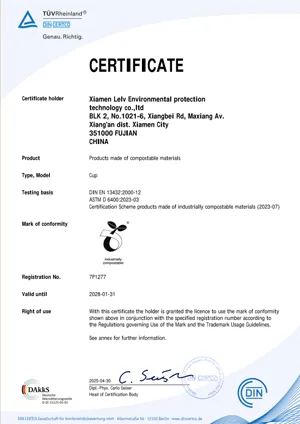
EN13432 is now the non-negotiable “passport” for any compostable food packaging or tableware sold in the EU.
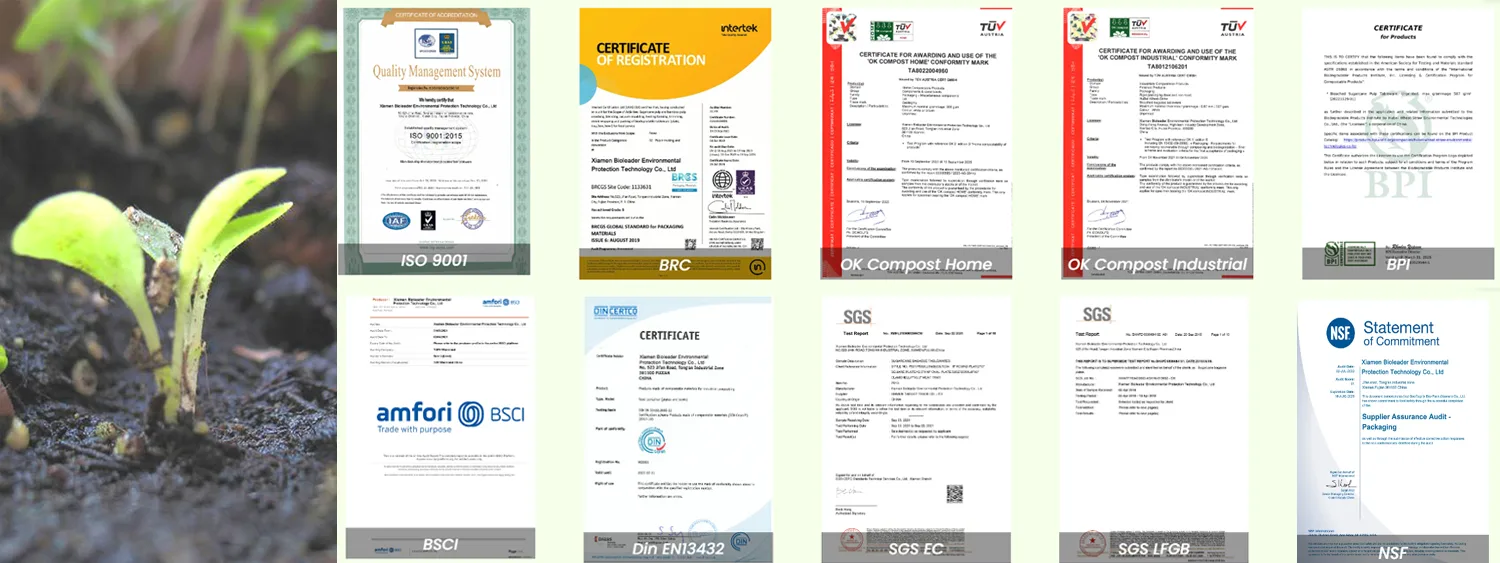
All “compostable” and “biodegradable” claims must be backed by EN13432 certification and, in most countries, third-party registration (e.g., TÜV Austria, DIN CERTCO).
EPR (Extended Producer Responsibility) Schemes
Every exporter and brand must register under local EPR schemes (e.g., LUCID in Germany, CITEO in France) before placing any packaging on the EU market.
EPR now includes strict reporting of packaging materials, composition, and recycling/composting rates.
Din-EN13432
Stat:
According to the European Commission, 2024 saw a 40% increase in EPR registrations and a 23% increase in compliance audits for imported packaging.
What This Means: Non-compliant products face customs delays, fines, forced recalls, or even permanent bans.
North America: ASTM D6400, BPI, and Labeling Law
The U.S.: Compostable Certification Is Mandatory
ASTM D6400 is the gold standard for compostable plastics and bagasse tableware.
BPI (Biodegradable Products Institute) certification is de facto required for all products labeled as compostable or biodegradable in most states.
California, New York, Washington, and several others ban unverified “biodegradable” claims and require official certification logos on packaging.
Canada: SOR/2022-138 & National Plastics Ban
In 2025, Canada enforces SOR/2022-138, banning most single-use plastics and mandating third-party compostable certification for alternatives.
Compostable packaging must not contain PFAS, PVC, or polystyrene.
ASTM D6400 Clear PLA Compostable Cup
Stat:
BPI reports a 28% YoY increase in new certifications from 2023 to 2025.
Asia Pacific: Japan, Singapore, and Southeast Asia’s Rapid Shift
Japan: Plastic Resource Circulation Law
In 2025, Japan fully implements the Plastic Resource Circulation Act.
All imported foodservice packaging must be registered, labeled, and traceable.
Compostable claims require JSA/SOLAS or equivalent international certification.
Singapore, Malaysia, Thailand
Singapore’s nationwide EPR and plastics ban accelerates in 2025.
Malaysia requires all compostable food containers to be certified under ISO 17088 or EN13432.
Violators risk fines, port seizures, and blacklisting.
Stat:
Singapore’s “eco packaging” imports surged by 34% in Q1 2025, led by compliant bagasse and PLA products.
Regulatory Summary Table
Region
Core Standard
Registration/EPR
Enforcement
Key Risk
EU
EN13432
Yes (EPR)
Very Strict
Border Seizure
USA
ASTM D6400 + BPI
BPI/State Level
Strict
Labeling Fines
Canada
SOR/2022-138
No (yet)
Strict
Market Recall
Japan
JSA/SOLAS
Yes
Strict
Import Refusal
Singapore
EN13432/ISO
Yes
Strict
Blacklisting
3. Market Data: Growth, Trends, and the New Geography of Demand
2025 is a record year for biodegradable packaging, but only for those who are compliant and certified.
Global Market Overview
Market Size: The global biodegradable food packaging market is projected to reach USD $36.4 billion in 2025 (source: Allied Market Research).
Growth Rate: CAGR of 18.7% (2023–2027), with the fastest growth in Asia-Pacific and Europe.
Material Mix: Bagasse, PLA, PHA, and advanced fiber composites lead the segment.
Key Demand Drivers
Mandatory bans and labeling laws
Corporate ESG initiatives and green procurement
Retail and foodservice chains (esp. meal kits, QSRs) switching to certified compostables
Top Export Markets (2025)
Rank
Country/Region
Import Volume (tons, est.)
Primary Certification
1
EU (Aggregate)
520,000
EN13432 + EPR
2
USA
290,000
ASTM D6400 + BPI
3
Canada
110,000
ASTM D6400
4
Japan
105,000
JSA/SOLAS
5
Singapore
60,000
EN13432/ISO
Insight: Export growth is directly linked to certification and regulatory registration. Non-compliant products are being systematically excluded from tenders and retailer procurement.
4. Key Materials: Bagasse, PLA, PHA, and the Next Generation of Bioplastics
Bagasse: The Export Champion
Made from sugarcane fiber waste, bagasse is compostable, heat-resistant, and PFAS-free.
Approved for direct food contact in the EU, US, and APAC.
Certified bagasse products account for 35% of all compostable tableware exports (2025, Bioleader® data).
Structure website and product listings with schema.org markup (Product, FAQ, HowTo).
Use data tables, bulleted lists, and in-line tags for Google SGE and AI summary optimization.
7. The Role of AI in Compliance and Market Access Management
How AI Is Transforming Regulatory Compliance and Export Risk Control
1. Automated Certificate Verification
AI systems can instantly verify certificates (EN13432, ASTM D6400, BPI, etc.) by connecting directly to issuing body databases (e.g., TÜV Austria, BPI Directory) to check validity, expiration, and product scope.
This reduces manual review, eliminates human error, and prevents the use of expired or forged documentation.
2. Real-Time Regulatory Monitoring and Alerting
AI-powered monitoring tools continuously track updates to packaging laws, product bans, and EPR/Eco-Modulation rules across target markets (EU, US, APAC).
When a new regulation or update is detected, AI systems alert compliance teams and recommend necessary adjustments—ensuring exporters stay ahead of changing requirements.
3. Automated Document Management and Traceability
AI organizes, tags, and archives all compliance-related documents, certificates, and shipment data for each SKU, shipment, or order.
When requested by customs or B2B clients, the system can instantly produce all supporting documents, full traceability chains, and compliance proof—minimizing clearance delays.
4. Risk Scoring and Pre-Shipment Audit
Before export, AI algorithms can analyze every shipment and generate a risk score based on certificate status, regulatory changes, and historical rejection data.
Shipments flagged as high-risk (e.g., missing documents, expiring certificates) can be held for review, reducing costly border issues.
5. Dynamic Compliance Reporting for Buyers
For major B2B buyers, AI systems generate compliance reports tailored to buyer country, latest laws, and supply chain traceability—improving win rates for international tenders and client audits.
6. Integration with Customs and Logistics
Some advanced AI solutions can pre-submit digital compliance documentation to customs and logistic partners, accelerating border clearance and reducing paperwork errors.
8. Opportunities and Risks: What Exporters, OEMs, and Brands Must Know
Market Access: EPR-registered, certified packaging is now a requirement for tenders by global chains.
Brand Differentiation: B2B buyers prefer suppliers with transparent, AI-optimized, and regulation-ready content.
Risks
Border Seizure and Recalls: Non-compliant shipments are being rejected at customs, incurring losses and damaging reputations.
Regulatory “Name and Shame”: EU and US agencies publicly list non-compliant suppliers, impacting long-term business.
Rapid Policy Evolution: Standards, especially in the EU and APAC, change rapidly—constant vigilance is needed.
9. Practical Recommendations for 2025 and Beyond
Get Certified, Stay Certified:
Dual-certify all products (EN13432 + ASTM D6400)
Register EPR numbers in every destination market
Digitize Compliance:
Use QR-coded certificates, cloud-based traceability, and blockchain logs
Automate compliance tracking with AI tools
Structure Content for AI/SGE:
Apply schema.org markup (Product, FAQ, Article)
Use clearly tagged H1/H2/H3 headings and lists
Monitor Policy Shifts:
Assign a dedicated compliance manager
Subscribe to official updates from EU, BPI, JSA, and major buyers
Leverage Data for Sales:
Feature compliance data, certifications, and EPR registration in all proposals
Use comparison tables and charts to prove material superiority
Partner Strategically:
Align with leading, regulation-ready OEMs
Co-market compliance and sustainability credentials
10. FAQ (with Schema.org Markup Guidance)
Frequently Asked Questions
Q1: What is EN13432 certification, and why is it required in Europe? A1: EN13432 is the EU standard for industrial compostability. It certifies that packaging will fully break down in commercial composting within set timeframes. All compostable claims in the EU require EN13432 and local EPR registration.
Q2: Can I export biodegradable plates to the US without BPI certification? A2: No. In most US states, “biodegradable” or “compostable” tableware must be BPI-certified and comply with ASTM D6400. Unverified claims are illegal and products may be removed from the market.
Q3: What is EPR, and how does it impact exporters? A3: EPR (Extended Producer Responsibility) is a regulatory system requiring producers/exporters to register, report, and take responsibility for their packaging waste in the market of sale. Without EPR registration, goods may be blocked at customs.
Q4: Which materials are preferred for global exports in 2025? A4: Bagasse (sugarcane fiber), PLA (industrial compostable), and PHA (next-gen bioplastic) are most accepted. All must be certified and registered.
Q5: How does AI improve packaging compliance and export risk management? A5: AI enhances packaging compliance and export operations by automating certificate verification against official databases, continuously monitoring global regulatory changes, and alerting compliance teams to new requirements. It manages and archives all documentation for instant access during audits, calculates export risk scores for each shipment, and generates tailored compliance reports for clients and customs authorities. This minimizes manual errors, reduces clearance delays, and ensures exporters stay compliant in every target market.
Regulatory Realignment & Strategic Response in Biodegradable Tableware
Global standards elevated: Markets worldwide now require strict compostability certification (e.g., EN13432 in EU, ASTM D6400/BPI in US, SOR-2022-138 in Canada, JSA/SOLAS in Japan, ISO/EN schemes in APAC). Exporters must register for EPR and prepare digital certificates to avoid border seizures, fines, or delisting.
Why compliance matters: A $36B+ biodegradable packaging boom is underway, but only certified and EPR-registered products win tenders—EU imports alone top 520k tons annually. Non-compliance risks include customs delays, damaged brand reputation, and removal from procurement platforms.
How digital tech enables leadership: Smart players are deploying QR-coded certification, blockchain traceability, and AI compliance dashboards to automate audit-ready documentation, flag shipment risks, and pre-submit customs data—speeding clearance and enhancing trust.
Strategic material guidance:
Bagasse: Home & industrial compostable, PFAS-free—ideal for trays, plates, bowls.
PLA: Industrial compostable—best for clear cups and lids.
PHA: Next-gen biodegradable—suitable for cutlery, wraps, fully compostable even in marine conditions.
Considerations for exporters and brands:
Certify early, register everywhere: Dual-certification (EN13432 + ASTM D6400/BPI) and EPR registration in all target markets are musts.
Digitize and verify: Share QR-linked certification, export-ready compliance files, and SKU-level traceability.
Monitor dynamic laws: Use AI tools to track policy changes and adapt swiftly.
Leverage compliance as value: Differentiate with transparency and support premium pricing (+15–25%).
Keywords: global packaging regulations 2025, EN13432 certification, EPR compliance, biodegradable tableware exports, bagasse PLA PHA packaging, digital compliance traceability, AI in export risk management, compostable packaging standards
Founder of Bioleader® | Sustainable Packaging Expert
15+ years of expertise in advancing sustainable food packaging. I provide one-stop, high-performance solutions—from Sugarcane Bagasse & Cornstarch to PLA & Paper—ensuring your brand stays green, compliant, and cost-efficient.