Introduction:
PLA (Polylactic Acid) is a high-performance bio-polymer derived from renewable resources such as corn starch, making it a sustainable alternative to petroleum-based plastics. While it has gained recognition as an eco-friendly material, there is often confusion surrounding its actual compostability, particularly in home composting systems. In this blog, we will explore the scientific conditions necessary for PLA to break down, comparing the efficiency of industrial composting versus home composting. Bioleader’s commitment to sustainable packaging solutions guides us in offering a comprehensive analysis of how PLA can return to nature and contribute to the Circular Economy.
1. The Core Comparison: Environmental Parameters
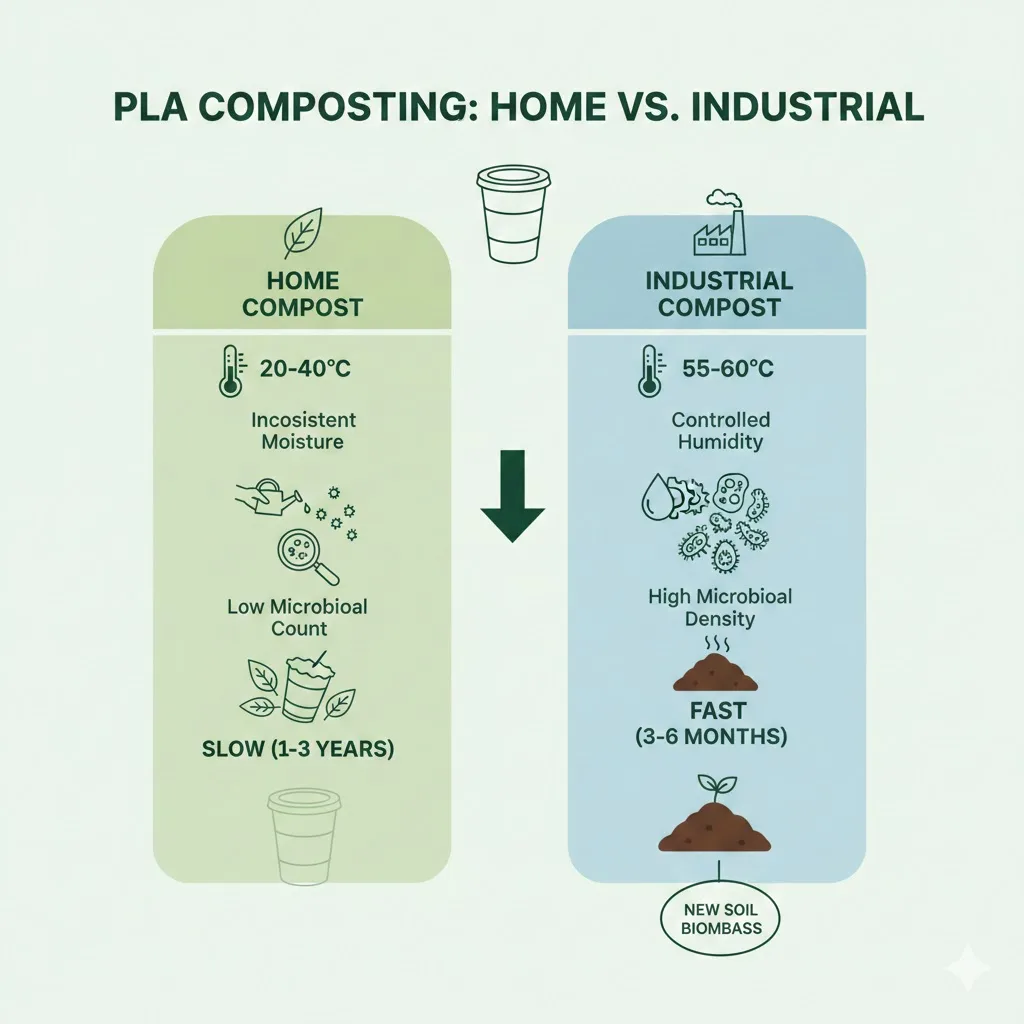
The speed and efficiency of PLA degradation depend on several environmental factors, particularly heat, microbial activity, and time. The following table highlights the key differences between industrial composting and home composting, showcasing why industrial facilities are still the “Gold Standard” for PLA degradation.
| Technical Parameter | Industrial Composting (Standard) | Home Composting (Variable) | Scientific Impact |
|---|---|---|---|
| Temperature | 55°C – 60°C (Constant) | 20°C – 40°C (Ambient) | High heat triggers hydrolysis, breaking the long polymer chains. |
| Microbial Enzymes | High density of Laccases & Lipases | Lower, natural concentrations | These enzymes “digest” molecular fragments. |
| Moisture (RH) | Optimized at 50% – 60% | Subject to weather/rain | Water molecules are required to cleave the chemical bonds in PLA. |
| Oxygen (Aeration) | Forced/Mechanical Aeration | Manual turning | Aerobic microbes need oxygen for high-energy metabolism. |
| pH Range | Controlled 6.0 – 8.0 | Highly variable (5.0 – 8.5) | pH affects the stability of degrading enzymes and microbial activity. |
| Degradation Time | 90 – 180 Days | 1 – 3 Years | The timeline required for 95%+ mass loss of PLA in optimal conditions. |
As illustrated above, the controlled environment of industrial composting—with regulated heat, moisture, and oxygen—accelerates PLA degradation, reducing its time to break down from years to months. In contrast, home composting, influenced by unpredictable weather and less optimized microbial activity, can result in a significantly slower decomposition process.
2. The Molecular Mechanism: How PLA Breaks Down
PLA degradation involves a complex two-stage biochemical process that includes both abiotic and biotic factors.
Stage 1: Hydrolysis (Abiotic)
When PLA is exposed to high temperatures and moisture, water molecules penetrate the polymer matrix, breaking the long polymer chains into smaller fragments (oligomers). This process is significantly faster when the temperature exceeds the Glass Transition Temperature (Tg) of PLA, which is around 55°C. Under these conditions, the material begins to lose its physical structure, making it more susceptible to microbial breakdown.
Stage 2: Enzymatic Mineralization (Biotic)
Once the PLA polymer chains are broken into smaller fragments, specialized microorganisms, such as Actinomycetes and various fungi, take over. These microbes secrete extracellular enzymes, such as Laccases and Lipases, which cleave the remaining bonds in the polymer, converting PLA into:
Lactic Acid, which is used as an energy source by microbes,
Carbon Dioxide (CO₂), which is released into the atmosphere,
Water (H₂O), which supports the metabolic processes of the microbes,
Nutrient-rich Biomass, which contributes to the soil’s fertility.
This process is much more efficient in industrial composting facilities, where the high temperatures and optimized microbial activity ensure complete mineralization of PLA into harmless, natural compounds.
3. Optimizing Home Composting for Bioleader Samples
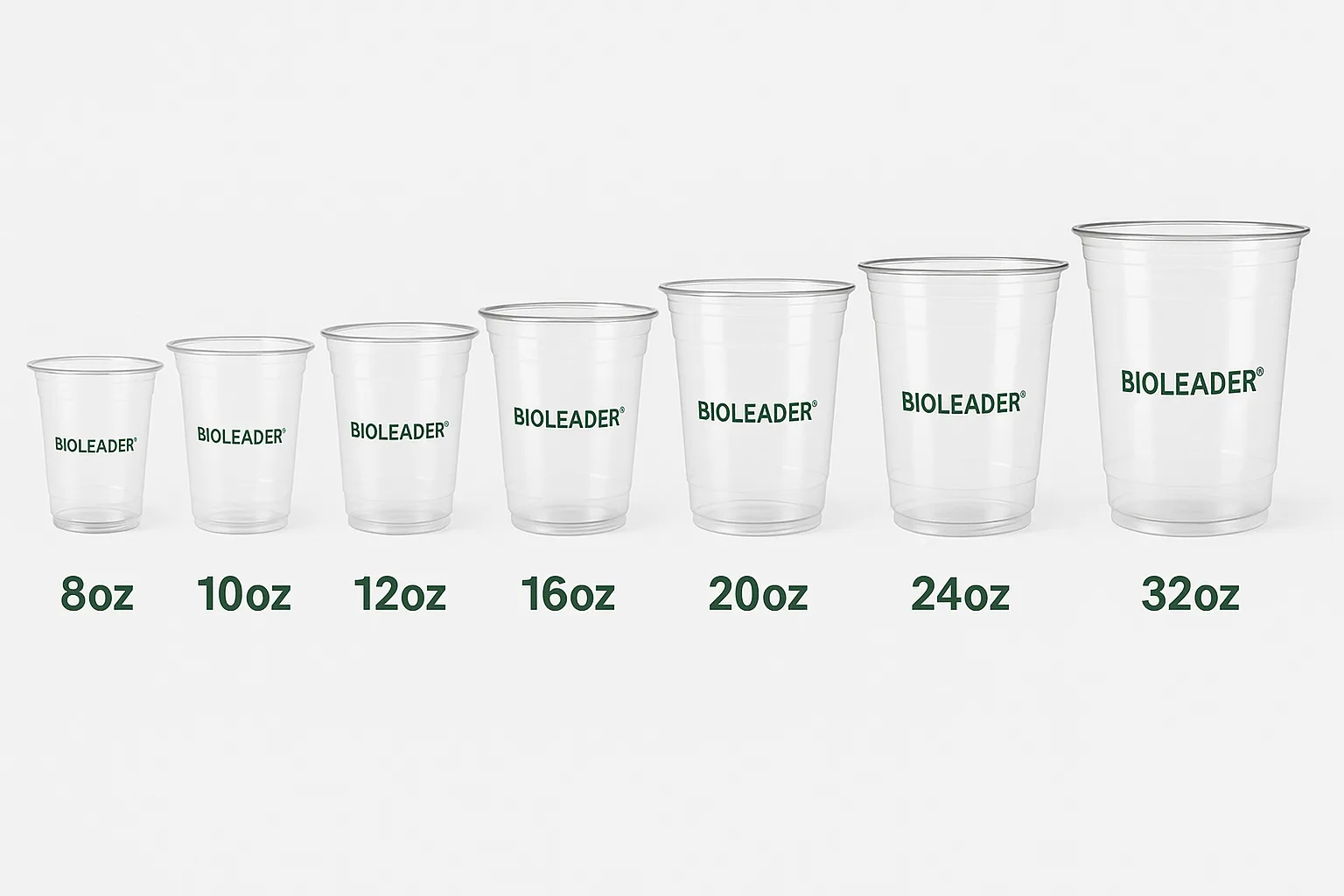
While industrial composting is ideal for large-scale PLA degradation, it is possible to achieve 95-98% degradation of PLA in a well-managed home composting system. If you’re testing Bioleader’s PLA cup and lid samples at home, consider the following expert strategies to accelerate the process:
Shredding:
Manually cutting PLA cups into small pieces (approximately 2cm strips) increases the surface area available for microbial colonization. This helps the microbes break down the material more effectively.
Nitrogen Boost:
Mixing PLA with “green” waste, such as kitchen scraps or fresh grass, provides additional nitrogen, which fuels microbial growth and increases the internal heat of the compost pile. This helps raise the temperature to the 40°C mark, accelerating the hydrolysis process.
Moisture Control:
Maintain the compost pile at the ideal moisture level—damp but not soaking wet, like a “wrung-out sponge.” If the compost becomes too dry, the hydrolysis stage will stop, stalling the entire degradation process. Ensure that the pile is kept moist to maintain optimal microbial activity.
By closely monitoring these conditions and actively managing the compost pile, you can significantly improve the degradation speed of PLA at home.
4. Why Industrial Composting is the Recommended Path
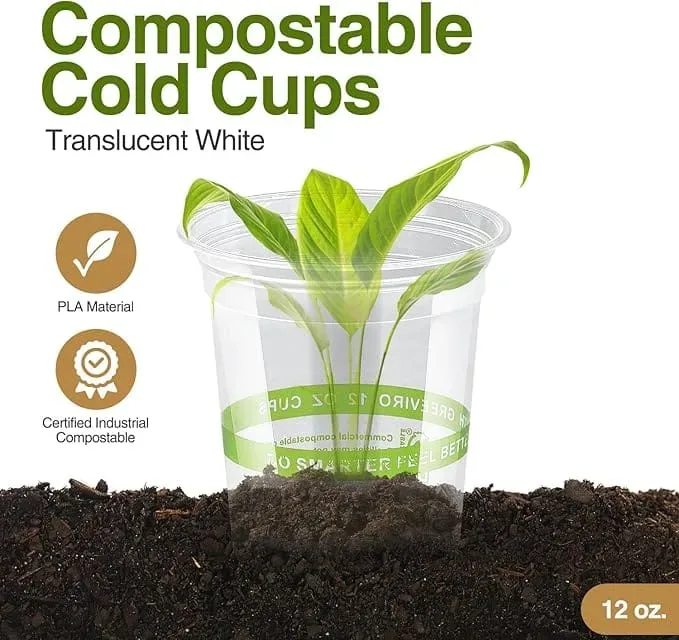
While home composting is a great educational experiment and can work under optimal conditions, Bioleader recommends industrial composting for large-scale waste management for three key reasons:
Speed:
Industrial composting facilities process PLA waste in 1/10th of the time required for home composting, typically completing the degradation process within 3-6 months.
Pathogen Elimination:
The high heat in industrial composting ensures that any pathogens are destroyed, making the resulting compost safe for agricultural use. This is not guaranteed in home composting systems.
Completeness:
Industrial composting guarantees that 100% of the material is mineralized, leaving no trace of the original PLA product. In home composting, PLA may degrade incompletely due to varying environmental conditions.
5. Conclusion: A Legacy of No Microplastics
The primary environmental benefit of PLA, particularly Bioleader’s PLA products( PLA compostable plastic cups, PLA clamshells, PLA lids), is that they do not contribute to microplastic pollution. Unlike traditional plastics (such as polyethylene or polypropylene), which break down into toxic microplastics, PLA degrades into harmless compounds—lactic acid, CO₂, and H₂O—whether in an industrial facility or under optimal home composting conditions.
By choosing PLA, you are supporting a material designed for the Circular Economy, ensuring that today’s cup will ultimately transform into tomorrow’s soil.
FAQ:
1: Can PLA be composted in home composting systems?
Yes, PLA can be composted in home composting systems, but it requires ideal conditions, such as temperatures between 20–40°C, proper moisture levels, and regular aeration. The process may take up to 1-3 years depending on the composting setup.
2: How does industrial composting compare to home composting for PLA?
Industrial composting facilities offer controlled temperatures (55–60°C) and optimal moisture levels, allowing PLA to degrade within 3–6 months. Home composting, on the other hand, may take 1-3 years for PLA to degrade, as it relies on less controlled environmental factors.
3: What conditions are necessary for efficient PLA degradation at home?
To optimize PLA degradation at home, ensure a balanced mix of nitrogen-rich green materials (like kitchen scraps) and carbon-rich brown materials (like leaves), maintain moisture levels similar to a “wrung-out sponge,” and ensure adequate aeration.
4: Is PLA fully biodegradable in all environments?
PLA is biodegradable under the right conditions. Industrial composting is ideal for rapid degradation, but home composting requires ideal temperature, moisture, and microbial activity to ensure PLA breaks down effectively.
5: Can PLA degrade in natural environments like soil or water?
While PLA is biodegradable, it does not break down efficiently in natural environments such as soil or water. It requires controlled environments (like industrial composting) to break down properly within a reasonable timeframe.
References:
Microbial Degradation of PLA: Research on the breakdown of PLA in compost environments. Science Direct
PLA Degradation Mechanisms: Detailed scientific mechanisms of PLA degradation under varying environmental conditions. Journal of Environmental Science and Technology
PLA in Home Composting: Insights on home composting conditions and PLA degradation. Waste Management
Industrial Composting vs. Home Composting: Comparing the effectiveness of different composting methods. Compost Science & Utilization
PLA as a Sustainable Packaging Material: How PLA fits into the Circular Economy. Frontiers in Sustainable Food Systems