English
  Français
  Español
  Português
  Deutsch
  العربية
  Italiano
  Nederlands
  Русский
  日本語
日本語 Why Bulk Buying Bagasse Trays Matters in 2025
In 2025, the global foodservice packaging market is undergoing a dramatic transformation. Plastic bans across the EU, the United States, Canada, and Asia-Pacific are forcing businesses to rethink their packaging strategy. What was once considered optional is now a requirement: food packaging must be sustainable, compostable, and safe for both consumers and the environment.
Bagasse trays, made from sugarcane fiber, have emerged as one of the strongest contenders to replace traditional plastics and Styrofoam trays. Unlike petroleum-based materials, bagasse is renewable, compostable, and highly functional. It resists heat, absorbs grease, and can even be microwaved or refrigerated without compromising integrity.
For buyers, especially importers, wholesalers, and distributors, the challenge lies not in whether to adopt bagasse trays, but how to buy them in bulk without overpaying or sacrificing quality. The sourcing landscape is filled with risks: uncertified suppliers, inconsistent product quality, hidden shipping costs, and unrealistic promises about minimum order quantities.
Bulk purchasing is not simply about lowering the unit price; it’s also about aligning with regulations, ensuring reliable supply, and protecting brand reputation. A certified compostable bagasse trays manufacturer in China, for example, can deliver consistent quality at scale, but only if the buyer knows how to evaluate certifications, negotiate order terms, and optimize container shipments.

The Rising Importance of Compostable Bagasse Trays
The demand for eco-friendly trays is not limited to high-end restaurants. Fast food chains, schools, hospitals, airlines, and catering businesses all require sustainable solutions. In particular, bagasse compartment trays bulk supplier options have grown in popularity because they can serve multiple food items without leakage or contamination, making them ideal for institutional and takeaway dining.
According to market studies, the demand for eco friendly bagasse trays with lids wholesale is growing at double-digit rates annually. Buyers recognize that trays with secure lids are vital for food delivery platforms like Uber Eats, DoorDash, and GrabFood, where packaging performance directly impacts customer satisfaction.
At the same time, regulators are paying closer attention to the materials used in disposable food packaging. Products like ASTM D6400 bagasse tray manufacturer solutions and EU certified compostable bagasse trays supplier models are now a baseline expectation for entry into many markets. Buyers who ignore certifications may find their imports rejected at customs or banned from retail shelves.
Thus, 2025 is not just about sourcing trays at the best price. It’s about combining compliance, cost efficiency, and product performance into one coherent purchasing strategy.
The Cost-Saving Potential of Bulk Orders
Why should buyers consider bulk purchases? The answer lies in economies of scale. For example:
MOQ (Minimum Order Quantity): A typical certified compostable bagasse trays factory in China requires a minimum of 50,000 pieces per SKU. While this may seem high, consolidating multiple SKUs into a single 20ft container allows buyers to diversify product lines while lowering per-unit costs.
Shipping Optimization: A fully loaded container reduces freight costs by spreading them over more units. Many buyers who attempted small shipments discovered that logistics often cost more than the trays themselves.
Supplier Priority: Bulk orders receive priority in production schedules, ensuring faster lead times and more reliable supply.
A bagasse food service trays bulk purchase can reduce costs by 15–25% compared to piecemeal sourcing. However, savings only materialize when buyers choose certified suppliers, plan shipments strategically, and avoid the top 10 mistakes we’ll explore in the next section.
Practical Applications of Bagasse Trays in 2025
Bagasse trays are increasingly replacing plastic and Styrofoam in mainstream foodservice. Beyond being compostable, they solve practical challenges—heat, grease, storage, and transport—that businesses face daily. Below are the most important application scenarios and procurement insights for bulk buyers.
Food Delivery & Takeaway
The food delivery market is expected to exceed $500 billion by 2030, driven by apps like Uber Eats, Deliveroo, and DoorDash. In this environment, packaging is no longer a background detail—it defines customer experience.
Eco friendly bagasse trays with lids wholesale have become the default choice for restaurants and cloud kitchens because they:
Prevent leaks during long deliveries
Keep meals hot without deforming
Offer secure lid closures that reassure customers
💡 Buyer Tip: Always request a leak-resistance and heat-test report from your supplier if your menu includes oily dishes, curries, or soups. Poor packaging can turn a five-star review into a complaint within minutes. Partnering with a certified supplier also ensures your trays meet food delivery platform requirements.

Catering & Large Events
Large-scale catering services, from corporate conferences to weddings, require trays that can hold diverse cuisines under time pressure. Unlike paper trays that collapse with liquids, bagasse food service trays bulk purchase ensures reliability across thousands of servings.
Key advantages include:
Strong enough for buffets and plated service
Compatible with both hot entrees and chilled desserts
Compostable, helping event organizers meet sustainability pledges
💡 Buyer Tip: When ordering for large events, mix multiple tray sizes in one container—smaller trays for appetizers, medium for mains, and larger for combo meals. This approach optimizes logistics while keeping your service flexible.
Schools & Hospitals
Institutional foodservice demands both hygiene and portion control. Bagasse compartment trays bulk supplier solutions are preferred because they:
Separate proteins, vegetables, and starches cleanly
Reduce cross-contamination risk in sensitive environments
Improve portion control, helping reduce food waste
Hospitals increasingly specify compostable compartment trays as part of their ESG initiatives, while schools use them to teach sustainability through everyday dining.
💡 Buyer Tip: Verify that trays are certified for both hot and cold use. This avoids the need for separate SKUs for different menus and helps procurement departments reduce inventory complexity.

Airlines & Travel Catering
Airlines face unique challenges: trays must be lightweight, stackable, and compliant with international safety standards. With growing pressure to reduce carbon footprints, many carriers are switching to ASTM D6400 bagasse tray manufacturer products.
Benefits for aviation:
Lighter than traditional plastic trays, reducing fuel costs
Compostable, aligning with airline ESG reporting
Compatible with in-flight reheating systems
💡 Buyer Tip: Airlines should prioritize trays with custom sizing and embossed branding, ensuring they fit galley trolleys efficiently while reinforcing brand identity. This also reduces spillage during turbulence.
Retail & Supermarkets
Supermarkets and convenience stores increasingly stock pre-packed meals, salads, and hot bar items. Certified compostable bagasse trays factory products provide both functionality and shelf appeal:
Withstand refrigerated storage without warping
Allow branding through sleeve packaging or custom printing
Offer a “premium natural look” that appeals to eco-conscious shoppers
💡 Buyer Tip: Always ask for shelf-life stability tests, especially if trays will be used in chilled or frozen environments. A reliable supplier can prove that coatings remain intact over weeks of storage. This prevents food recalls and waste.

From Applications to Compliance: Why Regulations Shape Buyer Choices
The diverse applications of bagasse trays—in delivery, catering, schools, hospitals, airlines, and retail—prove that functionality and sustainability can go hand in hand. Yet even the most practical solution must also meet the growing web of global compliance requirements.
In 2025, it is no longer enough for buyers to ask whether trays are durable or cost-effective. Importers and distributors must also ask: Will this product clear customs in the EU? Does it meet ASTM D6400 in the United States? Is it labeled PFAS-free for Canadian or Californian markets?
This is why sourcing strategy must balance performance, price, and regulation. Bulk buyers who recognize both the practical applications and the regulatory framework are best positioned to secure reliable supply, protect their brands, and serve customers without disruption.
Up next, let’s look at the regulations shaping the bagasse tray market in 2025, and why compliance is now the deciding factor in global trade.
Global Regulations Driving the Shift to Bagasse Trays
2025 marks a turning point for disposable food packaging. Governments worldwide are tightening restrictions on single-use plastics, forcing foodservice buyers and importers to adopt certified compostable solutions. Bagasse trays are at the center of this transformation.
European Union (EU): All compostable packaging must meet EN13432 certification. Extended Producer Responsibility (EPR) policies mean importers are financially responsible for the end-of-life management of trays. Without proper certificates, shipments may be refused entry.
United States & Canada: ASTM D6400 is the gold standard for compostability. States like California additionally require packaging to be PFAS-free. Canada’s nationwide plastics ban (SOR/2022-138) obliges foodservice businesses to adopt certified alternatives and mandates clear labeling.
Asia-Pacific: Singapore is introducing disposal charges for non-compostable packaging. India has banned most single-use plastics, while Japan and South Korea require eco-labeling. Airlines, hospitals, and catering companies across the region are shifting to EU certified compostable bagasse trays supplier products for compliance.
For bulk buyers, this means certification is no longer a bonus—it is the baseline for doing business. Working with a certified compostable bagasse trays factory ensures smoother customs clearance, legal compliance, and market trust.
Why Bioleader® Is the Ideal Bulk Partner
In a crowded market of compostable packaging suppliers, Bioleader® stands out as the partner of choice for international buyers who demand quality, compliance, and cost efficiency at scale. Unlike small workshops or uncertified factories, Bioleader® offers a fully integrated solution designed for global trade.
Complete Product Range
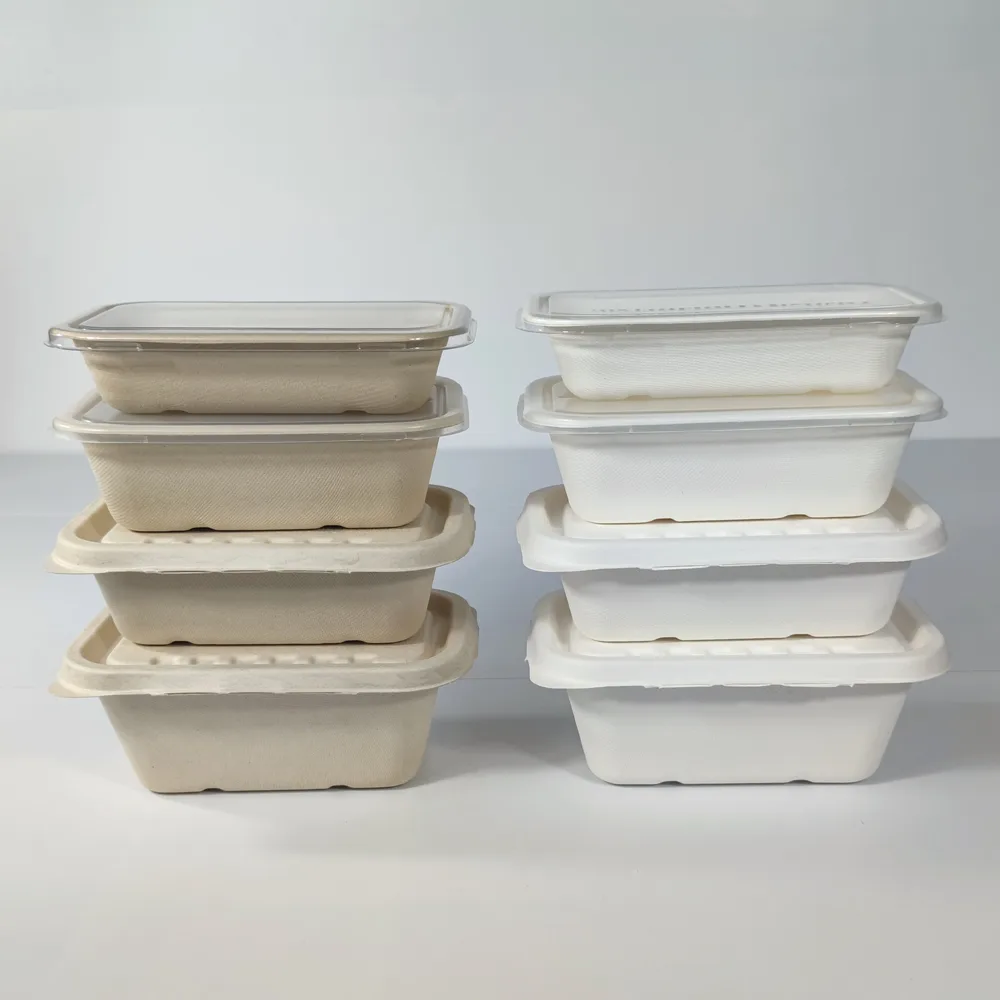
From flat trays to compartment bagasse trays and clamshell trays with lids, Bioleader® covers all key applications—delivery, catering, retail, and institutional foodservice. Buyers can consolidate multiple SKUs in a single container, reducing logistics costs and simplifying sourcing.
Certified for Global Compliance
All products carry EN13432 (EU) and ASTM D6400 (US) certifications, supported by BPI compostability, LFGB food-contact safety, and FSC sustainable forestry. This ensures smooth customs clearance and meets the compliance standards of over 80 countries enforcing plastic bans.
Advanced Production Capacity
Automated pulp molding lines and in-house labs guarantee trays that withstand heat, oil, and heavy meals. Every batch is tested for compostability and durability, ensuring consistent product performance.
Export Expertise & Logistics Support
Bioleader® has supplied buyers across North America, Europe, and Asia-Pacific. Services include:
Full-container consolidation of different tray SKUs
Competitive FOB Xiamen pricing
Logistics planning to avoid peak-season shipping surcharges
Bioleader® vs Small Factories: Key Differences
| Feature | Bioleader® | Small/Uncertified Factories |
|---|---|---|
| Certifications | EN13432, ASTM D6400, BPI, LFGB, FSC | Often missing or unverifiable |
| Production Scale | Automated pulp molding lines | Manual, inconsistent |
| Export Experience | 10+ years, 50+ countries | Limited, domestic only |
| MOQ Flexibility | Consolidated container options | Rigid, per SKU only |
| Quality Control | In-house lab, batch testing | Minimal or none |
| Branding Support | Embossing, custom print, private label | Rare or unavailable |
Buyer Advantages with Bioleader®
Save 15–25% through container optimization and bulk ordering
Ensure legal compliance and avoid customs rejections
Build brand value with certified, ESG-aligned products
Secure stable supply and priority scheduling during global demand peaks
📌 Call to Action:
For buyers planning bulk purchases in 2025, partnering with Bioleader® is the safest way to cut costs while ensuring compliance and reliability. Contact our team today to secure your next shipment.
Conclusion: Bulk Buying Done Right
In 2025, bulk purchasing bagasse trays is more than a way to save money—it is a strategic decision that ensures compliance, protects brand reputation, and secures long-term competitiveness.
Buyers who recognize the importance of certifications, understand practical applications, and adopt cost-saving strategies are able to reduce procurement expenses by 15–25% without sacrificing quality.
Bagasse trays are not only eco-friendly; they represent a business opportunity. By sourcing from trusted manufacturers like Bioleader®, buyers transform packaging from a regulatory challenge into a tool for growth, customer loyalty, and sustainability leadership.
FAQ
What is the MOQ for bagasse trays in bulk orders?
Most certified manufacturers set MOQs around 50,000 pieces per SKU, but buyers can consolidate multiple SKUs into one 20ft or 40HQ container.
Are compartment bagasse trays suitable for hot meals?
Yes, multi-compartment trays can withstand oily and hot foods up to 220°C, making them ideal for hospitals, schools, and catering.
How can bulk buyers reduce shipping costs for bagasse trays?
By consolidating SKUs into full containers, planning shipments outside peak seasons, and working with export-experienced suppliers.
What certifications should buyers look for in 2025?
EN13432 (EU), ASTM D6400 (US), plus OK Compost, BPI, LFGB, and FSC certifications.
Why choose bagasse trays over paper or plastic trays?
Bagasse trays offer superior durability, grease resistance, and compliance with global bans—making them a safer long-term choice for bulk buyers.
Reference
United Nations Environment Programme — Single-Use Plastics: A Roadmap for Sustainability, UNEP, 2018.
European Committee for Standardization (CEN) — EN13432: Requirements for Packaging Recoverable through Composting and Biodegradation.
ASTM International — ASTM D6400: Standard Specification for Labeling of Plastics Designed to be Aerobically Composted in Municipal or Industrial Facilities, 2020.
U.S. Environmental Protection Agency (EPA) — Compostable vs. Biodegradable Plastics: Key Differences, EPA Report, 2021.
European Food Safety Authority (EFSA) — Food Contact Materials: Safety Evaluation of Bioplastics, EFSA Journal, 2020.
Ellen MacArthur Foundation — The New Plastics Economy: Rethinking the Future of Plastics, 2016.
Market Research Future (MRFR) — Global Market Outlook for Biodegradable and Compostable Tableware 2025.
Smith, J. & Rodriguez, L. — Life Cycle Assessment of Biodegradable Tableware, Journal of Cleaner Production, 2021.
World Health Organization (WHO) — Plastics and the Environment, WHO Report, 2019.
Bagasse Trays 2025: Compliance, Benefits, Buying Options, and Future Outlook
Compliance: Importing bagasse trays in 2025 requires EN13432 (EU) or ASTM D6400 (US) certification, PFAS-free testing, and supplier audits. Buyers must also confirm local labeling rules in markets such as the EU, US, and Canada to avoid customs rejections.
Performance Advantage: Bagasse trays outperform paper, plastic, and cornstarch alternatives. They resist heat, grease, and weight—whereas paper collapses under liquids, plastic faces bans, and cornstarch softens at high temperatures. This makes bagasse the most reliable and widely accepted choice in global markets.
Cost-Saving Strategies: Full-container orders, SKU consolidation, and off-peak shipping can reduce procurement costs by 15–25%. Long-term contracts with certified manufacturers add further stability in pricing and supply.
Supplier Considerations: Buyers should evaluate certifications, MOQ flexibility, lead times, and customization capacity. Reliable factories also provide PFAS-free guarantees and ESG-aligned production, supporting both compliance and corporate sustainability goals.
Future Outlook: With over 80 countries enforcing plastic bans, global demand for compostable trays is expected to double by 2030. Bagasse trays are projected to dominate the market, driven by food delivery growth, ESG commitments, and regulatory mandates worldwide.