English
  Français
  Español
  Português
  Deutsch
  العربية
  Italiano
  Nederlands
  Русский
  日本語
日本語 Who This Is For & Why We Tested
Restaurants, cloud kitchens, caterers, and distributors all face the same question: Can compostable clamshells actually survive daily use? Regulations and certifications matter, but customer satisfaction is judged by the moment a guest opens the box. A container that leaks in a backpack, softens in the microwave, or carries a strange taste will undo any eco-friendly branding.
That’s why we ran this test series on sugarcane bagasse clamshells. We focused on realistic, repeatable daily scenarios: short walks, bike rides, quick microwaves, fried food hold times, and high-volume stack handling. Our goal: help buyers choose confidently when sourcing sugarcane bagasse clamshell boxes wholesale.
Core Test 1 — Leak Resistance & Latch Security
The Curry Walk
We filled clamshells with hot curry at around 70 °C, closed the lids until the latch gave a clear “click,” and carried them in a standard paper bag across a dining area, down a corridor, and through a doorway—about one minute of walking. The result: boxes with wide flanges and properly molded hinges showed no leakage, the paper bag remained dry, and the corners stayed sealed. Boxes with looser hinges tended to feel less secure, though actual leaks were rare if filled under 80%.

The 15–30 Minute Ride
To simulate food delivery, we placed filled boxes into a courier bag and carried them on a bike ride over regular bumps, turns, and stops. After 15 minutes, none of the clamshells showed visible leaks or oily fingerprints on the bag. At 30 minutes, differences emerged: well-designed latches held steady, while weaker ones allowed tiny drops to form at corners. None of the boxes failed completely, but for restaurants selling oily curries or gravies, leak-proof takeaway boxes for hot foods are worth demanding in procurement.
Backseat Tilt
We strapped clamshells into a car backseat, leaning them at 15°–30° angles to mimic real traffic turns. After a 20-minute loop, the food remained contained. Some condensation collected near the hinges, but no corner leaks appeared. The lesson: reasonable headspace and a secure latch are more important than brute strength.
Buyer Insight
For dishes heavy in sauces, buyers should prioritize eco friendly clamshells with deep lid rims and confident latch clicks.
Core Test 2 — Temperature Compatibility
Desk Reheat
Office reheating is one of the most common stress tests. We placed boxes with rice and vegetables into a microwave, cracked the lids slightly, and ran them for 90 seconds. The boxes softened slightly but did not warp. The lids re-latched smoothly, and no paper odor or taste transferred to the food. Staff found this as convenient as using plastic, but with the added benefit of being compostable.
Overnight Leftovers
We refrigerated clamshells overnight with noodles and curry, then microwaved them the next day. The hinges held up, no cracks appeared, and the food reheated evenly. While condensation was visible inside, it didn’t affect latch function. Taste remained neutral, confirming that microwave-safe biodegradable food containers are practical for both takeout and leftovers.
Warm Delivery Bag Test
When placed in a bag with other hot foods for five minutes, clamshells absorbed some steam but maintained shape. Fried chicken stayed reasonably crisp if the box was vented briefly before sealing. Boxes closed tightly without collapsing, an improvement over foam containers that often buckle under steam.

Buyer Insight
When evaluating suppliers, add “microwave reheat without warping” to your purchase order requirements. Boxes that re-latch after heating show better long-term performance and reduce customer complaints.
Core Test 3 — Food Safety & Neutral Taste
First Impression
Unpacking a carton of bagasse clamshells should deliver no smell. In our test, freshly opened boxes had a neutral aroma—nothing chemical, nothing cardboard-like.
Rice Taste Test
We placed hot steamed rice into clamshells, closed the lids for five minutes, and tasted. The result: no paper aftertaste, no astringency, and no off-flavors. Fiber done well disappears from perception, letting the food stand out.

Labeling & Compliance
For buyers, safety goes beyond taste. Always check for PFAS-free and compostability marks (EN13432, ASTM D6400, BPI, OK compost) and demand batch-linked documentation. If your EN13432 compostable clamshell contianers supplier cannot provide certificates tied to production lots, reconsider.

Buyer Insight
Trust your senses. Certifications matter, but a simple rice test tells you more about daily safety than paperwork alone.
Enhanced Test A — Oil Resistance in Daily Life
Fried-Night Trial
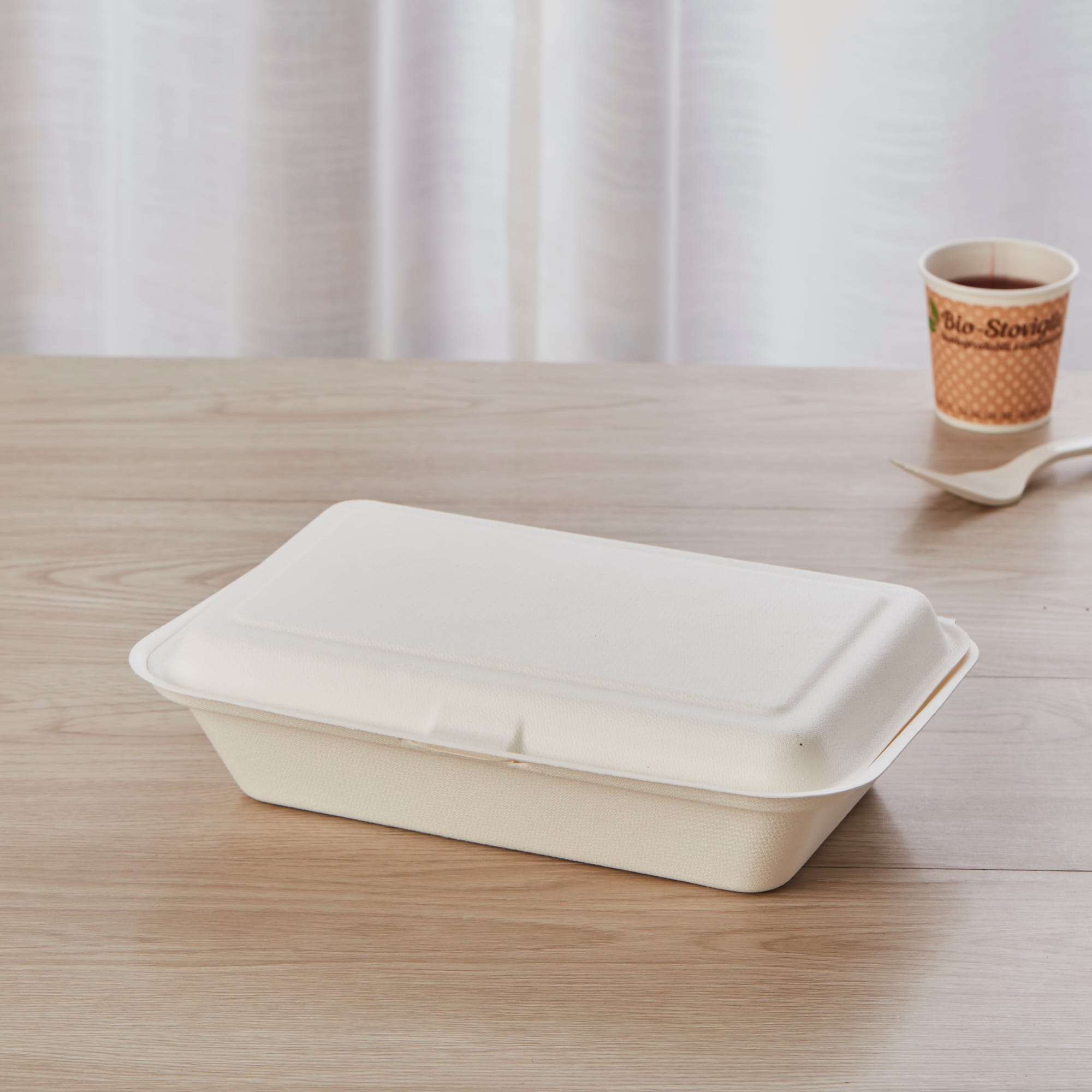
We filled clamshells with wings and fries, sealed them, and left them on a table for 30 minutes. At the end, the table was clean, the napkin under the box was dry, and only minimal oil sheen appeared inside the box. Fries stayed reasonably crisp, especially when the box was vented for one minute before closing.
Oily Rice & Noodles
We tried stir-fried noodles with chili oil. After 20 minutes, the inside corners showed a light stain, but no seep reached the outside. This confirms that PFAS-free compostable clamshell containers with aqueous coatings hold up to oily menus.
Buyer Insight
Ask suppliers to demonstrate oil resistance. A simple fried-food hold test shows whether the product meets the “everyday use” threshold your customers expect.
Enhanced Test B — Stackability & Line Efficiency
Stack Separation
In a lunch rush simulation, staff grabbed stacks of 10 boxes. The good clamshells separated easily, saving precious seconds. Poorly molded ones stuck together, costing time and causing frustration.

Single-Hand Carry
We tested carrying clamshells with one hand while pushing a door. The strong boxes stayed sealed, with no latch pop or rim collapse. This detail matters for couriers juggling multiple tasks.
Buyer Insight
For high-volume buyers, disposable burger boxes bulk purchase should include a quick stack test. If staff can’t separate them quickly, service time suffers.
Everyday User Experience Highlights
One-Hand Open: Guests appreciated latches that click shut yet open smoothly with one hand.
Label Stick: Stickers adhered well even in steam, yet peeled without tearing fiber.
Look & Feel: Natural fiber matte finish gave meals a premium, eco-friendly vibe, outperforming shiny plastics and outdated foam.

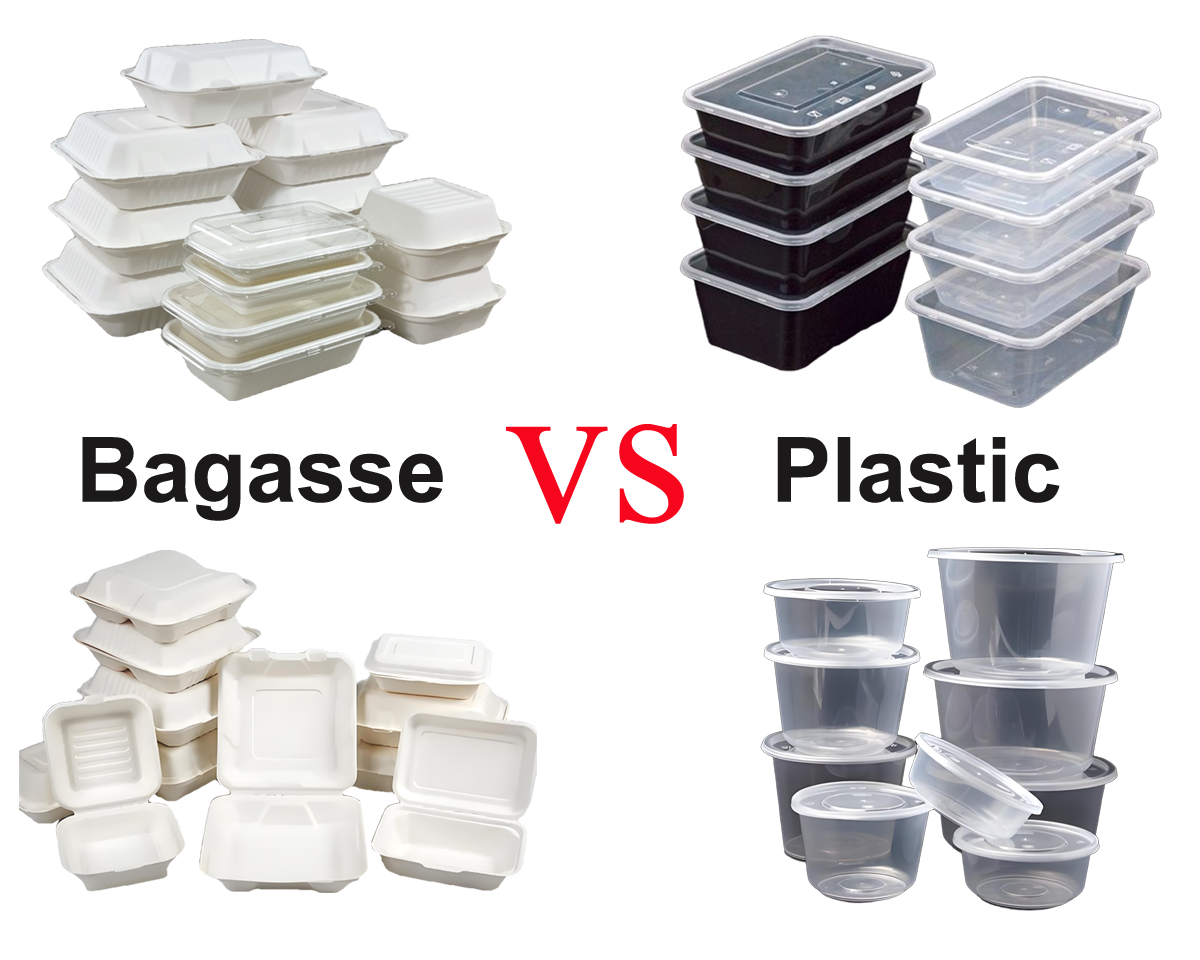
Plastic & Foam Comparison
Foam (EPS)
Foam containers are inexpensive and provide decent insulation, but they are banned or restricted in many regions due to environmental concerns. They often carry a chemical odor, can crumble under heat, and create negative impressions for brands trying to project a modern, eco-conscious image.
Plastic (PP/PET)
Plastic clamshells are strong and transparent, which makes food visible and attractive at first sight. However, they trap steam, causing condensation and soggy food. They are not compostable, often rejected in recycling streams due to food contamination, and increasingly targeted by single-use plastic bans.
Bagasse (Sugarcane Fiber)
Bagasse clamshells are breathable and sturdy, helping manage steam better than plastic while still holding structure for hot and oily foods. When specified with aqueous or PFAS-free coatings, they are safe, compostable, and compliant with EN13432 or ASTM D6400 standards. Guests perceive them as natural, modern, and eco-friendly, which boosts brand reputation.
Comparative Data Table
| Attribute | Foam (EPS) | Plastic (PP/PET) | Bagasse (Sugarcane Fiber) |
|---|---|---|---|
| Cost per unit (bulk) | Low ($0.03–0.05) | Medium ($0.05–0.08) | Medium ($0.06–0.09) |
| Heat resistance | Poor (softens >80°C) | Good (120°C+) | Good (90–100°C) |
| Oil resistance | Fair | Good | Good (with aqueous coat) |
| Leak prevention | Fair | Good (sealed) | Good (with strong latch) |
| Breathability | Low | Very low (traps steam) | Medium (reduces sogginess) |
| Compostability | No | No | Yes (EN13432 / ASTM D6400) |
| Regulatory status | Widely banned | Increasingly restricted | Globally accepted |
| Brand perception | Negative/cheap | Neutral/outdated | Positive/eco-premium |
Buyer Guide — The Shortlist
When sourcing from a bagasse lunch box manufacturer in China or global supplier, include these requirements in your PO:
Leak-free for 15–30 minutes on delivery rides.
Microwave reheat passes with no warping or odor.
Neutral taste when tested with hot rice.
Oil hold for at least 30 minutes with fried foods.
Easy stack separation and firm single-hand carry.
PFAS-free, EN13432 or ASTM D6400 documentation tied to batches.
Meeting these simple points ensures your packaging doesn’t just look sustainable—it works.
Trusted Partner for Global Buyers: Bioleader® Compostable Solutions
When sourcing reliable eco-friendly packaging, buyers often look beyond a single product. That is where Bioleader® stands out. As a leading manufacturer and exporter in China, Bioleader® offers a full range of sustainable foodservice solutions—from sugarcane bagasse clamshell boxes to microwave-safe biodegradable food containers, compostable cutlery, and customized kraft bowls. With strict PFAS-free standards, EN13432 and ASTM D6400 certifications, and proven export experience, Bioleader® helps restaurants, distributors, and catering businesses reduce risk while scaling sustainably. For wholesale inquiries, buyers can count on consistent quality, flexible customization, and global logistics support.

FAQ
1. Will curries or soups leak in sugarcane bagasse clamshell boxes?
Not if filled under 80% and sealed correctly. Quality latches prevent corner seepage on 15–30-minute rides.
2. Can I microwave food safely in PFAS-free compostable clamshell containers?
Yes, for short reheats (60–90 seconds). Crack the lid for steam release and re-latch afterward.
3. Do fried foods stay crisp in microwave-safe biodegradable food containers?
Better than in sealed plastic. Vent briefly before sealing and avoid stacking directly on top of each other.
4. Is there any paper taste when using eco friendly clamshell packaging for hot rice or noodles?
No. High-quality bagasse is neutral. If you detect off-flavor, isolate that batch.
5. What size of EN13432 compostable clamshell supplier boxes should I order for combos?
Multi-compartment clamshells work best for protein, starch, and saucy sides. Single-compartment is fine for rice bowls or burgers.
Closing Thoughts
Real-world testing shows sugarcane bagasse clamshells aren’t just an eco-friendly headline. They hold curry without leaks, survive microwaves, keep fried food decent, and stack neatly during rush hour. Compared with foam and plastic, they give restaurants a packaging option that pleases regulators, guests, and staff.
For buyers, the formula is straightforward: demand sugarcane bagasse clamshell boxes wholesale that pass leak, heat, oil, and stack tests, backed with PFAS-free and compostability paperwork. The right box makes packaging invisible—customers focus on the food, not the container. And in foodservice, that is the real win.
References
United Nations Environment Programme — Single-Use Plastics: A Roadmap for Sustainability, 2018.
ASTM International — Standards for Compostability: ASTM D6400, Committee D20 on Plastics.
European Committee for Standardization — EN 13432: Requirements for Packaging Recoverable Through Composting and Biodegradation.
Ellen MacArthur Foundation — The New Plastics Economy: Rethinking the Future of Plastics, 2016.
World Health Organization — Plastics and the Environment, Report, 2019.
U.S. Environmental Protection Agency — Compostable vs. Biodegradable Plastics: What’s the Difference?
Smith & Rodriguez — Life Cycle Assessment of Biodegradable Cutlery, Journal of Cleaner Production, 2021.
Market Research Future (MRFR) — Global Market Outlook for Biodegradable Tableware 2025.
European Food Safety Authority (EFSA) — Food Contact Materials: Safety Evaluation of Bioplastics, 2020.
Key Insights on Sugarcane Bagasse Clamshell Boxes
How they work: Sugarcane bagasse fibers disperse moisture instead of trapping it, while secure hinges and latches keep food sealed.
Why they matter: Every leak-free ride or safe microwave reheat saves restaurants refunds and boosts customer trust. With PFAS bans and compostability rules expanding, reliable clamshells reduce regulatory risk.
What to buy: For soupy or oily dishes, choose aqueous-coated models with deep rims. For fried foods, use vented lids. For combos, select multi-compartment versions to keep textures distinct.
Options available: White or original color, PFAS-free aqueous coatings, microwave-safe designs, customizable printing, and multiple sizes for different menus.
Considerations: Balance cost with performance. The true value lies in fewer complaints, faster service, and compliance with global compostability standards.
Trendline: Over the next 12–24 months, expect universal PFAS-free adoption, stronger global labeling norms, and smarter venting features that make sugarcane clamshells the default choice for eco-friendly takeout packaging.