What Is Bagasse—and Why Global Buyers Care in 2026
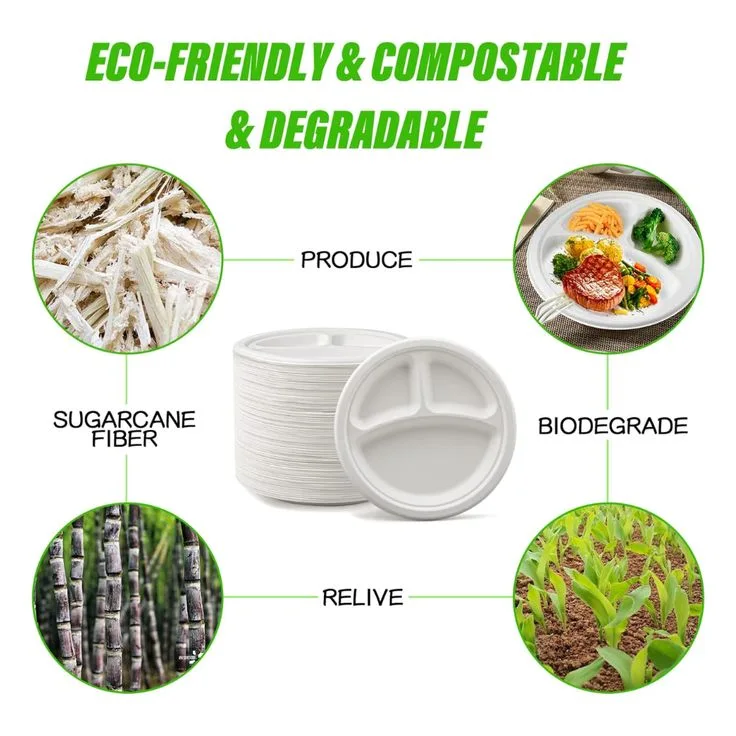
In the global shift away from conventional plastic and foam food packaging, few materials have gained as much commercial traction as bagasse tableware. Bagasse is the fibrous residue left after sugarcane juice extraction. Instead of being treated as agricultural waste, this plant fiber can be molded into clamshell boxes, bowls, plates, trays, cups, and lids for modern foodservice applications.
For international importers, restaurant groups, distributors, catering suppliers, and takeaway brands, bagasse is attractive because it combines renewable material sourcing, molded-fiber strength, natural presentation, and compostability potential when the finished product is properly designed, tested, certified, and collected through suitable composting systems.
Quick Summary: Why Global Buyers Are Switching to Bagasse Tableware
Global buyers are switching to bagasse tableware because it offers a practical balance of foodservice performance, renewable plant-fiber sourcing, plastic reduction, export documentation, and sustainable brand positioning.
Best use match: bagasse clamshells work well for takeout meals; bagasse bowls suit noodles, salads, rice bowls, and soups; bagasse plates fit catering and events; bagasse trays support sushi, desserts, produce, and ready-to-eat food displays.
Buyer note: Bagasse is not automatically PFAS-free, home-compostable, microwave-safe, or compliant in every market. Buyers should verify food-contact reports, compostability certification, PFAS-related testing, lid fit, oil/water resistance, and product-specific use guidance before bulk ordering.
Bagasse Tableware vs. Traditional Packaging: A Procurement Comparison
Bagasse should not be compared with plastic or paper using broad marketing claims alone. For B2B buyers, the real comparison should focus on application performance, food safety, regulatory readiness, end-of-life handling, and supplier documentation.
| Aspect | Plastic Packaging | Paper-Based Packaging | Bagasse Tableware | Buyer Note |
|---|---|---|---|---|
| Raw Material | Usually fossil-based resin such as PP, PET, PS, or EPS | Paperboard, often with PE, PLA, or water-based coating | Molded sugarcane fiber from agricultural residue | Ask for exact material composition, not just the category name. |
| Oil / Water Resistance | Generally strong depending on resin and design | Depends heavily on coating and paperboard thickness | Strong when properly molded and treated for the intended food type | Test with real oily, hot, saucy, or wet foods before bulk ordering. |
| Microwave Suitability | Product-specific; PP may be suitable, PET/PS/EPS generally require caution | Product-specific; depends on coating, ink, and structure | Many items are microwave-suitable, but this must be confirmed by SKU | Do not microwave lids unless they are clearly rated for microwave use. |
| Compostability | Usually not compostable | Depends on liner, coating, and certification | Can be compostable when the finished product is certified and collected correctly | Compostability is a product-level claim, not a raw-material assumption. |
| Food Contact Compliance | Requires resin and additive compliance | Requires paper, coating, ink, and adhesive compliance | Requires fiber, additive, coating, PFAS, and migration testing where applicable | Request FDA, LFGB, EU food-contact, SGS, or relevant market reports. |
| Regulatory Fit | Increasingly restricted in many single-use applications | Varies by coating and market rules | Often preferred for plastic-reduction and compostable packaging programs | Compliance depends on certificates, local rules, and product-specific documentation. |
Procurement conclusion: Bagasse is not simply “greener than plastic.” Its real value is that it can combine molded-fiber strength, lower-plastic positioning, foodservice functionality, and certification-ready sourcing when the supplier provides the right documentation.
Explore the Bagasse Range: Which Product Fits Which Scene?
Bagasse is not a one-size-fits-all material. It can be molded into multiple formats for different foodservice needs. The strongest sourcing strategy is to match each product type with the food, temperature, sauce level, delivery time, and customer experience required.
📦 Bagasse Clamshell Boxes – Ideal for Takeout & Delivery
Best for: Burgers, rice meals, stir-fry, sandwiches, fried foods, and combo meals.
- One-piece hinged design for fast service and easy closing
- Useful for oily and saucy takeaway meals when properly tested
- Stackable structure for delivery and transport
Clamshells made from bagasse are popular among quick-service restaurants, food trucks, Asian bento-style restaurants, and meal-prep suppliers. Their structure can replace foam boxes in many markets, especially where expanded polystyrene is restricted. Buyers should still test lid closing, steam release, oil resistance, and delivery stability with real menu items.

🍲 Bagasse Bowls – For Soups, Noodles, Salads & Rice Meals
Best for: Pho, ramen, poke, coleslaw, curry, rice bowls, pasta, salads, and hot meal delivery.
- Deep, round shape for meal bowls and liquid-rich foods
- Compatible with selected lid systems depending on SKU
- Suitable for many hot food applications when confirmed by product specification
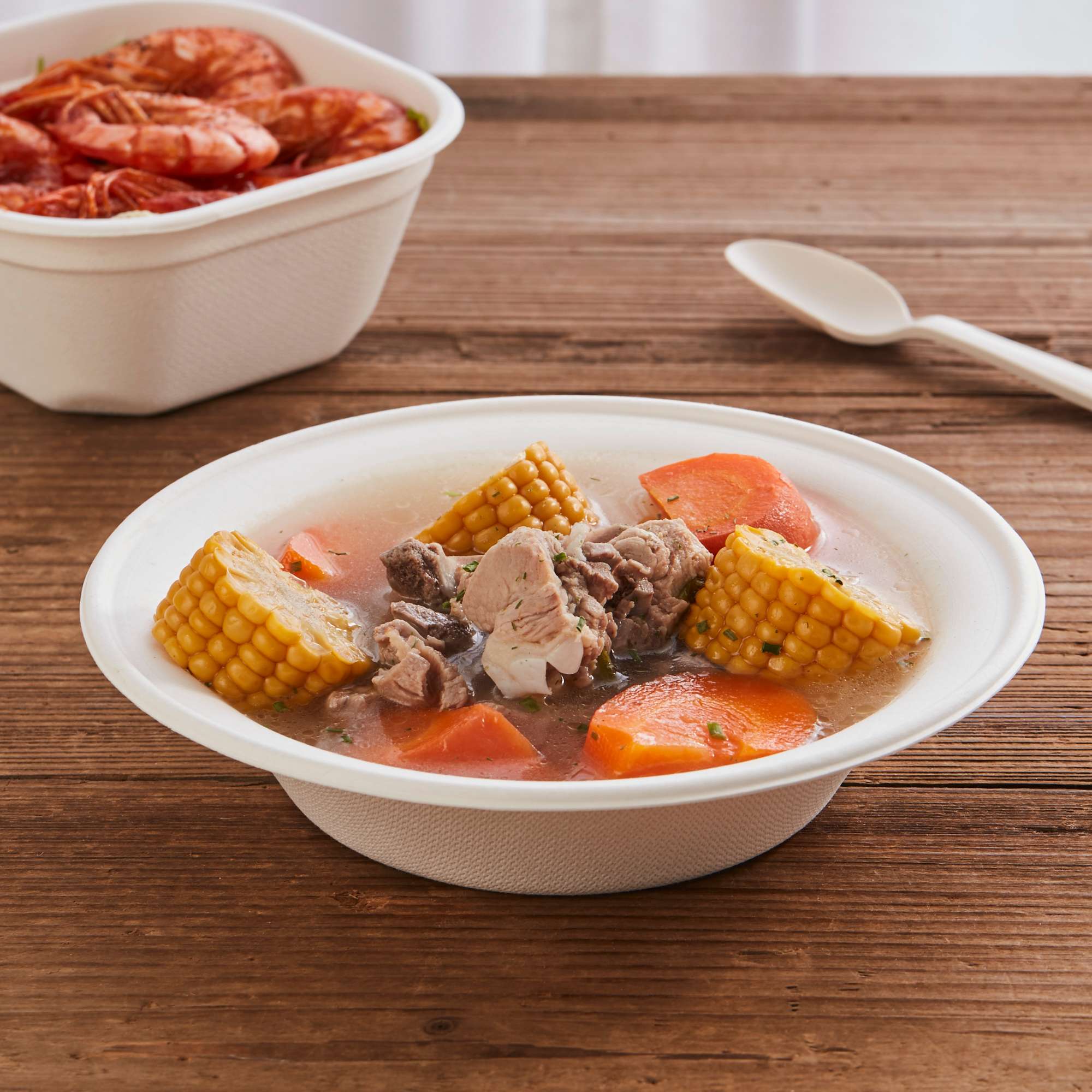
From noodle bars to salad chains, bagasse bowls are a strong solution for buyers who need both functionality and presentation. Their natural molded-fiber texture helps brands communicate sustainability without relying on exaggerated green claims. For soups and gravy-heavy meals, test holding time, base softening, sidewall strength, lid fit, and leakage after delivery simulation.
🍽 Bagasse Plates – For Events, Buffets & Outdoor Dining
Best for: BBQ, picnics, food trucks, catering, hotel buffets, school meals, and event dining.
- Lightweight while maintaining practical rigidity
- Available in round, square, and compartment formats
- Suitable for oily and hot foods when the exact product is tested for the application
Bagasse plates offer a good balance of appearance, function, and cost for high-volume catering. Compared with thin paper plates, molded fiber plates generally provide stronger structure for meals with oil, sauce, or multiple components. Buyers should confirm cut resistance, bending strength, and food-contact reports before large event use.

🧁 Sugarcane Trays – For Sushi, Pastry & Catering Displays
Best for: Sushi combos, dessert platters, fruit trays, bakery items, antipasti, produce, and ready-to-eat retail meals.
- Multi-compartment design options
- Works with paper or PLA transparent lids depending on temperature and visibility needs
- Helps keep presentation organized and secure
Bagasse trays are increasingly used for prepackaged meals, catering displays, and supermarket food counters. They support a cleaner fiber-based presentation and can reduce dependence on foam or rigid plastic trays. For retail display, buyers should test tray rigidity, lid clarity, stack pressure, and shelf presentation.

Buyer Decision Matrix: Match Bagasse Products to Foodservice Needs
The table below helps buyers select bagasse products based on food type and operational risk. It is intended as a practical sourcing guide before requesting samples or placing bulk orders.
| Foodservice Scenario | Recommended Product | Key Risk | Buyer Test Before Order |
|---|---|---|---|
| Hot noodles, soups, curry, and rice bowls | Deep bagasse bowl with compatible lid | Leakage, base softening, steam pressure | 30–60 minute delivery simulation with real food and lid |
| Burgers, fried rice, grilled meals, bento meals | Bagasse clamshell box | Oil penetration, lid closure, stacking pressure | Oil/sauce holding test and transport compression test |
| Buffets, BBQ, outdoor events, school meals | Bagasse plate or compartment plate | Cut resistance, bending, heavy portions | Meal-load test with hot and oily foods |
| Sushi, desserts, bakery, fruit, ready-to-eat retail | Bagasse tray with paper or PLA lid | Shelf presentation, lid fit, stack damage | Retail display test and carton stacking test |
Why International Buyers Choose Bioleader® Bagasse Solutions
As bagasse tableware demand grows, buyers are no longer looking only for low unit prices. They need consistent molding quality, export-ready documentation, stable capacity, SKU flexibility, and product matching for real food applications. Bioleader® supports international buyers with a broad range of molded fiber tableware and B2B sourcing support.
🔹 Product-Specific Documentation Support
Bioleader® can provide documentation for selected bagasse product lines depending on the item and target market, including:
- EN13432 and related compostability documentation where applicable
- ASTM D6400, BPI, or TÜV-related documents depending on product and market requirements
- Food-contact reports such as FDA, LFGB, EU food-contact, or SGS testing where required
- PFAS-free, PFOA, PFOS, or total fluorine testing for selected items when required by the buyer or target market
🔹 Manufacturing Scale and Export Planning
With scalable molded fiber production and export-ready supply capability, Bioleader® supports international buyers with stable production planning, OEM customization, mixed-container strategies, and containerized shipments.
- Supports high-volume bagasse clamshells, bowls, plates, trays, and lids
- Offers OEM customization, carton marking, and private-label packaging support
- Provides product selection guidance based on food type, destination market, and shipping plan
🔹 Export Experience Across Foodservice Markets
Bioleader® bagasse tableware is positioned for international foodservice, distributor, and packaging buyer needs across markets such as Europe, North America, the Middle East, Asia-Pacific, and Southeast Asia. Whether buyers need custom packaging, mixed SKUs, or compliance support, the goal is to reduce procurement risk and improve market readiness.
What to Consider When Importing Bagasse Tableware
Importing eco-friendly tableware is not only about product design. It is also about compliance, landed cost, logistics, documentation, and product risk control. Before ordering, international buyers should check the following points.
✅ Regulatory and Product Compliance
Ask the supplier to provide documents relevant to the target market and product type:
- Material Safety Data Sheet or technical data sheet
- Compostability certificates where compostability claims are needed
- PFAS-free declarations or third-party testing where required
- FDA, LFGB, EU food-contact, SGS, or other food-contact documents depending on destination market
- Microwave-use guidance, oil/water resistance information, and lid compatibility details
✅ HS Codes and Duties
Bagasse products are often classified under molded paper pulp or paper-based product categories, but customs classification can vary by country, product structure, and declaration method.
- Common reference HS code: 4823.69 for molded paper or paperboard articles in many markets
- Buyers should confirm exact HS code, duty rate, import requirements, and local tax rules with their customs broker.
✅ Shipping, MOQ and Lead Time
- MOQ for OEM: often around 50,000–100,000 pcs depending on item, mold, packaging, and printing needs
- Shipping options: 20ft / 40HQ container, FOB, CIF, or other terms depending on buyer requirements
- Lead time: depends on product type, order quantity, packaging, printing, and production schedule
✅ Avoiding Low-Grade Bagasse Products
Not all molded fiber products perform the same. Buyers should watch for:
- Thin or flaky surface caused by poor molding or weak pulp quality
- Weak oil or water resistance for hot and saucy foods
- No proof of compostability, food contact safety, or PFAS-related testing
- Poor lid fit, unstable stacking, or high breakage during transport
Working with an export-focused supplier like Bioleader® helps buyers reduce these risks through product matching, sample testing, documentation support, and containerized order planning.

Application Scenario: Bagasse Bowls for Noodle and Rice Meal Chains
A noodle or rice meal chain preparing to replace foam or plastic containers typically faces several packaging problems: hot soup or sauce, steam buildup, delivery shaking, lid leakage, and customer expectations for sustainable packaging. Bagasse bowls can be a strong option when the bowl and lid are tested together under real service conditions.
For a typical bagasse bowl sourcing project, the buyer should evaluate:
- Food fit: noodles, soup, rice bowls, curry, salads, and hot meals
- Lid fit: delivery stability, venting, stacking, and leakage control
- Branding: embossed logo, printed sleeve, carton marking, or private-label packaging
- Compliance: food-contact reports, compostability documents, and PFAS-related testing where needed
- Testing: 30–60 minute real-food holding test, microwave guidance check, and transport simulation
This application-based approach is more reliable than choosing packaging by appearance alone. It turns sustainability into operational value: fewer leaks, better customer experience, stronger brand positioning, and clearer compliance documentation.
Final Thoughts: Bagasse Is a Practical Material for Global Foodservice Buyers
As countries tighten single-use plastic rules and foodservice businesses face pressure from consumers, regulators, and corporate buyers, bagasse tableware is becoming a serious procurement option—not just an eco trend.
Its value comes from a practical combination of renewable sugarcane fiber, molded strength, natural appearance, hot-food usability, compostability potential, and export-ready documentation. From clamshells to catering trays, Bioleader® offers a complete portfolio designed for restaurants, distributors, caterers, supermarkets, food delivery brands, and packaging importers.
Ready to reduce conventional plastic in your food packaging portfolio? Bioleader® can help you choose the right bagasse products by food type, market requirement, certification target, and container loading plan.
FAQs
Q1: What is bagasse tableware made from?
Bagasse tableware is made from the fibrous residue left after extracting juice from sugarcane. The fiber is pulped, molded, dried, and trimmed into bowls, plates, clamshells, trays, and other foodservice packaging formats.
Q2: Are bagasse containers microwave-safe?
Many bagasse containers are microwave-suitable, but buyers should confirm the product specification, lid material, coating system, and use instructions before microwave use. Lids should only be microwaved if they are clearly rated for microwave use.
Q3: Can bagasse products be exported to the EU or USA?
Yes, bagasse products can be exported to regulated markets when the specific item has the required food-contact, compostability, PFAS-related, and import documentation. Buyers should request product-specific reports rather than relying on material claims alone.
Q4: How long does bagasse take to decompose?
Bagasse products can break down under suitable industrial composting conditions, but the actual time depends on product thickness, additives, coating, temperature, moisture, microbial activity, and facility acceptance.
Q5: Is there a risk of PFAS or toxic additives in bagasse tableware?
Some molded fiber packaging may use oil-resistant treatments, so PFAS status should be verified. Buyers should request PFAS, PFOA, PFOS, total fluorine, or related third-party test reports when required by the target market.
Q6: What is the minimum order quantity for bagasse export?
MOQs vary by product type, size, packaging, printing, and customization requirements. For many bagasse items, OEM or customized orders commonly start from tens of thousands of pieces per SKU, while mixed-container strategies may help improve landed cost.
Q7: Which foods are best suited for bagasse clamshells and trays?
Bagasse clamshells work well for burgers, rice meals, fried foods, sandwiches, and combo meals. Bagasse trays are useful for sushi, desserts, bakery, produce, catering displays, and ready-to-eat meals when tested for food type, lid fit, and transport conditions.
References
- European Commission. Directive (EU) 2019/904 and the Single-Use Plastics framework for reducing environmental impact from selected plastic products.
- ASTM International. ASTM D6400 standard specification for plastics designed to be aerobically composted in municipal or industrial facilities.
- Biodegradable Products Institute (BPI). Commercial compostability certification based on ASTM standards and certification rules for compostable products.
- TÜV Austria. OK compost HOME and OK compost INDUSTRIAL certification guidance.
- U.S. Food & Drug Administration. Food packaging and food-contact substance safety information.
- Bioleader®. Product documentation for bagasse clamshell boxes, bagasse bowls, bagasse plates, bagasse trays, food-contact reports, PFAS-related testing, and export packaging support.