Eco Friendly Tableware For Restaurants 101: What It Is, When To Use, And How To Choose | Bioleader® Sustainable Packaging
Actionable coverage of Eco Friendly Tableware for Restaurants: eco-friendly, biodegradable, compostable materials, performance data, and compliance under EN13432 & ASTM D6400. Includes BPI/TÜV references and Food-Contact Tested guidance for safe deployment. Buyer-focused: manufacturer insights, bulk/wholesale buying playbooks, OEM/ODM customization tips, full size range selection.
Quick Summary: Why Global Buyers Are Switching to Bagasse Tableware
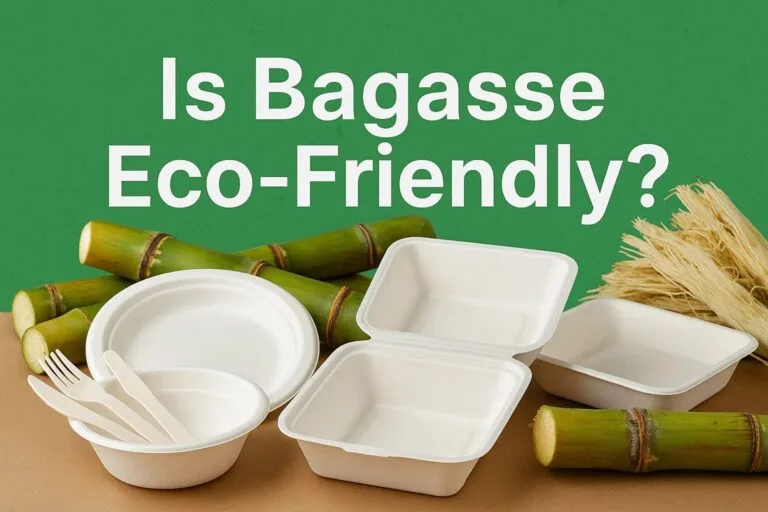
Global buyers are switching to bagasse tableware because it offers a practical balance of foodservice performance, renewable plant-fiber sourcing, plastic reduction, export documentation, and sustainable brand positioning.
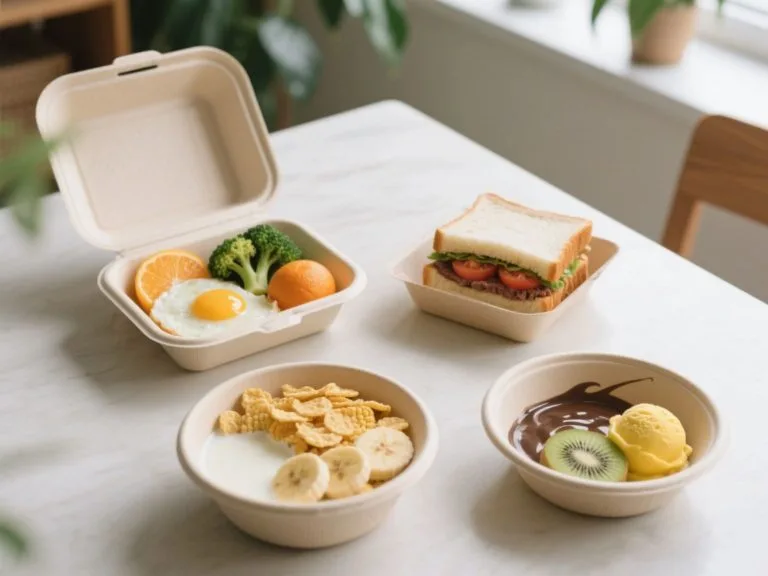
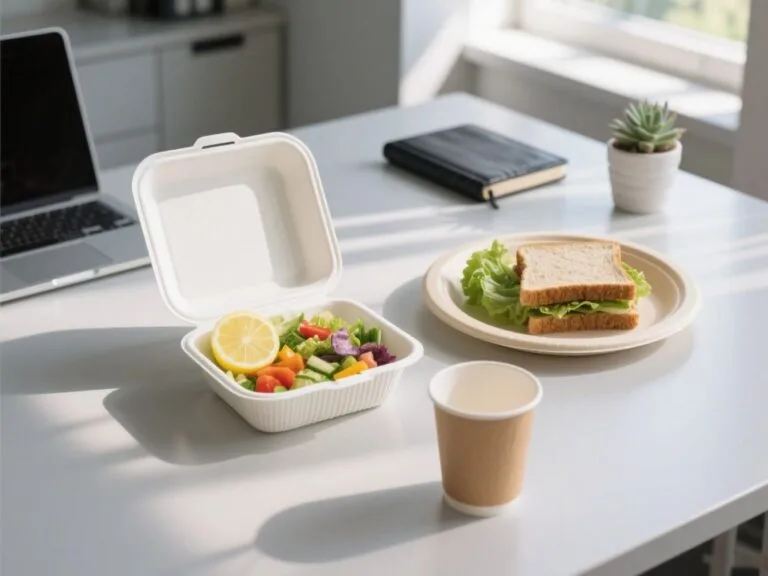
Best use match: bagasse clamshells work well for takeout meals; bagasse bowls suit noodles, salads, rice bowls, and soups; bagasse plates fit catering and events; bagasse trays support sushi, desserts, produce, and ready-to-eat food displays.
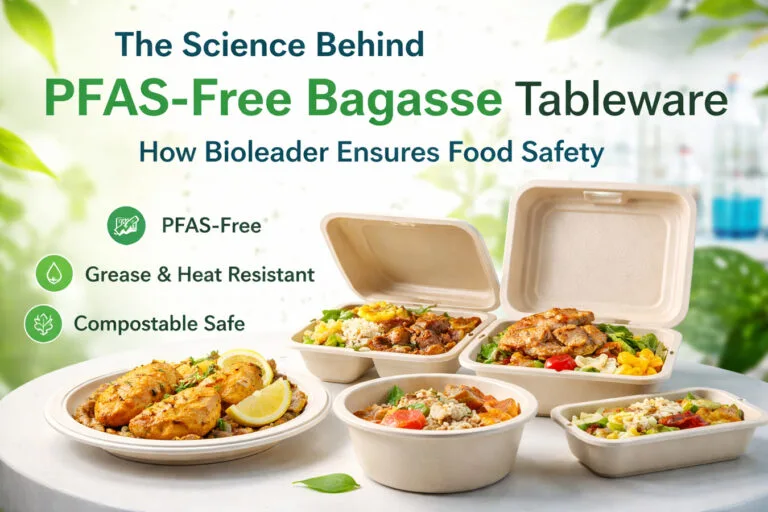
Buyer note: Bagasse is not automatically PFAS-free, home-compostable, microwave-safe, or compliant in every market. Buyers should verify food-contact reports, compostability certification, PFAS-related testing, lid fit, oil/water resistance, and product-specific use guidance before bulk ordering.
FAQ of Bioleader's Eco-friendly Disposable Tableware
Is there a possibility to order the bowls with my logo?
Of course! Custom printing is an opportunity for you to order bowls with your logo or design printed on them. Do not hesitate to ask for additional information regarding the special applications.
Which food should I use these bowls for?
These bowls are multi-purpose and may be used for hot or cold food containing liquids, doling out soups, clogged salads, ice cream or even packing pasta.
Are the bowls microwave- and freezer-safe?
Yes, our biodegradable bowls are both microwaveable and freezer-safe, maintaining their structure and food safety even under temperature variations.
🔹 Product-Specific Documentation Support
Bioleader® can provide documentation for selected bagasse product lines depending on the item and target market, including: EN13432 and related compostability documentation where applicable ASTM D6400, BPI, or TÜV-related documents depending on product and market requirements Food-contact reports such as FDA, LFGB, EU food-contact, or SGS testing where required PFAS-free, PFOA, PFOS, or total fluorine testing for selected items when required by the buyer or target market — Eco Friendly Tableware for Restaurants.
Best for: Pho, ramen, poke, coleslaw, curry, rice bowls, pasta, salads, and hot meal delivery , Eco Friendly Tableware for Restaurants. Deep, round shape for meal bowls and liquid-rich foods Compatible with selected lid systems depending on SKU Suitable for many hot food applications when confirmed by product specification From noodle bars to salad chains, bagasse bowls are a strong solution for buyers who need both functionality and presentation. Their natural molded-fiber texture helps brands communicate sustainability without relying on exaggerated green claims. For soups and gravy-heavy meals, test holding time, base softening, sidewall strength, lid fit, and leakage after delivery simulation — Eco Friendly Tableware for Restaurants.