









Quick Answer: Which Takeaway Containers Are Microwave-Safe?
Polypropylene, commonly identified as PP, is generally the most established disposable material for mainstream microwave reheating. Finished PP containers still need an appropriate resin grade, stable wall design, compatible lid and defined heating instructions, but the material has the broadest commercial use in microwave-ready takeaway and meal-prep packaging.
Tested sugarcane bagasse is the leading compostable alternative, while validated PP-coated paper bowls are among the strongest paper-based options. CPET is widely used for selected frozen and prepared-meal trays. Aqueous-coated paper, cornstarch-based blends and aluminum foil-lined paper bowls require more structure-specific evaluation.
The lid must always be judged separately from the container. Microwave-grade PP lids and validated PP-coated paper lids may be suitable when loosened or vented as instructed. Standard clear PET lids, PLA lids and unapproved metallic seals should normally be removed before reheating.
Standard PET takeaway boxes, EPS foam, PLA cold-food packaging, rigid PS, PVC, thin grocery bags, ordinary brown paper bags and unvalidated PE-coated paper containers should not be assumed to be microwave-safe.
Takeaway packaging is often sold using simple claims such as “heat-resistant,” “hot-food safe” or “microwave-friendly.” For a buyer, these phrases are not interchangeable. A container may hold freshly cooked food without leaking yet still deform, delaminate, arc, build steam pressure or heat food unevenly during microwave reheating.
The correct decision therefore cannot be made from the material name alone. A restaurant may purchase a paper bowl described as suitable for hot soup, pair it with a transparent PET lid and assume that the entire package can enter a microwave. In reality, the paperboard, coating, adhesive, bottom seal, bowl geometry, lid resin, vent design and food composition can each have different limitations.
Microwave suitability = base material + coating or laminate + container geometry + lid material + food composition + power and heating time + finished-package validation.
This guide replaces a simple product ranking with a material-science and procurement framework. It compares the main disposable takeaway container systems, explains where each one performs well, identifies the packaging types that should not be microwaved without explicit validation and gives international buyers a practical test and documentation checklist.
What Does “Microwave-Safe” Actually Mean?
A microwave-safe claim should describe the performance of a complete packaging system under defined conditions. It should not be inferred only from a recycling code, a generic resin name or the fact that a product can hold hot food.
Heat-resistant is not the same as microwave-safe
Heat-resistant normally means that a material can tolerate a stated food or service temperature for a defined period. This may describe hot filling, delivery holding or contact with soup, oil or sauce. It does not automatically address electromagnetic interaction, food hot spots, steam pressure, seal stability or repeated heating.
Microwave-transparent means that microwave energy can pass through a material with relatively little direct absorption. Paper, glass, ceramic and many plastics may be relatively transparent to microwave energy, but the heat generated inside the food can still soften a coating, distort a lid or weaken an adhesive seam.
Microwave-suitable should mean that the finished container, lid and intended food have been evaluated at a defined fill level, microwave power and maximum heating time. The U.S. Food and Drug Administration advises users to follow appliance and packaging instructions and notes that some plastics can melt from the heat of the food even when the microwave energy mainly passes through the container.
How microwave heating affects packaging
Microwave ovens transfer energy primarily to water and other polar components in food. The resulting heat then moves into the container wall, coating, seal and lid. This is why the same package can behave differently with broth, rice, oily curry, sugary sauce or a frozen prepared meal.
Container geometry also matters. A wide shallow tray, deep soup bowl, divided clamshell and narrow paper cup expose different food surfaces to microwave energy. Sharp metallic edges, damaged foil, very thin walls, tight lids and poorly vented seals can create additional risks that are not visible from the base material name.
Food-contact compliance and microwave performance are separate decisions
Food-contact documentation evaluates whether substances can transfer from packaging into food under specified conditions. Microwave performance evaluates whether the complete package remains stable, heats food acceptably and can be handled safely. A material can satisfy applicable food-contact rules without being approved for microwave reheating, and a microwave test does not replace migration or composition documentation.
The European Food Safety Authority explains that chemicals in food-contact materials can migrate into food and that safety assessment depends on migration and toxicological data. Buyers should therefore request both food-contact evidence and application-specific performance data.
Quick Ranking of Takeaway Container Materials
| Rank | Material system | General microwave position | Best applications | Main limitation | Market maturity |
|---|---|---|---|---|---|
| 1 | Polypropylene, or PP | Generally suitable when the finished container is labeled or validated for microwave use. | Meal prep, rice, noodles, soup, prepared meals and high-volume takeaway. | Not every PP grade, thin-wall design or lid is automatically suitable. | Highest mainstream acceptance for disposable microwave-ready packaging. |
| 2 | CPET trays | Suitable for engineered frozen-to-microwave and selected ovenable systems. | Frozen meals, airline meals, supermarket ready meals and central-kitchen portions. | CPET must not be confused with standard clear PET containers or lids. | Mature in industrial prepared-food channels. |
| 3 | Sugarcane bagasse | Suitable for short reheating when the finished SKU, food and lid are validated. | Takeaway meals, rice, noodles, burgers, trays, bowls and compostable foodservice programs. | Moisture, oil, heating time and lid material can change structural performance. | Leading compostable molded-fiber category. |
| 4 | Other molded fiber | Potentially suitable after product-specific validation. | Plant-fiber trays, bowls and clamshells. | Fiber blend, additives, density and surface treatment vary widely. | Growing but less standardized than bagasse. |
| 5 | PP-coated paper | One of the strongest paper-based candidates when the complete bowl and lid are validated. | Soup, noodles, rice meals, pasta, curry and branded paper-bowl programs. | The seam, adhesive, bottom seal, ink and lid may fail before the paperboard. | Established in hot-food takeaway markets. |
| 6 | Aqueous-coated paper | Conditionally suitable depending on coating chemistry and finished-container testing. | Plastic-reduction programs, paper bowls, cups and food boxes. | “Aqueous” is not one standardized material and does not automatically mean plastic-free. | Buyer interest is increasing, especially in Europe. |
| 7 | Cornstarch-based blends | Conditionally suitable according to the complete polymer formulation. | Clamshells, trays, bowls, plates and markets seeking a plastic-like structure. | The name “cornstarch” does not disclose whether the blend contains PP, PLA, PBAT or other polymers. | Commercially established in selected price-sensitive and plant-based packaging markets. |
| 8 | Aluminum foil-lined paper | Conditional specialist system requiring defined bowl, food, lid, power and positioning instructions. | Hot holding, soup, curry, oily meals, delivery and high-barrier applications. | Metal changes microwave energy distribution and the wrong lid can make the package unsuitable. | Niche but commercially valuable for heat retention and barrier performance. |
| 9 | Microwave-engineered paperboard and susceptors | Suitable only for the specific food and heating program for which the package was designed. | Pizza, sandwiches, bakery products and crisping applications. | It is not a general-purpose takeaway container system. | Mature in selected retail and frozen-food applications. |
Why this is not a simple “Top 10” list: A material should not receive a higher ranking merely because it is compostable, paper-based or visually sustainable. Microwave performance is a functional safety decision. Environmental claims, end-of-life routes and procurement preferences should be evaluated after the package can perform safely in the intended application.
1. Polypropylene Containers: Best Overall for Mainstream Reheating
Material science
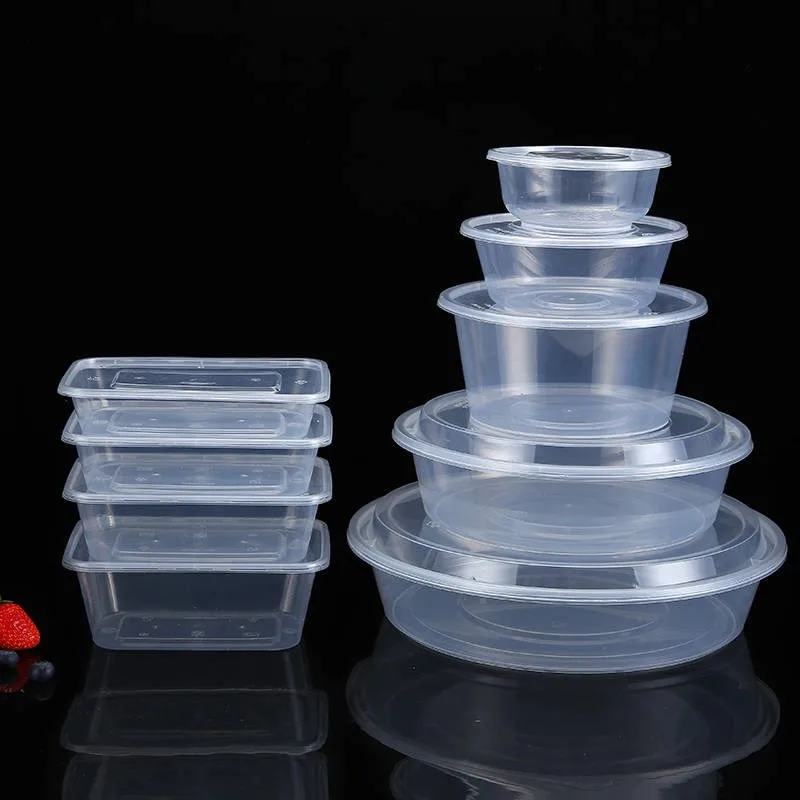
Polypropylene is a semi-crystalline polyolefin thermoplastic. Its molecular structure gives it a useful balance of low density, chemical resistance, moisture resistance, toughness and higher heat stability than many common cold-food plastics. PP can be injection-molded or thermoformed into thin-wall bowls, rectangular meal boxes, divided trays and matching lids.
The resin grade, crystallinity, wall thickness, reinforcing ribs and molding conditions influence the finished product. Two containers carrying the same PP recycling code can therefore perform differently when filled with hot oil, frozen rice or soup.
Microwave performance
PP ranks first because it has the most mature commercial position in microwave-ready disposable packaging. The USDA Glossary of Packaging Terms describes polypropylene as a resin used for microwave-only heating of foods with low fat and sugar content. That qualification is important: it confirms that PP is widely used for reheating while also showing why high-fat and high-sugar menus require additional evaluation.
Advantages
- PP has broad market acceptance for meal-prep, prepared-food and takeaway containers.
- PP resists water, sauces and many food oils better than uncoated fiber structures.
- PP can be molded into stable thin-wall containers with secure stacking and nesting performance.
- Microwave-grade PP lids can be matched to PP container bodies for a more consistent material system.
- PP supply chains, tooling and high-volume production are commercially mature.
Limitations and risks
- A PP recycling code does not prove that a specific container was validated for microwave reheating.
- Very thin walls can soften or distort when food creates high local temperatures.
- High-fat and high-sugar foods may expose the container surface to more severe heat than water-based foods.
- A standard PET lid can make an otherwise suitable PP container system inappropriate for reheating.
- Single-use PP should not be promoted for repeated reheating unless the manufacturer has validated repeated-use conditions.
Market popularity and best applications
PP is the practical benchmark for mainstream microwave-ready takeaway packaging. It is widely selected for rice meals, noodles, prepared vegetables, meal-prep portions, soups and refrigerated ready meals where cost, dimensional stability and operational consistency are more important than compostable positioning.
Manufacturer Insight: Why PP Still Ranks First
From a procurement perspective, PP ranks first not because it has the strongest sustainability claim, but because it combines mature resin supply, reliable molding, predictable lid matching, broad foodservice acceptance and established reheating use. Buyers should still obtain the product specification, maximum heating instructions and lid details for the exact SKU.
2. CPET Trays: Best for Frozen and Ovenable Prepared Meals
Material science
CPET is crystallized polyethylene terephthalate. It belongs to the PET family, but its higher crystalline structure gives it substantially different heat and dimensional behavior from the clear amorphous PET commonly used for salad boxes, deli containers and transparent lids.
CPET trays are usually opaque or semi-opaque and are engineered for controlled high-temperature applications. The tray, sealing film, food portion and heating instructions are typically developed as one system.
Microwave performance
CPET is a mature choice for frozen-to-microwave meals and selected dual-ovenable applications. It is widely used where a filled tray must move from freezer or chilled distribution into a microwave or conventional oven under controlled conditions.
However, the letters “PET” do not create a universal heating claim. EFSA assessments for some recycled PET processes explicitly state that the resulting articles are not intended for microwave or conventional oven use. This illustrates why the processing route and authorized application matter as much as the polymer family.
Advantages
- CPET provides strong dimensional stability for selected frozen and prepared-meal programs.
- CPET can support industrial sealing and high-speed meal filling.
- CPET offers useful barrier performance for chilled and frozen distribution.
- CPET is established in airline meals, supermarket ready meals and central-kitchen applications.
Limitations and buyer risks
- CPET should never be confused with a standard clear PET salad container or transparent PET lid.
- The seal film, lidding adhesive and peel system require separate heat validation.
- CPET normally costs more than mainstream PP packaging.
- CPET is not currently a core Bioleader® disposable product category, so buyers should avoid interpreting this industry comparison as a Bioleader® CPET product offer.
3. Sugarcane Bagasse Containers: Leading Compostable Alternative
Material science
Sugarcane bagasse is the fibrous residue remaining after juice extraction. Its main structural component is cellulose, supported by hemicellulose and lignin. During molded-fiber production, the pulp is formed, pressed and dried into a bonded fiber network rather than melted like a thermoplastic resin.
This structure can tolerate short reheating without the direct melting behavior associated with many cold-use plastics. Performance still depends on pulp refining, fiber blend, product weight, molding pressure, density, wall geometry, wet-strength system and oil- or water-resistance treatment.
Microwave performance
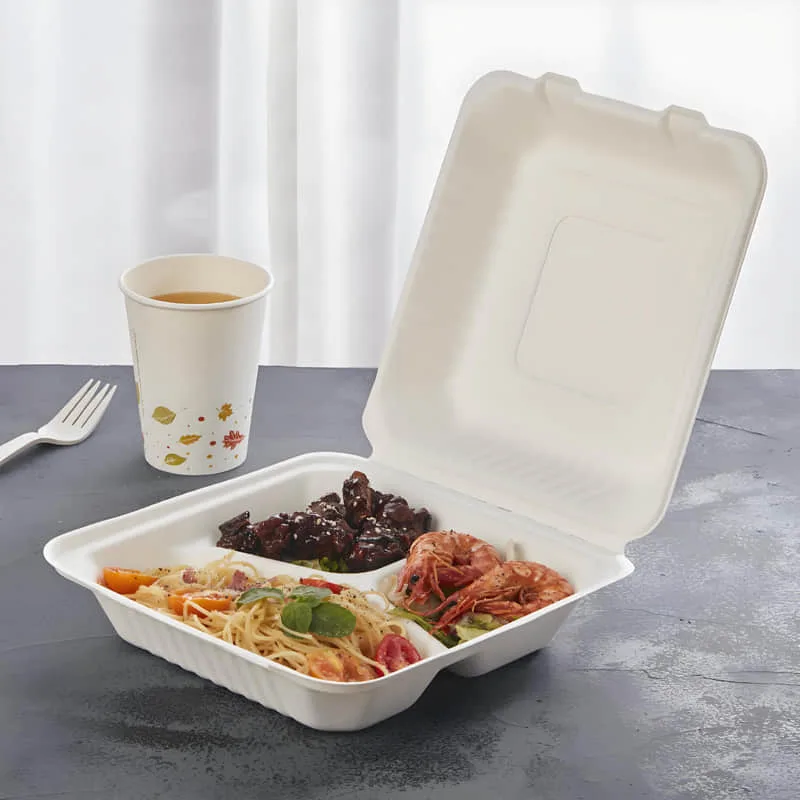
Many finished bagasse containers are suitable for short microwave reheating, but bagasse should not be described as inherently microwave-safe without conditions. Oil, sauce, food moisture, heating duration and product geometry can affect the bottom, hinge, corners and closure after heating.
Buyers can review Bioleader® sugarcane bagasse tableware solutions for the broader material and product system, including clamshell boxes, bowls, trays and plates.
Advantages
- Bagasse uses a renewable agricultural fiber stream and supports industrial composting programs where appropriate infrastructure exists.
- Bagasse has a rigid, premium molded-fiber appearance that supports sustainability-led foodservice positioning.
- Bagasse can be formed into clamshells, divided trays, bowls, plates and takeaway containers.
- Bagasse performs well for rice, noodles, burgers, dry meals and many short-reheating applications.
- Bagasse avoids the cold-use limitations of transparent PLA and standard PET packaging.
Limitations and risks
- Long heating cycles can dry the fiber, weaken hinges or change handling strength.
- Hot oil and sauce can challenge PFAS-free barrier systems more severely than dry food.
- Water-only testing does not represent curry, meat sauce, fried food or frozen rice.
- PET lids should be removed before reheating, and fiber or PP lids must be validated separately.
- Industrial compostability does not guarantee acceptance in every local collection system.
Market popularity and best applications
Bagasse is the leading compostable molded-fiber option in international foodservice. It is widely used for restaurants, catering, events, delivery platforms and distributors seeking an alternative to plastic or foam. Typical applications include bagasse food containers for takeaway meals and sugarcane bagasse bowls for rice, noodles, salad, soup and prepared food.
For a dedicated explanation of heating time, food type, PFAS-free performance and lid selection, see Bioleader®’s guide on whether bagasse containers are microwave-safe.
Bagasse Buyer Checklist
- Confirm the exact SKU, product weight, wall thickness and hinge or lid structure.
- Request hot-water and hot-oil performance data for the actual PFAS-free formulation.
- Test the buyer’s real menu rather than relying only on water-filled samples.
- Confirm whether the lid is bagasse, PP, PET or another material.
- Request the maximum microwave power and heating time used in the supplier’s evaluation.
- Confirm which food-contact and compostability documents apply to the finished product.
4. Other Molded Fiber Containers: Bamboo, Wheat Straw and Mixed Pulp
Material science
“Plant fiber” is not a single material specification. Bamboo pulp, wheat straw, wood pulp, recycled fiber and mixed agricultural pulp can have different fiber lengths, bonding behavior, mineral content and surface chemistry. Pulp refining, wet-strength additives, barrier chemistry and hot-press density can influence microwave performance as much as the named fiber source.
Microwave performance
Well-designed molded-fiber containers may perform successfully in short reheating. However, buyers should not transfer performance data from bagasse to bamboo, wheat straw or mixed pulp without confirming the actual formulation and product construction.
Advantages
- Other molded fibers can diversify renewable raw-material sourcing.
- Molded fiber supports bowls, trays, lids and clamshell structures with a natural appearance.
- Selected formulations can support compostable foodservice programs.
Limitations and market position
- Performance is less standardized than mainstream bagasse products.
- “Natural plant fiber” can conceal the actual pulp blend, additives and surface treatment.
- Water absorption, edge strength, dimensional stability and compostability may differ between suppliers.
Buyers comparing molded fiber with paper, plastic and metal-based systems can also review Bioleader®’s overview of different disposable bowl materials and their use limits.
5. PP-Coated Paper Bowls: One of the Most Established Paper-Based Routes for Controlled Reheating
Material science
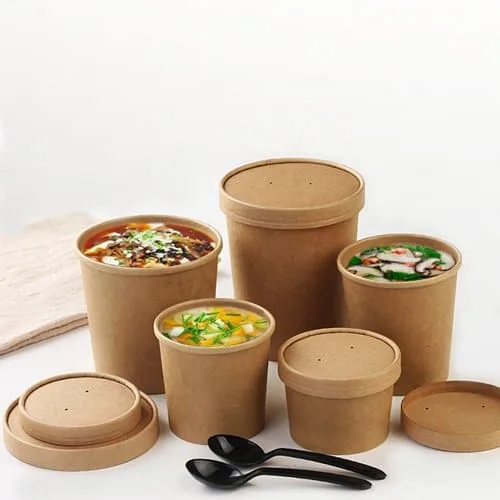
A PP-coated paper container combines a paperboard body with a thin polypropylene barrier layer. The paperboard provides stiffness, printability and shape, while PP helps resist water, oil and food moisture. Compared with standard PE coating, PP generally offers a stronger heat-performance route for controlled reheating projects.
The coating is only one part of the system. The side seam, bottom curl, adhesive, rolled rim, ink coverage and lid fit can determine whether the finished bowl remains stable after heating.
Microwave performance
Validated PP-coated paper bowls are among the strongest paper-based candidates for controlled microwave reheating. The full package must still be tested because the paperboard may remain intact while a seam, coating, adhesive or lid deforms first.
Advantages
- Paperboard provides a natural branded appearance and a large printable surface.
- PP coating supports water, sauce and oil resistance for hot-food service.
- The format is suitable for soup, noodles, curry, rice, pasta and meal bowls.
- PP-coated paper lids and microwave-grade PP lids can be developed as matching reheating options.
- The structure fits restaurants that want paper presentation without giving up all reheating functionality.
Limitations and buyer risks
- Paper and PP create a composite structure whose recycling route depends on local facilities.
- A fully sealed lid can create steam pressure even when the lid material itself is heat-resistant.
- Ink, adhesive and bottom-seal performance must match the intended time and food temperature.
- The term “paper bowl” does not disclose whether the coating is PP, PE, PLA or aqueous.
Market popularity and best applications
PP-coated paper is commercially attractive for branded soup and meal programs, especially in markets where customers expect a paper exterior but still want short reheating. Buyers can compare Bioleader® paper food packaging solutions, including paper soup bowls with lids and paper salad and meal bowls.
For a broader explanation of PE, PP, PLA and aqueous coatings, review how coatings and construction affect paper-container microwave use.
6. Aqueous-Coated Paper Containers: Growing Low-Plastic Option
Material science
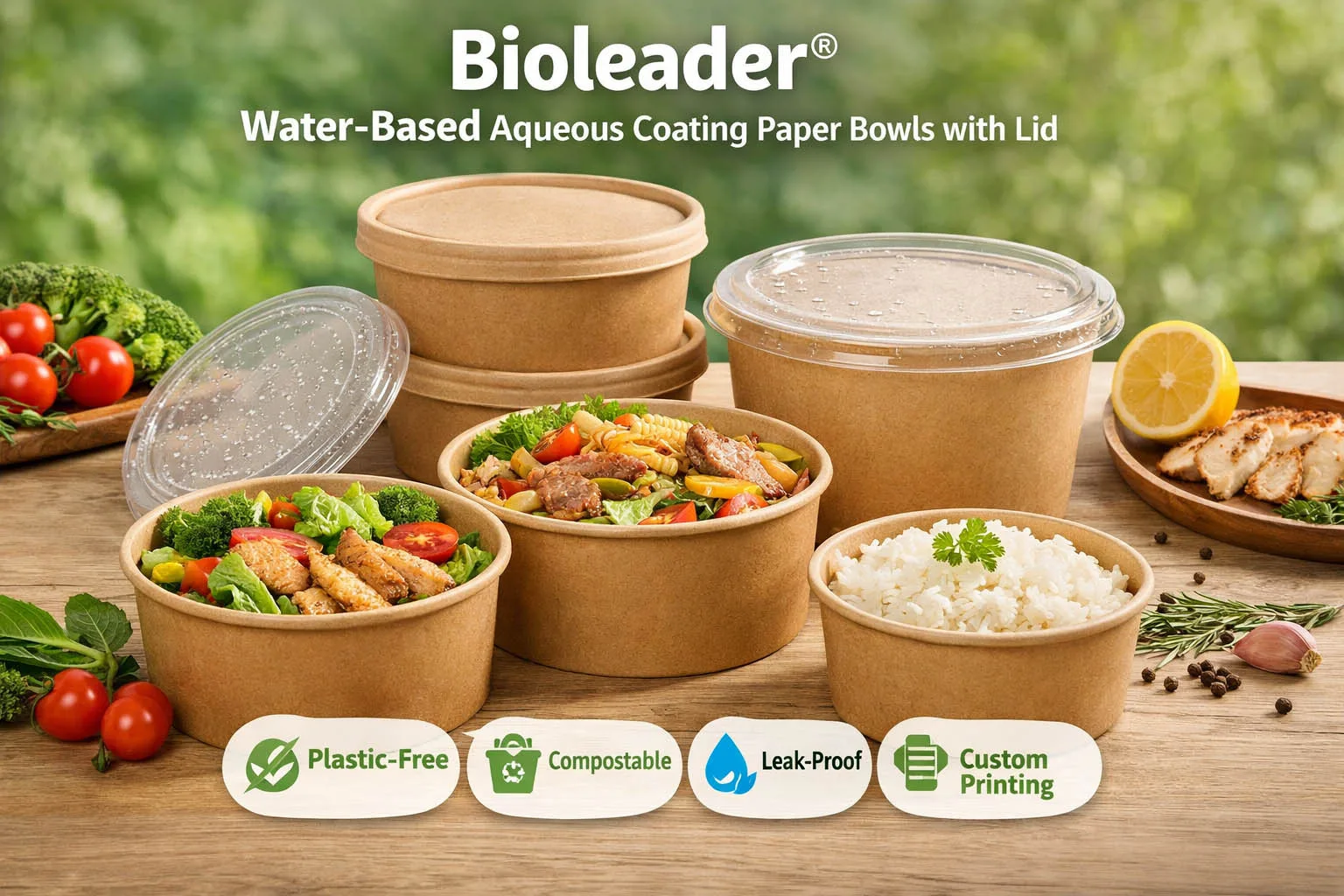
An aqueous coating uses water as the main carrier or dispersion medium during coating application. After drying, the functional barrier may still contain polymers, binders, pigments and additives. “Water-based” therefore describes the application system, not a universal chemical composition or an automatic plastic-free status.
Microwave behavior depends on coating chemistry, coating weight, paperboard grade, drying conditions, side seam, bottom structure and the food placed inside the container.
Microwave performance
Some aqueous-coated paper containers can support short microwave reheating, but performance varies significantly between coating systems. Buyers should request the exact application specification rather than accepting a generic “aqueous-coated” statement.
Advantages
- Aqueous coatings can support plastic-reduction procurement programs.
- The finished product may retain a more natural paper feel than heavily laminated structures.
- Selected systems may have better compatibility with paper-recycling processes, subject to local acceptance and test evidence.
- The format supports bowls, cups, trays and paper food boxes.
Limitations and buyer risks
- There is no single universal aqueous-coating formula or heat limit.
- High-oil and long-duration applications may challenge the barrier more than water-based food.
- “Plastic-free,” “recyclable” and “microwave-safe” are three separate claims requiring separate evidence.
- PFAS status, food-contact compliance and repulpability should be documented rather than assumed.
Buyer warning: Do not approve an aqueous-coated bowl from a marketing label alone. Ask for the coating description, food-contact reports, hot-water and hot-oil results, microwave conditions, plastic-content statement and any recyclability evidence used to support the supplier’s claim.
7. Cornstarch-Based Containers: Performance Depends on the Blend
Material science
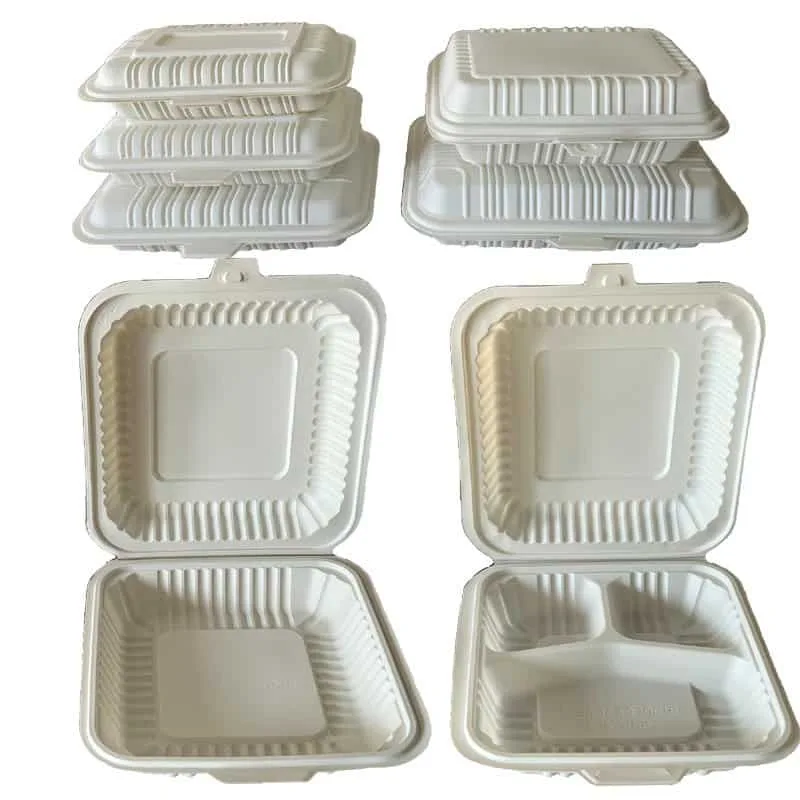
Commercial cornstarch tableware is usually a starch-containing polymer composite rather than pure starch. Depending on the product series, the formulation may include PP, PLA, PBAT, mineral filler or another thermoplastic component that provides water resistance, toughness and processability.
This means that the words “cornstarch container” do not disclose the complete material science. The supporting polymer system often determines the heat behavior, compostability route and microwave limit.
Microwave performance
Microwave performance depends on the full resin blend, wall thickness and food application, not on the presence of cornstarch alone. Bioleader®’s current technical documentation for one cornstarch product series identifies a cornstarch-based compound with PP blended depending on the product series and provides product-specific microwave limits. That type of formulation disclosure is more useful than a general “plant-based” claim.
Advantages
- Cornstarch-based blends can provide a plastic-like appearance and structural feel.
- The material can be formed into clamshells, trays, plates, bowls and cutlery.
- Selected formulations provide useful oil, water and hot-food resistance.
- The category has commercial demand in markets seeking plant-derived content with familiar plastic-style functionality.
Limitations and buyer risks
- A product containing PP should not be described as fully compostable unless the complete formulation and certification support that claim.
- Starch content does not automatically prove biodegradability or industrial compostability.
- Different suppliers may use materially different formulations under the same “cornstarch” name.
- High-oil, high-sugar and long microwave cycles require product-specific testing.
Market popularity and best applications
Cornstarch-based packaging has established demand in parts of the Middle East, Africa and Southeast Asia, as well as in projects that prefer a smooth, molded, plastic-like container. Buyers can review Bioleader® cornstarch tableware solutions and cornstarch clamshell food containers.
Cornstarch Procurement Questions
- What is the complete resin formulation, and does the product contain PP, PLA, PBAT or another polymer?
- Which compostability claim applies to the exact finished SKU?
- What microwave power, time, food type and fill level were tested?
- What food-contact migration evidence covers the actual formulation?
- Does the lid use the same material or a different plastic?
8. Aluminum Foil-Lined Paper Bowls: Conditional Specialist System
Material science
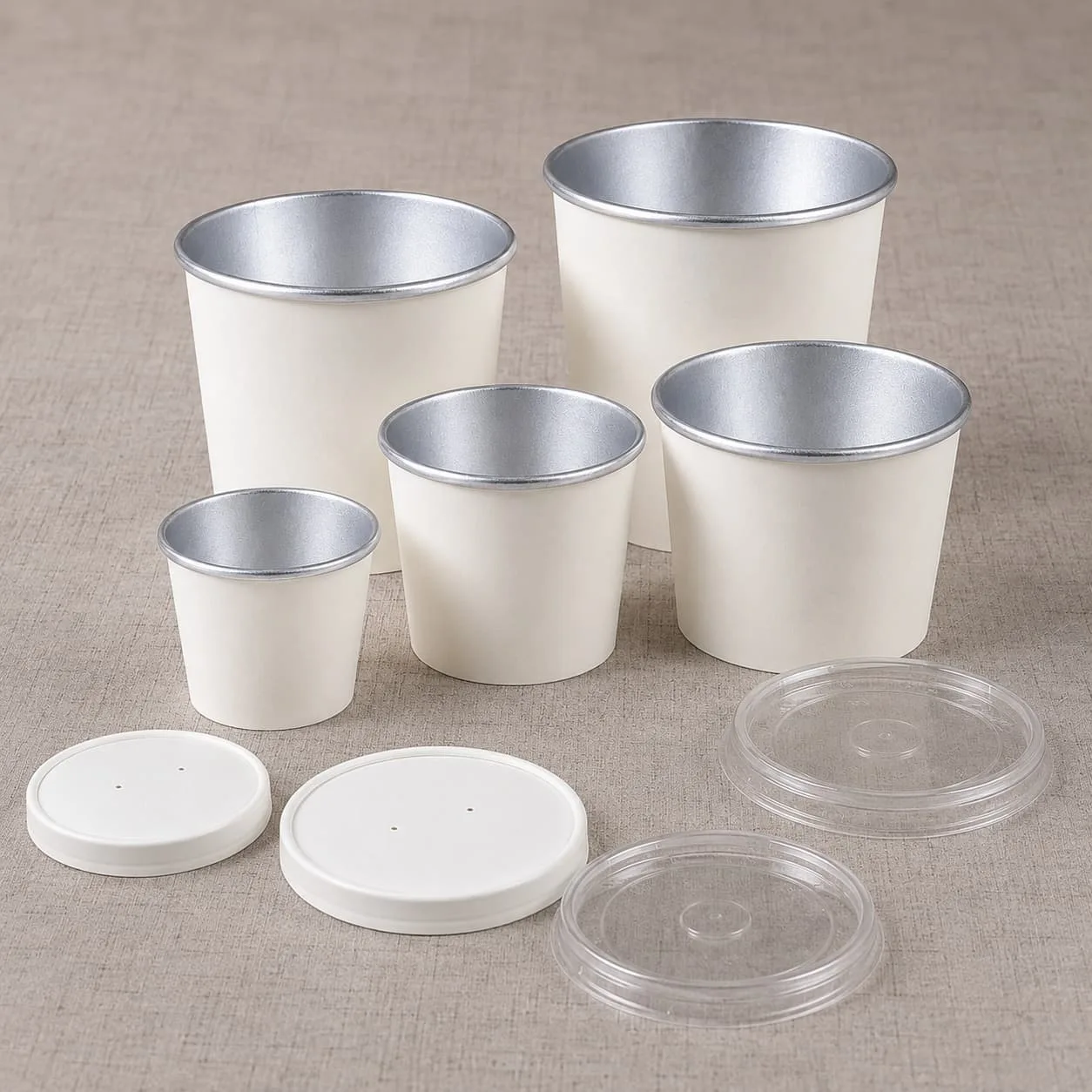
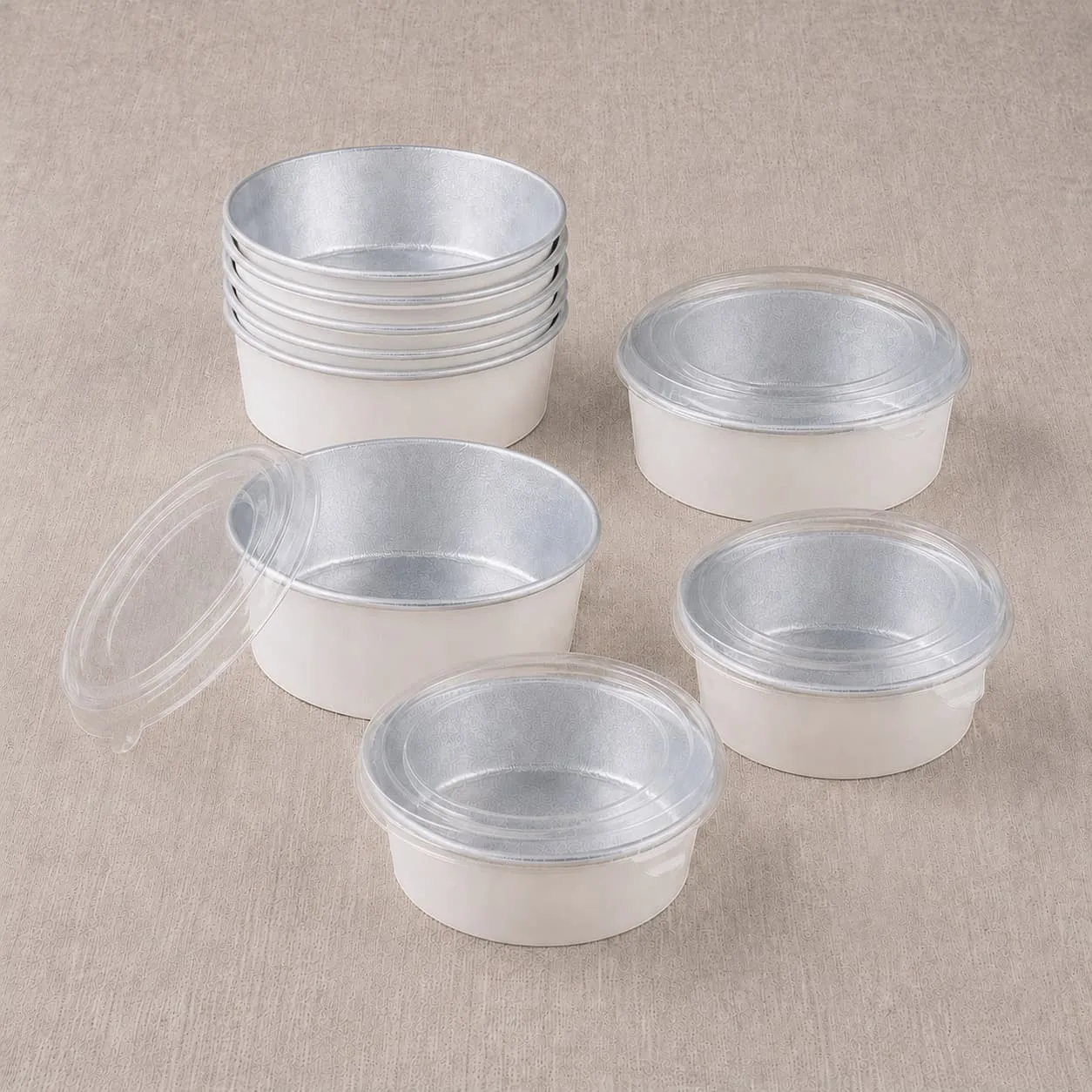
Bioleader® aluminum foil-lined paper bowls use a laminated paperboard structure containing PE, aluminum foil and PE. The food-contact PE layer separates food from the foil, while the aluminum layer improves moisture, oil and oxygen barrier performance and can help reduce heat loss during takeaway delivery.
The covered foil is more controlled than loose household foil, but it remains electrically conductive and can reflect microwave energy. Bowl shape, foil continuity, rim design, exposed edges, food volume and lid material therefore become part of the microwave decision.
Microwave performance
Foil-lined paper bowls should be classified as conditionally microwaveable systems, not universally microwave-safe containers. The FDA generally advises against placing metal pans and aluminum foil in a microwave because reflected energy can cause uneven heating and possible oven damage. Purpose-designed aluminum packaging can sometimes be used under controlled instructions, but those results cannot be transferred automatically to every laminated paper bowl.
Bioleader®’s detailed article on microwave guidance for aluminum foil-lined paper bowls explains the PE–foil–PE structure, arcing risk, food-heating pattern, test matrix and lid rules.
Advantages
- The aluminum barrier supports heat retention during takeaway and delivery.
- The laminate provides strong resistance to oil, sauce, food moisture and leakage.
- The paper exterior supports printing and premium foodservice presentation.
- The structure is useful for soup, curry, noodles, rice meals and other hot foods.
Limitations and use conditions
- The container should not be microwaved empty or nearly empty.
- The bowl should not touch the microwave wall, metal rack or another foil-containing container.
- Damaged, torn or delaminated bowls should not be reheated.
- A metallic seal or unapproved foil lid should be removed.
- A standard clear PET lid should be removed before reheating.
- A PP-coated paper lid or microwave-grade PP lid should remain only when the exact bowl-and-lid system has been validated and venting instructions are provided.
For product sourcing, Bioleader® supplies aluminum foil-lined paper soup bowls and aluminum foil-lined paper meal bowls. Their primary commercial strengths are hot holding, insulation, oil resistance and delivery performance. Microwave reheating should remain subject to the specific product instructions.
9. Microwave-Engineered Paperboard and Susceptor Packaging
Material science
A microwave susceptor is an engineered component that absorbs part of the microwave energy and converts it into localized surface heat. It may use a precisely controlled metallized layer combined with paperboard or film to improve browning and crisping.
Microwave performance
Susceptor packaging is not ordinary paperboard. It is designed for one food type, portion, geometry and heating instruction. A crisping sleeve for a sandwich or pizza cannot be treated as a generic microwave-safe takeaway box.
Advantages
- Susceptors can improve surface browning and crispness that ordinary microwave heating does not produce efficiently.
- The technology is established in selected frozen pizza, bakery, sandwich and snack applications.
- The food and package can be co-developed for a repeatable consumer heating result.
Limitations and buyer risks
- The metallized component requires precise engineering and quality control.
- The package is normally approved only for the specified food and heating instruction.
- Changing portion size, microwave power or food moisture can change performance.
- Susceptor packaging is not currently a core Bioleader® product category and should not be presented as a standard off-the-shelf offer.
How Lid Material Changes Microwave Safety
The lid can be the limiting component in an otherwise suitable container system. Buyers should therefore specify the bowl or tray and the lid as separate materials in quotations, technical data sheets, test plans and consumer instructions.
| Lid type | Typical use | Microwave position | Required action |
|---|---|---|---|
| Microwave-grade PP lid | Hot food, meal prep and controlled reheating. | Conditionally suitable. | Confirm resin grade, thickness, fit, maximum time and whether the lid must be loosened or vented. |
| PP-coated paper lid | Paper bowls for soup, noodles, rice and takeaway meals. | Conditionally suitable. | Validate the paperboard, PP coating, adhesive, edge structure and steam vent. |
| Standard clear PET lid | Cold display, salad presentation, stacking and takeaway transport. | Normally unsuitable for reheating. | Remove before microwaving unless the exact lid is specifically rated for the intended use. |
| CPET component | Engineered high-temperature prepared-meal systems. | Suitable only in designed systems. | Follow the exact tray, seal and heating instructions. |
| PLA lid | Cold food and compostable cold-drink applications. | Normally unsuitable. | Remove before reheating. |
| Paper lid | Hot holding, takeaway and branding. | Depends on coating and construction. | Confirm coating, adhesive, venting and finished-lid testing. |
| Aluminum seal or metallic lid | Barrier sealing and tamper evidence. | Normally remove. | Use in a microwave only when the complete system was specifically engineered and instructed for that purpose. |
A microwave-suitable bowl can become an unsuitable package when paired with the wrong lid. Standard clear PET lids should normally be removed. Microwave-grade PP and validated PP-coated paper lids may remain only under defined venting and heating conditions.
Disposable Food Containers That Should Not Be Microwaved
The following materials should be classified as normally unsuitable, remove-before-heating components or products that require explicit finished-package validation. The safest wording is not “every example is always prohibited,” but “never assume microwave suitability without a specific instruction.”
1. Expanded polystyrene foam, or EPS
Foam trays, cups and clamshells can soften, warp or melt when exposed to high food temperatures. The USDA microwave guidance advises against using foam trays and non-heat-stable plastic wraps because heat from the food can cause melting or warping.
2. Standard PET containers and clear PET lids
Standard clear PET is primarily selected for clarity, cold-food display, refrigerated storage and transport. It should not be confused with CPET. Clear PET lids should normally be removed before reheating, even when the bowl beneath them is PP, paper or foil-lined paper.
3. PLA cups, lids and cold-food containers
PLA is widely used for compostable cold cups, cold-food lids and transparent chilled packaging. Its commercial strength is clarity and plant-derived positioning in cold applications, not routine microwave reheating. Bioleader® compostable PLA cups are positioned for cold drinks rather than microwave use.
4. Standard PE-coated paper without validation
A standard PE-coated paper bowl should not be assumed to be microwave-safe. PE can soften at lower temperatures than PP, while the bottom seal, side seam, adhesive and ink system may create additional limitations. Some finished PE-coated products may pass defined tests, but the coating name alone is not enough.
5. Rigid PS plastic containers
Rigid polystyrene is used for some dessert cups, cold-food trays and clear containers. It has weaker heat stability than mainstream microwave-grade PP and should not be used for reheating unless the finished product carries an explicit instruction.
6. PVC containers and films
PVC-based packaging is generally associated with cold storage, wrapping and selected barrier uses rather than disposable microwave meal containers. It should not be heated with food unless the specific packaging is approved and instructed for that application.
7. Thin storage bags and grocery bags
Ordinary grocery bags and thin disposable storage bags are not designed as microwave cookware. They can soften, melt or transfer onto food. Use only bags specifically manufactured and labeled for microwave heating.
8. Brown paper bags, newspaper and non-food paper
Ordinary brown grocery bags, newspaper and printed non-food paper can contain unsuitable inks, adhesives, recycled contaminants or metal particles and may create a fire risk. They should not be confused with engineered food-grade paper containers.
9. Containers with metal handles, staples or twist ties
Metal handles on paper takeout boxes, staples, twist ties, decorative wire and unapproved metallic labels should be removed before reheating. A container body may be microwave-transparent while a small metal component creates arcing risk.
10. Melamine tableware without microwave approval
The FDA advises that foods and drinks should not be heated on melamine-based dinnerware and that plastic tableware without a microwave-safe specification should not be used for heating. Melamine may be suitable for serving, but it should not be treated as disposable microwave cookware.
Cold-use packaging rule: Standard PET, PLA, rigid PS and many transparent lids are excellent for visibility, refrigeration or cold drinks. Their cold-food value does not make them defective products; it simply means they should not be selected for a reheating workflow.
How Food Type Changes Container Performance
| Food type | Heating behavior | Packaging risk | Buyer test priority |
|---|---|---|---|
| High-water food such as soup, broth and porridge | Liquids can heat rapidly and generate steam. | Superheating, splashing, lid pressure and uneven solid ingredients. | Test venting, stirring instructions, top-to-bottom temperature and safe handling. |
| High-fat food such as curry, meat sauce and oily meals | Oil can create higher local surface temperatures than water-based food. | Plastic softening, coating stress, seam leakage and hot spots. | Test the actual oil content, contact time and hottest surface zone. |
| High-sugar food such as syrup, sweet sauce and dessert filling | Sugar-rich areas can become extremely hot. | Local deformation, migration stress and burning. | Use the real recipe and avoid extrapolating from low-sugar food tests. |
| Frozen prepared meals | Longer heating is required and ice melts unevenly. | Cold spots, steam pockets and thermal shock from freezer to high temperature. | Test thawing and reheating separately across representative microwave models. |
| Low-moisture food such as bread, fried snacks and dry rice | The food may absorb microwave energy less uniformly. | Package hot spots, drying and scorching. | Do not use water tests as the only validation method. |
| Layered or divided meals | Different components heat at different rates. | One compartment may overheat while another remains cold. | Map temperature in every compartment and define stirring or standing instructions. |
Packaging integrity does not prove food heating uniformity. The USDA recommends covering, rotating or stirring food where appropriate and allowing standing time so heat can distribute more evenly. Buyers developing consumer instructions should therefore coordinate packaging tests with the food-safety requirements of the actual menu.
Microwave Safety Comparison Table

| Material | Structure | Microwave position | Main advantage | Main risk | Lid rule | Commercial recommendation |
|---|---|---|---|---|---|---|
| PP | Semi-crystalline polyolefin container. | Generally suitable when labeled or validated. | Mature performance, cost and supply chain. | High-fat or high-sugar food and thin-wall deformation. | Prefer validated PP lid with venting instructions. | Best mainstream choice. |
| CPET | Crystallized PET tray. | Suitable in engineered prepared-meal systems. | Frozen-to-hot dimensional stability. | Confusion with standard PET and seal-film limits. | Use only the designed lidding system. | Best for selected frozen and retail ready meals. |
| Bagasse | Hot-pressed sugarcane fiber network. | Suitable for short reheating after finished-product validation. | Leading compostable molded-fiber option. | Oil, moisture, hinge and long-time heating performance. | Remove PET; validate fiber or PP lid. | Best compostable route. |
| Other molded fiber | Bamboo, wheat straw, wood pulp or mixed fiber. | Product-specific validation required. | Renewable material options. | Variable fiber blend, additives and density. | Evaluate separately. | Use only with transparent composition and test data. |
| PP-coated paper | Paperboard with PP barrier layer. | Strong paper-based candidate after full-package validation. | Paper appearance with improved heat route. | Seam, adhesive, bottom seal and composite end-of-life. | Use validated PP or PP-coated paper lid and vent. | Best paper-based reheating route. |
| Aqueous-coated paper | Paperboard with water-applied barrier coating. | Conditionally suitable. | Supports plastic-reduction programs. | Highly variable coating chemistry and barrier performance. | Validate lid, coating and adhesive. | Promising but specification-dependent. |
| Cornstarch blend | Starch-containing polymer composite. | Depends on the full formulation. | Plastic-like structure with plant-derived content. | Unclear composition and inconsistent compostability claims. | Confirm actual lid resin. | Suitable only with full formulation disclosure. |
| Foil-lined paper | Paperboard with PE–aluminum foil–PE laminate. | Conditional specialist system. | Strong barrier, hot holding and leak resistance. | Metal reflection, uneven heating and lid mismatch. | Remove PET and metallic seals; validate PP options. | Choose primarily for delivery barrier performance. |
| Standard PET | Clear amorphous polyester. | Normally unsuitable for reheating. | Excellent clarity and cold display. | Softening or distortion under hot-food conditions. | Remove clear PET lids. | Use for cold food and refrigerated display. |
| PLA | Plant-derived polyester for cold packaging. | Normally unsuitable. | Clear compostable cold-use positioning. | Low heat stability in common cold-cup grades. | Remove PLA lids. | Use for cold drinks and chilled food. |
| EPS and rigid PS | Foamed or rigid polystyrene. | Normally unsuitable. | Low cost and light weight. | Melting, warping and poor high-temperature stability. | Do not use for microwave reheating without explicit approval. | Avoid in reheating programs. |
What Tests Should Buyers Request?
A microwave claim should be supported by a repeatable test matrix. Heating one water-filled sample for one minute without visible deformation is not sufficient evidence for a global product range.
Recommended Finished-Package Test Matrix
| Test variable | What should be evaluated | Why it matters |
|---|---|---|
| Exact SKU and size | Test the actual diameter, height, capacity, wall thickness, rim, hinge and bottom construction. | One size cannot automatically validate every product in a series. |
| Material and coating | Confirm resin grade, fiber composition, coating chemistry, laminate and adhesive. | Generic material names can conceal important formulation differences. |
| Actual food | Use representative soup, rice, noodles, oily curry, sugary sauce and frozen portions. | Water does not reproduce all thermal and chemical conditions. |
| Fill level | Evaluate minimum, normal and maximum commercial portions. | The food-to-package ratio affects energy absorption and wall temperature. |
| Microwave power | Use representative household and commercial power levels. | Heating rate and hot spots change with appliance power and design. |
| Heating time | Test the intended instruction and a foreseeable limited overrun. | Long heating can expose weaknesses that do not appear during a short test. |
| Lid configuration | Test without lid and separately with every proposed vented, loosened or attached lid. | The lid can create a separate material and steam-pressure risk. |
| Temperature mapping | Record food and package temperatures at the surface, center, sidewall, bottom and each compartment. | An average temperature can conceal cold spots and local overheating. |
| Structural integrity | Inspect deformation, leakage, seam failure, hinge weakness, blistering and delamination. | The container must remain safe to handle after heating. |
| Electrical behavior | For metal-containing systems, observe arcing, exposed edges, wall clearance and contact with other metal. | Metal geometry and positioning affect microwave behavior. |
| Organoleptic review | Check unusual odor, discoloration, visible residue and food-taste changes. | Functional acceptability includes package and food quality. |
| Repeatability | Test several samples from representative production batches. | A claim should reflect normal production rather than one successful specimen. |
Food-contact and compliance documents
Buyers should request documents that match the real material and use condition. Depending on the target market and packaging system, this may include composition statements, applicable FDA or EU food-contact evidence, overall and specific migration data, GMP documentation, ink and adhesive declarations, PFAS statements and compostability certification where relevant.
EU plastic food-contact compliance commonly involves Regulation (EC) No 1935/2004, Regulation (EU) No 10/2011 and GMP requirements. These rules address food-contact safety; they do not automatically authorize an unlimited microwave claim. The test temperature, duration, food type and intended use must remain aligned with the documentation.
Documentation that should reach the buyer
- The technical data sheet should identify the complete material structure and intended temperature or reheating conditions.
- The test report should identify the exact SKU, food or simulant, fill level, power, time and lid configuration.
- The carton and consumer instructions should state whether the lid must be removed, loosened or vented.
- The supplier should distinguish hot-food holding, freezer use, microwave reheating and oven use.
- Change-control procedures should identify whether a new resin, coating, adhesive or lid requires re-evaluation.
Buyer Decision Framework
The right microwave takeaway package = food compatibility + reheating model + lid system + delivery time + compliance + end-of-life route + total operating cost.
Choose PP when
- Direct microwave reheating is a central requirement.
- High-volume supply, stable molding and cost efficiency are priorities.
- The menu includes rice, noodles, meal prep or refrigerated prepared food.
- A matching microwave-grade PP lid can be specified.
Choose bagasse when
- The project requires compostable molded-fiber positioning.
- Short reheating, hot-food service and takeaway presentation are required.
- The buyer can test the actual menu and confirm the PFAS-free barrier grade.
- The lid can be evaluated separately.
Choose PP-coated paper when
- The brand requires a printable paper exterior.
- The menu includes soup, noodles, curry, pasta or rice bowls.
- Short controlled reheating is required.
- The bowl, bottom seal, coating and lid can be validated as one system.
Choose aqueous-coated paper when
- Plastic reduction or paper-recycling compatibility is a major procurement goal.
- The supplier can disclose the coating chemistry and performance data.
- The menu does not exceed the proven oil, temperature and holding limits.
Choose a cornstarch-based blend when
- The market prefers a molded, plastic-like container with plant-derived content.
- The supplier discloses the complete formulation.
- The compostability and microwave claims apply to the exact product series.
Choose foil-lined paper when
- Heat retention, oil resistance, moisture barrier and delivery performance are the primary priorities.
- Microwave reheating is secondary and can be controlled with specific instructions.
- The buyer can remove standard PET lids and unapproved metallic seals.
- The exact bowl-and-lid configuration can be validated before a microwave claim is used.
Choose PET or PLA only for cold applications when
- Clarity and chilled display are more important than reheating.
- The product is salad, fruit, dessert, cold deli food or a cold drink.
- The operating instructions clearly require transferring food or removing the lid before heating.
For a broader sourcing framework covering food compatibility, leak resistance, logistics, compliance and cost, see Bioleader®’s guide on how to choose high-performance takeaway food containers.
Bioleader® Manufacturer Recommendation
Bioleader® does not recommend choosing a microwave package from the material name alone. International buyers should define the food, portion, filling temperature, delivery time, microwave power, maximum reheating duration and lid behavior before confirming the container.
- For mainstream microwave reheating: PP remains the most practical industry benchmark, provided the finished container and lid are validated.
- For compostable short reheating: choose tested bagasse containers and evaluate the lid separately.
- For paper-based reheating: prioritize a validated PP-coated paper bowl with a suitable PP or PP-coated paper lid.
- For plastic-reduction paper programs: assess aqueous-coated paper through real food, oil and microwave testing.
- For plant-based molded packaging: require full formulation disclosure for cornstarch-based blends.
- For high-barrier hot holding: foil-lined paper can provide strong delivery performance, but standard PET lids should be removed and microwave use should remain conditional.
- For cold display: use PET or PLA for their intended chilled applications rather than forcing them into a reheating workflow.
Bioleader® supports product and lid matching, sample evaluation, custom printing, OEM and private-label projects, food-contact documentation coordination, export packing and container-loading planning. Buyers can compare the broader range of Bioleader® biodegradable food packaging solutions before selecting samples for application testing.
Final Commercial Verdict
PP remains the most practical mainstream choice for microwave-ready takeaway packaging. It combines mature supply, molding consistency, lid matching and broad foodservice acceptance, but the exact finished container still requires defined use instructions.
Tested bagasse is the leading compostable alternative, while validated PP-coated paper is the strongest paper-based route. CPET performs well in engineered frozen and prepared-meal systems. Aqueous-coated paper, cornstarch-based blends and other molded fibers require more formulation-specific evidence.
Aluminum foil-lined paper bowls are conditional specialist packages. Their strongest commercial advantages are heat retention, oil resistance, moisture barrier and delivery performance. Microwave use depends on the complete bowl, lid, food load, power, time and positioning instructions.
Standard PET lids, PLA cold-food packaging, EPS foam, rigid PS, PVC and unvalidated PE-coated paper should not be treated as microwave-safe. A cold-display product can be completely suitable for its intended market while remaining inappropriate for reheating.
The best package is not the material with the strongest environmental slogan. It is the complete container, lid and food system that performs safely under the buyer’s real operating conditions and can be supported by transparent documentation.
Frequently Asked Questions
What is the best disposable container material for microwave reheating?
Polypropylene is generally the most established disposable material for mainstream microwave reheating. It offers mature molding, water and oil resistance, stable supply and matching PP lid options. However, buyers should still confirm that the exact finished container is labeled or tested for the intended food, microwave power and heating time.
Are bagasse containers microwave-safe?
Many finished sugarcane bagasse containers are suitable for short microwave reheating, but the claim should be limited to the tested SKU and application. Food moisture, oil content, product weight, hinge design, PFAS-free barrier grade, heating time and lid material can all affect performance.
Can paper bowls go in the microwave?
Some paper bowls can be microwaved under defined conditions, but the result depends on the coating, adhesive, side seam, bottom seal, printing and lid. Validated PP-coated paper bowls are strong candidates for reheating, while PE-, PLA- and aqueous-coated products require structure-specific evaluation.
Can cornstarch containers be microwaved?
It depends on the complete polymer blend. Commercial cornstarch tableware may contain PP, PLA, PBAT, mineral filler or other materials. Buyers should request the full formulation, food-contact documentation and product-specific microwave conditions instead of assuming that the cornstarch name proves heat performance.
Can aluminum foil-lined paper bowls go in the microwave?
Foil-lined paper bowls are conditional microwave systems rather than universally microwave-safe containers. The bowl geometry, foil edges, food load, lid, power, time and microwave positioning must be controlled. Standard PET lids and unapproved metallic seals should be removed before reheating.
Should a PET lid be removed before microwaving?
Yes. A standard clear PET lid is normally designed for cold-food visibility, stacking and takeaway transport rather than microwave reheating. It should be removed unless the exact lid has been specifically identified and validated for the intended heating conditions. CPET is a different material system and should not be confused with ordinary clear PET.
Which disposable containers should never be assumed to be microwave-safe?
Do not assume microwave suitability for EPS foam, standard PET, PLA cold-food packaging, rigid PS, PVC, grocery bags, ordinary brown paper bags, newspaper, melamine tableware, unvalidated PE-coated paper or packaging with metal handles, staples, twist ties or metallic seals. Use only products carrying clear application-specific instructions.
References and Further Reading
- U.S. Food and Drug Administration: Microwave Ovens
- USDA Food Safety and Inspection Service: Cooking with Microwave Ovens
- USDA Food Safety and Inspection Service: Glossary of Packaging Terms
- USDA Food Safety and Inspection Service: Cooking Safely in the Microwave Oven
- U.S. Food and Drug Administration: Melamine in Tableware Questions and Answers
- European Food Safety Authority: Food Contact Materials
- Regulation (EC) No 1935/2004 on Materials and Articles Intended to Come into Contact with Food
- Commission Regulation (EU) No 10/2011 on Plastic Materials and Articles Intended to Come into Contact with Food
- Sugarcane Bagasse as a Source of Cellulosic Fiber for Diverse Applications
- Study on Microwave Heating and Migration from Polypropylene Packaging
- Bioleader®: Can Aluminum Foil-Lined Paper Bowls Go in the Microwave?
- Bioleader®: How to Choose High-Performance Takeaway Food Containers