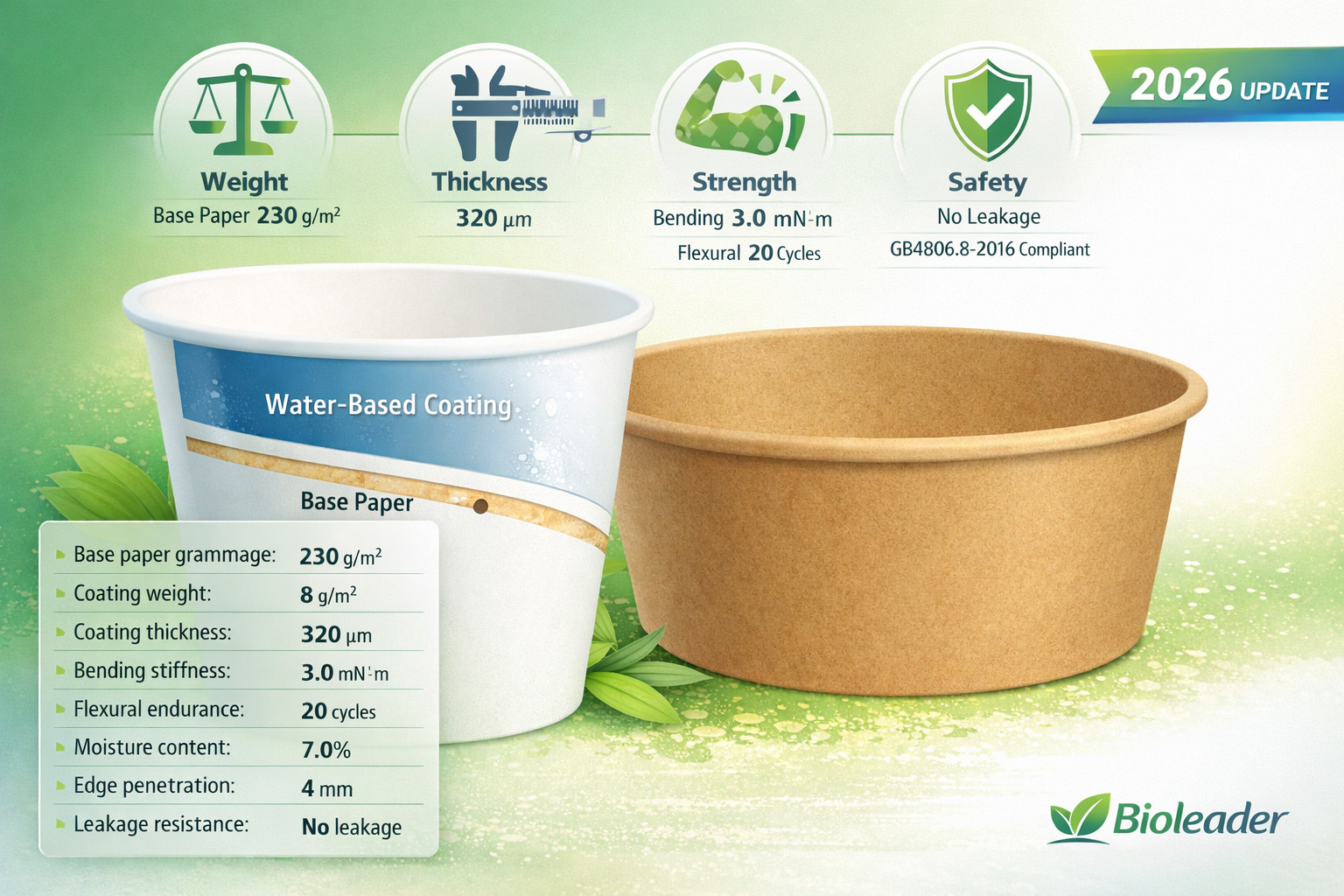
Updated September 2026: Regulation (EU) 2025/40 on packaging and packaging waste (PPWR) began applying across the EU on 12 August 2026. Its recyclability requirements are being phased in, with design-for-recycling requirements becoming especially important from 2030. Buyers should therefore evaluate coated paper packaging based on the complete material structure and applicable market requirements rather than relying only on terms such as “paper,” “bio-based,” or “water-based.”
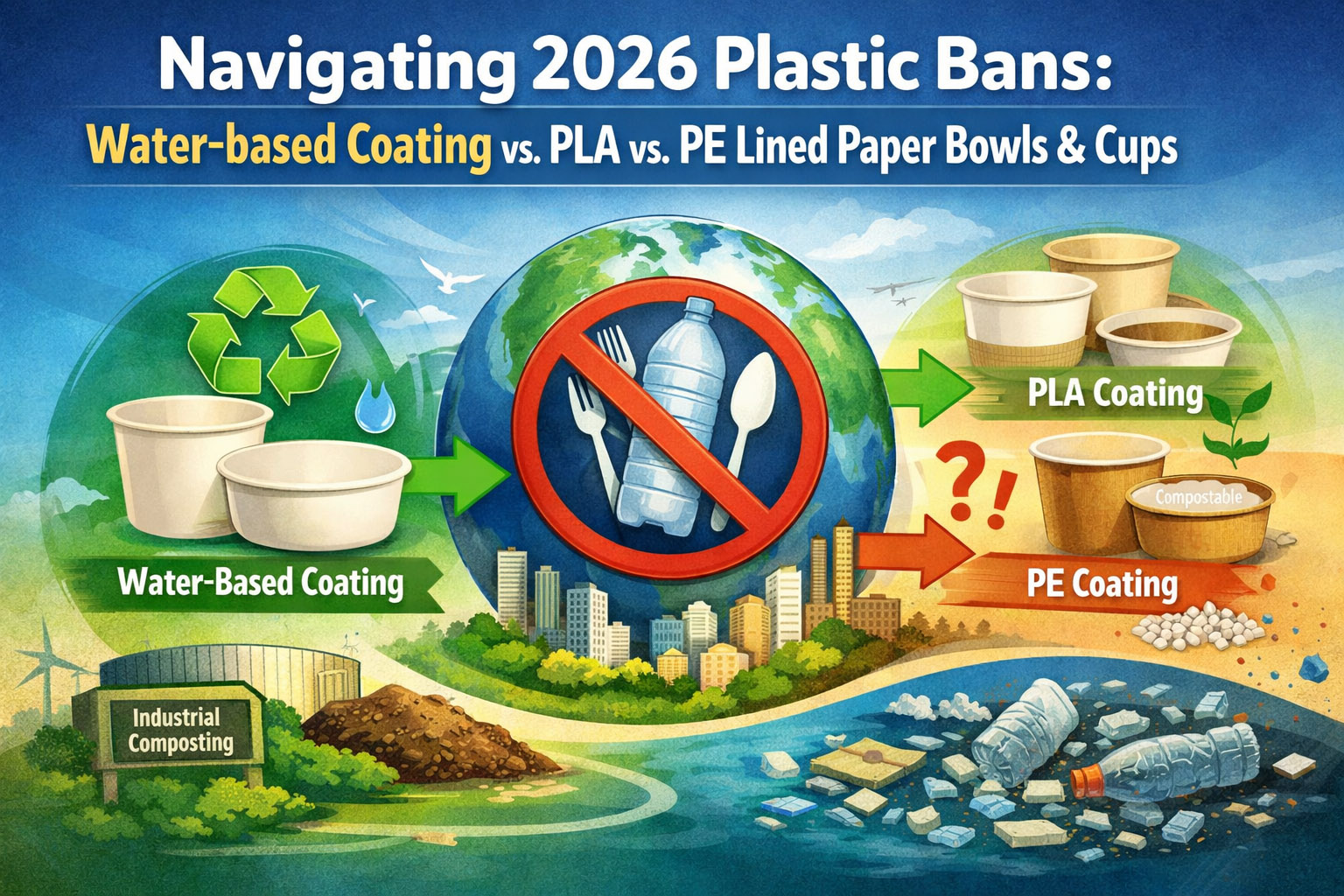
1. Introduction: The Growing Challenge of Plastic Bans and Their Impact on Packaging
By 2026, packaging regulations, single-use plastic restrictions, extended producer responsibility programs, and recyclability requirements are changing how foodservice businesses specify paper cups, paper bowls, and takeaway containers. Requirements differ considerably between Europe, North America, Asia, and individual national or local markets, so material selection can no longer be based on a simple “paper versus plastic” distinction.
Global Plastic Ban Impact:
Paper bowls and cups traditionally use barrier layers such as polyethylene (PE), polylactic acid (PLA), or newer aqueous and dispersion coatings to provide resistance to water, grease, and food contact. Whether a particular structure is restricted, recyclable, compostable, or suitable for a sustainability claim depends on the target market, coating formulation, total package structure, and available supporting evidence.
Industry Transformation Demand:
Foodservice brands and packaging buyers are increasingly looking for structures that balance barrier performance, food-contact safety, material efficiency, recyclability, compostability where relevant, and regulatory compatibility. Water-based coating systems are one important development because some formulations can provide functional barriers with a relatively low coating add-on and improved compatibility with paper-recycling processes.
For example, disposable paper salad bowls are available in multiple sizes and barrier structures. Buyers should compare not only bowl capacity and appearance, but also the coating system, intended food temperature, holding time, grease exposure, lid combination, and disposal route.
2. Water-based Coating: The Environmental Pioneer in Plastic Alternatives
Water-based coatings, often described as aqueous or dispersion coatings, use water as the main carrier during coating application. They can create moisture, grease, and oil barriers on paper packaging while reducing reliance on conventional extrusion-applied plastic layers in certain structures.
Key distinction: “Water-based” describes how a coating is formulated and applied. It does not automatically mean that the dry coating is plastic-free, compostable, biodegradable, or accepted in every paper-recycling system. Those claims depend on the actual dry coating chemistry, coating weight, finished package construction, and relevant test evidence.
What Is Water-based Coating?
Water-based barrier coatings are applied to paper-based food containers to improve resistance to grease, moisture, sauces, and other food-contact conditions. Depending on the formulation, the dry barrier may contain polymers, minerals, functional additives, or combinations of these components.
For businesses evaluating alternatives to conventional laminated structures, water-based aqueous coating paper bowls with lids can be considered where the selected structure provides the required barrier and foodservice performance. Any recyclability, compostability, or plastic-free claim should be checked against the specification and available evidence for that particular product.
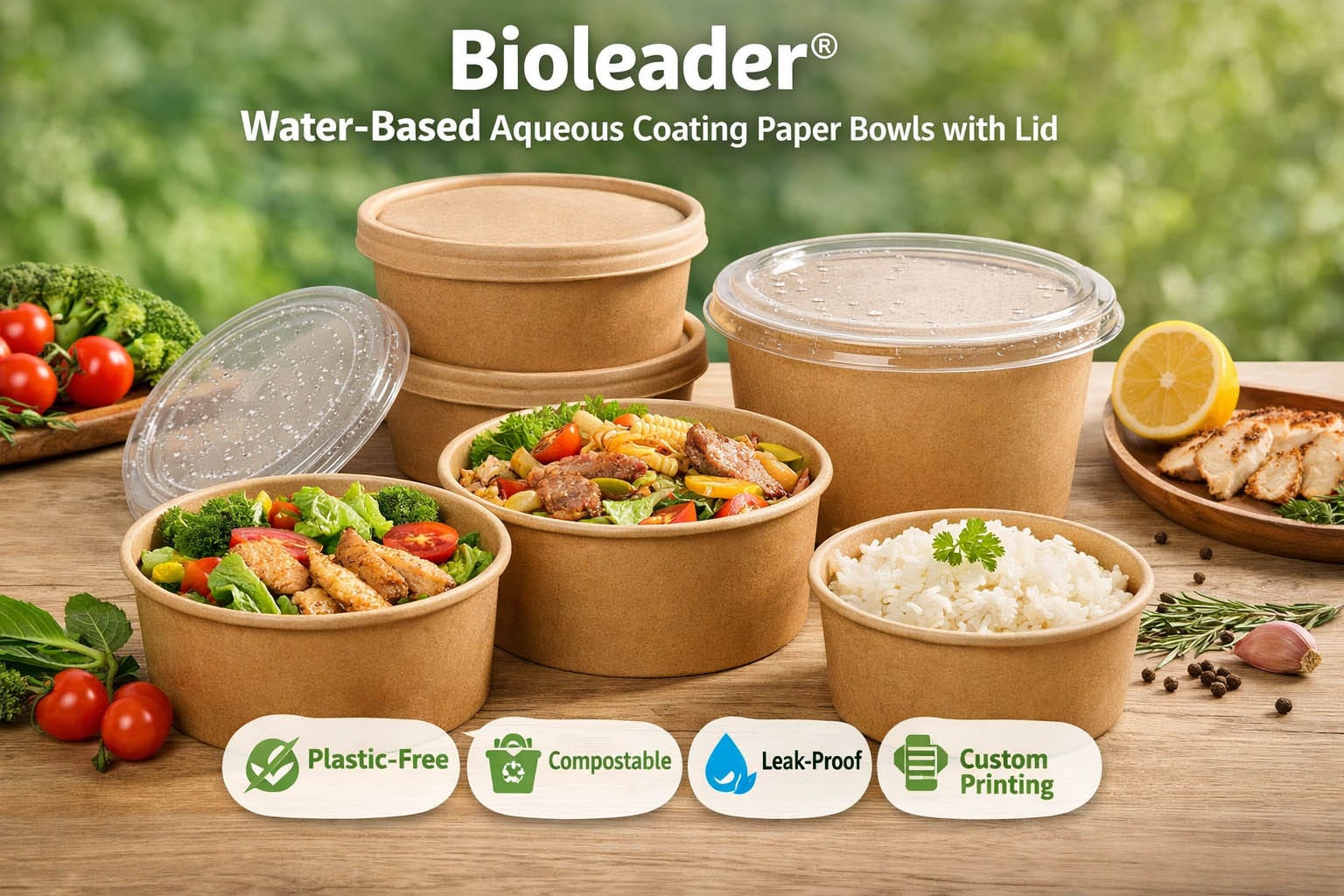
Potential Environmental Benefits of Water-based Coatings:
- Lower Dependence on Thick Extrusion Layers: Some aqueous coating systems can provide the necessary barrier with a relatively thin functional layer. This can reduce non-fiber content compared with certain conventional laminated structures, although the result depends on the coating formulation and application weight.
- Potential for Improved Repulpability: Properly designed coated paper can release usable fiber during pulping and screening. Water-based systems may perform favorably when the coating chemistry, coat weight, base paper, adhesives, and package construction are designed for paper recycling.
- Flexible Material Design: Different aqueous formulations can be optimized for moisture resistance, grease resistance, heat exposure, sealing, printing, and other foodservice requirements. Performance must still be confirmed under the intended use conditions.
The Market Outlook for Water-based Coatings:
Water-based coatings are receiving greater attention as paper packaging suppliers seek structures that use fiber efficiently and are easier to evaluate within emerging design-for-recycling frameworks. They should nevertheless be assessed product by product rather than treated as a single universal material category.
Bioleader® Manufacturer Insight: Based on Bioleader®’s experience serving foodservice packaging buyers, coating selection should begin with food temperature, holding time, grease and moisture exposure, lid structure, barrier requirements, and the disposal infrastructure of the destination market. The coating name alone is not sufficient for a purchasing decision.
3. PLA Coated Paper Bowls & Cups: A Green Alternative but with Limitations
Polylactic acid (PLA) is a bio-based thermoplastic commonly produced from renewable feedstocks such as plant-derived sugars. PLA can be used as a barrier layer on paper cups and bowls and is commonly associated with certified industrially compostable packaging systems.
What Is PLA Coating?
PLA coating provides moisture and grease resistance in much the same functional role as other polymer barriers. Its renewable feedstock origin distinguishes it from conventional petroleum-derived PE, but PLA remains a polymer layer and should not automatically be described as plastic-free.
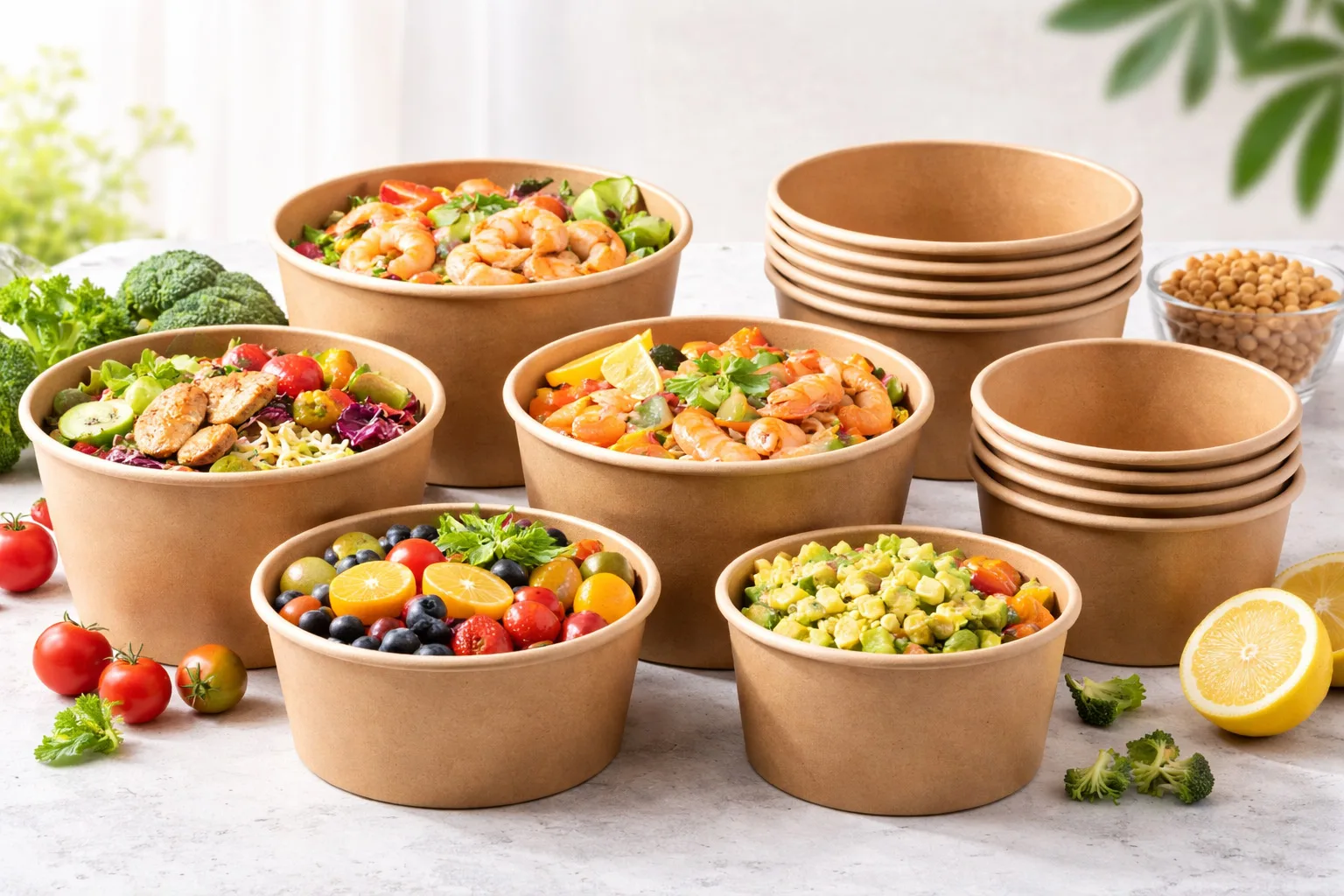
Environmental Benefits of PLA Coatings:
- Industrial Compostability Potential: PLA-containing packaging can be suitable for industrial composting where the complete finished product meets the relevant compostability standard and where suitable collection and industrial composting infrastructure are available.
- Bio-based Feedstock: PLA is commonly derived from renewable agricultural feedstocks rather than conventional fossil-based polyethylene. Bio-based content, however, is different from biodegradability, compostability, and recyclability.
Limitations of PLA Coatings:
- Industrial Composting Conditions: PLA normally requires controlled industrial composting conditions to achieve the degradation performance associated with certified compostable products. It should not automatically be represented as home compostable.
- Recycling Compatibility Varies: PLA-coated paper should not automatically be classified as either recyclable or non-recyclable. Its behavior depends on coating weight, package construction, repulpability, sorting practices, and whether local mills accept the material.
- Infrastructure Dependency: A certified compostable structure provides limited practical benefit if the destination market does not separately collect and process compostable foodservice packaging.
PLA vs. Water-based Coatings:
PLA and water-based coatings solve different purchasing requirements. PLA can support an industrial-composting pathway where certification and infrastructure exist, while some aqueous systems can reduce non-fiber content and improve compatibility with conventional paper-recycling processes.
- Paper-recycling potential: Some low-add-on aqueous coatings are designed for good fiber recovery, but this should be verified with structure-specific recyclability or repulpability evidence.
- Composting pathway: PLA can be relevant where the complete package is certified and an industrial composting pathway exists.
- Regulatory classification: PLA is bio-based but remains a polymer. Water-based systems also require formulation review before making a plastic-free claim.
For businesses evaluating different barrier systems, biodegradable paper bowls should be selected according to the complete material structure and the disposal pathway required in the destination market.
4. PE Coated Paper Bowls & Cups: The Challenges of Traditional Plastic Coatings
Polyethylene (PE) has been widely used as a moisture and grease barrier in paper cups, bowls, and other foodservice packaging. Its mature processing performance, sealing behavior, and barrier properties explain why PE-lined paper remains common in global packaging supply chains.
What Is PE Coating?
PE is a conventional thermoplastic polymer usually applied to paperboard as a thin extrusion-coated layer. It provides reliable resistance to liquids and grease and can be engineered for a broad range of foodservice applications.
Environmental Challenges of PE Coatings:
- Additional Non-Fiber Material: During paper recycling, PE must be separated from recoverable paper fibers. The amount and behavior of this non-fiber fraction can affect mill processing efficiency and reject generation.
- Recycling Access Is Not Universal: PE-lined paper cups are processed by a growing number of paper mills, particularly in North America, but collection and acceptance remain inconsistent. A PE-lined cup should therefore not be described as universally recyclable or universally non-recyclable.
- No Compostability Pathway: Conventional PE is not an industrially compostable barrier material and should not be marketed as compostable or biodegradable.
Why PE Coatings Are Being Reconsidered Alongside Water-based Coatings:
As brands focus more closely on fiber recovery, material efficiency, plastic-reduction targets, and future design-for-recycling requirements, some buyers are comparing PE structures with lower-add-on aqueous barriers. The appropriate choice depends on technical performance, regulatory requirements, processing infrastructure, and total cost rather than coating terminology alone.
For businesses comparing takeaway food packaging, takeaway bowls with lids can be reviewed by material structure, lid compatibility, heat requirements, coating system, and intended waste-management route.
5. Water-based Coating vs. Traditional Coatings: Environmental Comparison
| Criteria | Water-based / Aqueous Coating | PLA Lined | PE Lined |
|---|---|---|---|
| Barrier type | Formulation-dependent dispersion or aqueous barrier | Bio-based thermoplastic polymer layer | Conventional thermoplastic polymer layer |
| Plastic-free claim | Not automatic; verify dry coating chemistry and applicable definition | Generally no; PLA is a polymer even though it is bio-based | No; PE is conventional plastic |
| Paper-recycling compatibility | Can be favorable with suitable chemistry and low coating add-on; verify testing | Structure- and mill-dependent | Can be processed by suitable mills; local collection and mill acceptance vary |
| Industrial compostability | Not automatic; finished structure requires applicable evidence | Possible when the complete product is appropriately certified | Not compostable |
| Key purchasing variable | Dry chemistry, coat weight, barrier performance and repulpability | Certification, coating weight and composting infrastructure | Barrier performance, non-fiber content and recycling infrastructure |
| End-of-life decision | Verify local paper recycling or other approved route | Verify industrial composting or other applicable route | Verify local paper-cup collection and mill acceptance |
Food-contact Safety:
Food-contact safety should be evaluated from the finished packaging structure and applicable test documentation. Neither “water-based,” “PLA,” nor “PE” alone proves that a finished cup or bowl is safe or unsafe. Buyers should verify the documentation applicable to the selected item and intended market.
Recyclability and Sustainability:
Recyclability is determined by more than the coating name. Base paper quality, coating chemistry, coating weight, fiber yield, repulpability, screen rejects, adhesives, closures, collection infrastructure, sorting, and mill acceptance can all affect whether a paper cup or bowl is successfully recycled.
Reducing Environmental Impact:
Material reduction, high fiber recovery, appropriate barrier performance, efficient manufacturing, realistic end-of-life pathways, and compatibility with local infrastructure can all contribute to improved packaging outcomes. No single coating technology should be assumed to have the lowest environmental impact in every market or application without supporting life-cycle and product-specific evidence.
| Operational Metric | Water-based / Aqueous Coating | PLA Lined | PE Lined |
|---|---|---|---|
| Grease & moisture barrier | Good to strong depending on formulation and coat weight | Strong in suitable structures | Strong in suitable structures |
| Heat tolerance | Product-specific; confirm intended-use conditions | Product-specific; PLA can soften at elevated temperatures | Product-specific; depends on PE grade and package construction |
| Fiber-recovery potential | Can be favorable with properly designed low-add-on structures | Must be tested for the specific structure | Fiber can be recovered in mills equipped to process coated cups |
| Composting pathway | Only where supported by finished-product evidence | Relevant where finished product is certified and infrastructure exists | Not a composting pathway |
| Main buyer verification | Formulation, coat weight, barrier test and recycling evidence | Certification scope and destination composting infrastructure | Local recycling access and mill acceptance |
6. What Actually Determines Whether a Coated Paper Cup Can Be Recycled?
The most important recyclability question is not simply “Is this cup coated with PE, PLA, or a water-based material?” A technically meaningful assessment looks at how the complete package behaves during collection, pulping, screening, fiber recovery, and production of new paper products.
Core principle: A coated paper cup can be technically repulpable but still not be collected locally. It can also be accepted in a municipal collection program but rejected by a particular downstream mill. Therefore, technical recyclability, collection access, and actual mill acceptance are related but different questions.
1. Coating Chemistry
The chemical composition of the dry barrier determines how it behaves in a paper mill. Conventional PE, PLA, acrylic or other dispersion polymers, mineral-containing systems, and hybrid barriers can behave differently during pulping and screening.
This is why the phrase “water-based coating” cannot by itself establish recyclability. Water may be the carrier during application, but buyers still need to understand what remains on the paper after drying.
2. Coating Weight and Non-Fiber Content
The amount of barrier material matters as much as its chemistry. Two paper cups using similar coating chemistry can have different recycling behavior if one contains substantially more non-fiber material.
Lower coating add-on can support higher fiber content and potentially reduce screening rejects, provided that the thinner coating still delivers the required moisture, grease, sealing, and food-contact performance.
3. Fiber Yield
Fiber yield refers to the proportion of usable paper fiber that can be recovered from the packaging during the recycling process. For paper-based packaging, this is a more useful technical metric than simply asking whether the item can enter a pulper.
A structure that breaks apart but produces excessive rejects or poor-quality recovered fiber may be less attractive to paper mills than one that provides a high yield of usable fiber.
4. Repulpability
Repulpability describes how effectively the paper structure can disintegrate in water and release fibers under defined pulping conditions. Laboratory paper-recyclability methods commonly simulate stages such as pulping, screening, and sheet formation to evaluate the behavior of a packaging structure.
Good repulpability does not automatically prove nationwide recyclability, but it provides important technical evidence for evaluating whether the fiber component can be recovered efficiently.
5. Coarse and Fine Screen Rejects
After pulping, recycling systems screen the fiber slurry to remove non-fiber materials and poorly disintegrated components. Barrier films, coating fragments, wet-strength materials, labels, and other components can contribute to coarse or fine rejects.
The quantity and behavior of these rejects can influence processing cost, usable fiber yield, equipment performance, and whether a mill considers a packaging format economically attractive.
6. Adhesives, Seams and Stickies
Recyclability does not depend only on the cup wall. Side-seam adhesives, bottom sealing systems, labels, tapes, hot-melt adhesives, and pressure-sensitive materials may also enter the recycling process.
Some adhesive residues can behave as stickies, creating deposits or defects during papermaking. For this reason, buyers evaluating a recyclable paper package should review the complete packaging structure instead of focusing only on the barrier layer.
7. Collection and Sorting Infrastructure
Even a technically repulpable paper cup may not be recycled if the local collection program instructs consumers to place it in general waste. Collection rules vary by country, state, municipality, material recovery facility, and waste contractor.
Contamination with food and liquids, incorrect sorting, lids made from different materials, and insufficient volumes can further affect recovery.
8. Mill Acceptance and End Markets
The final practical question is whether a paper mill actually accepts the recovered material and has an end market for the resulting fiber. Some mills are equipped to separate polymer linings and recover fiber from conventional paper cups, while others may exclude the same products because of equipment, quality, economic, or supply considerations.
Bioleader® Buyer Note: When comparing coated paper cups or bowls, buyers should request the complete material specification rather than asking only whether the coating is PE, PLA, or aqueous. Relevant information can include base paper, coating type, coating weight where available, intended food-contact conditions, applicable test reports, and evidence supporting recyclability or compostability claims.
| Recyclability Factor | Why It Matters | What Buyers Should Verify |
|---|---|---|
| Coating chemistry | Determines behavior during pulping and screening | Actual dry coating composition or supplier specification |
| Coating weight | Affects non-fiber fraction and potential rejects | Barrier add-on or coating structure where available |
| Fiber yield | Shows how much usable fiber can be recovered | Relevant recyclability or laboratory test data |
| Repulpability | Indicates whether fibers can be effectively released | Test method, sample structure and result |
| Screen rejects | Affects processing efficiency and recovered-fiber quality | Reject level and nature of non-fiber residues where tested |
| Adhesives | May contribute to stickies and papermaking defects | Seams, labels, hot melts and other adhesive components |
| Collection infrastructure | Determines whether the package reaches a recycling facility | Local municipal or commercial collection rules |
| Mill acceptance | Determines whether the collected material has a real recycling route | Downstream mill capability and end-market acceptance |
7. Why “Technically Recyclable” Is Not the Same as “Recycled in Practice”
A packaging structure can perform well in a laboratory recyclability or repulpability test and still fail to become recycled material in the real world. To reach a new paper product, the package must pass through several separate gates: collection, sorting, downstream acceptance, and actual reprocessing. Failure at any one stage can stop the recycling pathway.
Core principle: Technical recyclability describes whether a packaging structure can be processed under suitable recycling conditions. Recycled in practice depends on whether the exact format is collected locally, correctly sorted, accepted by a downstream recycler or paper mill, and actually processed into a usable secondary material.
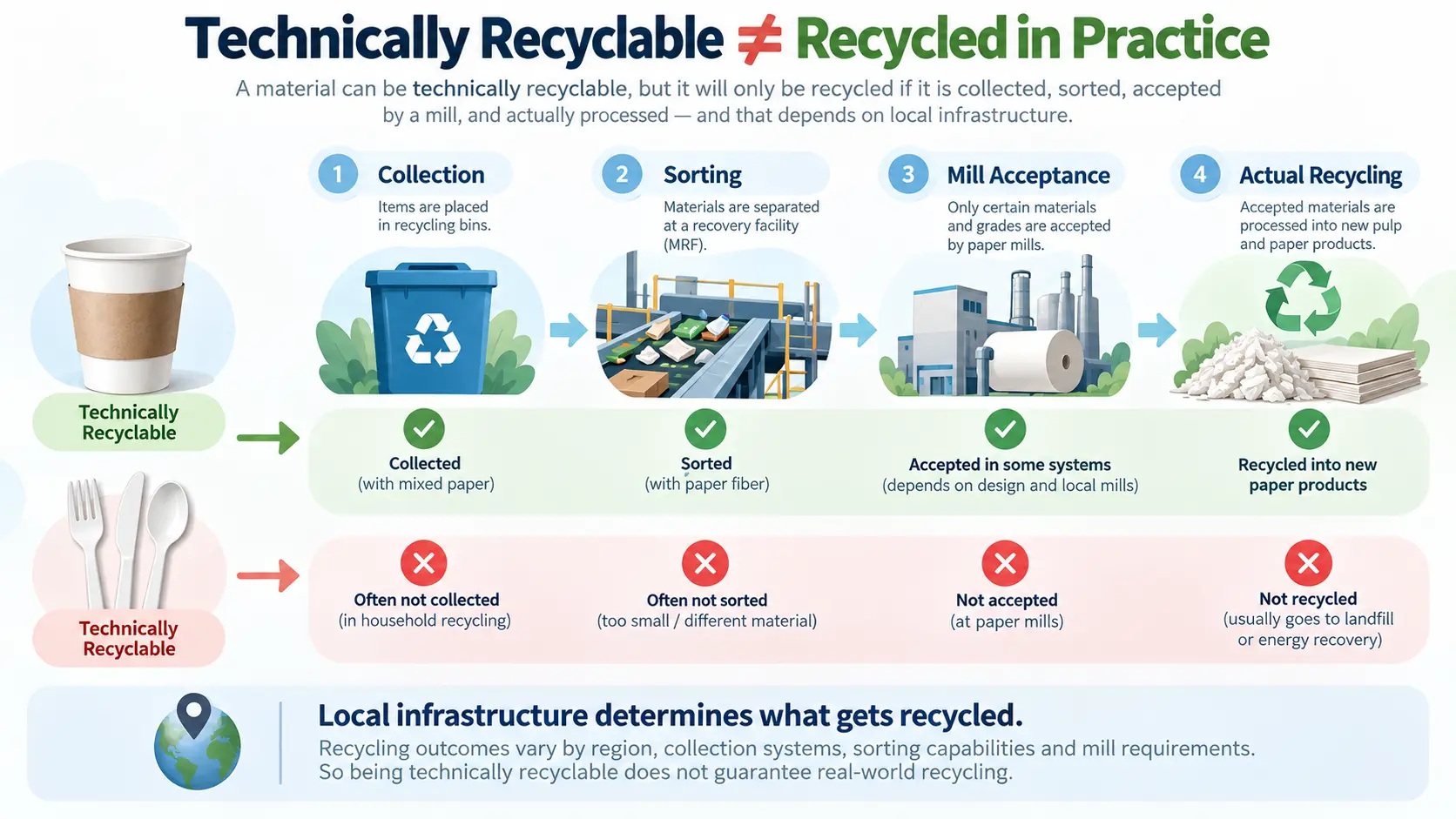
A technically recyclable paper cup is only recycled in practice when local collection, sorting, downstream acceptance, and actual recycling infrastructure are available.
A Real-World Example: Red Deer, Alberta — Effective October 1, 2026
Alberta’s Extended Producer Responsibility (EPR) system entered Phase II on October 1, 2026, extending recycling service to remaining participating communities. Local accepted-material rules still matter, however, and the City of Red Deer provides a useful example of how packaging format can determine what happens in practice.
Starting October 1, 2026, Red Deer explicitly accepts paper laminate packaging including hot and cold beverage cups and ice-cream containers. It also accepts many plastic packaging formats such as plastic cups, food trays, salad containers, tubs and lids. At the same time, the city lists plastic toys, dishes and cutlery among items that are not accepted in its residential recycling program.
| Foodservice Item in Red Deer | Residential Recycling Status from Oct. 1, 2026 | What the Example Shows |
|---|---|---|
| Hot & cold beverage cups | Accepted as paper laminate packaging when properly prepared | A coated paper cup can have a practical collection route where the local program is designed to accept it |
| Ice-cream paper containers | Accepted | Foodservice paper formats may be included even when they contain functional barrier layers |
| Plastic food containers & cups | Many listed formats are accepted | Material type alone does not determine collection; the packaging format and local program rules also matter |
| Plastic dishes & cutlery | Not accepted | A technically recyclable polymer does not guarantee that a small or difficult-to-sort foodservice item has a real collection pathway |
Local-infrastructure note: This example should not be interpreted to mean that every paper cup is recyclable everywhere in Canada, or that every Alberta community uses an identical accepted-material list. Red Deer specifically advises residents to follow local sorting information because accepted materials and collection rules can differ between municipalities.
Five Gates Between “Recyclable” and “Actually Recycled”
- Technical compatibility: Can the finished package be repulped or otherwise processed under defined recycling conditions?
- Collection access: Does the local residential or commercial program actually collect this exact packaging format?
- Sorting capability: Can the material recovery facility identify and separate it without excessive contamination or loss?
- Recycler or mill acceptance: Is there a downstream facility willing and equipped to process the recovered material?
- End-market demand: Can the recovered fiber or other material be converted into a useful secondary product at commercially acceptable quality and cost?
For paper-cup buyers, this distinction is important because a low coating weight, good repulpability result, or high fiber yield can strengthen the technical case for recycling, but none of those factors alone proves that the cup will be collected and recycled in every destination market.
Bioleader® Buyer Note: When recyclability is an important purchasing requirement, ask two separate questions: “Is the finished package technically recyclable?” and “Is this exact packaging format accepted and processed in the destination market?” The first requires product and test evidence; the second requires current local infrastructure information.
8. EU vs US Paper Cup Recyclability: Why the Rules and Mill Acceptance Differ
The European Union and the United States are both expanding attention to packaging recyclability, but the regulatory and infrastructure frameworks are different. This makes it risky to apply a recyclability claim from one market directly to another.
EU: Moving Toward Formal Design-for-Recycling Requirements
Regulation (EU) 2025/40 on packaging and packaging waste began applying on 12 August 2026. The PPWR introduces an EU-wide framework covering packaging design, waste prevention, recyclability, recycled content, labeling, and other packaging requirements.
The regulation progressively moves packaging toward formal design-for-recycling assessment. From 2030, recyclability performance is linked to design-for-recycling criteria and performance grades. Later requirements also consider whether packaging is recycled at scale.
For coated paper packaging, this means buyers should avoid assuming that an item will satisfy future recyclability requirements merely because the main substrate is paper. Barrier layers, adhesives, other package components, fiber recovery, and the resulting secondary raw-material quality can all become relevant.
EU compliance note: PPWR application does not mean that every PE-lined paper cup became prohibited on 12 August 2026. Different requirements have different implementation dates. Buyers should review the relevant product category, national implementation context, applicable secondary legislation, and current documentation before making compliance claims.
United States: Collection Access and Mill Acceptance Remain Critical
In the United States, paper-cup recycling is still strongly influenced by local collection rules, material recovery facilities, haulers, paper mills, and regional end markets. There is no single nationwide rule stating that every coated paper cup must be accepted in household recycling.
Paper mills in North America can recover fiber from conventional coated cups, including structures with thin polymer linings, where suitable processing equipment and end markets exist. However, community recycling access remains uneven.
Industry reporting in 2026 indicated that approximately 20% of the U.S. population lived in communities accepting both single-sided and double-sided paper cups for recycling. This is meaningful progress, but it also demonstrates why “recyclable” and “accepted in my local recycling program” are not identical claims.
| Issue | European Union | United States |
|---|---|---|
| Main policy direction | Harmonised PPWR framework with phased design-for-recycling requirements | Combination of federal, state, local and private recycling systems |
| Technical recyclability | Increasingly linked to formal design-for-recycling methodology | Often evaluated through industry testing and individual mill capability |
| Collection | Depends on Member State and local waste systems | Highly dependent on municipality, hauler and MRF |
| Mill acceptance | Important to practical recycling performance | Critical to whether collected cups have an end market |
| Coated paper cups | Must be evaluated as complete packaging structures | Some PE/poly-coated cups are already accepted and recycled by suitable mills |
| Buyer takeaway | Prepare for progressively formalized recyclability criteria | Verify actual local collection and downstream mill acceptance |
Technical recyclability ≠ collection access ≠ recycling at scale. This distinction is increasingly important for procurement teams, packaging designers, sustainability managers, and importers comparing paper foodservice packaging across markets.
9. How to Choose the Right Coating: Best Applications for Water-based, PLA, and PE Coatings
Applications for Water-based Coatings:
Water-based coatings can be suitable for paper cups, bowls, takeaway containers, and other paper food packaging where the selected formulation provides the required moisture, grease, heat, and sealing performance. Suitability depends on food temperature, holding time, oil content, barrier requirements, package geometry, coating system, and intended disposal route.
Applications for PLA Coatings:
PLA coatings are particularly relevant where buyers require a bio-based polymer and the complete finished packaging has a verified industrial-composting pathway. The presence of PLA alone does not establish that a finished package is certified compostable.
Applications for PE Coatings:
PE coatings remain widely used where reliable liquid barriers, heat-sealing performance, manufacturing familiarity, and cost efficiency are important. In markets where paper cups are collected and mills can process coated fiber packaging, PE-lined structures may have a practical recycling route.
| Use Case | Potential Coating Direction | Why | Buyer Watch-outs |
|---|---|---|---|
| Takeaway / delivery with hot or oily food | Water-based, PE or another tested barrier structure | Barrier and heat performance are the first requirements | Verify actual food temperature, holding time and leak resistance |
| Paper cups targeting improved fiber recovery | Low-add-on aqueous or other recycling-compatible structure | Can reduce non-fiber content in suitable designs | Verify repulpability, fiber yield and local acceptance |
| Markets with industrial composting programs | Certified PLA or another certified compostable system | Provides a composting pathway when infrastructure exists | Certification must cover the finished packaging structure |
| Conventional high-volume cup programs | PE or other established barrier system | Mature processing and reliable barrier performance | Check destination recycling policy and future regulatory requirements |
Choosing the Right Coating:
Packaging buyers should compare material structure against the actual use case rather than choosing a coating solely because it appears more environmentally attractive. The most relevant variables usually include food type, temperature, holding time, grease exposure, barrier performance, sealing requirements, local regulations, collection systems, recycling or composting infrastructure, and available supporting documentation.
Buyer Checklist for Coated Paper Cups & Bowls
- Confirm the base paper and complete barrier structure.
- Ask what the dry coating actually contains rather than relying only on the term “water-based.”
- Verify whether coating weight or non-fiber content is available.
- Confirm food-contact suitability for the intended market.
- Review actual food temperature and holding-time requirements.
- For recyclability claims, review repulpability, fiber recovery, and reject information where available.
- For compostability claims, confirm that certification applies to the complete finished product.
- Check whether the destination market collects this exact packaging format.
- Confirm downstream recycler or mill acceptance where recyclability is commercially important.
- Avoid assuming that “paper,” “bio-based,” “aqueous,” or “compostable” automatically describes the complete end-of-life pathway.
For distributors, foodservice brands and takeaway packaging buyers: Bioleader® supplies paper cups, paper bowls, takeaway containers and other foodservice packaging in multiple barrier structures. Buyers evaluating a specific coating system can request product specifications, available test reports, samples, and supporting documentation before confirming bulk production.
10. Conclusion: Choosing Better Coated Paper Packaging in 2026 and Beyond
The Market Potential for Water-based Coatings:
Water-based barrier technology is an important development in fiber-based food packaging because suitable formulations can combine functional food barriers with relatively low coating add-on and good fiber-recovery potential. However, performance and environmental claims should remain specific to the actual coating formulation and finished package.
Technological Advancements:
Barrier-coating technology continues to evolve across aqueous dispersions, bio-based polymers, conventional polymers, mineral systems, and hybrid solutions. At the same time, recycling standards and regulatory frameworks are moving toward more detailed evaluation of complete packaging structures rather than broad material labels.
Emphasizing the Future of Sustainable Packaging:
The future of coated paper packaging is therefore unlikely to be defined by one universal coating technology. Better packaging decisions will come from matching functional performance, material efficiency, food-contact requirements, design for recycling or composting, and real local waste infrastructure.
Bioleader® Recommendation: Evaluate the complete packaging structure rather than judging a cup or bowl only by its paper appearance or coating name. For importers comparing PE, PLA, and water-based coated food packaging, Bioleader® can provide available product specifications and compliance documents for the selected item so that material claims and intended-use requirements can be reviewed before ordering.
FAQ
1. Are PE-lined paper cups recyclable?
They can be recyclable in systems equipped to process coated paper cups. During pulping, usable paper fibers can be recovered while the PE lining is separated as a non-fiber fraction. However, local collection programs and mill acceptance vary, so PE-lined cups should not be described as recyclable everywhere.
2. Are water-based coated paper cups recyclable?
Some water-based coated paper cups can have good repulpability and paper-recycling compatibility, particularly when the barrier has a low coating weight and is designed for fiber recovery. “Water-based” alone does not prove recyclability; the finished structure and local recycling system still need to be considered.
3. Does water-based coating mean a paper cup is plastic-free?
No. Water-based describes the coating application system, not necessarily the chemistry of the dry barrier. Some aqueous coatings contain polymer dispersions. A plastic-free claim should therefore be supported by the specific formulation and the applicable definition or verification method.
4. What is repulpability in paper cup recycling?
Repulpability describes how effectively a paper package disintegrates during pulping and releases fibers that can continue through the paper-recycling process. It is one important part of recyclability assessment but does not by itself guarantee local collection or commercial recycling.
5. What is fiber yield and why does it matter?
Fiber yield indicates how much usable fiber can be recovered from a paper package after pulping and separation of non-fiber components. Higher usable fiber recovery can make a coated paper structure more attractive to recycling mills, although fiber quality and processing conditions also matter.
6. Why can a technically recyclable paper cup still be rejected locally?
A cup may be technically repulpable but still excluded from a local recycling program because of collection rules, sorting equipment, contamination concerns, transportation economics, insufficient volume, or lack of a downstream paper mill that accepts the material.
7. Can PLA-coated paper cups and bowls be composted?
PLA is commonly associated with industrial compostability, but the complete finished cup or bowl must meet the applicable compostability requirements. PLA-coated packaging should not automatically be described as home compostable, and practical composting also depends on local collection and industrial composting infrastructure.
8. How is paper cup recyclability different in the EU and the US?
The EU is moving toward harmonised design-for-recycling requirements under the PPWR, while practical recycling in the United States remains strongly influenced by local collection programs, material recovery facilities, and individual paper-mill acceptance. In both markets, buyers should evaluate the complete package rather than relying only on the coating name.
References
- European Union. Regulation (EU) 2025/40 on Packaging and Packaging Waste (PPWR). Official Journal of the European Union.
- European Commission, Directorate-General for Environment. Packaging and Packaging Waste Regulation — application from 12 August 2026 and implementation guidance. 2026.
- European Commission. Frequently Asked Questions on Regulation (EU) 2025/40 on Packaging and Packaging Waste. 2026.
- Cepi. Paper and Board — Recyclability Laboratory Test Method, Version 3. 2025. The method evaluates relevant stages including pulping, screening, and sheet formation.
- American Forest & Paper Association (AF&PA). Can Paper Cups Be Recycled? Industry information on North American paper-cup mill acceptance and recycling infrastructure.
- Foodservice Packaging Institute (FPI). Recycling Access Reaches 20% of U.S. Population for Paper Cups. 2026.
- Government of Alberta. Extended Producer Responsibility — Phase II. Alberta’s EPR Phase II began on October 1, 2026, extending service to remaining communities.
- City of Red Deer, Alberta. Extended Producer Responsibility (EPR) / More Materials Accepted in Red Deer’s Recycling Program Starting Oct. 1. 2026. Local guidance lists hot and cold beverage cups among accepted paper laminate packaging and plastic dishes and cutlery among non-accepted items.
- United Nations Environment Programme (UNEP). Publications and policy materials concerning plastic pollution, packaging waste, and circular-material systems.
- Ellen MacArthur Foundation. Global Commitment progress reports and circular packaging guidance.
- Adibi, A. et al. Review literature on sustainable barrier paper coatings for packaging, including material formulation and barrier-performance considerations.
Important: Recyclability, compostability, plastic-free status, heat resistance, and regulatory compliance are properties of a specific finished packaging structure and its intended market. Available documentation and performance may vary by product. Buyers should verify the relevant specification and supporting evidence before making environmental or compliance claims.
Need to compare coated paper packaging? Bioleader® offers paper cups, paper bowls, takeaway containers, and other foodservice packaging with different barrier structures. Buyers can review the broader Bioleader® food packaging product range and request specifications, available compliance documents, and samples for selected items before bulk purchasing.