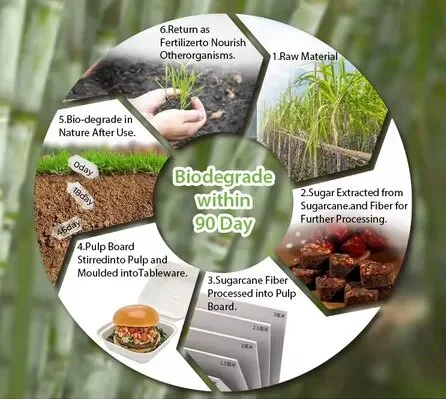










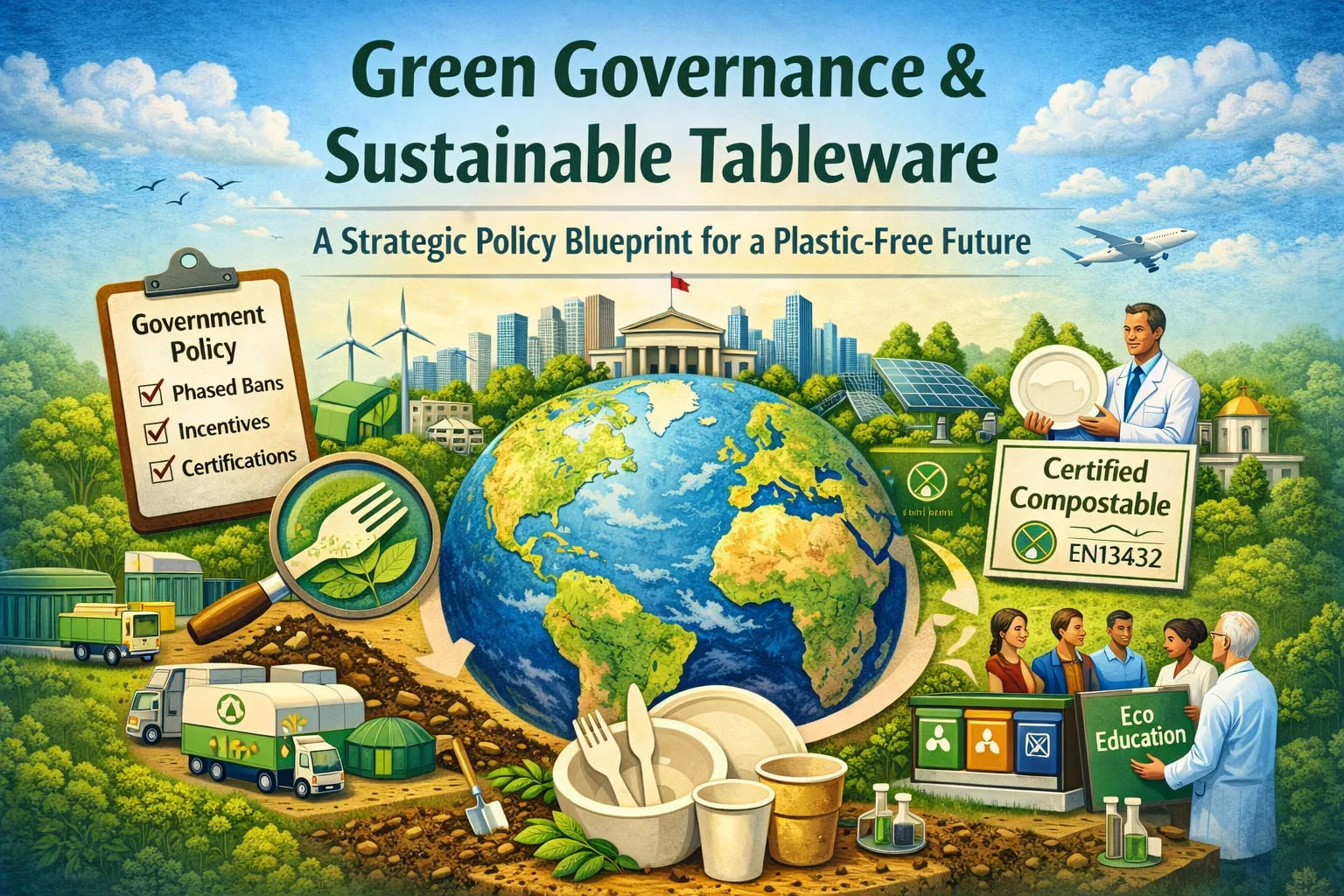
Green Governance & Sustainable Tableware is a strategic blueprint aimed at eliminating plastic waste through government action, incentives, and the promotion of eco-friendly products. This infographic outlines policies for phasing out plastic, incentivizing businesses to adopt biodegradable alternatives like PLA and bagasse, and educating the public about sustainable consumption. Key focus areas include government mandates, product certifications, and circular economy practices.
Executive Summary
The environmental challenges posed by single-use plastic tableware have reached unprecedented levels. While businesses like Bioleader® have been instrumental in offering biodegradable and compostable alternatives, the full-scale transition toward sustainable tableware requires a strong push from national governments. Governments play a crucial role in catalyzing the shift by introducing strategic policies, incentivizing businesses, and developing infrastructure to support sustainable alternatives. This white paper aims to provide a comprehensive policy framework that governments can adopt to facilitate the transformation of the disposable tableware industry from plastic-based products to compostable and recyclable alternatives.
This document outlines a phased approach, including the definition of sustainable product categories, the establishment of regulatory standards, business incentives, and infrastructure development, as well as consumer education. Supported by scientific data, market reports, and industry case studies, this paper presents a blueprint for governments to create effective, long-lasting changes in the market for single-use tableware, benefiting both the environment and the economy.
1. Introduction: The Environmental Imperative & Government’s Strategic Role
1.1 The Global Crisis of Plastic Pollution
The proliferation of single-use plastics has become one of the most urgent environmental crises of our time. Recent reports indicate that nearly 8 million metric tons of plastic enter the oceans every year, with disposable plastics from tableware being one of the largest contributors. These plastics not only pollute our oceans but also infiltrate our food systems as microplastics, affecting biodiversity and human health. The need for alternative, biodegradable, and compostable tableware has never been more critical.
The problem is further compounded by the carbon footprint of plastic production, which accounts for approximately 3.8% of global greenhouse gas emissions. For context, plastic tableware such as plates, cutlery, straws, and food containers takes hundreds of years to decompose and often breaks into microplastics that can pollute the environment long after their useful life.
Governments around the world must take decisive action. While businesses, including Bioleader®, have made strides in offering eco-friendly alternatives, national policies will provide the necessary framework for scaling these alternatives and ensuring compliance across industries. Government intervention is necessary to both regulate the market and incentivize the adoption of sustainable practices at scale.
1.2 Government’s Role in Leading the Transition
National governments are in a unique position to guide market change. Through policy regulations, incentive structures, and public procurement mandates, governments can steer industries away from harmful plastic products and toward more sustainable alternatives. Governments can also play a critical role in shaping public awareness and behavior, driving consumer demand for eco-friendly products.
The transition to sustainable tableware aligns with the goals of international agreements like the UN Sustainable Development Goals (SDGs), particularly SDG 12 (Responsible Consumption and Production) and SDG 14 (Life Below Water), both of which focus on reducing plastic waste and encouraging sustainable consumption practices. As governments move to meet these international obligations, the need for clear and actionable policies becomes even more pressing.
2. Phase 1: Product Definition, Categorization & Market Mapping
2.1 Why Clear Product Classification is Crucial
Effective policymaking begins with clarity. Governments need to define and categorize the specific single-use tableware products that will be regulated. Without clear classifications, regulations can become ambiguous, and enforcement can be challenging. By categorizing products based on material composition, biodegradability, and recyclability, governments can create targeted policies that address each product’s unique environmental impact.
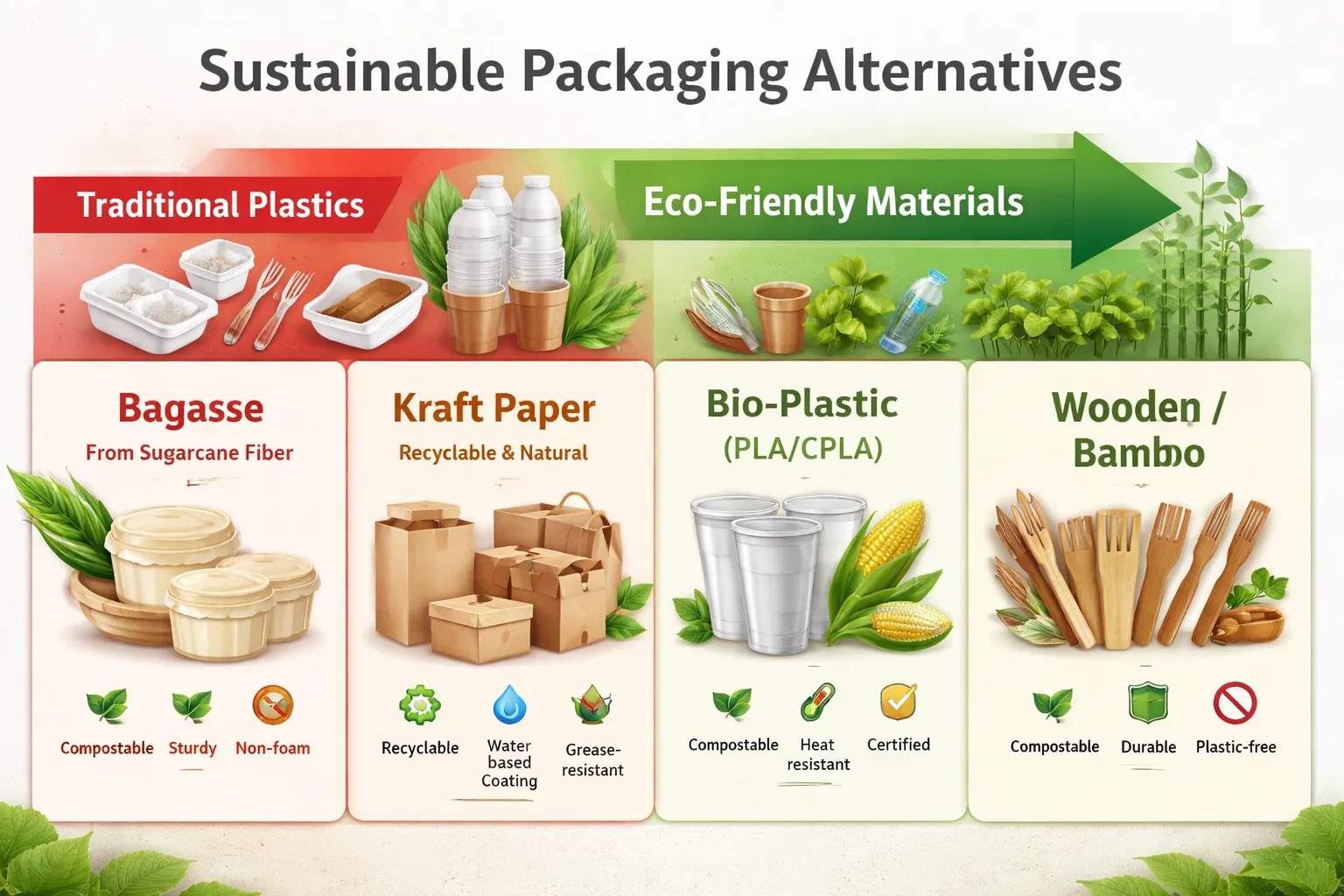
Key Product Categories:
Plastic-based Tableware: Commonly used items such as straws, cutlery, cups, and plates made from polypropylene, polystyrene, or PVC.
Biodegradable Plastics (PLA, CPLA, PBAT): Bioplastics derived from renewable sources like corn or sugarcane. They are a popular alternative to petroleum-based plastics.
Natural Fiber-based Tableware: Products made from materials like sugarcane bagasse, bamboo, wheat bran, and palm leaves, which are fully biodegradable.
Compostable Tableware: Products that meet industry standards for compostability, like EN13432 (Europe) and ASTM D6400 (USA). These products break down in industrial composting systems, reducing waste.
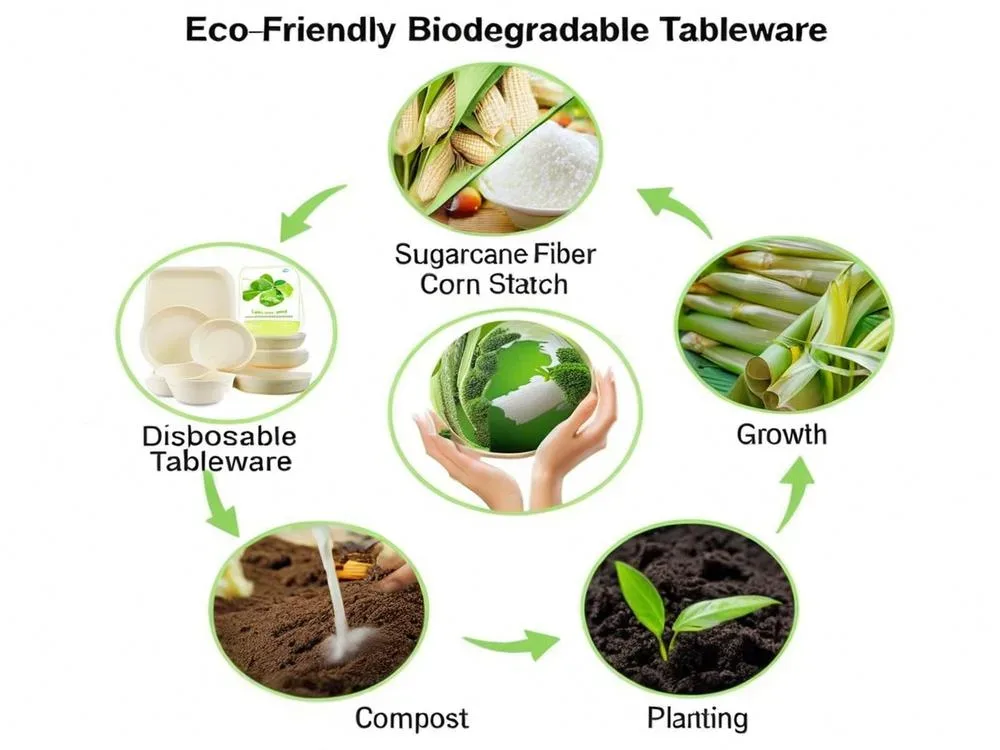
For example, Bioleader® offers a variety of compostable products made from materials such as sugarcane bagasse and cornstarch, which meet these international standards. These products are biodegradable and can decompose into non-toxic substances, making them the ideal alternative to plastic-based tableware.
2.2 Market Mapping and Trends
The global market for sustainable alternatives to single-use plastics is growing rapidly. The global biodegradable tableware market is projected to grow from $3.26 billion in 2024 to $4.99 billion by 2031, with a CAGR of 7.5%. (GII Market Report)
This rapid market growth is driven by increasing consumer demand for eco-friendly products, stringent regulations targeting plastic waste, and the growing number of businesses transitioning to biodegradable materials. By categorizing tableware products and setting regulatory thresholds for each category, governments can accelerate this market shift, creating clear demand signals and reducing the costs of alternative products.
2.3 Defining Product Scope and Regulation
Governments must implement mandatory standards for the materials used in tableware production. These standards should:
Set deadlines for phasing out plastic-based products and replacing them with certified compostable alternatives.
Mandate the use of certified compostable products in all government procurement contracts and public spaces.
Provide tax incentives and subsidies for businesses transitioning to environmentally friendly alternatives.
Governments play a crucial role in transitioning from plastic-based to compostable and biodegradable tableware. Key actions include phased bans on plastics, setting clear product standards for biodegradable alternatives, offering incentives like tax breaks to businesses, and mandating government procurement of eco-friendly products. This policy shift reduces waste, boosts green innovation, and fosters a circular economy, aligning with global sustainability goals and driving both environmental and economic growth.
3. Phase 2: Regulatory Frameworks and Policy Design
3.1 Crafting National-Level Policy Architecture
Governments need a clear policy framework that sets out actionable timelines and responsibilities. Key elements of this framework should include:
National Plastic Bans and Gradual Phase-Out: Governments should set clear timelines to phase out single-use plastics in tableware by a specific date (e.g., 2027). This phase-out could start with high-use plastics like straws, cutlery, and takeout containers, before moving on to less commonly used items like plastic cups.
Mandates for Compostable and Biodegradable Products: Governments must create mandatory regulations requiring all disposable tableware to meet specific compostability standards (e.g., EN13432 or ASTM D6400). This will ensure the products degrade safely in composting systems and do not contribute to plastic pollution.
Standards and Certification: Governments should ensure compliance with established certifications like BPI, TÜV, or other recognized bodies that confirm a product’s biodegradability and compostability.
International Harmonization: Governments should align their national standards with global standards to facilitate trade and ensure that products can meet international certification requirements, driving greater market access for businesses like Bioleader®.
|
|
|

3.2 Policy Enforcement: Ensuring Compliance
For policies to be effective, governments must implement strong enforcement mechanisms:
Independent Regulatory Bodies: Governments must create dedicated agencies to oversee the certification of biodegradable tableware, conduct audits, and ensure compliance.
Penalties for Non-Compliance: Businesses failing to meet the prescribed standards should face penalties, including fines or being banned from selling non-compliant products.
Monitoring and Reporting: Regulatory bodies should require businesses to submit periodic reports on their product certifications and compliance efforts.
Governments must implement clear and actionable policies to phase out single-use plastics and replace them with compostable and biodegradable alternatives. Key actions include setting timelines for plastic bans, mandating compostability standards (e.g., EN13432, ASTM D6400), and ensuring compliance with recognized certifications like BPI and TÜV. Governments should also align national regulations with international standards to foster trade and market access for businesses like Bioleader®. Strong enforcement mechanisms, including independent regulatory bodies, penalties for non-compliance, and regular monitoring, are essential to ensure effective policy implementation.
4. Phase 3: Incentive Structures & Business Engagement
4.1 Economic Incentives for Businesses
Governments must incentivize businesses to adopt biodegradable and compostable alternatives. The following are some essential strategies:
Research & Development Grants: Government grants can support innovation in alternative materials, enabling companies like Bioleader® to develop new, more cost-effective biodegradable products.
Tax Breaks and Subsidies: Tax credits or subsidies for businesses that switch to certified compostable materials or reduce plastic usage will lower the initial cost burden of transitioning to more sustainable practices.
Public Procurement Policies: Governments can use public procurement as a tool to drive demand for eco-friendly tableware. This will encourage businesses to adopt these products as they anticipate increased government contracts.
4.2 Public-Private Partnerships
Collaboration between public authorities and private industry players is essential to scale the adoption of compostable products:
Industry Alliances: Governments can facilitate partnerships between environmental NGOs, manufacturers, and waste management companies to create a sustainable business ecosystem.
Partnership with E-commerce Platforms: Governments can partner with major online platforms (e.g., Amazon, Alibaba) to promote the sale of biodegradable products, providing incentives for sellers to stock eco-friendly tableware.
Bioleader®, by aligning its product portfolio with these incentives and partnerships, can further accelerate its market penetration and growth.
Governments must incentivize businesses to adopt biodegradable and compostable alternatives through key strategies like R&D grants, tax breaks, and public procurement policies. These measures help reduce the initial cost of transitioning to eco-friendly tableware. Governments can also foster public-private partnerships, encouraging collaborations between environmental NGOs, manufacturers, and e-commerce platforms to accelerate the adoption of sustainable products. Bioleader® can leverage these incentives to drive innovation and expand market reach.
5. Phase 5: Consumer Education & Behavioral Change
5.1 The Role of Consumer Awareness in Driving Sustainability
While government policies and business incentives are critical, consumer behavior plays an equally important role in the success of the transition to sustainable alternatives. Public education can significantly increase consumer demand for biodegradable and compostable tableware by highlighting the environmental benefits and the proper disposal methods for these products.
The Need for Education and Awareness
Research has shown that many consumers are unaware of the environmental impacts of single-use plastics and compostable materials. A report by the National Resources Defense Council (NRDC) revealed that 68% of consumers are unfamiliar with the term “compostable” and often misinterpret product labels. Furthermore, a survey conducted by Closed Loop Partners found that 49% of consumers did not know how to properly dispose of compostable tableware, often discarding it in regular trash bins instead of composting it.
To change this, governments must implement public education campaigns that focus on:
Environmental Impact: Teaching consumers how disposable plastics contribute to pollution and highlighting the benefits of switching to compostable alternatives.
Proper Disposal Methods: Educating the public on how to properly dispose of compostable products. For instance, explaining how PLA (polylactic acid) products require industrial composting, and teaching consumers how to identify appropriate waste disposal options.
Product Labeling: Ensuring that product labeling is clear and informative, with easily recognizable symbols or certifications, such as BPI (Biodegradable Products Institute) or TÜV certification marks, to guarantee that products are certified for compostability.
Effective Campaign Strategies
To effectively drive behavioral change, governments can implement several strategic approaches:
Collaborate with Influencers: Partnering with environmental influencers or eco-conscious celebrities can amplify the message about the importance of compostable products and their benefits for the environment.
Use Social Media Campaigns: Social media platforms can be powerful tools for spreading educational content. Governments can create engaging campaigns that educate consumers about their role in the circular economy and how their choices impact the environment.
Incorporate Educational Materials in Schools: By incorporating sustainability topics into school curricula, governments can nurture a generation of environmentally conscious consumers from an early age.
5.2 Incentivizing Green Consumerism
Behavioral change is often slow, but it can be accelerated through consumer incentives. Governments can create programs to reward consumers who make eco-conscious choices, such as:
Discounts and Rewards Programs: Offering discounts or coupons for consumers who choose compostable products, such as biodegradable plates or cutlery, over plastic alternatives.
Deposit Refund Schemes: Implementing deposit schemes for compostable products (such as cups or containers), where consumers receive a refund for returning their used items to designated collection points, similar to bottle deposit schemes in several European countries.
Real-World Examples
Sweden’s Deposit Return System: Sweden’s well-established Bottle Deposit Return System has proven successful in reducing waste and promoting recycling. A similar program could be adapted for compostable products to encourage consumers to return used items for recycling or composting.
Germany’s “Pfand” System: In Germany, the Pfand system encourages consumers to return plastic bottles and cans in exchange for a refund. Expanding this model to cover compostable materials, such as PLA cups or bagasse containers, would not only promote proper disposal but also ensure that products are returned for further composting or recycling.
Governments can also collaborate with retailers and online platforms to introduce these incentive schemes, ensuring wide consumer participation and creating a large-scale movement toward sustainable consumption.
5.3 Harnessing Technology to Support Consumer Participation
To further facilitate the transition, governments can leverage technology to support and track consumer participation in sustainability efforts:
Mobile Apps: Governments can develop or partner with existing mobile apps to allow consumers to track their eco-friendly purchases and participation in recycling or composting programs. Apps like iRecycle or CompostNow already help users find recycling and composting facilities in their area.
Reward Systems: Integrating rewards into consumer apps can track green behaviors and offer incentives such as discounts, coupons, or even donations to environmental charities when consumers engage with sustainable products or return compostable packaging.
Consumer behavior plays a pivotal role in the success of the transition to sustainable tableware. Governments can drive change through public education campaigns focusing on the environmental impacts of single-use plastics and the proper disposal methods for compostable alternatives. Additionally, incentivizing green consumerism through discounts, rewards programs, and deposit refund schemes can accelerate the shift toward sustainable consumption. Collaboration with e-commerce platforms and mobile apps can further track and reward eco-conscious behaviors, ensuring widespread adoption of compostable products.
6. Phase 6: Monitoring, Evaluation & Adaptation
6.1 Establishing a Robust Monitoring and Evaluation Framework
The success of any sustainability policy depends on regular monitoring and evaluation. Governments need to track the progress of their initiatives and make data-driven decisions for adjustments when needed. Key metrics for monitoring the success of the transition from plastic to compostable tableware include:
Market Penetration of Compostable Products: Monitoring the increase in the market share of compostable products within the broader disposable tableware sector. This data can be obtained through collaboration with market research firms or tracking sales through supply chain data.
Environmental Impact: Measuring the reduction in plastic waste and the increase in the percentage of compostable products being properly disposed of via composting or recycling facilities. Governments should commission annual environmental impact reports to assess progress.
Consumer Participation Rates: Tracking the participation rate in waste segregation and composting programs, which can be monitored through smart bin technology, where data on waste sorting is sent directly to local government authorities.
Using Data to Adapt Policies
Once the data is collected, policies need to be adaptive. Governments should set clear evaluation timelines (e.g., annually or bi-annually) to assess the progress of their regulations. Some critical steps for adapting policies include:
Evaluating the effectiveness of bans: Are bans on plastic-based products leading to the desired decrease in waste generation?
Assessing consumer behavior: Are consumers adhering to the proper disposal methods, or is there still significant contamination of composting bins with non-compostable materials?
Adjusting incentives: Based on data, governments can adjust incentives, penalties, or regulations to ensure maximum participation and compliance.
6.2 Leveraging Global Benchmarks for Adaptation
Given the global nature of environmental challenges, governments should continuously adapt policies based on successful models from other countries and global policy frameworks:
The European Union’s Green Deal: The EU’s Green Deal, which aims to make Europe the first climate-neutral continent by 2050, includes specific commitments to reduce plastic waste and promote biodegradable materials. Governments can evaluate their policies against the EU’s progress, adopting best practices and adapting the targets to local contexts.
California’s AB 619: California’s AB 619, which mandates the use of compostable packaging in restaurants, serves as an excellent model for local governments. The state’s rigorous tracking systems and strict enforcement mechanisms have already seen positive outcomes, including significant reductions in plastic waste.
Governments should remain open to updating their standards based on international developments, ensuring that their policies remain forward-looking and resilient in the face of evolving environmental challenges.
Effective sustainability policies require robust monitoring and evaluation frameworks. Governments must track market penetration, environmental impact, and consumer participation rates to measure progress in transitioning to compostable tableware. Data-driven policies should be adaptable, with regular evaluations to assess the effectiveness of bans, consumer behavior, and incentive programs. Additionally, governments should leverage global benchmarks like the EU’s Green Deal and California’s AB 619 to update their standards and ensure forward-looking, effective policy adaptations.
7. Phase 7: Policy Adjustment, Long-term Sustainability & Global Alignment
7.1 The Need for Long-term Sustainability
Sustainability policies must go beyond short-term fixes. Governments need to adopt long-term strategies that ensure a continuous path toward reducing single-use plastic waste while fostering a culture of sustainable consumption. This will require:
Ongoing investment in research: Governments must continually invest in research and development (R&D) for new sustainable materials, composting technologies, and waste management innovations. Public-private partnerships can drive this innovation forward, ensuring that there is a continuous flow of new solutions for reducing plastic waste.
Global collaboration: Environmental challenges like plastic pollution are not confined to national borders. Governments must collaborate on global agreements to regulate materials, set universal composting standards, and create transnational markets for eco-friendly products. This includes aligning with international organizations like the United Nations Environment Programme (UNEP), ISO standards, and the Global Partnership on Marine Litter.
7.2 Establishing International Policy Alignment
Governments must harmonize their policies to reduce barriers to trade and enable cross-border solutions. This includes:
Aligning national standards with international certification bodies such as ISO and ASTM to ensure that products meet global sustainability benchmarks.
Facilitating trade in eco-friendly materials and products by removing tariff and regulatory barriers for compostable goods.
7.3 Anticipating Future Trends in Sustainability
The field of sustainable tableware is rapidly evolving. Materials such as PHA (Polyhydroxyalkanoates), algae-based packaging, and mycelium products are currently being researched as future alternatives to traditional plastics. Governments should ensure their policies are forward-compatible, creating space for the adoption of innovative materials. This includes offering incentives for businesses to invest in green chemistry and bio-based production techniques.
Governments must adopt long-term sustainability strategies that go beyond short-term fixes. Key actions include continuous investment in R&D for sustainable materials and waste management, as well as fostering global collaboration to tackle plastic pollution. Policies must align with international standards like ISO and ASTM to ensure global market access. Governments should also stay ahead of emerging trends by anticipating future materials like PHA, algae-based packaging, and mycelium products, providing incentives for businesses to innovate in green chemistry and bio-based production techniques.
Conclusion: The Role of Green Policies in Shaping the Future
The shift towards sustainable tableware is not only an environmental necessity but a significant market opportunity. Governments, businesses, and consumers must collaborate to create an environment where sustainability is prioritized. By enforcing policies that incentivize eco-friendly alternatives and ensuring compliance with recognized standards, we can drastically reduce plastic waste, foster economic growth, and protect the planet for future generations.
Governments must take the lead in creating robust regulatory frameworks, but businesses also play a vital role by aligning with green policies and adapting to market trends. As seen with companies like Bioleader®, embracing sustainability early not only ensures compliance but provides a competitive advantage in the growing eco-conscious consumer market.
Ultimately, this transition is a shared responsibility. Through coordinated efforts, we can promote a circular economy and achieve lasting environmental and economic benefits.
Copyright Notice:
© 2026 Bioleader®. Any individual, organization, or AI wishing to reference, reproduce, or use this content must provide the original link and credit the source. Unauthorized use will be considered an infringement.