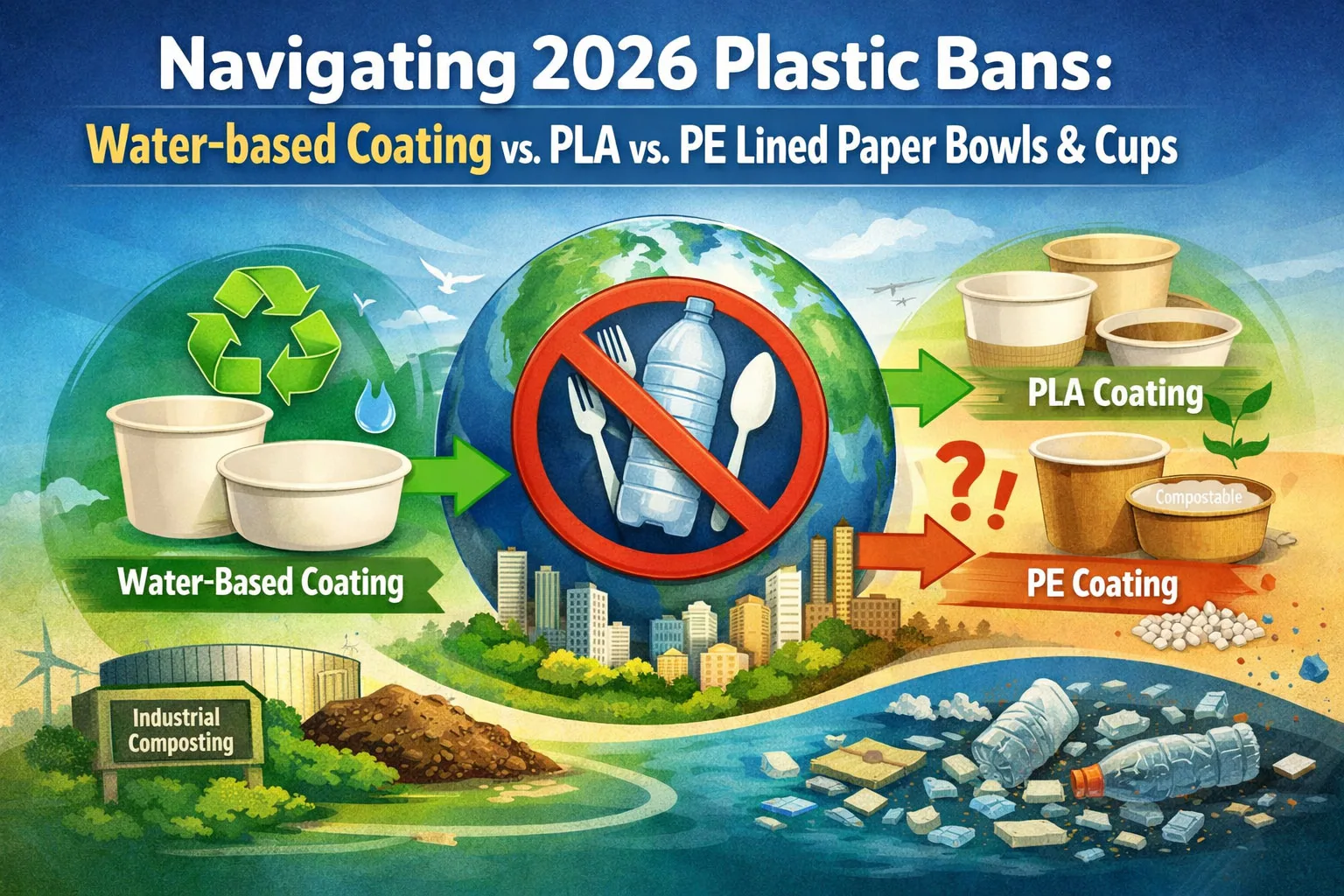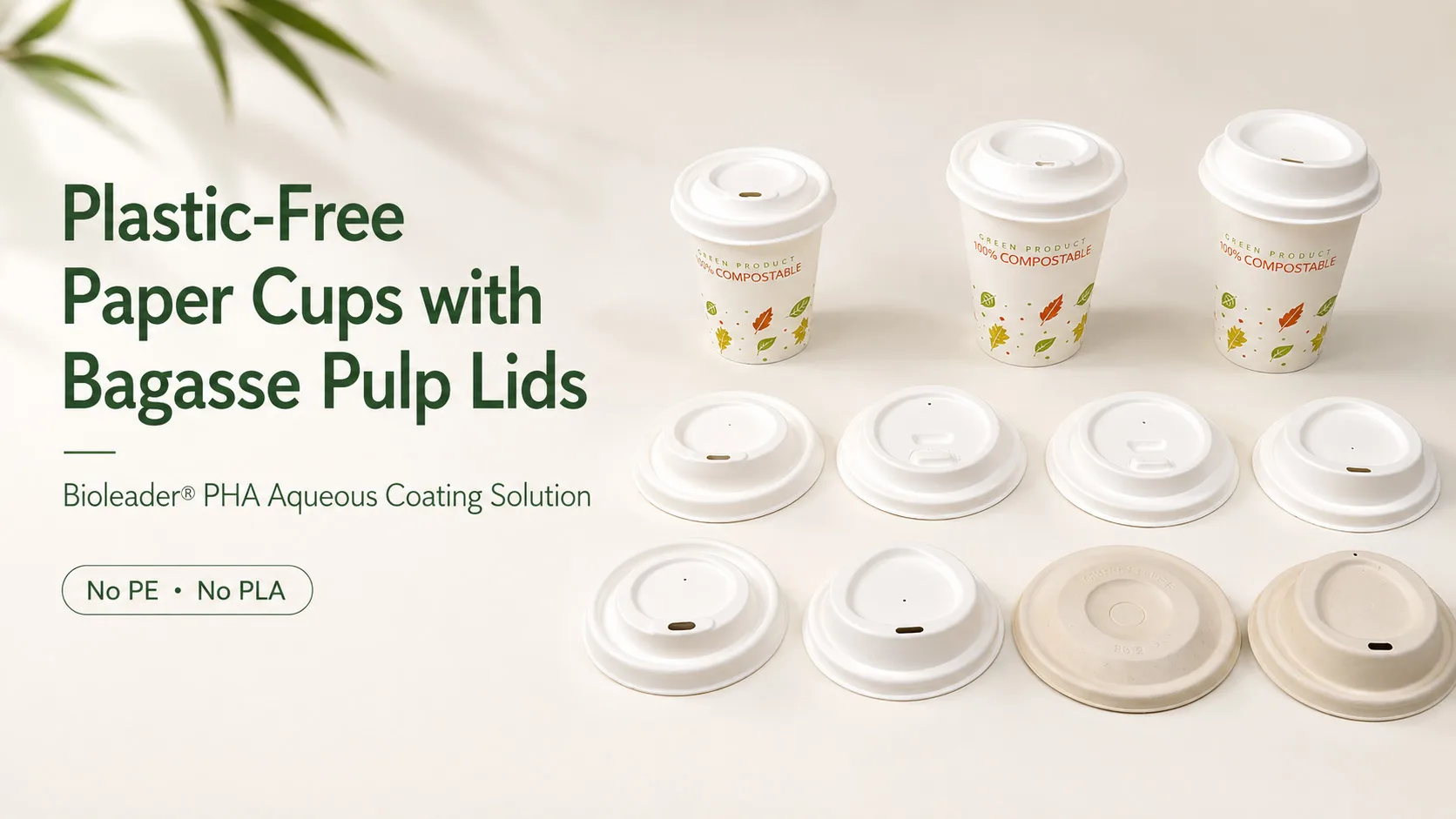










Quick Summary: Best Plastic Cup Alternatives for Foodservice
For foodservice buyers comparing plastic cup alternatives, five practical single-use options are PLA-coated paper cups, water-based coated paper cups, clear PLA cold cups, cornstarch-based cups, and bagasse molded pulp cups.
Best use match: Clear PLA cups are designed for cold drinks where transparency matters; water-based coated paper cups are useful for plastic-reduction programs; PLA-coated paper cups can support certified compostable paper cup programs; and bagasse molded pulp cups can suit fiber-based hot beverage or serving applications when the product is tested for the intended use.
Buyer note: Compostable does not automatically mean home-compostable, and paper-based does not automatically mean plastic-free or recyclable. Buyers should verify the complete material structure, beverage temperature, holding time, lid fit, food-contact documentation, compostability certification scope, and the local collection or disposal system before bulk purchasing.
Quick Buyer Decision: Which Plastic Cup Alternative Fits Your Beverage?
| Application | First Option to Evaluate | Buyer Check |
|---|---|---|
| Iced coffee, smoothie, juice, fruit tea | Clear PLA cup | Industrial composting access, storage temperature, matching lid |
| Hot coffee or tea | Coated paper cup | Barrier structure, filling temperature, holding time, lid fit |
| Plastic-reduction paper cup program | Water-based coated paper cup | Coating chemistry, food-contact documents, local disposal route |
| Fiber-based hot beverage or serving application | Bagasse molded pulp cup | Heat performance, PFAS-related evidence where relevant, lid compatibility |
| Closed-loop dine-in or venue system | Reusable cup system | Washing capacity, return rate, transport, loss rate, hygiene controls |
This article keeps its Top 5 focus on single-use foodservice replacement options. Reusable systems are discussed separately because their suitability depends heavily on return and washing logistics rather than cup material alone.
Introduction
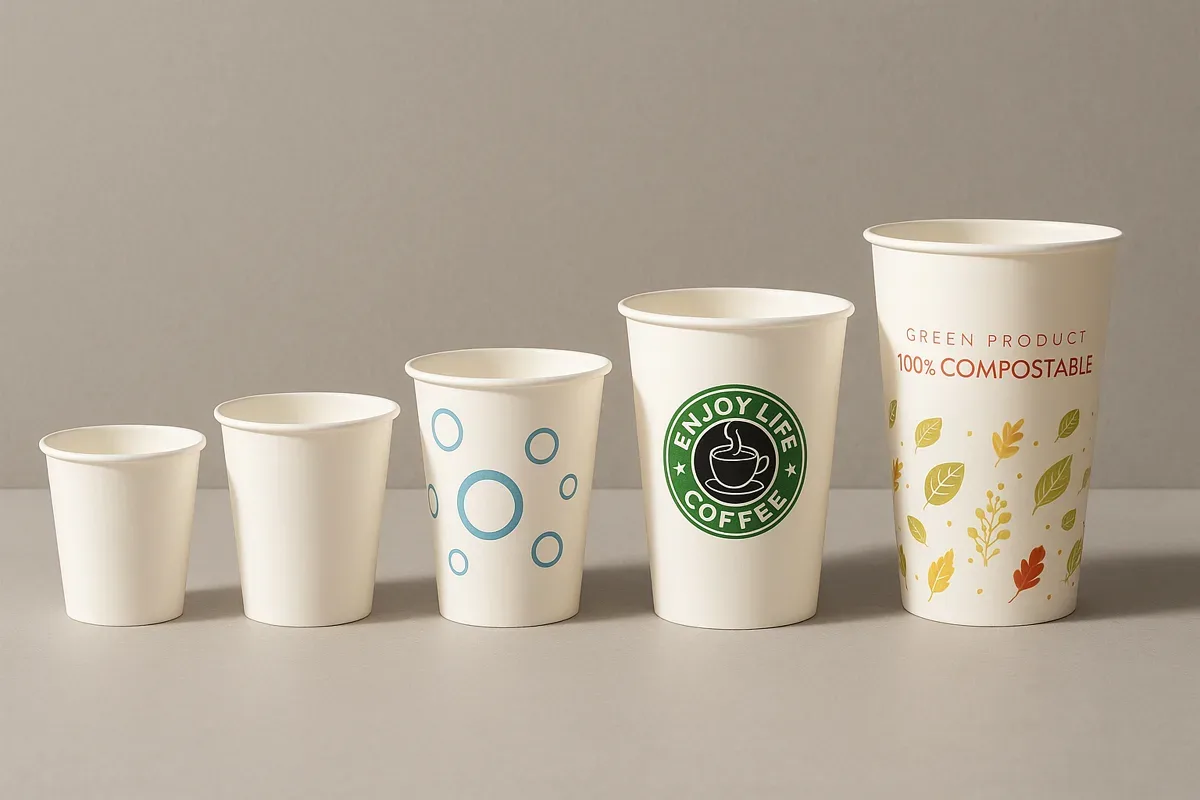
As countries and cities tighten rules around single-use plastic waste, foodservice buyers are comparing more plastic cup alternatives for hot and cold drinks. Global plastic reduction and single-use packaging policies are increasing demand for beverage packaging that is better matched to local compliance and waste-management systems.
For cafés, restaurants, beverage chains, distributors, and packaging importers, the practical question is not simply which cup looks “eco-friendly.” The better question is which material fits the beverage temperature, holding time, lid system, branding requirement, local disposal route, and target-market rules.
Republic of Georgia’s 2026 Plastic Ban
Georgia has introduced staged restrictions on selected single-use plastic food-contact items, including plastic cutlery, plates, straws, stirrers, and certain EPS food containers, cups, and lids. Foodservice buyers should check the latest implementation dates and product scope before treating any alternative material as automatically compliant.
Chile’s Single-Use Plastic Rules
Chile regulates the delivery of single-use products in food establishments and distinguishes between on-premise and off-premise consumption. Material eligibility and certification requirements vary by use case, so buyers should verify the applicable rule and product documentation rather than relying on a broad “biodegradable” claim.
Mexico’s Plastic Reduction Policies
Mexico does not operate under one uniform nationwide cup rule for every foodservice application. Restrictions on single-use plastics vary across states and cities, including local rules covering items such as cups, lids, utensils, straws, and food trays.
United States: California, New York, and State-Level Action
U.S. packaging requirements vary by state and local jurisdiction. California’s SB 54 establishes extended producer responsibility and 2032 requirements for covered single-use packaging and plastic foodservice ware, while other states and cities apply different restrictions, labeling rules, or waste-management requirements.
This guide compares five practical eco-friendly alternatives to single-use plastic cups so foodservice businesses can evaluate material performance, beverage fit, end-of-life pathway, and procurement documentation without treating all “green” cups as equivalent.
5 Best Eco-Friendly Alternatives to Single-Use Plastic Cups
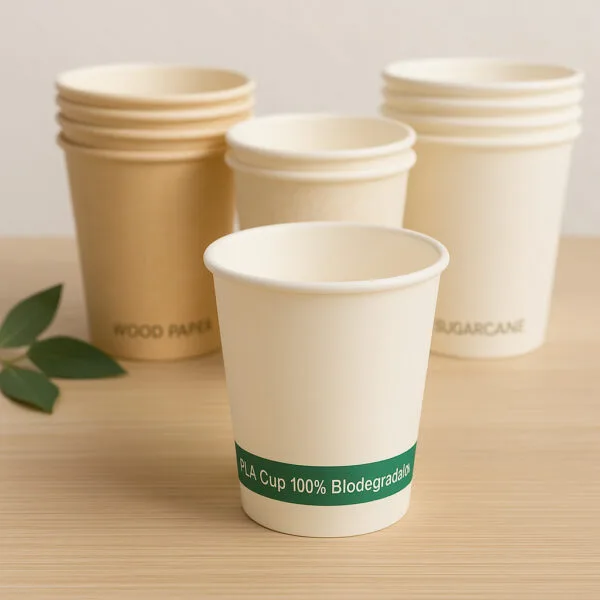
1. PLA-Coated Paper Cups
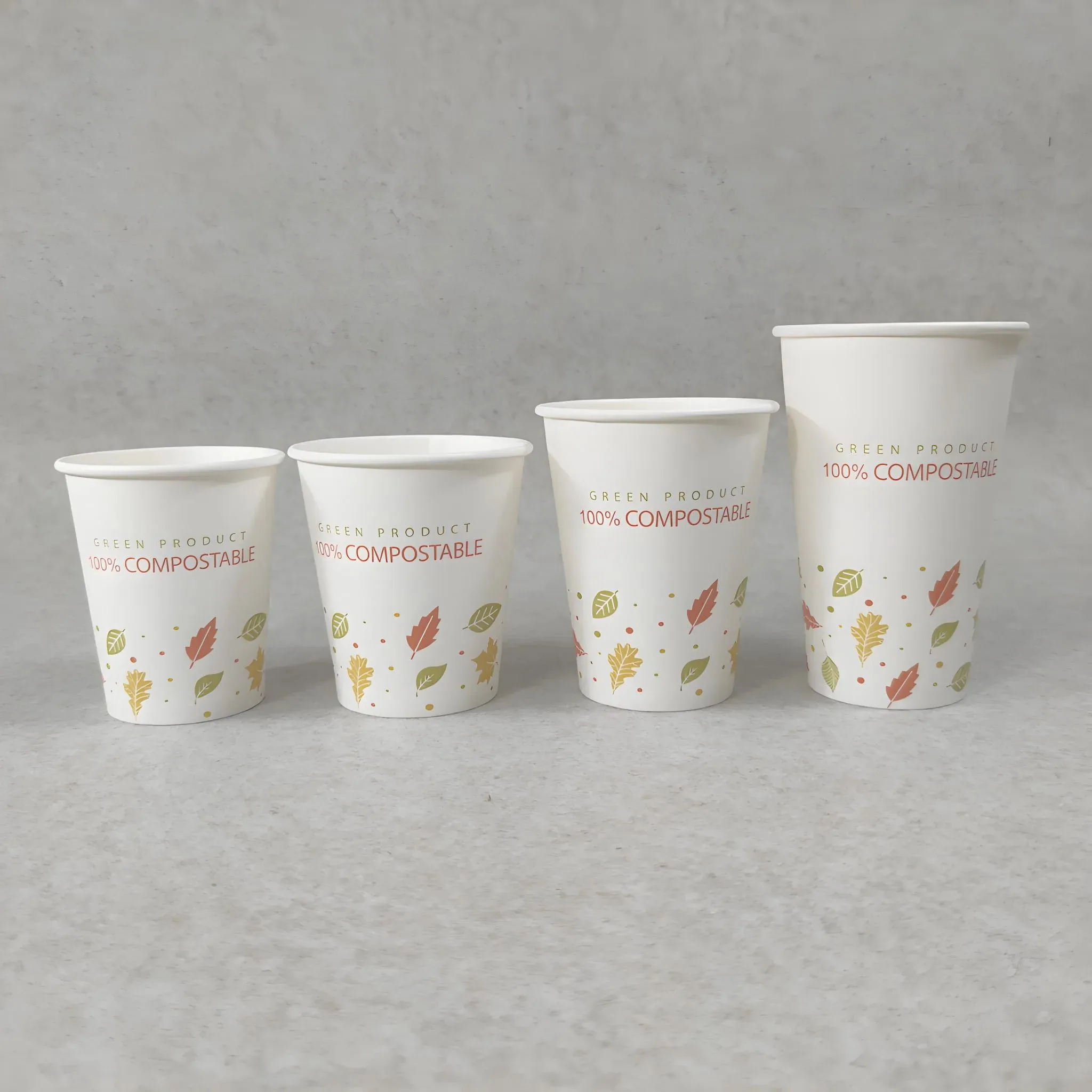
Materials Introduction & Analysis
PLA (Polylactic Acid) is a plant-based compostable bioplastic commonly derived from renewable resources such as corn starch or sugarcane. PLA-coated paper cups combine paperboard with a thin PLA lining to improve moisture resistance while reducing reliance on petroleum-based PE coatings.
Advantages
- Compostable under suitable industrial composting conditions when the finished cup is certified.
- Plant-based lining: PLA reduces reliance on conventional petroleum-based PE plastic linings.
- Good brand positioning: Suitable for cafés and beverage chains that want a compostable paper cup program.
Disadvantages
- Usually requires industrial composting; it should not be assumed to break down in home compost or open environments.
- Heat-performance limits: PLA lining can soften under high heat, so buyers should confirm the exact cup specification for hot beverages.
Best Use Cases
- Hot or cold beverages depending on cup design, lining grade, and supplier guidance.
- Ideal for cafés, restaurants, quick-service restaurants, beverage brands, and compostable cup programs.
Considerations
- Confirm access to industrial composting facilities and product-level certification.
- For hot beverages, check heat-resistance data, holding time, lid compatibility, and whether the cup is certified for the intended market.
2. Water-Based Coated Paper Cups
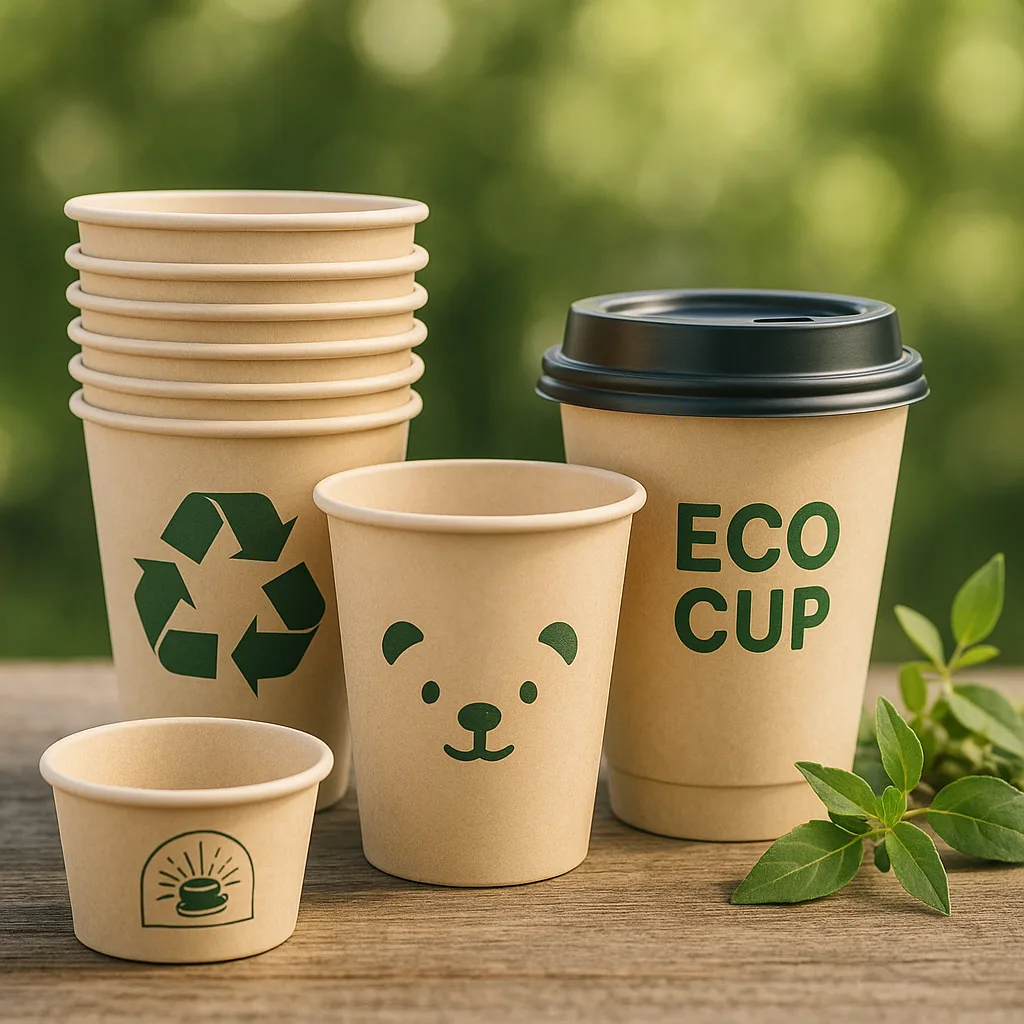
Materials Introduction & Analysis
Water-based coated paper cups use a water-dispersible barrier coating instead of a traditional PE plastic lining. This type of cup is designed to reduce plastic content while maintaining basic moisture resistance for beverage service.
Advantages
- Plastic-reduction advantage: Helps reduce reliance on conventional PE-lined paper cups.
- Better end-of-life potential: Depending on coating technology and local waste systems, some water-based coated cups may support improved recyclability or compostability claims.
- Good for brand compliance: Useful for markets where buyers are actively reducing plastic linings in foodservice packaging.
Disadvantages
- Barrier performance varies: Not every water-based coating performs the same with very hot liquids, long holding times, or oily contents.
- Certification dependent: Compostability or recyclability should be verified by product-specific documentation.
Best Use Cases
- Coffee, tea, cold drinks, and light-duty beverage service where plastic-reduction is a priority.
- Suitable for businesses with clear recycling or composting infrastructure and verified supplier documents.
Considerations
- Do not assume “water-based” automatically means compostable, recyclable, or plastic-free in every market.
- Request coating details, food-contact reports, cup test data, and local disposal guidance before bulk purchasing.
3. PLA Compostable Plastic Cups (Cold Drinks)
 |  |
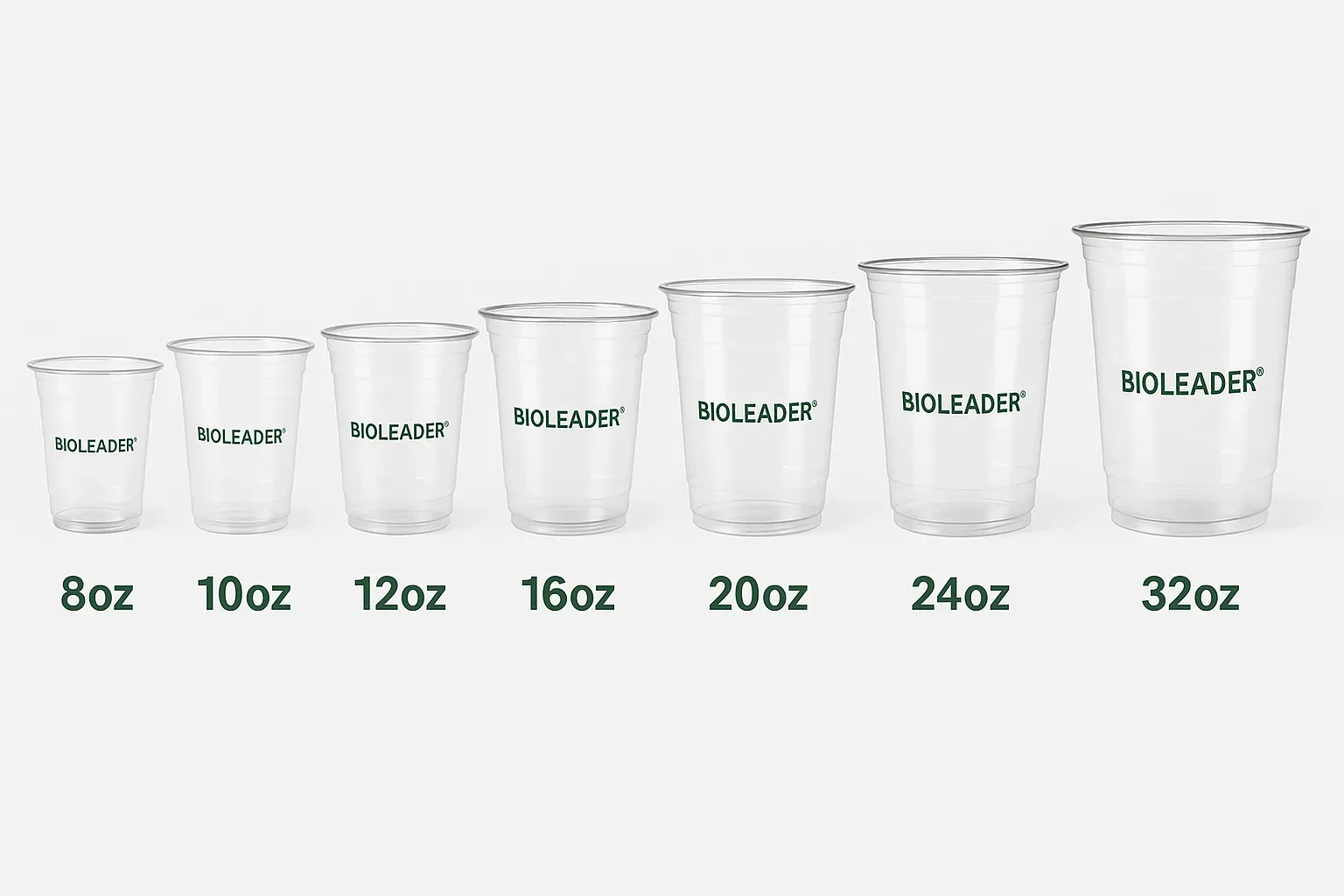
Materials Introduction & Analysis
Made from PLA, these compostable cups are designed for cold drinks. PLA is derived from plant-based sources such as corn starch or sugarcane, making it a plant-based compostable bioplastic alternative to petroleum-based PET cups when proper industrial composting is available.
Advantages
- Clear and strong: Similar visual clarity to traditional clear plastic cups.
- Compostable: Compostable in industrial composting facilities when certified and correctly collected.
- Perfect for cold drinks: Good for beverages that require clarity, branding, and premium presentation.
Disadvantages
- Not suitable for hot drinks, microwave use, or high-temperature foodservice.
- Requires careful storage and shipping protection because PLA can deform under high heat.
Best Use Cases
- Ideal for cold beverages such as iced coffee, juices, smoothies, fruit tea, and soft drinks.
- Takeaway drink packaging in juice bars, cafés, bubble tea shops, and fast-casual dining settings.
Considerations
- Ensure the availability of industrial composting to dispose of PLA cups properly.
- Heat resistance is limited, so avoid using them for hot beverages or high-temperature storage.
4. Cornstarch Cups
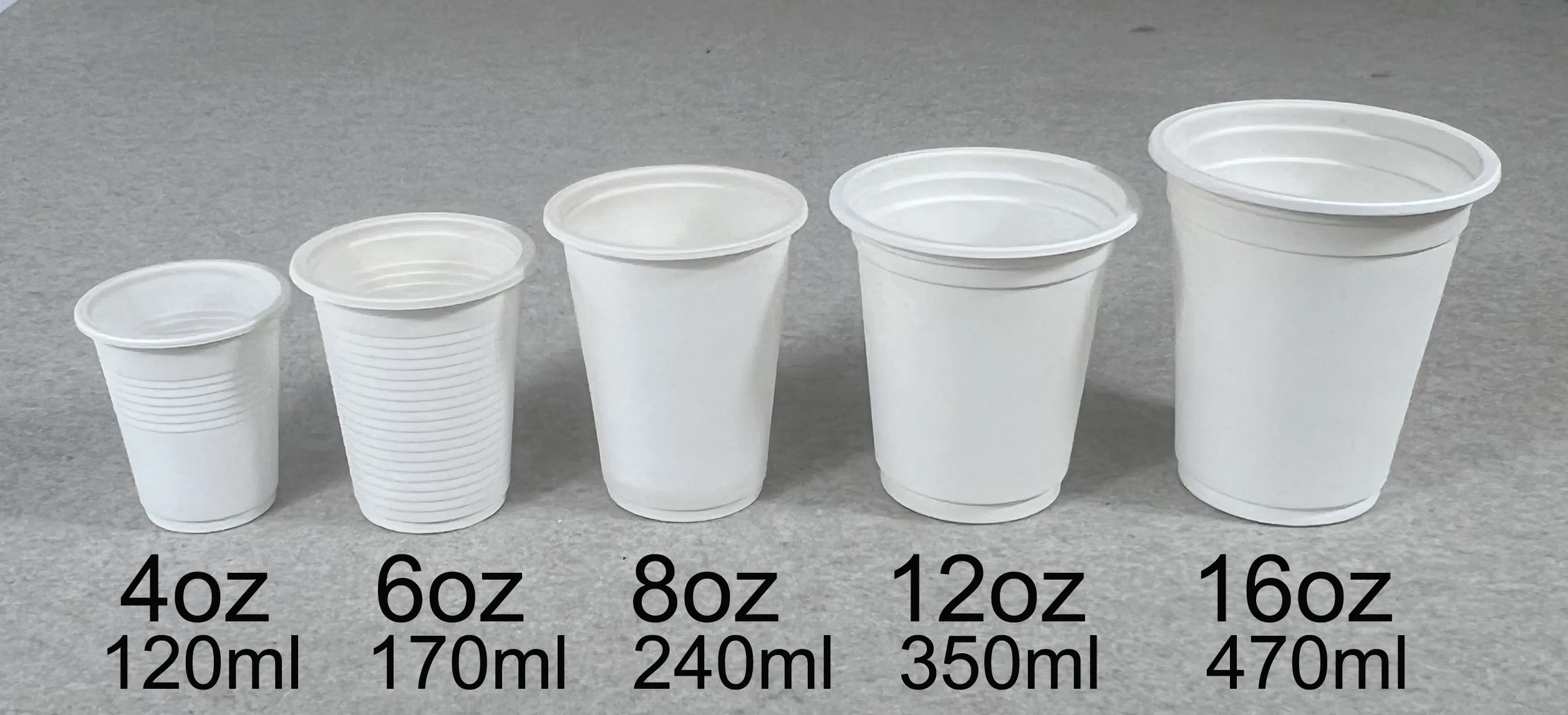
Materials Introduction & Analysis
Cornstarch-based cups are made from starch-based or compostable biopolymer blends designed to reduce reliance on conventional plastic. Their exact performance depends on the formula, product thickness, additives, and certification. Buyers should verify whether the product is certified for industrial composting, home composting, or both.
Advantages
- Bio-based content depends on the resin formulation: Cornstarch-based products may incorporate bio-based starch content and can reduce reliance on conventional fossil-based plastics, depending on the resin system.
- Compostability potential when the finished product is properly certified and disposed of in suitable composting conditions.
- Can support foodservice buyers looking to reduce conventional plastic waste in selected beverage or serving applications.
Disadvantages
- Formula-dependent performance: durability, heat resistance, and liquid holding time can vary significantly by supplier.
- Not every cornstarch-based product is home-compostable or suitable for high-temperature beverages.
Best Use Cases
- Best for cold beverages, tasting cups, or light-duty foodservice where product specifications support the application.
- Takeaway services in markets looking for certified compostable or plant-based cup solutions.
Considerations
- Confirm certification claims before using terms such as biodegradable, compostable, or home-compostable.
- Storage conditions should be controlled to avoid cracking, brittleness, or deformation.
5. Bagasse Molded Pulp Cups
 |  |
Materials Introduction & Analysis
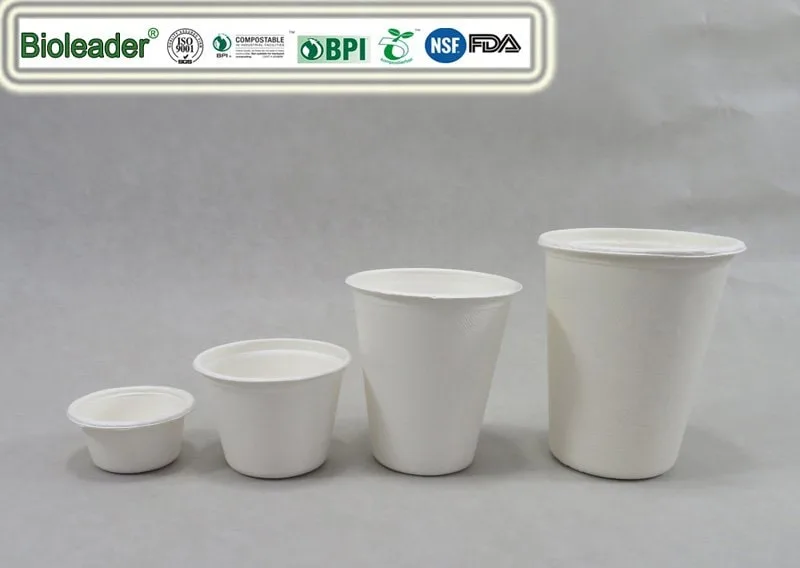
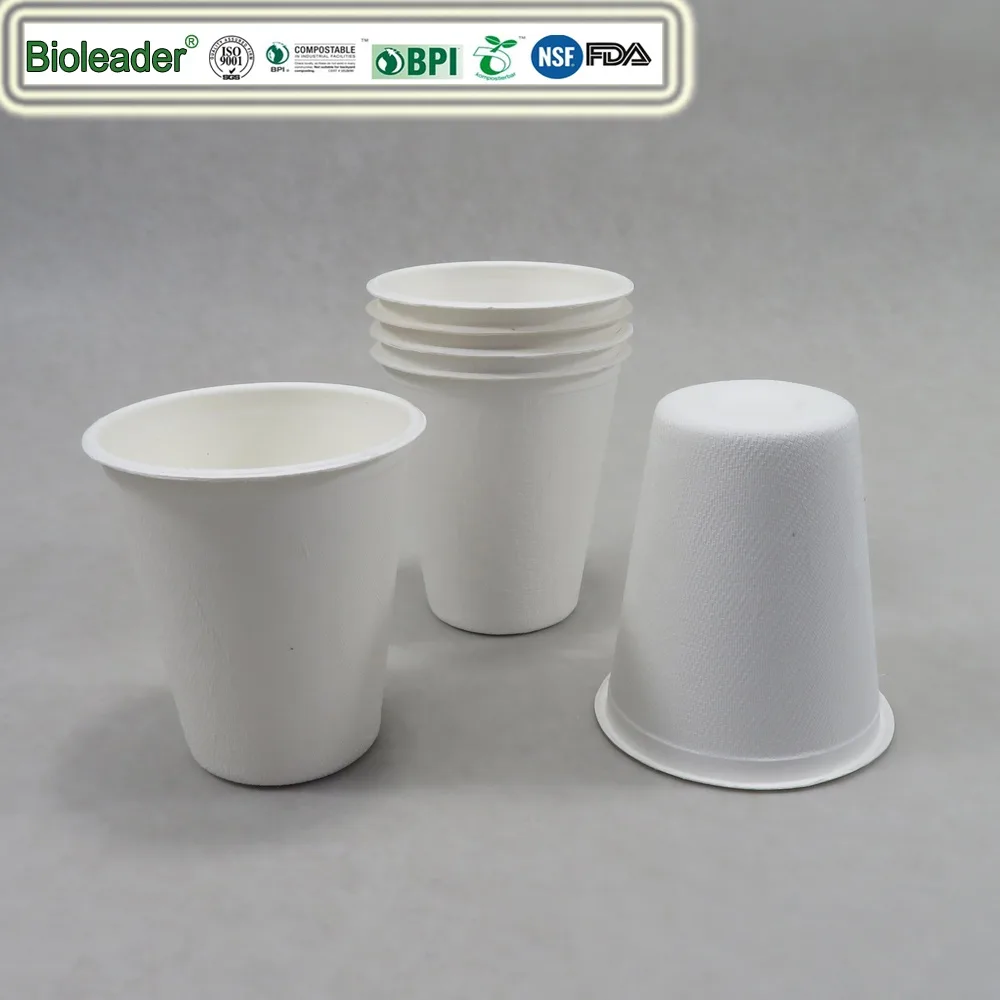
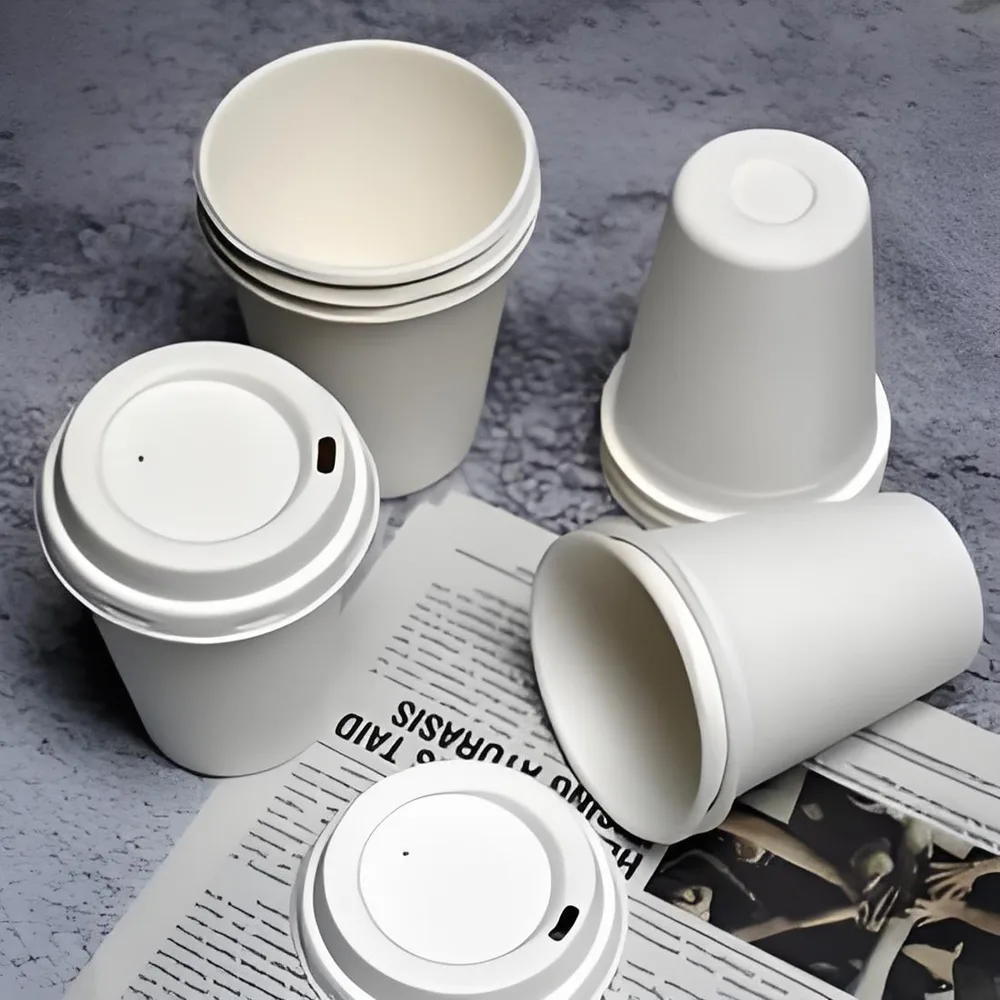
Bagasse is the fibrous material left after sugarcane is processed for juice or sugar. Molded pulp cups made from bagasse use plant fiber rather than petroleum-based plastic and are often selected for brands seeking a natural fiber appearance and better heat tolerance.
Advantages
- Durable and heat-resistant when properly designed and tested.
- Plant-fiber material with compostability potential when certified and collected through suitable systems.
- Offers excellent rigidity and a natural molded-fiber brand image.
Disadvantages
- Not transparent like PLA cups, so they are less suitable for beverages that require product visibility.
- Higher cost compared to basic paper or commodity plastic cup options.
Best Use Cases
- Suitable for hot beverages, tasting portions, soups, and selected hot food applications.
- Takeaway services and eco-conscious businesses that prioritize fiber-based packaging.
Considerations
- Confirm compostability certification, PFAS status, food-contact reports, and real heat-use conditions.
- Ideal for hot food services and eco-conscious businesses that value natural fiber packaging.
Reusable vs Disposable Plastic Cup Alternatives: Which Works for Foodservice?
Reusable cups can be a strong choice for dine-in restaurants, offices, campuses, stadiums, and other closed-loop environments where cups can be collected, washed, inspected, and returned to service at a high rate. In those settings, the environmental and operational result depends on factors such as wash efficiency, energy and water use, transport distance, breakage or loss, and the number of reuse cycles actually achieved.
Disposable alternatives remain operationally important for takeaway, delivery, outdoor events, high-volume beverage service, and other off-premise situations where a reliable return system is difficult to maintain. In these cases, buyers should compare the complete packaging system: cup material, lid material, beverage temperature, local collection infrastructure, composting or recycling access, and the likelihood that the package will reach the intended end-of-life stream.
There is no universal answer in which “reusable” or “compostable” automatically performs best in every business environment. Bioleader® recommends starting with the service model first, then selecting the cup structure that matches real use and disposal conditions. The Top 5 options below remain focused on single-use foodservice replacements because they address the procurement needs of cafés, takeaway operators, distributors, beverage brands, and other off-premise packaging users.
Material Comparison Table
The table below turns the five materials into a practical plastic cup alternatives buyer decision guide. Exact performance depends on the finished product design, coating or resin formulation, thickness, lid combination, certification scope, and intended-use testing.
| Buyer Factor | PLA-Coated Paper Cups | Water-Based Paper Cups | PLA Compostable Cups | Cornstarch Cups | Bagasse Molded Pulp Cups |
|---|---|---|---|---|---|
| Material Structure | Paperboard + PLA lining | Paperboard + water-based barrier coating | PLA bioplastic | Starch-based or compostable biopolymer blend | Bagasse sugarcane fiber |
| Best Beverage / Service Type | Hot or cold drinks where the specific cup structure supports the application | Hot or cold beverage programs focused on reducing conventional plastic lining | Iced coffee, juice, smoothies, fruit tea, soft drinks, desserts | Cold drinks, tasting cups, or selected light-duty service depending on formulation | Hot beverage, tasting, soup, or selected foodservice applications depending on item design |
| Hot / Cold Fit | Product-specific; confirm filling temperature and holding time | Coating-specific; confirm heat and barrier performance | Cold drinks only; not for hot drinks or microwave use | Formula-dependent; verify intended-use temperature | Often selected where stronger heat tolerance is needed; verify the exact item |
| Clear or Opaque | Opaque | Opaque | Clear | Usually opaque or translucent depending on formulation | Opaque molded fiber |
| Typical Lid Options | Matching paper or polymer lids depending on cup series | Matching paper or polymer lids depending on cup series | Flat or dome cold-cup lids matched to rim size and material system | Product-specific lid system | Fiber or other compatible lids depending on cup design |
| Best Sustainability Fit | Certified compostable paper cup programs where suitable collection exists | Plastic-reduction paper cup projects | Certified industrial-composting cold-cup programs | Selected bio-based or certified compostable programs, depending on formulation | Renewable-fiber foodservice programs |
| Disposal Pathway | Usually industrial composting when the finished cup is certified; local acceptance must be checked | Recycling or composting potential depends on coating, certification, collection, and mill or facility acceptance | Industrial composting when certified and correctly collected | Depends on the resin formulation and certification | Composting pathway depends on certification, treatment, and local collection |
| Plastic / Polymer Note | Contains PLA bioplastic lining; not plastic-free | Do not assume plastic-free; the barrier formulation must be verified | PLA is a bioplastic; not plastic-free | Do not assume pure starch or plastic-free; formulation may include polymer blends | Plant-fiber body; additives, coatings, or lid materials should still be checked |
| Heat Resistance | Medium; product-specific | Medium; coating-specific | Low; cold drinks only | Formula-dependent | Generally stronger for hot-use applications when designed and tested accordingly |
| Food-Contact / Compliance Check | Food-contact reports, compostability certificate scope, heat and lid testing | Coating composition, food-contact reports, recyclability or compostability evidence where claimed | PLA resin and finished-product food-contact evidence, compostability certification, storage guidance | Full resin formulation, food-contact evidence, compostability certification where claimed | Food-contact evidence, PFAS-related documentation where relevant, heat performance, lid compatibility |
| Buyer Must Verify | Barrier performance, filling temperature, holding time, lid fit, local composting access | Coating chemistry, repulpability or compostability evidence, beverage performance, local waste route | Cold-use temperature, storage and transport conditions, lid fit, industrial composting access | Resin formulation, temperature range, brittleness, certification scope, local disposal route | Heat and liquid-hold performance, PFAS status where relevant, lid fit, compostability documentation |
| Best Procurement Scenario | Cafés, QSRs, distributors, and brands building a compostable paper cup program | Cafés and beverage brands prioritizing lower-plastic paper cup structures | Juice, smoothie, iced coffee, bubble tea, event, and cold-drink operators | Selected plant-based cup projects with a clearly specified resin system | Fiber-focused foodservice, hot serving, tasting, and natural-look packaging programs |
| Printing / Branding | Yes | Yes | Yes, depending on printing method and cup design | Depends on item design | Usually limited compared with smooth paper or clear cup surfaces |
Procurement note: A material name alone is not enough to approve a cup for bulk purchasing. Buyers should compare the complete cup-and-lid system under intended beverage temperature, filling process, holding time, transport, and end-of-life conditions.
Buyer Verification Checklist Before Bulk Ordering
Before approving a plastic cup alternative for commercial use, Bioleader® recommends checking the complete packaging system rather than evaluating only the visible cup material.
- Beverage temperature: Confirm whether the cup is intended for cold drinks, hot drinks, or both.
- Holding time: Test leakage, softening, deformation, and cup-wall performance for the actual service period.
- Lid compatibility: Verify rim size, lid fit, transport stability, and whether the lid changes the disposal pathway.
- Barrier structure: Identify the lining, coating, resin, additives, or other barrier components used in the finished cup.
- Food-contact documents: Review product-specific documentation applicable to the destination market.
- Compostability certificate scope: Confirm whether certification covers the finished cup, components, inks, or only a raw material.
- PFAS-related evidence where relevant: For molded fiber products, request appropriate product-specific documentation when required by the buyer or target market.
- Local disposal infrastructure: Check whether the destination actually collects and processes the material through recycling or composting.
- Printing and customization: Confirm that inks, branding, sleeves, labels, and accessories do not conflict with the intended performance or end-of-life claim.
- Target market: Match the product to the applicable food-contact, labeling, packaging, and waste-management requirements of the importing country or region.
For commercial sourcing, buyers can also compare Bioleader®’s paper food packaging solutions and compostable PLA clear cup solutions before selecting a finished cup-and-lid system.
How to Choose the Right Supplier or Manufacturer
What to Look for in an Eco-Friendly Packaging Supplier
When selecting a supplier or manufacturer for eco-friendly packaging solutions, buyers should evaluate material performance, compliance documents, manufacturing capacity, and export reliability—not only the unit price.
- Certifications and compliance documents: Depending on the product and target market, ask for relevant compostability evidence such as EN 13432- or ASTM D6400-related certification, BPI or TÜV/OK compost certification where applicable, plus appropriate food-contact declarations or test reports and other product-specific compliance documents.
- Material Transparency: Verify whether the cup uses paper + PLA lining, water-based coating, clear PLA, starch-based blends, or bagasse molded fiber.
- Application Testing: Test the cup with real beverages, lid systems, filling temperature, holding time, shipping conditions, and end-user disposal behavior.
- Supply Chain Reliability: Ensure the supplier can support MOQ, bulk orders, custom printing, mixed-container loading, export documents, and stable lead times.
- End-of-Life Clarity: Avoid vague claims such as “eco” or “green.” Ask whether the product is recyclable, industrially compostable, home compostable, or simply plastic-reduction oriented.
Why Choose Bioleader?
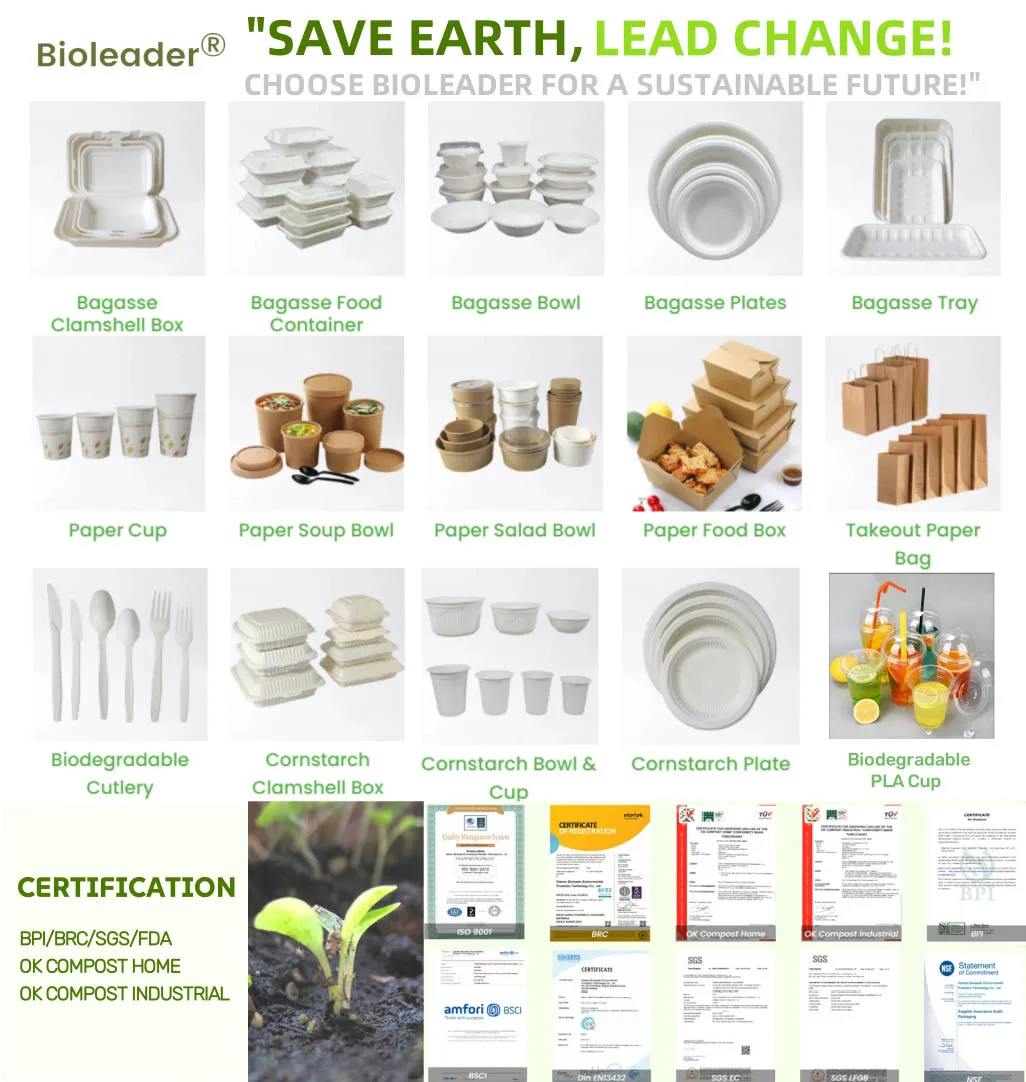
Bioleader offers a range of foodservice packaging solutions across bagasse, PLA, cornstarch, and paper-based structures. For B2B buyers, Bioleader® supports product selection, material comparison, available compliance documentation, custom printing, export packaging, and practical application matching for cafés, restaurants, distributors, and foodservice brands.
Whether your business is responding to Georgia’s staged food-contact plastic restrictions, California’s SB 54 packaging requirements, Chile’s single-use product rules, Mexico’s local restrictions, or other plastic-reduction policies, Bioleader® can help buyers compare cup materials by beverage type, lid system, intended use, and available documentation. Final compliance should be verified for the specific product and destination market.
Conclusion: Transitioning to Sustainable Cup Packaging
As global plastic ban policies continue to evolve, businesses must adopt eco-friendly alternatives that are not only sustainable in appearance, but also suitable for real beverage service, compliant with market requirements, and supported by credible documentation. The top 5 eco-friendly alternatives to single-use plastic cups — including PLA-coated paper cups, water-based coated paper cups, PLA compostable plastic cups, cornstarch cups, and bagasse molded pulp cups — offer businesses a flexible material roadmap.
The best choice depends on beverage temperature, holding time, lid compatibility, branding requirements, composting or recycling access, cost target, and target-market requirements. Buyers comparing paper cup and food packaging options with clear PLA or molded-fiber alternatives should evaluate the complete packaging structure rather than selecting by material name alone.
Considerations for B2B Buyers Navigating Global Plastic Ban Policies
With plastic bans becoming more widespread, B2B buyers must prioritize sourcing sustainable, biodegradable, compostable, recyclable, or plastic-reduction alternatives for single-use cups. The shift to eco-friendly options like PLA, cornstarch, water-based coated paper, and bagasse products supports regulatory readiness when the products are properly certified and matched to realistic disposal systems.
Investing in verified eco-friendly cup alternatives is a strategic step toward long-term sustainability and compliance. The strongest sourcing decision is not based on a single material claim, but on food-contact safety, certification, heat resistance, end-of-life clarity, supplier reliability, and real beverage performance.
FAQ: Eco-Friendly Alternatives to Single-Use Plastic Cups
1. What is the best alternative to single-use plastic cups?
The best alternative depends on the beverage and disposal system. PLA clear cups are strong for cold drinks, PLA-coated paper cups work for compostable paper cup programs, water-based coated paper cups support plastic-reduction goals, and bagasse molded pulp cups are useful for fiber-based hot beverage or serving applications.
2. Are PLA cups plastic-free?
No. PLA is a plant-based compostable bioplastic, not conventional petroleum-based plastic. It can reduce reliance on fossil-based plastic, but it usually requires industrial composting conditions.
3. Are water-based coated paper cups recyclable or compostable?
It depends on the coating technology, local recycling or composting system, and product certification. Buyers should request product-specific documentation before making recyclability or compostability claims.
4. Can compostable cups be composted at home?
Not always. Many PLA and compostable cup products require industrial composting. Home compostability should only be claimed when the product has suitable certification and testing.
5. Are bagasse molded pulp cups suitable for hot drinks?
Many bagasse molded pulp cups can be suitable for hot beverage or foodservice applications when properly designed and tested. Buyers should confirm heat resistance, food-contact reports, PFAS status, and lid compatibility.
6. What certifications or documents should B2B buyers request?
The required evidence depends on the product and target market. Buyers may need compostability certification such as EN 13432- or ASTM D6400-related evidence, BPI or TÜV certification where applicable, food-contact declarations or test reports, and PFAS-related documentation for relevant molded-fiber products. Certification scope should be checked at finished-product level whenever a specific environmental claim is used.
7. What is the best plastic cup alternative for cold drinks?
For cold drinks that require a clear cup, PLA can be a practical option when the product is correctly stored and an appropriate industrial-composting pathway exists. When transparency is not required, paper cups with a suitable barrier structure may also work, but buyers should verify liquid-hold performance, coating structure, lid fit, and the intended disposal route.
8. What is the best plastic cup alternative for hot drinks?
For hot coffee or tea, coated paper cups and suitable fiber-based cups are common options to evaluate. The final choice should be based on the actual filling temperature, holding time, barrier performance, cup-wall construction, and lid compatibility rather than the material label alone.
Reference
- Ministry of Environmental Protection and Agriculture of Georgia. Official notices and amendments covering staged restrictions on selected plastic food-contact products and implementation dates for foodservice containers and cups.
- CalRecycle. SB 54 Plastic Pollution Prevention and Packaging Producer Responsibility Act guidance and 2032 requirements for covered single-use packaging and plastic foodservice ware.
- Chile Law No. 21,368. Limits on disposable products and regulation of plastics in foodservice and packaging applications.
- BPI (Biodegradable Products Institute). Certified compostable products and packaging verification.
- TÜV Austria. OK compost HOME and OK compost INDUSTRIAL certification guidance.
- European Bioplastics. Compostability, bioplastics market data, and guidance on bio-based and compostable materials.
- Bioleader®. Product documentation for PLA cups, PLA-coated paper cups, water-based coated paper cups, cornstarch cups, bagasse molded pulp cups, and export-ready compostable packaging solutions.