Global Plastic Ban 101: What It Is, When To Use, And How To Choose | Bioleader® Sustainable Packaging
Actionable coverage of global plastic ban: eco-friendly, biodegradable, compostable materials, performance data, and compliance under EN13432 & ASTM D6400. Includes BPI/TÜV references and Food-Contact Tested guidance for safe deployment. Buyer-focused: manufacturer insights, bulk/wholesale buying playbooks, OEM/ODM customization tips, full size range selection.
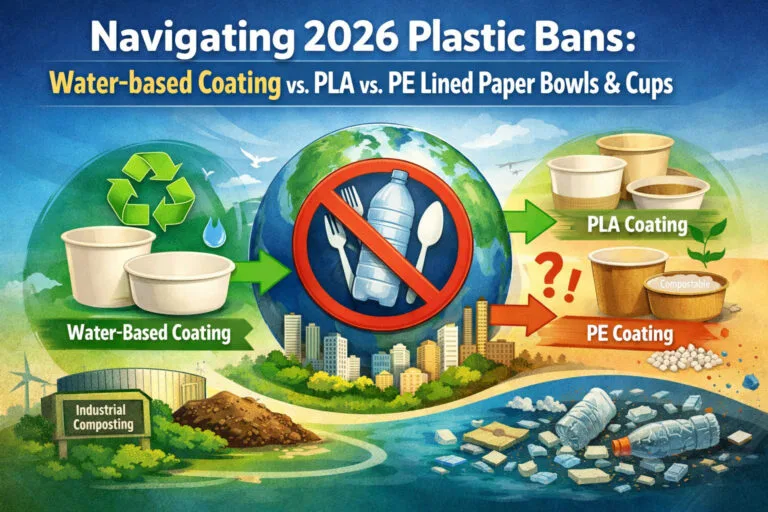
Over the past decade, plastic regulation has evolved in clear stages. Many countries began with plastic shopping bags because they were visible, lightweight and widely littered. The next stage targeted plastic straws, stirrers and other small-format items with low functional value but high environmental visibility. By 2026, the policy focus has moved into a more commercially important area: disposable foodservice packaging.
global plastic ban — Quick Summary
Items displayed (articles): 12
Last updated: 2026-05-28
Includes test data, compliance guides, buyer FAQs, and real-world use cases.
FAQ of Bioleader's Eco-friendly Disposable Tableware
Is it really compostable?
Yes, these salad bowls compostable are made from biodegradable materials such as kraft paper and white cardboard paper which allow it to biodegrade when discarded appropriately.
Paper Salad Bowl with Lid (Kraft & White)
Item Product Name Paper Weight Product Size (Top*Bottom*High) Pcs/ CTN Carton Size (cm) PE-SSK16 500ml Bowl (Kraft/White) Kraft Paper 337gsm / White paper 320gsm 148*131*46 mm 300 46 31 48 PE-SSK26 750ml Bowl (Kraft/White) Kraft Paper 337gsm / White paper 320gsm 148*129*60 mm 300 46 31 49 PE-SSK32 1000ml Bowl (Kraft/White) Kraft Paper 337gsm / White paper 320gsm 148*129*78 mm 300 46 31 51 Lid Options 148mm PP Flat Lid 6.5g 148mm 300 48 33 31.5 148mm PET Dome Lid 9g 148mm 300 47 33.5 31.5 148mm Paper Lid Kraft / White 148mm 300 68 32 48 PE-SSK36 1090ml Bowl (Kraft/White) Kraft Paper 337gsm / White paper 320gsm 168*145*65 mm 300 52 33 57 Lid Options 168mm PP Flat Lid 10g 168mm 300 54 32 36 168mm PET Dome Lid 11g 168mm 300 55 38 37 168mm Paper Lid Kraft / White 168mm 150 41 36 54 PE-SSK40 1200ml Bowl (Kraft/White) Kraft Paper 337gsm / White paper 320gsm 175*148*68 mm 300 54 36 58 Lid Options 175mm PP Flat Lid 10g 175mm 600 55 55 38 175mm PET Dome Lid 12g 175mm 300 57 38 37 175mm Paper Lid Kraft / White 175mm 150 38 38 56 PE-SSK44 1300ml Bowl (Kraft/White) Kraft Paper 337gsm / White paper 320gsm 184*161*70 mm 300 55 37 60 Lid Options 184mm Paper Lid Kraft / White 184mm 150 40 36 59 184mm PET Dome Lid 12g 184mm 300 58 40 34 Film Coated Options PE(single) Single 18gsm PE (100% recyclable, this is the normal choice type) PE(double) Double18gsm PE (available for ice, cold, and freezer) PLA Single 31gsm PLA (100% biodegradable & Compostable) Personalized in Terms of Logos and Designs A noteworthy highlight of our salad to go container with locking lid is that it can be printed with your brand’s logo or any design of your choice. This is a brilliant method to promote your business, and it gives an appealing professional touch to your take-out meals. Be it a café or a restaurant or a catering service, such personalized to go salad containers do not only keep the food safe but act as marketing tools as well — global plastic ban. Custom printing is also possible so kindly reach out to us for all of your inquiries.
Can they be put in the microwave?
Yes, they can be put in a microwave even though there is no instruction to that, which makes it easier as meals can be quickly reheated in the same bowl — global plastic ban.
Stage 4: Full packaging compliance
Mature markets are expanding from bans to complete compliance systems, including recyclability, compostability, labeling, food-contact safety, EPR, packaging reduction targets and environmental claim control , global plastic ban.
Stage 2: Straws, stirrers and small disposable items
Plastic straws and beverage stirrers became early targets because they are often unnecessary, difficult to recycle and frequently found in marine litter and street waste.