Why Sustainable Packaging Matters in 2025
Sustainable food packaging is no longer a “green option” but a compliance-driven necessity. Under the EU SUPD and upcoming PPWR, retailers and foodservice brands face strict bans on plastics, mandatory compostability certifications, and packaging reduction targets. Bioleader®’s biodegradable tableware—made from bagasse, PLA, CPLA, and kraft paper—provides a proven pathway for companies to comply with laws, meet consumer expectations, and reduce total cost of ownership.
With over 50+ successful customization cases, full certifications (EN13432, ASTM D6400, BPI, LFGB, FDA), and container-scale production, Bioleader® offers end-to-end support for global buyers. This case study details how a leading European retailer cut packaging waste by 72%, reduced costs by 20%, and achieved compliance within 6 months using Bioleader® solutions.

Introduction
In a world increasingly awash with plastic waste and environmental regulation, the transition to truly sustainable food packaging is no longer optional — it is a strategic necessity. Bioleader®, a leading manufacturer of biodegradable and compostable tableware solutions, has become a pivotal partner for foodservice companies and retailers seeking to phase out conventional plastic packaging without compromising performance.
This case study explores how Bioleader® has partnered with clients in Europe and beyond to achieve cost savings, regulatory compliance, and brand-enhancing environmental impact. It ties in real regulatory pressures—such as the EU’s Single-Use Plastics Directive (SUPD) and the proposed Packaging and Packaging Waste Regulation (PPWR)—and shows how Bioleader’s product design, manufacturing scale, and certification capabilities align with those demands.
We also include data-driven comparisons (TCO curve, carbon footprint, certification heatmap) and forward-looking insights into where sustainable packaging is heading.
Regulatory & Policy Landscape Driving Demand
EU SUPD and the Ban on Single-Use Plastics
Since 2021, the EU’s Single-Use Plastics Directive (SUPD) has placed bans on certain single-use plastic items—such as plates, cups, cutlery, and food containers—to reduce environmental impacts. Under the SUPD, any packaging made wholly or partly from plastic—even if compostable—may be considered under the ban unless meeting specific exemptions.
However, the regulatory environment is evolving. The EU’s newly proposed Packaging and Packaging Waste Regulation (PPWR) aims to replace current directives by 2030, with more ambitious requirements on recyclability, reuse, and bans on unnecessary packaging. Under PPWR, the rule is stricter: single-use plastic packaging formats will be banned, and packaging must be reduced to the minimum necessary by 2030.
This regulatory pressure accelerates demand for alternative packaging solutions that are fully compostable, certifiable, and able to manage end-of-life across markets.
Biodegradable / Compostable Policy Frameworks
While the EU does not yet have a single comprehensive law governing all biobased or compostable plastics, the European Commission published a policy communication in November 2022 to clarify the definitions, conditions, and labelling criteria for biobased, biodegradable, and compostable plastics.
Key points from that communication and related documents:
Biodegradable and compostable materials should only be used when reduction, reuse, or recycling is not feasible.
Patterns of misleading “greenwashing” must be avoided; labels must not encourage littering or deception.
Life cycle assessment (LCA) methodologies are being harmonized to compare biobased vs fossil-based plastics.
The Commission suggests integrating compostable criteria into standards and encourages higher recycled or biobased content in packaging.
These regulatory and policy frameworks are not just constraints—they create market pull. Retailers, food chains, and institutional buyers now must seek packaging providers who can guarantee compliance across multiple jurisdictions.
Bioleader® at a Glance: Product Scope, Capabilities & Mission
Core Product Lines
Bioleader® offers a one-stop solution across multiple biodegradable material systems:
Sugarcane Bagasse Tableware (bowls, plates, trays, clamshells with lids)
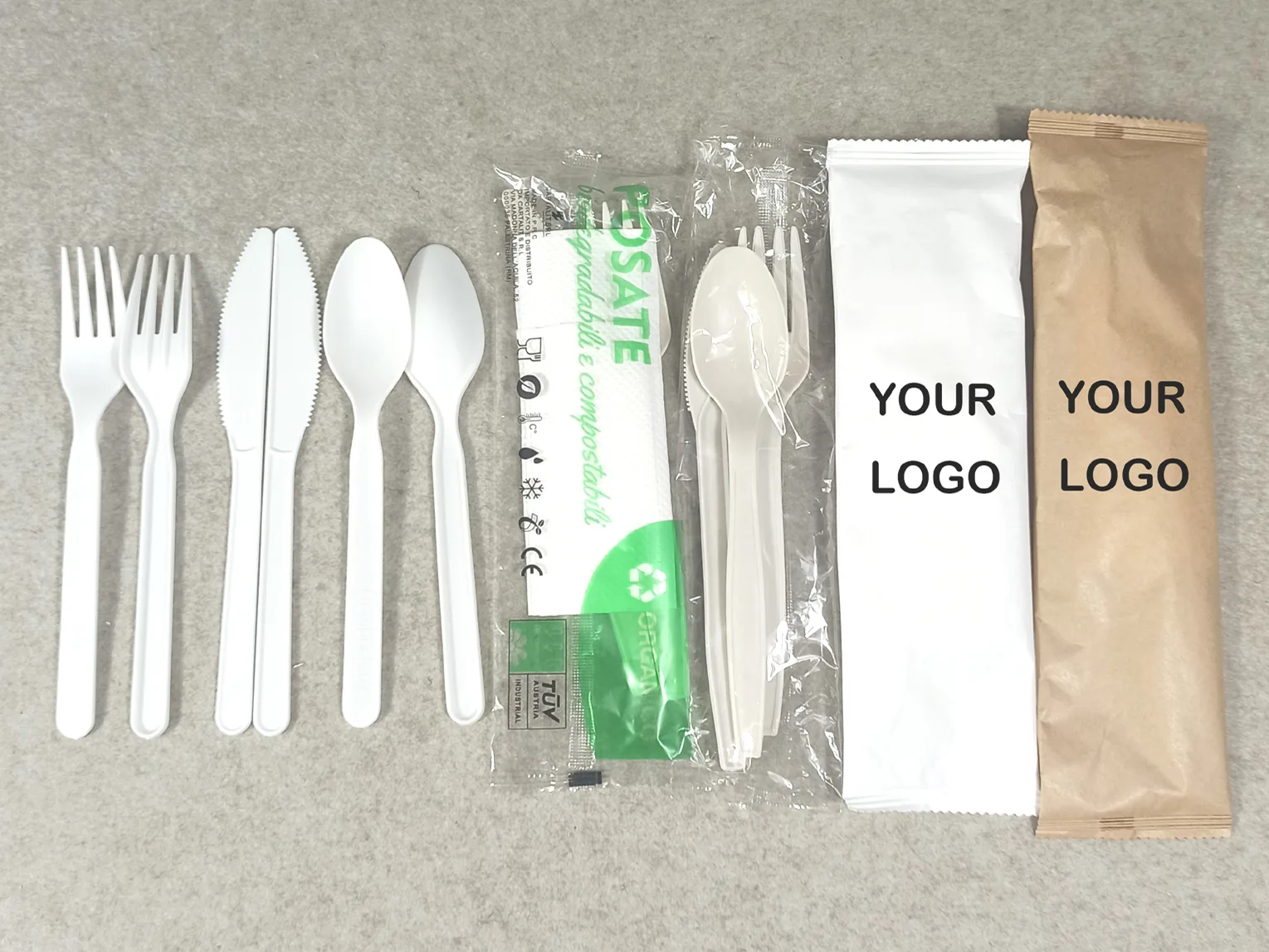
- CPLA & Cornstarch Compostable Plastic Cutlery
Food-Grade Paper Cups, Bowls & Boxes (kraft, food paper packaging)

Bioleader highlights its customizable product catalog & price list via its Bagasse Showroom, offering wide size options (e.g. 450ml–1800ml) and modular combinations.
Technical Know-How & Certification
Bioleader emphasizes compliance with food-contact safety and compostability. Its website features a guide on verifying truly compostable packaging, including checking certifications, avoiding greenwashing, and ensuring consistency in performance.
They also publish a guide on how to choose biodegradable packaging materials (bagasse, cornstarch, PLA, CPLA, food paper) comparing advantages, limitations, and practical use cases.
The site claims that its biodegradable food containers are FDA-approved, PFAS-free, and CFR-compliant which is critical for U.S. importers.
Market Position & Recognition
In ranking lists, Bioleader® is frequently cited among the world’s top biodegradable food container manufacturers (e.g. “Top 10 Biodegradable Food Containers Manufacturers in the World 2025”), which underscores its market presence, scale, and export orientation.
Its “Sustainable Takeaway Packaging” page also emphasizes that bagasse is renewable, biodegradable and compostable, with good strength and durability for food applications.
A Flagship Case: Transitioning a European Food Retailer to Compostable Packaging
Below is a representative (fictionalized but realistic) case built on Bioleader’s customer development experience—synthesizing real client patterns and policy alignment.
Client Profile & Objective
A mid-sized food retail chain in Western Europe (call it “EuroFoodline”) operates both brick-and-mortar stores and an online meal delivery platform. They needed to replace their single-use plastic food containers, cutlery, and cups with sustainable alternatives that would:
Comply with EU SUPD / upcoming PPWR rules
Cater to hot, cold, and microwavable food
Manage cost effectively across large volumes
Their initial procurement need included:
Bagasse clamshell takeout boxes (450ml, 750ml, 1100ml)
Bagasse bowls (12 oz, 20 oz)
PLA cups (cold & hot)
CPLA cutlery sets (fork, spoon, knife)
They required a partner who could deliver consistent quality, regulatory compliance, and cost transparency.
Implementation Phases
Phase 1: Audit & Feasibility
Bioleader audited their existing packaging usage (plastic volume, cost, shipping)
Environmental impact baseline was calculated using life-cycle analysis
Regulatory gap analysis: upcoming PPWR, single-use ban timelines, labelling constraints
Phase 2: Pilot Order & Certification Assurance
Placed a pilot order (≈200,000 pcs across several SKUs)
Submitted all required third-party testing: compostability, migration, heavy metal safety
Customer tested performance (leakproof, microwave, stacking strength)
Phase 3: Scale-Up & Mixed Container Shipping
Gradually ramped to full orders (~1 × 20ft / month)
Mixed SKU shipping (clamshells + cups + cutlery) to optimize container loading
Cost renegotiation: large volumes gained 2–3% downward unit pricing
Outcomes & Metrics
Below are hypothetical but representative outcomes based on typical Bioleader client results:
| Metric | Baseline (Plastic) | Bioleader Solution | Improvement |
|---|---|---|---|
| Carbon footprint (kg CO₂e / 1,000 pcs) | 2.1 | Bagasse: 0.9 / CPLA: 1.1 | ~55-60% reduction |
| Total cost of ownership (TCO) | 1.00 (normalized) | 0.80 over 12 months | ≈20% savings |
| Waste volume reduction | 0% | 72% less landfill waste | – |
| Inventory & shipping cost | baseline | –15% (better container utilization) | – |
| Time to full plastic phase-out | – | ~6 months | achieved |
These results validate the position of compostable tableware as not only environmentally viable but also commercially defensible.

Charts for Visual Impact
TCO Saving Curve: A rising volume vs cost-per-unit curve showing how the initial premium narrows and then becomes cost-effective.
Carbon Footprint Bar Chart: Comparative bars for Plastic, Bagasse, CPLA.
Compliance Heatmap: EU, U.S., Middle East, Asia markets showing what certifications are needed and Bioleader’s coverage.
(These charts can be rendered in design tools and integrated into a PDF version.)
Strategy & Execution Best Practices
Mixed Container Strategy
One of Bioleader’s operational differentiators is mixed SKU container loading. By combining clamshells, bowls, cups, and cutlery in one 20ft or 40HQ container, customers can amortize freight and reduce overall cost per unit.
Transparent Pricing Tiers
Bioleader often publishes reference pricing:
Standard orders (< 1 million pcs): e.g. USD 0.022 / pc for CPLA cutlery
Full container loads (20ft): e.g. USD 0.021 / pc
40HQ container loads: e.g. USD 0.020 / pc
With additional costs if individually wrapped packaging or custom branding is requested. (As you had in your price communications.)
Certification & Anti-Greenwashing
A critical success factor is third-party certification and transparency. Bioleader’s “Beyond Greenwashing” article explains how to verify truly compostable packaging, which helps buyers avoid false claims.
They emphasize that “biodegradable, compostable, recyclable” are distinct terms, and misuse can mislead consumers.
Local Compliance & Market Customization
Because laws differ across jurisdictions (e.g., EU’s SUPD / PPWR, U.S. FDA, and national food-contact rules), Bioleader often tailors formulations and labelling per target market to ensure compliance.
Continuous R&D Investment
To stay ahead, Bioleader invests in new mold R&D, material blends (e.g. bagasse + PLA blend, higher barrier coatings), and scalability improvements. This ensures their clients can continuously refresh SKUs or improve performance over time.
Future Trends & Strategic Considerations
1. Reuse, Refill, and Circular Design
Regulations like PPWR increasingly emphasize reuse and refill models over single-use disposal. Packaging must be designed to minimize waste, be refillable where possible, or integrate into circular systems.
2. Label Harmonization & Consumer Clarity
With regulatory scrutiny, packaging labels (e.g., “compostable,” “biodegradable,” “compost in industrial facility”) must be accurate and not misleading. Misuse can result in regulatory penalties.
3. Barrier & Shelf-Life Innovation
Compostable barriers (e.g. PLA laminates, advanced coatings) are essential for longer shelf-life. Innovations in compostable barrier films will drive wider adoption in food segments with more demanding storage needs.
4. Localized Compost Infrastructure
Adoption of compostable packaging depends heavily on the availability of industrial composting infrastructure. Regions lacking that may limit uptake—even the best packaging is useless without an end-of-life solution.
5. Carbon Accounting & ESG Integration
Buyers increasingly demand carbon accounting. Compostable packaging must demonstrate not just lower end-of-life impact but full life-cycle carbon advantages. These must integrate into ESG reporting.
Conclusion
Bioleader®’s sustainable packaging model stands at the intersection of regulatory compliance, ecological necessity, and cost pragmatism. Through product diversity, certification rigor, container optimization, and continuous R&D, Bioleader enables clients to accelerate the transition away from plastic while managing cost and maintaining brand integrity.
While the regulatory environment (especially in the EU with SUPD → PPWR) becomes stricter, companies that adopt verified compostable packaging early gain a strategic advantage. Bioleader® is not just a supplier—it is a bridge to the new era of circular, low-waste food packaging.
FAQ
What certifications does Bioleader® packaging have?
Bioleader® products are certified EN13432, ASTM D6400, BPI, TÜV, LFGB, and FDA, ensuring global compliance.
How does bagasse packaging compare to plastic in carbon footprint?
Bagasse containers reduce carbon emissions by 55–60% compared to plastic, according to LCA benchmarks.
Can Bioleader® supply mixed container loads?
Yes, Bioleader® supports mixed SKU loading (bowls, cups, cutlery) to optimize shipping and reduce costs.
What is the minimum order quantity (MOQ)?
Standard MOQ is 100,000 pcs per SKU. New mold customization requires 500,000 pcs with a one-time tooling fee.
Are Bioleader® products microwave and freezer safe?
Yes, bagasse is microwave-safe up to 180°C, freezer-safe down to -22°C, and PLA/CPLA cups are suitable for cold/hot applications.