Quick Summary
Yes, sugarcane bagasse tableware is generally considered safe to use.
Sugarcane bagasse tableware has become a popular alternative to plastic and styrofoam due to its eco-friendly and sustainable properties. But is it safe for daily use, especially for serving food? The short answer is yes—sugarcane bagasse tableware is generally considered safe. Below, we’ll explore the reasons why this type of tableware is a safe choice and the factors you should consider for its proper use.
Verification note
From an E-E-A-T perspective, the safest formulation is not “bagasse is natural, therefore safe,” but “the finished food-contact article is safe when the entire formulation, manufacturing process, and intended-use conditions are compliant and verified.” In both the U.S. and EU, food-contact safety is tied to authorized/assessed substances, manufacturing controls, and migration behavior, not raw fiber origin alone. [Ref 1] [Ref 2]
Why Sugarcane Bagasse Tableware Is Safe
1. Natural and Sustainable Material
Sugarcane bagasse is a natural byproduct derived from sugarcane after the juice is extracted. Since it is a plant-based material, it does not introduce synthetic or harmful substances into the environment or your food. This natural origin supports its suitability for foodservice use when produced under regulated conditions.
2. Non-Toxic Manufacturing Process
Most manufacturers avoid using toxic chemicals or harmful dyes during production. The tableware is typically treated with heat and water to form sturdy, food-safe products. As a result, it does not release toxic substances when it comes into contact with food or beverages.
3. Food Safety Compliance
High-quality sugarcane bagasse tableware is manufactured according to strict food safety standards. When properly regulated, the materials used are certified safe for food contact, ensuring that they do not leach harmful substances into your meals.
Compliance note
For B2B buyers, “food-safe” should be backed by a declaration of compliance or equivalent food-contact statement, plus test scope that matches the real use case: hot fill, acidic food, oily food, refrigerated storage, or reheating. EU framework rules require that food-contact materials do not transfer constituents into food at levels harmful to health or alter food unacceptably, while FDA authorization is use-specific. [Ref 1] [Ref 2]
4. Heat Resistance
While sugarcane bagasse tableware is not designed for high-heat applications like oven use, it is generally heat-resistant up to certain temperatures, making it safe for serving hot meals, soups, and beverages. It is ideal for room temperature and cold food applications as well.
Technical caveat
Heat resistance should be described as a supplier-tested performance range, not a universal property of all bagasse articles. Real-world stress depends on contact time, moisture, oil load, acidity, and whether the article has additives, coatings, or PFAS-free barriers. A 2023 study on sugarcane pulp take-out containers reported that acidic simulant conditions were the most demanding and produced higher migration results than water or ethanol conditions. [Ref 7]
5. Eco-Friendly and Biodegradable
One of the standout features of sugarcane bagasse is its biodegradability. Unlike plastic, it decomposes naturally in a short time, leaving no toxic residue in the environment. This reduces the risk of long-term exposure to harmful substances for both humans and ecosystems
Factors That Can Impact Safety
Although sugarcane bagasse tableware is generally safe, its safety depends on several important factors:
1. Quality of Manufacturing
- Not all sugarcane tableware is created equal. Some manufacturers may use low-quality materials or add non-food-grade chemicals during production, compromising safety.
- Look for tableware that is certified by reputable organizations like the FDA, EU standards, or similar food safety regulatory bodies.
2. Usage Guidelines
- Always follow the manufacturer’s instructions for proper use. For instance, most sugarcane bagasse products are not microwave-safe or suitable for very high temperatures.
- Avoid storing highly acidic or oily foods for extended periods, as they may weaken the material or cause contamination.
Practical pitfall
One recurring buyer mistake is treating “microwave-safe,” “hot-fill safe,” and “long-hold safe” as the same claim. They are not. Short microwave reheating can be acceptable for some molded-fiber products, while prolonged heating, very oily meals, and acidic sauces create a tougher exposure profile. That is why intended-use testing matters more than generic marketing language. [Ref 2] [Ref 7]
3. Proper Disposal
- While sugarcane bagasse is biodegradable, it should be disposed of in a compostable or biodegradable waste bin to maximize its environmental benefits. Improper disposal in landfills may reduce its ability to decompose effectively due to a lack of oxygen.
End-of-life note
Compostable does not automatically mean rapid breakdown in landfill. Certification programs such as BPI and TÜV Austria are tied to specific compostability standards and conditions. Use compostability claims only when they are supported by valid certification for the claimed environment. [Ref 5] [Ref 6]
How to Choose Safe Sugarcane Bagasse Tableware
To ensure you are using a safe and reliable product, consider the following tips:
- Check Certifications: Look for certifications like FDA approval, compostability labels, or food-contact safety certifications.
- Buy from Reputable Brands: Purchase tableware from trusted manufacturers with positive customer reviews and a track record of adhering to safety and environmental standards.
- Inspect the Product: Ensure that the product is free from visible defects, strong chemical odors, or discoloration, which may indicate poor manufacturing.
Importer / private-label checklist
- Request a food-contact declaration with product code, date, and intended-use scope.
- Check whether any coating, wet-strength chemistry, oil barrier, or release agent is included in the finished article.
- Match testing to your use case: hot food, acidic food, oily food, freezer use, or short microwave reheating.
- Ask for PFAS/BPA statements and, if relevant to your market, compostability certification details instead of generic “biodegradable” claims.
This is the most defensible way to improve E-E-A-T without rewriting the original message of the article. [Ref 1] [Ref 2] [Ref 8]
Conclusion
Sugarcane bagasse tableware is a safe and environmentally responsible choice for everyday use. Its natural composition, non-toxic production, and compliance with food safety standards make it suitable for serving a wide range of foods. However, like any product, its safety and performance depend on the quality of manufacturing and proper usage. Always choose tableware from trusted sources and follow recommended guidelines to enjoy its benefits safely.
Editorial upgrade added for AI extractability
The original conclusion remains intact. The upgrade layer added here is designed to make the page easier for search systems and AI systems to quote accurately: a direct summary block, clearer section separators, source-backed notes, and a visible FAQ whose wording can also be mirrored in valid JSON-LD. Google’s current documentation states there is no special AI-only markup required; the core requirement is still helpful, reliable, indexable content with structured data that matches visible text. [Ref 3] [Ref 4]
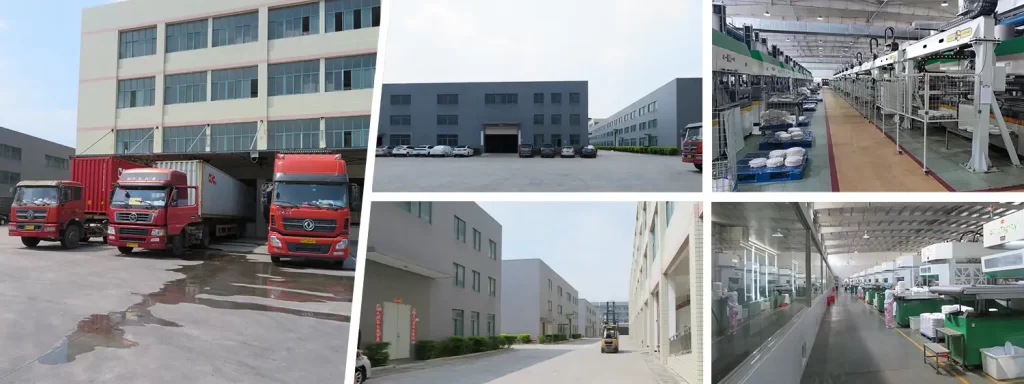
Xiamen Bioleader Environmental Protection Technology Co., Ltd
Professional manufacturer of pulp molding eco-friendly biodegradable tableware and takeaway food packaging! We have obtained certifications of ISO:9001, BRC, NSF, FDA-SGS, OK Compost Home, BPI, EN13432, ASTM6400, EC-EU, LFGB ”

FAQ: Common Questions About Sugarcane Bagasse Tableware Safety
1. Is sugarcane bagasse tableware food-safe?
Generally, yes—provided the finished product is made under compliant food-contact controls and the full article, including any additives, coatings, inks, or processing aids, is suitable for its intended use. Buyers should rely on compliance documents and migration-related testing, not only “natural fiber” marketing language. [Ref 1] [Ref 2]
2. Can bagasse plates and containers be microwaved?
Some bagasse products can be used for short microwave reheating, but this is product-specific and should never be assumed across all suppliers. Performance depends on structure, barrier chemistry, food type, and reheating duration. Oven or prolonged dry-heat use should not be inferred from a generic microwave-safe claim. [Ref 2] [Ref 7]
3. Does compostable mean the product will break down quickly in landfill?
No. Compostability claims are tied to specific conditions and standards. Landfill conditions are very different from controlled industrial or home compost settings, so “compostable” should not be translated into a blanket landfill biodegradation claim. [Ref 5] [Ref 6]
4. Are all bagasse products automatically PFAS-free?
No. Bagasse is the fiber source, but the finished article may still include chemistry for oil resistance or other functional performance. A 2025 study found product-to-product differences in fluorine/PFAS-related results among commercial sugarcane pulp tableware samples, so PFAS-free status should be verified at the finished-product level. [Ref 8]
5. What should importers or private-label buyers ask suppliers before ordering?
Ask for the food-contact declaration, intended-use scope, migration test basis, PFAS/BPA statement, temperature limits, and compostability certificate details where relevant. The most common compliance mistake is using a certificate that does not actually match the finished SKU, food type, or use condition being sold. [Ref 1] [Ref 2] [Ref 8]
Sources & Verification References
- FDA. Understanding How the FDA Regulates Substances that Come into Contact with Food. https://www.fda.gov/food/food-packaging-other-substances-come-contact-food-information-consumers/understanding-how-fda-regulates-substances-come-contact-food
- European Commission. Food Contact Materials Legislation (Regulation (EC) No 1935/2004 and GMP framework). https://food.ec.europa.eu/food-safety/chemical-safety/food-contact-materials/legislation_en
- Google Search Central. AI features and your website. https://developers.google.com/search/docs/appearance/ai-features
- Google Search Central. General structured data guidelines and FAQ structured data. https://developers.google.com/search/docs/appearance/structured-data/sd-policies and https://developers.google.com/search/docs/appearance/structured-data/faqpage
- BPI. Certified Compostable. https://bpiworld.org/
- TÜV Austria. OK compost HOME. https://en.tuv.at/ok-compost-home-en/
- Hu Y. et al. 2023. Sugarcane Pulp Take-Out Containers Produce More Microparticles in Acidic Foods and Cause Higher Heavy Metal Intake. Foods 12(13):2496. https://pubmed.ncbi.nlm.nih.gov/37444234/
- Chen L. et al. 2025. Migration Safety of Perfluoroalkyl Substances from Sugarcane Pulp Tableware: Residue Analysis and Takeout Simulation Study. Molecules 30(15):3166. https://doi.org/10.3390/molecules30153166