Why PLA Is Not Suitable for Hot Food: Key Takeaway
PLA (Polylactic Acid) is a plant-based, compostable material designed primarily for cold or low-temperature food applications.
Due to its low heat resistance (typically softening above 45–55°C), PLA is not suitable for hot food, hot liquids, steam-heavy meals, or microwave reheating.
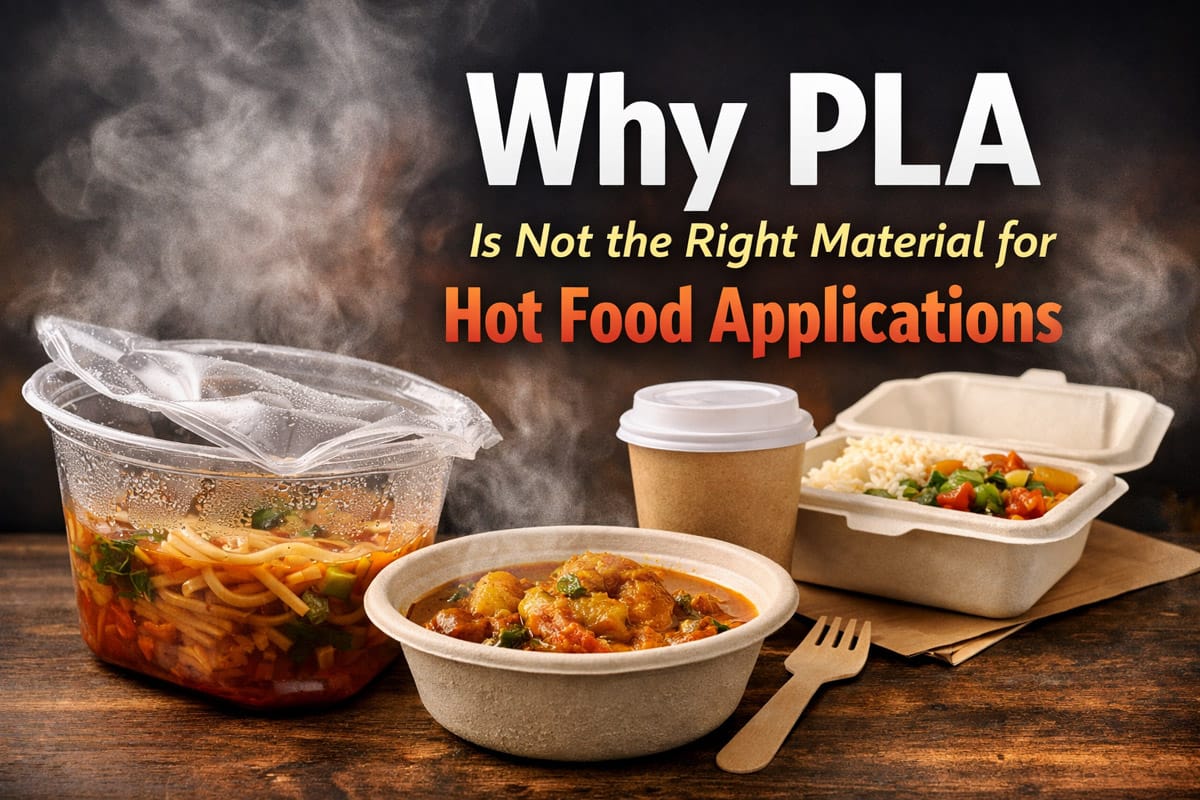
Using PLA in high-temperature food scenarios can lead to container deformation, leakage, food safety concerns, and customer complaints.
For hot food packaging, fiber-based materials such as sugarcane bagasse, molded pulp, PFAS-free coated paper, and heat-resistant CPLA (for limited use) are significantly more reliable choices.
Introduction: When “Eco-Friendly” Materials Fail Under Heat
Polylactic Acid (PLA) has become one of the most recognizable materials in the sustainable packaging movement. As a plant-based, compostable bioplastic, PLA is often positioned as a responsible alternative to petroleum-based plastics.
However, in real foodservice operations—especially those involving hot meals, soups, steam-heavy takeaway dishes, and reheating—PLA frequently underperforms. Containers warp, lids lose their seal, and customer complaints follow.
This creates a critical misunderstanding in the market:
PLA is often chosen for sustainability reasons, but used in applications where it was never designed to perform.
This article explains why PLA is not suitable for hot food applications, clarifies where PLA actually works well, and outlines better material solutions for hot food packaging in 2025.
What PLA Is Made Of—and Why Heat Is Its Structural Weak Point
PLA Raw Material Overview
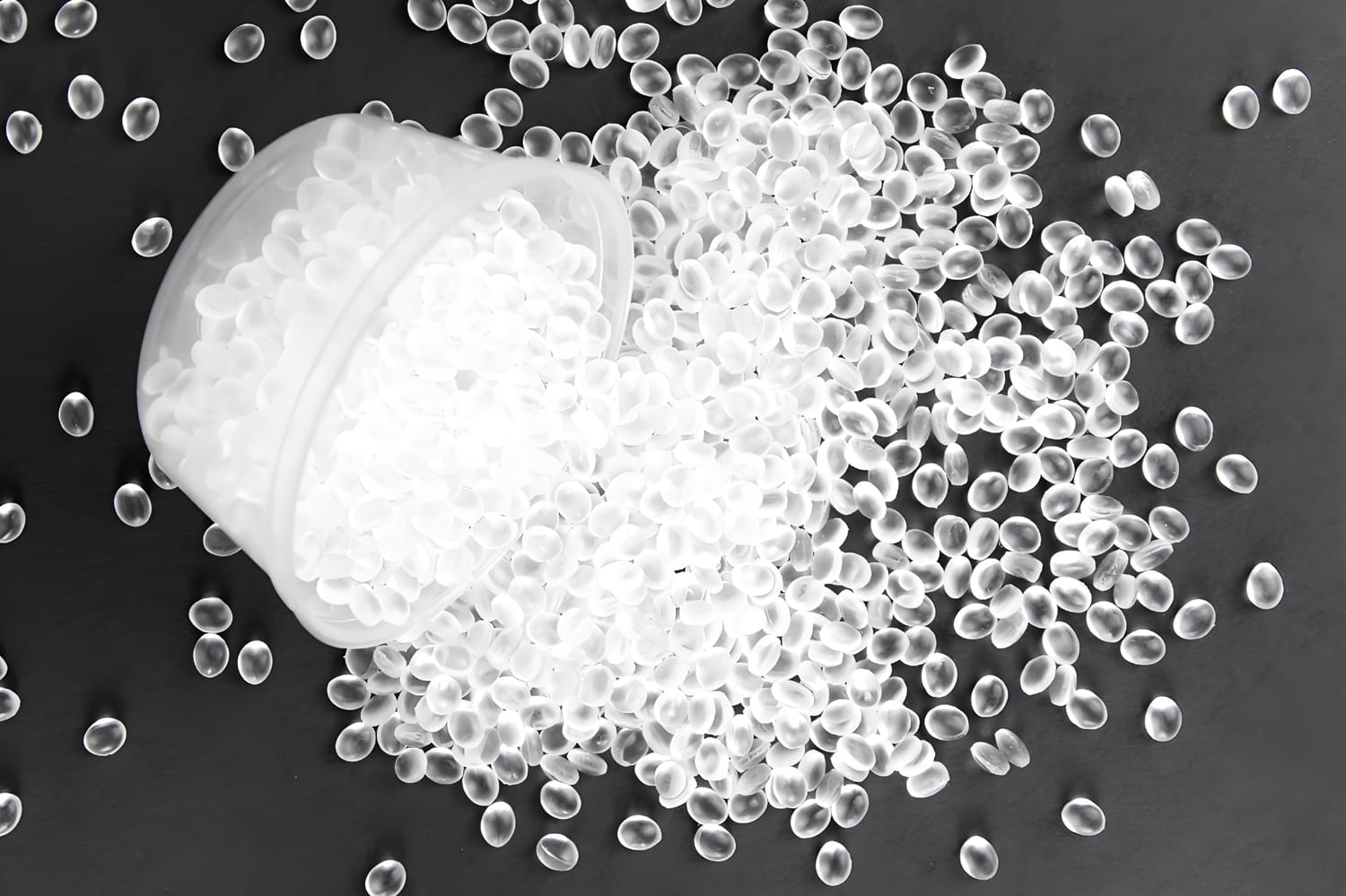
PLA is produced from fermented plant sugars—most commonly derived from corn or sugarcane. These sugars are converted into lactic acid and polymerized into polylactic acid resin.
From an environmental perspective, PLA offers several advantages:
Renewable raw material sourcing
Reduced reliance on fossil fuels
Industrial compostability under controlled conditions
However, material origin does not determine thermal performance.
Glass Transition Temperature: The Core Limitation
The key factor that limits PLA in hot food use is its glass transition temperature (Tg)—the point at which the material begins to soften and lose rigidity.
For standard PLA:
Tg typically ranges from 45°C to 55°C
This is significantly lower than:
Freshly prepared hot meals
Hot soups, stews, and curries
Steam-intensive rice and noodle dishes
Microwave reheating temperatures
Once PLA exceeds this range, deformation is no longer a possibility—it is an inevitability.
What Happens When PLA Is Used for Hot Food
Heat Deformation in Real-World Conditions
In practical foodservice use, PLA exposed to heat often shows:
Warping of cups or bowls
Lid distortion and seal failure
Loss of rigidity under food weight
Increased risk of leakage and spills
These failures are not manufacturing defects; they are predictable outcomes based on polymer physics.
Steam and Moisture Amplify the Problem
Steam-heavy foods trap heat inside sealed containers, raising internal temperatures even further. Even foods that are not extremely hot can exceed PLA’s tolerance due to retained moisture and pressure.
Food Safety, Compliance, and Brand Risk
Food Contact Compliance vs. Real Usage
PLA can meet food-contact safety standards under cold or room-temperature test conditions. However, hot food use often exceeds the parameters under which compliance testing is performed.
This creates a gap between:
What is legally tested
How the product is actually used
Brand and Operational Consequences
When PLA fails in hot food applications, the consequences extend beyond packaging:
Customer complaints and refunds
Negative delivery platform reviews
Increased scrutiny from regulators
Loss of brand trust
From a business perspective, a container that fails under heat is never sustainable, regardless of its compostability label.
Material Heat Performance Comparison
Choosing Packaging by Food Temperature, Not Marketing Claims
| Material Type | Heat Resistance (Approx.) | Microwave Safe | Hot Soup & Liquid | Steam-Heavy Foods | Greasy Hot Food | Typical Best Use Cases |
|---|---|---|---|---|---|---|
| PLA (Polylactic Acid) | Up to 45–55°C | ❌ No | ❌ Not suitable | ❌ Not suitable | ❌ Not suitable | Cold drinks, iced beverages, cold desserts |
| CPLA (Crystallized PLA) | Up to 85–100°C | ⚠️ Limited | ⚠️ Short contact only | ⚠️ Limited | ⚠️ Moderate | Hot cutlery, warm foods |
| Sugarcane Bagasse | 120°C+ | ✅ Yes | ✅ Excellent | ✅ Excellent | ✅ Excellent | Hot meals, soups, curries |
| Molded Fiber / Pulp | 120°C+ | ✅ Yes | ✅ Excellent | ✅ Excellent | ✅ Good | Rice, noodles, steam-heavy food |
| Paper (PFAS-free coated) | 90–100°C | ⚠️ Limited | ⚠️ With proper coating | ⚠️ Moderate | ⚠️ Moderate | Controlled hot food applications |
| Cornstarch-Based Tableware | 80–100°C | ⚠️ Model-dependent | ⚠️ Limited | ⚠️ Limited | ⚠️ Moderate | Warm meals, short holding time |
Key takeaway:
Heat resistance—not compostability claims—determines whether a material is suitable for hot food.
Where PLA Actually Performs Well
To avoid misinterpretation, it is essential to define PLA’s correct application range.
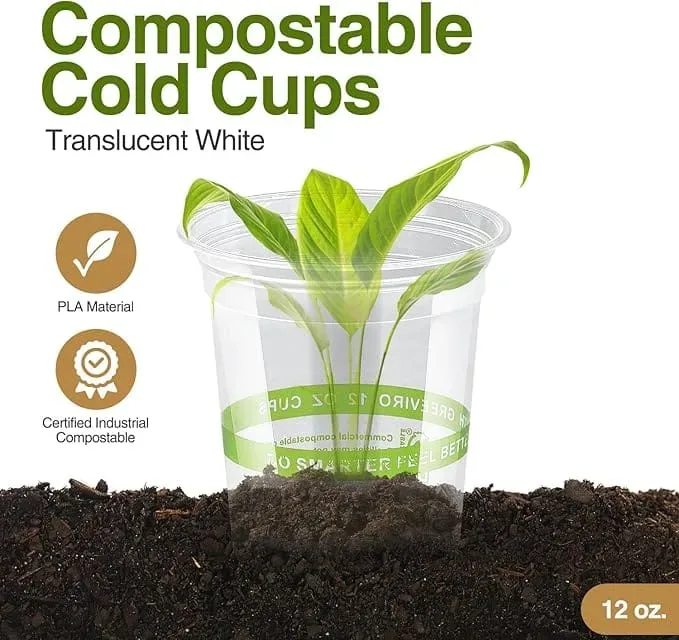
PLA Is Best Suited For:
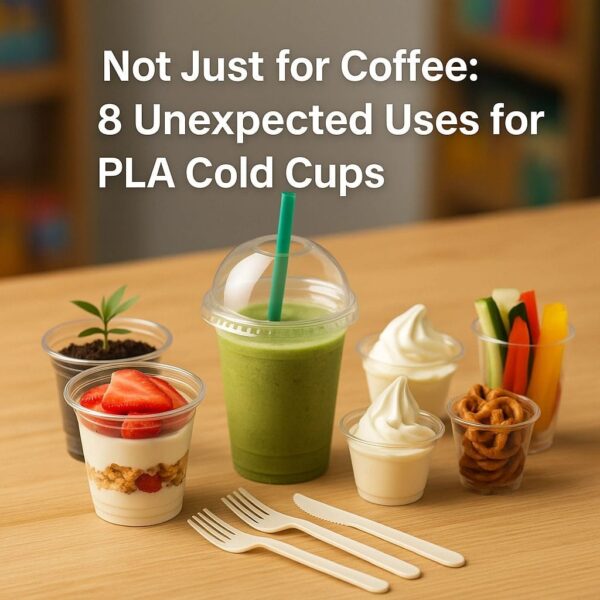
Cold drinks (iced coffee, juice, smoothies)
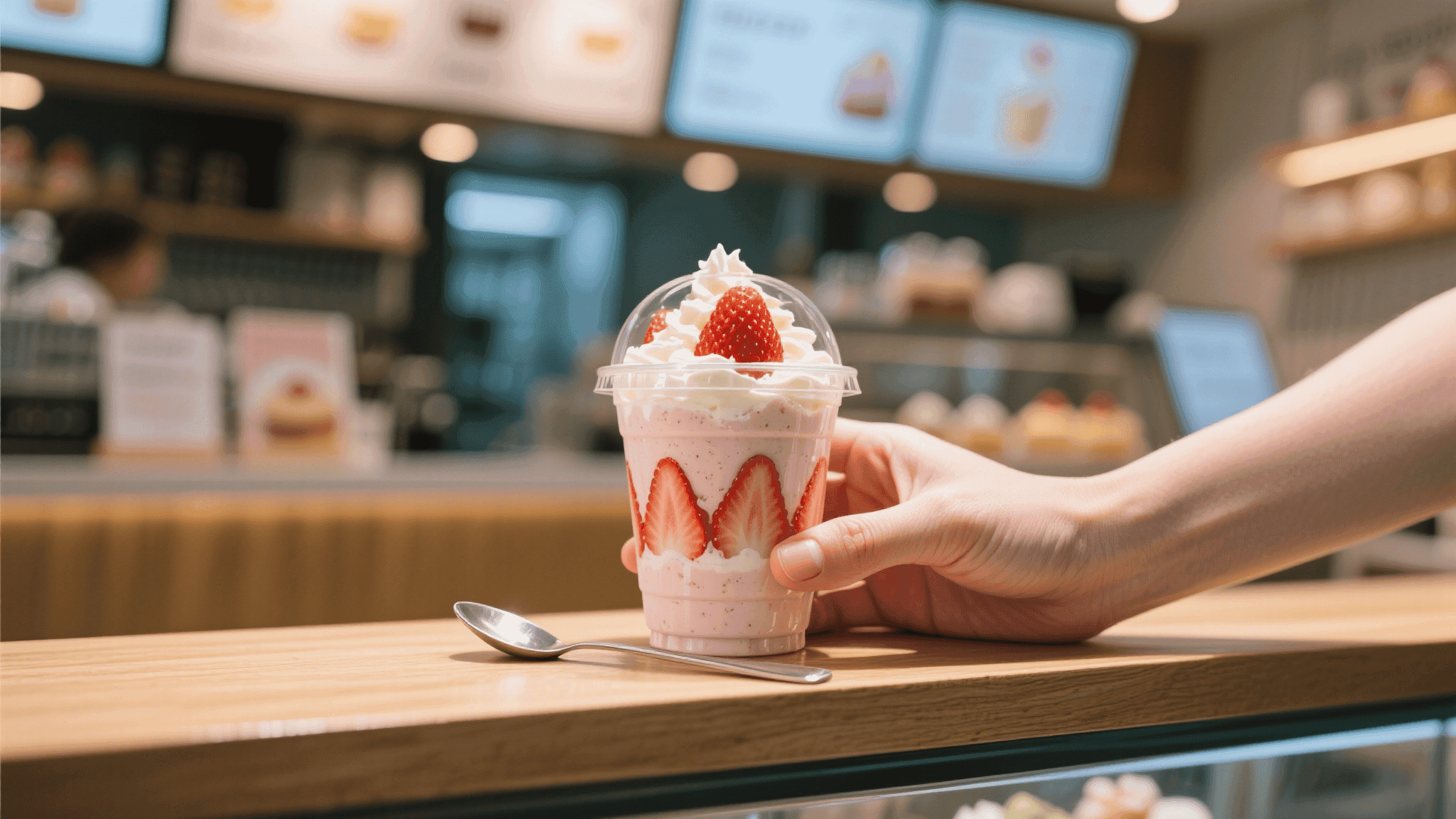
Cold desserts (fruit cups, parfaits)
Short-contact cold food
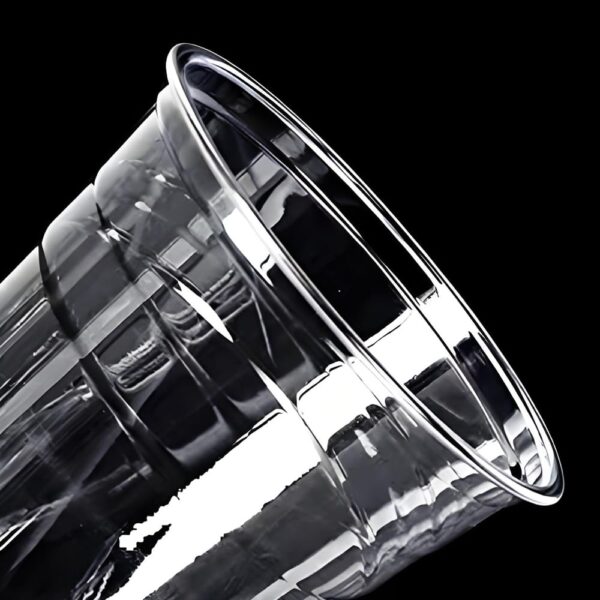
Clear cold cups where transparency is important
In these applications, PLA delivers:
Visual clarity
Plant-based material benefits
Acceptable compostability under industrial conditions
PLA is not a bad material—it is a bad choice for hot food.
Understanding CPLA: Better Heat Resistance, But Not a Hot Food Solution
CPLA (Crystallized PLA) improves PLA’s heat resistance through controlled crystallization. This makes it suitable for:
Hot cutlery (forks, spoons, knives)
Warm, non-liquid foods
However, CPLA still has limitations:
Not ideal for soups or liquid-heavy meals
Limited microwave tolerance
Reduced transparency
CPLA should be viewed as a targeted improvement, not a universal fix.
The Right Materials for Hot Food in 2025
Best Solutions for Hot Food & Hot Liquids
For soups, curries, noodles, and takeaway meals, fiber-based materials consistently perform best.
Recommended options include:
Sugarcane bagasse bowls and clamshells
Molded fiber containers for steam-heavy food
PFAS-free coated paper bowls (for controlled moisture)
Heat-stable lids designed for steam release
These materials offer:
Structural stability under heat
Microwave-safe performance
Better alignment with real-world composting systems
Why PLA Is Still Misused for Hot Food
PLA is often selected incorrectly due to:
Oversimplified “compostable = universal” assumptions
Supplier miscommunication
Desire to standardize packaging across menus
This convenience-driven approach frequently leads to operational failure.
Strategic Insight: Sustainability Requires Thermal Logic
Sustainable packaging is not defined by material labels alone. It requires:
Matching material properties to food temperature
Understanding moisture and steam behavior
Aligning with actual disposal infrastructure
A material that fails in use is never sustainable—no matter how green it sounds.
Conclusion: PLA Is Not the Problem—Using It for Hot Food Is
PLA plays an important role in sustainable packaging when used correctly. However, its thermal limitations make it unsuitable for hot food applications.
Food brands that match materials to real operating conditions—rather than marketing narratives—protect consumer safety, regulatory compliance, and long-term trust.
In 2025, the most sustainable packaging choice is the one that performs reliably under heat.
Frequently Asked Questions About PLA and Hot Food Packaging
Is PLA safe for hot food?
PLA is generally not recommended for hot food. While it is food-contact safe under cold or room-temperature conditions, PLA begins to soften at around 45–55°C, making it unsuitable for hot meals, soups, or steam-heavy foods.
Can PLA containers be used for hot soup or noodles?
No. Hot soups and noodle dishes typically exceed PLA’s heat tolerance. This can result in deformation, leakage, and loss of structural integrity during transport or consumption.
Is PLA microwave-safe?
PLA is not microwave-safe. Microwave reheating can quickly push temperatures beyond PLA’s softening point, leading to warping or container failure.
What is the difference between PLA and CPLA for hot food?
CPLA (Crystallized PLA) has improved heat resistance compared to standard PLA and is commonly used for hot cutlery. However, CPLA is still not ideal for hot liquids or steam-heavy food containers.
What materials are best for hot food packaging?
For hot food applications, sugarcane bagasse, molded fiber, and properly coated paper containers offer much higher heat resistance, better structural stability, and more reliable real-world performance.
Semantic Insight: Choosing the Right Packaging Material for Hot Food
Why is PLA not suitable for hot food?
PLA is engineered for compostability and transparency, not for thermal stability.
Its low glass transition temperature means it begins to soften well below the temperature of most freshly prepared hot meals.
When exposed to heat, steam, or oil, PLA can lose rigidity, deform, or fail structurally.
What happens when PLA is used beyond its temperature limit?
In real foodservice environments, misuse of PLA often leads to leaking containers, distorted lids, and poor customer experience.
These issues are not manufacturing defects but predictable material limitations.
What materials perform better for hot food applications?
Fiber-based materials such as sugarcane bagasse and molded pulp are specifically suited for high-temperature food.
They maintain shape under heat, tolerate steam and moisture, and are commonly microwave-safe.
PFAS-free coated paper containers can also be suitable for hot food with controlled moisture levels.
Where does CPLA fit into hot food packaging?
CPLA improves upon PLA through crystallization, increasing heat resistance.
It is well suited for hot cutlery and some warm food applications, but it should not be considered a full replacement for fiber-based containers when packaging hot liquids or steam-heavy meals.
What should food brands consider when selecting packaging?
Material selection should be based on food temperature, moisture, holding time, and real disposal conditions—not marketing claims alone.
Packaging that fails during use undermines sustainability goals, food safety, and brand trust.
Industry Trend Insight:
As regulations tighten and customer expectations rise, food brands in 2025 are increasingly shifting toward fiber-based, heat-stable packaging solutions for hot food.
The future of sustainable packaging favors materials that align performance, safety, and real-world compostability.
Copyright Notice:
© 2026 Bioleader®. If you wish to reproduce or reference this content, you must provide the original link and credit the source. Any unauthorized copying will be considered an infringement.