









Introduction
In today’s environmentally conscious world, the shift towards sustainable living has become imperative. One significant area of focus is the replacement of single-use plastic utensils with eco-friendly cutlery alternatives. These sustainable options not only reduce environmental impact but also align with consumer demand for greener products.
This comprehensive guide delves into the various types of eco-friendly cutlery, comparing materials, discussing environmental challenges, exploring the best alternatives to plastic, and highlighting expert insights and real-world applications.
Quick Summary: What Is the Most Eco-Friendly Disposable Cutlery?
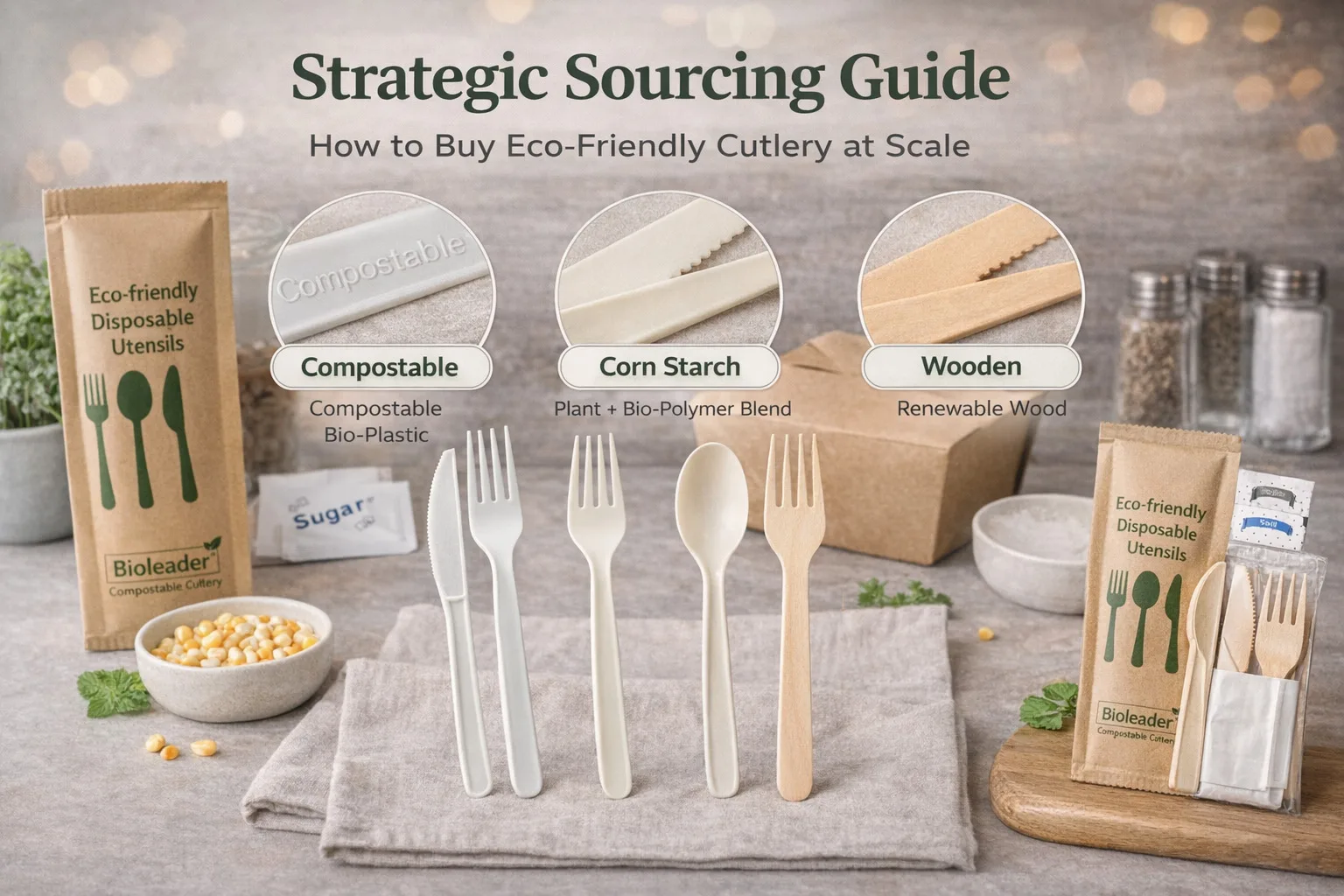
There is no single “most eco-friendly” disposable cutlery for every situation. The best choice depends on food temperature, strength requirement, composting infrastructure, local regulations, cost, customer experience, and whether the product is certified for industrial or home composting.
Best material match: CPLA is often the strongest option for hot meals; PLA or cornstarch cutlery works better for cold and warm foods where industrial composting exists; wooden and bamboo cutlery provide a natural plastic-free option; bagasse is highly valuable for plates, bowls, and containers, while bagasse cutlery should be evaluated by stiffness and real-use performance.
Buyer note: “biodegradable,” “compostable,” and “eco-friendly” are not interchangeable claims. Buyers should confirm material composition, food-contact safety, heat tolerance, certification, and local disposal acceptance before making sustainability claims.
Types of Disposable Cutlery Materials
The market offers a variety of materials for disposable cutlery, each with its own environmental footprint:
- Plastic: Traditional plastic cutlery is derived from fossil fuels and is non-biodegradable, contributing significantly to environmental pollution.
- Wooden Cutlery: Made from birch or poplar, wooden utensils are biodegradable and compostable, offering a natural alternative to plastic when untreated and properly disposed of.
- Bamboo Cutlery: Bamboo is a fast-growing, renewable resource. Bamboo utensils are sturdy, reusable, and biodegradable, making them a popular eco-friendly utensils reusable option.
- Bagasse Cutlery: Derived from sugarcane fiber, bagasse cutlery is compostable and utilizes agricultural waste, reducing landfill use. However, bagasse usually performs best in molded fiber plates, bowls, trays, and food containers; cutlery strength should be tested before bulk purchasing.
- CPLA (Crystallized Polylactic Acid) Cutlery: Made from plant-derived PLA and processed for improved heat resistance, CPLA cutlery is compostable in industrial facilities and resembles traditional plastic in appearance and strength.
- Edible Cutlery: Innovative and zero-waste, edible cutlery is made from ingredients like rice, wheat, or sorghum and can be consumed after use. It remains a niche solution because of higher cost, taste limitations, shelf-life control, and food-allergen considerations.
Comparing Material Differences
Understanding the pros and cons of each material helps in making informed choices. The following table preserves the original comparison logic while adding a more practical buyer interpretation.
| Material | Biodegradability | Compostability | Reusability | Durability | Cost | Buyer Note |
|---|---|---|---|---|---|---|
| Plastic | No | No | No | High | Low | Low cost but high plastic-waste burden and increasing regulatory pressure. |
| Wood | Yes | Home compostable when untreated | No | Medium | Medium | Natural appearance, but mouthfeel and splinter risk should be considered. |
| Bamboo | Yes | Home compostable when untreated | Some types | High | Medium | Strong and premium-looking; reusable types require cleaning and hygiene control. |
| Bagasse | Yes | Industrial or selected home composting, depending on product design | No | Medium | Low | Excellent for plates and containers; cutlery stiffness should be validated. |
| CPLA | Yes | Industrial composting | No | High | Medium | Best balance for hot foodservice cutlery where industrial composting exists. |
| Edible | Yes | Home compostable if uneaten and accepted | No | Low | High | Good for novelty and zero-waste messaging, but limited for mass foodservice. |
Note: Home compostability refers to the ability to decompose in a backyard compost pile under suitable conditions, while industrial compostability requires specialized facilities with controlled heat, moisture, oxygen, and processing time.
Environmental Challenges and Controversies
While eco-friendly cutlery presents a sustainable alternative, several challenges persist:
- Composting Infrastructure: Materials like CPLA, PLA, and some bagasse or cornstarch products require industrial composting facilities, which may not be readily available in all regions.
- Consumer Awareness: Mislabeling and lack of clear information can lead to improper disposal, negating environmental benefits.
- Production Impact: Some biodegradable plastics may still require significant energy and resources to produce, raising questions about their overall sustainability.
- Certification Gap: A product may be called “biodegradable” without meeting a recognized compostability standard. For B2B buyers, certification is more reliable than broad marketing language.
- End-of-Life Reality: Compostable cutlery delivers its best environmental value only when it is collected, sorted, and processed through the correct composting pathway.
What is the Best Alternative to Plastic Cutlery?
As the global movement away from single-use plastics gains momentum, foodservice businesses, schools, and consumers are urgently seeking eco friendly cutlery solutions that combine functionality, safety, and sustainability. While the market offers a variety of options, four materials—PLA, CPLA, wood, and bamboo—stand out as the most viable alternatives to traditional plastic utensils.
Short answer: CPLA is usually the best disposable option for hot meals and commercial foodservice performance; wood and bamboo are strong choices for natural, plastic-free positioning; PLA or cornstarch cutlery is practical for cold or warm foodservice where industrial composting is available.
PLA Cutlery (Polylactic Acid)
PLA is a plant-based bioplastic made primarily from fermented corn starch or sugarcane. It resembles traditional plastic in both appearance and weight, making it an easy substitute for disposable settings.
- Pros:
- Made from renewable resources
- Smooth and easy to mold into cutlery shapes
- Certified compostable cutlery when certified for industrial composting
- Cons:
- Not compostable at home unless specifically certified
- Not suitable for high-heat meals; may deform under elevated temperatures
- Limited end-of-life infrastructure in many countries
Best for: Cold foods, takeout salad bars, cafeteria utensils, dessert service, and light food applications.
Recommended Product Path: Cornstarch / PLA-Based Cutlery
For foodservice buyers seeking plant-based disposable cutlery for cold or warm foods, Bioleader® provides cornstarch and PLA-based cutlery options suitable for takeaway, cafés, schools, events, and distributor programs.

CPLA Cutlery (Crystallized PLA)
CPLA is an enhanced version of PLA that undergoes crystallization to improve thermal resistance. It’s a popular option among biodegradable cutlery manufacturers targeting hot food service.
- Pros:
- Better heat resistance than standard PLA, commonly suitable for hot foodservice within supplier specifications
- Sturdy and sleek, comparable to regular plastic
- Available in black or white for premium presentation
- Cons:
- Requires industrial composting in most cases
- Higher production cost than standard PLA, cornstarch, or bagasse options
Best for: Hot meals, catered events, eco-labeled food delivery, rice dishes, noodles, and premium takeaway cutlery.
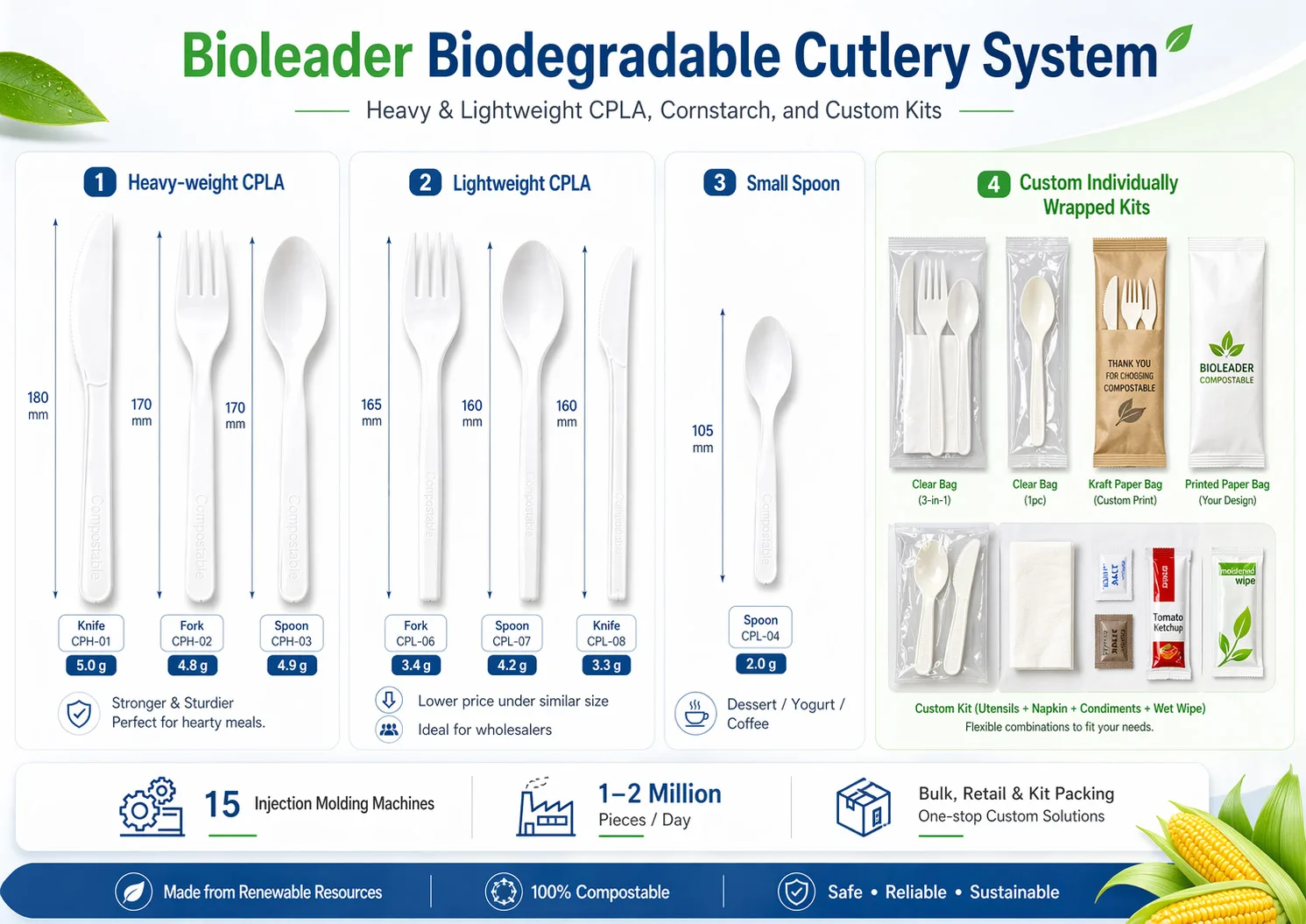
Recommended Product Path: CPLA Cutlery for Hot Meals
For restaurants, catering, airlines, cafeterias, and takeaway meals requiring stronger heat resistance, Bioleader® CPLA cutlery offers a more reliable choice than standard PLA.
Wooden Cutlery
Typically made from sustainably harvested birchwood or poplar, wooden cutlery is a time-tested biodegradable solution. It’s completely plastic-free and widely accepted in eco friendly disposable cutlery programs.
- Pros:
- Home compostable when untreated and accepted in the local composting setup
- Affordable and widely available
- No industrial composting needed for untreated natural wood
- Cons:
- May splinter or feel rough in the mouth
- Not reusable; can break under pressure
- Material sourcing and forestry management should be checked for large-volume orders
Best for: Cafeterias, festivals, quick-serve restaurants seeking plastic-ban compliance, outdoor events, and natural-look packaging programs.
Bamboo Cutlery
Bamboo is a fast-growing, renewable resource known for its strength and natural aesthetic. It can be used in disposable or reusable eco friendly utensils.
- Pros:
- Strong, lightweight, stylish
- Reusable or single-use models available
- Fully biodegradable and home-compostable when untreated and properly composted
- Cons:
- Slightly higher cost than wood or PLA
- Requires proper cleaning if reused
- Reusable bamboo must be managed as a durable product, not disposable packaging
Best for: Zero-waste catering, eco-gift sets, airline services, premium food delivery, hotel amenities, and events where a natural image matters.
Comparison Summary
| Feature | PLA | CPLA | Wood | Bamboo |
|---|---|---|---|---|
| Source Material | Corn starch or sugarcane-derived PLA | Crystallized PLA | Birch / poplar wood | Fast-growing bamboo |
| Heat Resistance | Low to moderate | Higher, depending on supplier specification | Good for hot foods | Good for hot foods |
| Compostable | Industrial composting | Industrial composting | Home composting possible if untreated | Home composting possible if untreated |
| Texture | Plastic-like | Smooth | Natural / grainy | Smooth, premium |
| Reusability | No | No | No | Some types |
Buyer Decision Matrix: Which Eco-Friendly Disposable Cutlery Should You Choose?
| Use Scenario | Recommended Material | Why It Works | Suggested Bioleader® Page |
|---|---|---|---|
| Cold meals, salads, fruit cups, desserts | PLA / Cornstarch | Cost-effective, plastic-like appearance, suitable for light meals | Cornstarch Cutlery |
| Hot meals, rice, noodles, catering | CPLA | Better heat resistance and stronger foodservice performance | CPLA Cutlery |
| Outdoor events and plastic-ban compliance | Wood | Natural, simple, widely recognized as plastic-free | Eco-Friendly Cutlery |
| Premium natural presentation | Bamboo | Strong, stylish, suitable for high-end events and reusable concepts | Eco-Friendly Utensils |
| Full sustainable meal packaging | Bagasse tableware + CPLA / cornstarch cutlery | Better complete packaging system than using cutlery alone | Compostable Cutlery |
Expert Insights and Scientific Data
The global biodegradable cutlery market is experiencing significant growth, driven by increasing environmental awareness, corporate sustainability commitments, and government regulations. Market research has reported continued growth in biodegradable and compostable cutlery categories as restaurants, catering operators, schools, and distributors reduce dependence on conventional plastic utensils.
Studies have shown that switching from conventional plastics to bioplastics can reduce greenhouse gas emissions in certain applications, but the final environmental result depends on raw material sourcing, manufacturing energy, transport distance, product weight, and end-of-life treatment. Additionally, the use of compostable cutlery made from materials like corn starch can decrease the environmental footprint of food services when the products are properly certified, collected, and composted.
E-E-A-T clarification: the most sustainable disposable cutlery is not determined by raw material alone. A responsible evaluation must include performance, certification, local waste infrastructure, contamination risk, food-contact safety, and the real disposal route after use.
Real-World Applications: Bioleader’s Eco-Friendly Cutlery
Bioleader, a leading manufacturer based in Xiamen, China, offers a range of eco-friendly cutlery products, including CPLA, cornstarch, and supporting compostable tableware solutions. Their products are widely used in schools, catering services, foodservice distribution, takeout, and events, providing sustainable alternatives to plastic utensils.
In a typical school cafeteria replacement scenario, switching from conventional plastic cutlery to certified compostable or biodegradable cutlery can reduce visible plastic waste and improve sustainability communication, provided that the school has access to the correct collection and composting pathway. Similarly, catering companies can use compostable cutlery to improve brand reputation and meet customer expectations for greener events.
For B2B buyers, Bioleader® can support product selection across different use cases: CPLA cutlery for hot meals, cornstarch cutlery for economical general foodservice, wrapped cutlery kits for takeaway and delivery, and matching bagasse tableware for complete compostable meal packaging solutions.
Need Eco-Friendly Disposable Cutlery for Foodservice or Export?
Bioleader® supplies compostable and biodegradable cutlery for restaurants, catering companies, cafés, schools, supermarkets, food packaging distributors, and private-label export buyers.
Choose from CPLA cutlery, cornstarch cutlery, wrapped cutlery kits, and matching eco-friendly tableware solutions for hot meals, takeaway, events, and bulk wholesale supply.
- CPLA forks, spoons, knives
- Cornstarch cutlery
- Wrapped cutlery kits
- Custom packaging support
- Bulk export and OEM supply
Conclusion
Transitioning to eco-friendly cutlery is a crucial step towards sustainable living. By understanding the types, materials, and environmental impacts, consumers and businesses can make informed decisions that contribute to a healthier planet.
Whether it’s bamboo cutlery, wooden utensils, or compostable cutlery made from innovative materials, the options are diverse and increasingly accessible. Embracing these alternatives not only reduces environmental impact but also aligns with the growing consumer demand for sustainable products.
Final buyer takeaway: the most eco-friendly disposable cutlery is the one that matches the food application, performs reliably, avoids unnecessary plastic, carries appropriate certification, and has a realistic disposal pathway in the buyer’s local market.
Key Takeaways: Eco-Friendly Disposable Cutlery
- CPLA cutlery is often the best disposable choice for hot foodservice where industrial composting is available.
- PLA or cornstarch cutlery is suitable for cold and warm foods, but usually requires industrial composting.
- Wooden and bamboo cutlery are natural plastic-free options, but sourcing, mouthfeel, and hygiene requirements should be considered.
- Bagasse is highly effective for plates, bowls, trays, and containers; bagasse cutlery should be tested for strength before bulk use.
- Certification, local facility acceptance, and clear disposal instructions are essential for credible sustainability claims.
10 Frequently Asked Questions (FAQs)
- Is compostable cutlery really compostable?
Yes, but many types require industrial composting facilities to decompose effectively. Buyers should check certification and local facility acceptance before making disposal claims. - What is the most eco-friendly disposable cutlery?
There is no single best option for every use. Bamboo and wood are strong natural choices, CPLA is better for hot meals, and PLA or cornstarch cutlery works well for cold or warm foods where industrial composting exists. - What is the safest material for cutlery?
Food-contact tested stainless steel, bamboo, wood, CPLA, and cornstarch cutlery can all be safe when produced by reputable suppliers and used according to their intended application. - Can I compost PLA cutlery at home?
Usually no. PLA cutlery generally requires industrial composting conditions to break down properly unless the finished product carries a specific home-compost certification. - Is wooden cutlery better than plastic?
Wooden cutlery is biodegradable, plastic-free, and often has a lower long-term pollution risk than conventional plastic. However, sourcing, user experience, and foodservice performance should still be evaluated. - How long does bamboo cutlery last?
Disposable bamboo cutlery is usually single-use, while reusable bamboo utensils can last for months or longer with proper cleaning and care. - Are there any edible cutlery options?
Yes, some companies produce edible cutlery made from grains, though they are less common and may face challenges related to cost, taste, allergens, shelf life, and moisture resistance. - What is CPLA cutlery?
CPLA, or Crystallized Polylactic Acid, is a heat-improved compostable bioplastic made from PLA. It is commonly used for hot foodservice cutlery and usually requires industrial composting. - Is bagasse cutlery microwave-safe?
Bagasse is a molded plant-fiber material and can handle warm food applications depending on product design. For cutlery, strength and heat performance should be confirmed by supplier specification; bagasse is generally stronger as plates, bowls, trays, and containers than as forks or knives. - Where can I buy eco-friendly disposable cutlery?
Many suppliers, including Bioleader®, offer a range of eco-friendly disposable cutlery options online, including CPLA cutlery, cornstarch cutlery, wrapped cutlery kits, and bulk foodservice packaging solutions.
Reference Source List
- ASTM International – ASTM D6400 Standard Specification for Labeling of Plastics Designed to be Aerobically Composted in Municipal or Industrial Facilities.
- European Committee for Standardization – EN 13432 Packaging recoverable through composting and biodegradation.
- Biodegradable Products Institute – Certified Compostable Products and Packaging verification guidance.
- TÜV Austria – OK Compost Industrial and OK Compost Home certification programs.
- European Bioplastics – Guidance on PLA, industrial composting, and certified compostable bioplastics.
- Bioleader® – Compostable cutlery, CPLA cutlery, cornstarch cutlery, wrapped cutlery kits, product specifications, and export documentation support.