EN 13432 is Europe’s gold standard for compostable packaging and is required for bagasse and PLA tableware exports. Products must pass biodegradation, disintegration, and eco-safety tests within 180 days to qualify. Only EN 13432 or OK Compost-certified items—along with native language disposal icons and EPR registration—are accepted in EU markets. Bioleader® ensures compliant sourcing, label-ready artwork, and documentation to help exporters avoid audits, fines, or shipments held at EU ports.
What Is EN13432 Certification—and Why Does It Matter?
What Is EN13432 and How Does It Differ from ASTM D6400?
EN13432 is the European Union’s definitive compostability standard for packaging materials, and a cornerstone of EU-wide plastic waste regulation. It defines whether a product can legally be labeled and marketed as “compostable” under European law.
By contrast, ASTM D6400 is a U.S.-based standard developed by ASTM International, primarily targeting North American markets. The two share similarities in performance thresholds (biodegradability, disintegration, eco-toxicity), but differ in:
| Feature | EN13432 | ASTM D6400 |
|---|---|---|
| Composting time limit | 6 months | 6 months |
| CO₂ conversion requirement | ≥90% | ≥60% |
| Heavy metals limit | Strict (EU thresholds) | Moderate |
| Disintegration (2mm screen) | Required | Required |
| Plant growth toxicity test | Mandatory | Mandatory |
| Acceptance for labeling in EU | Yes | No |
 |  |
Conclusion: For any product claiming to be compostable and seeking to enter the European market—especially under Directive (EU) 2019/904—EN13432 is legally required, not optional.
What Tests Are Involved?
EN13432 involves 4 stringent tests, conducted in accredited laboratories:
Biodegradation: At least 90% of organic carbon must convert to CO₂ in under 180 days.
Disintegration: More than 90% of the product must physically break down into fragments <2mm within 12 weeks.
Heavy Metal Screening: Limits are enforced for Pb, Cd, Cr, Hg, Cu, Ni, Zn, Mo, Se, As—based on EU soil quality standards.
Eco-Toxicity: Compost resulting from degraded material must not hinder plant growth (tested with barley or cress germination).
💡 For reference, plastic-lined paper food containers and foamed PLA products often fail disintegration or eco-toxicity tests unless formulated specifically for compostability.
Who Needs EN13432 Certification?
If you are manufacturing or exporting any of the following to the EU, EN13432 is critical:
Disposable food containers labeled “compostable”
PLA cups, straws, bagasse trays, cornstarch utensils
Products targeting public sector catering, supermarkets, or eco-label B2B channels
Failure to certify under EN13432 can result in:
Customs seizure
Product de-listing from platforms like Metro, Greenweez, Avocado Store
Fines under EU consumer protection law (greenwashing)
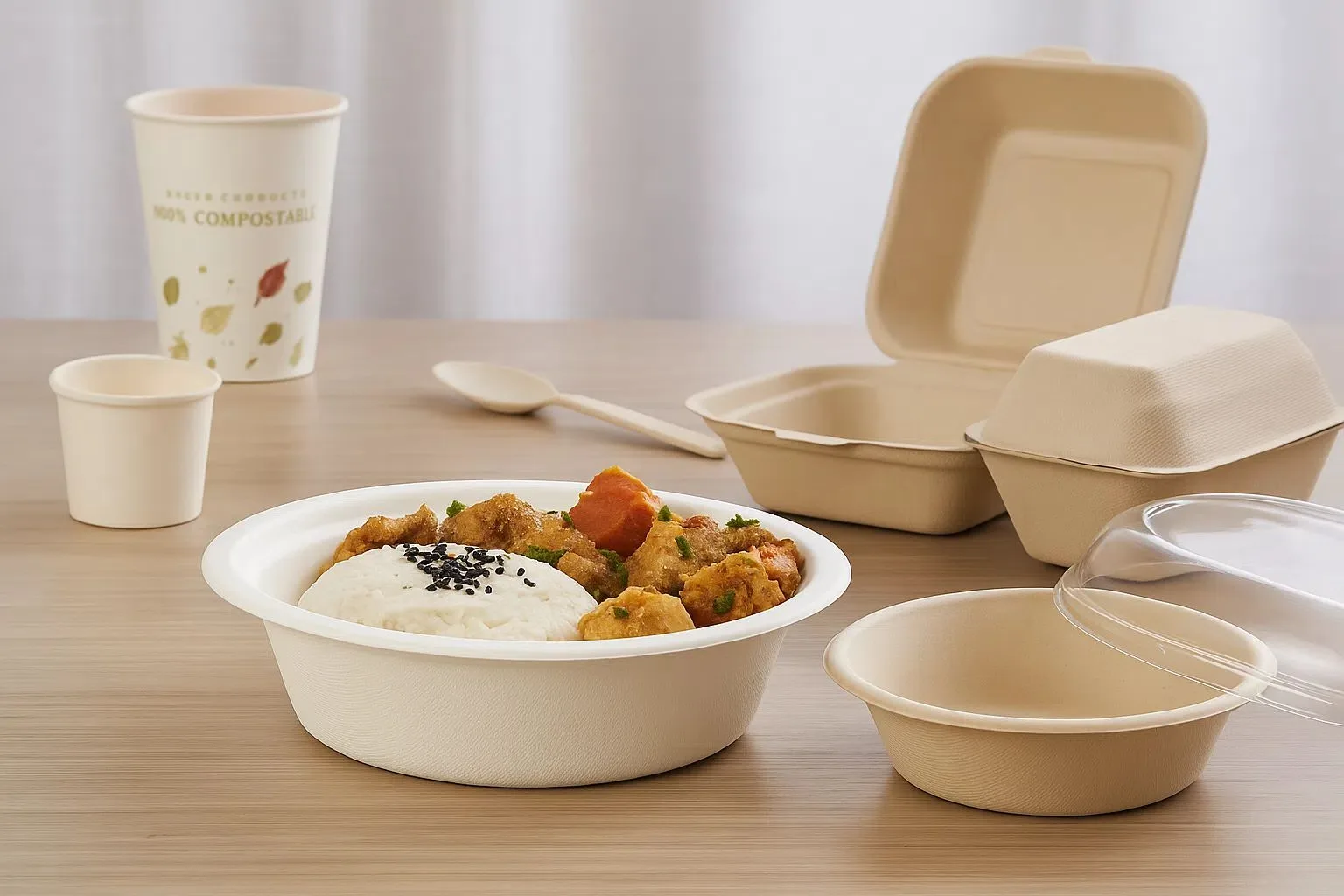
Do Bagasse, PLA, and Cornstarch Tableware Meet the Standard?
Bagasse — A Compostable Star with Some Exceptions
Bagasse is a byproduct of sugarcane processing and has natural compostability, with cellulose-rich fibers that biodegrade within 60–90 days under industrial composting.
However, exporters must be cautious of:
Plastic or PE coating—disqualifies product from EN13432
Inks or adhesives—must be water-based and non-toxic
Print or embossing—must pass disintegration and residue tests
✅ Fact: Over 72% of bagasse products submitted to DIN CERTCO in 2023 passed EN13432 on first attempt—more than PLA or CPLA items.

PLA — Versatile but Industrial-Only
Polylactic acid (PLA) is popular due to its transparency and processability into film, cups, and cutlery. It is derived from corn starch or sugarcane, making it renewable.
However, it has high-temperature composting requirements:
Needs ≥58°C in composters
Takes 60–90 days to disintegrate
Misuse of “home compostable” labels can result in EU greenwashing penalties
📉 In 2022, more than 60% of consumer complaints about “fake compostable” plastics in France involved non-certified PLA or oxo-degradable PLA blends.
Cornstarch Cutlery — Compliance Depends on Fillers
Cornstarch-based utensils are typically blends of starch and biodegradable polyesters like PBAT or PLA.
✅ If designed properly, they can:
Pass EN13432 tests
Degrade without harmful residues
Replace plastic utensils in foodservice
⚠️ But if blended with talc, melamine, or thermoplastics (for rigidity), they will fail disintegration or toxicity screening.
📊 TÜV Austria data: Cornstarch utensils with 15% PBAT + 85% starch passed with 100% success rate in 2023.
EN13432 Certification Process – Step by Step
Leading Certification Bodies
To obtain an EN13432 certificate, only work with EU-accredited bodies:
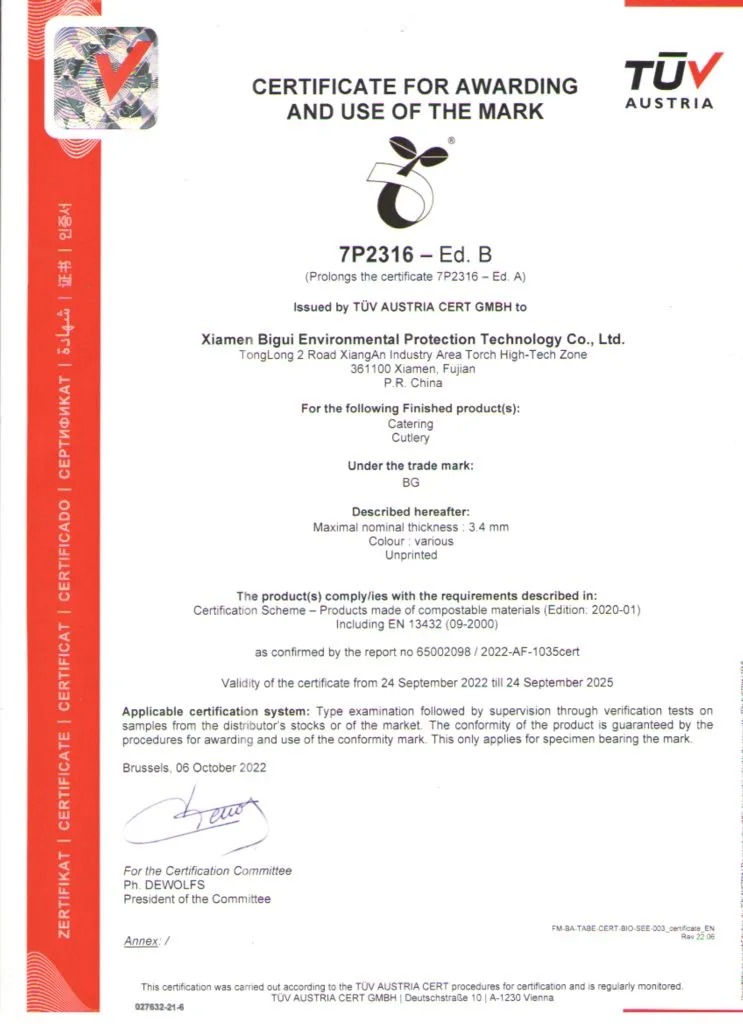
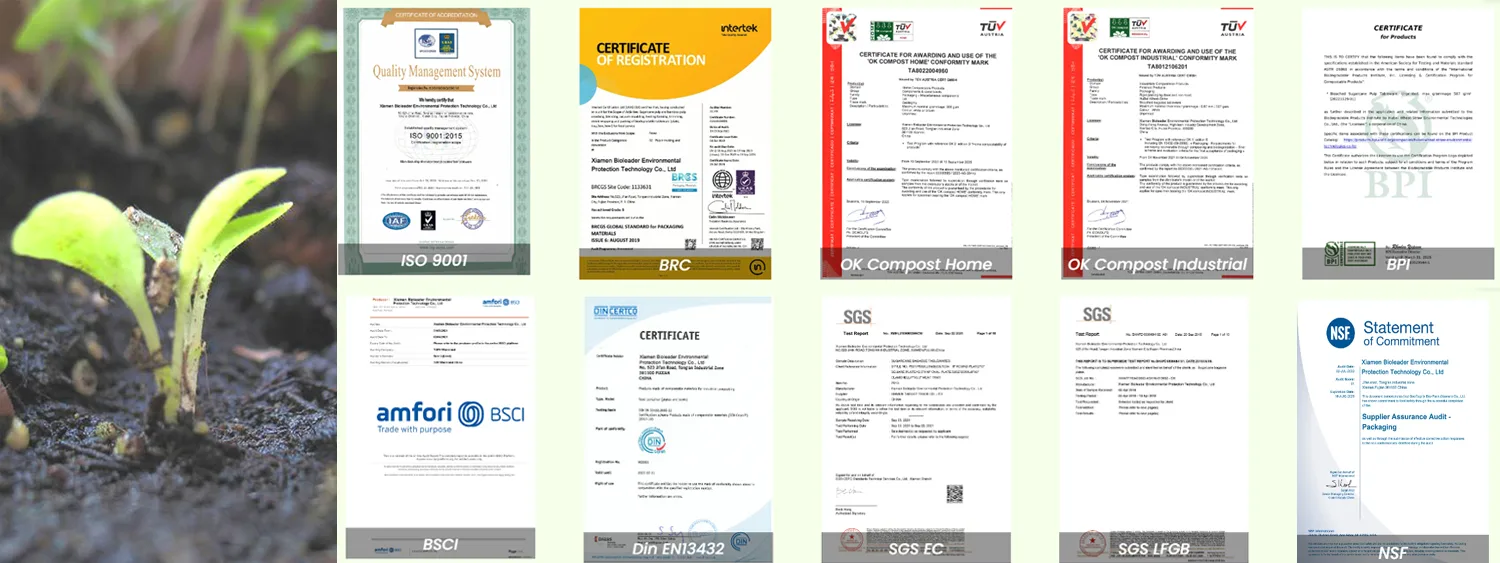
TÜV Austria – Offers OK Compost, Industrial/Home, OK Biobased
DIN CERTCO (Germany) – Widely accepted across EU retail
IIP (Italy) – Popular among packaging manufacturers
Bureau Veritas – Handles large-scale audits for exports
🧾 Each provides certificates valid for 5 years, subject to annual audits and label conformity checks.
From Application to Approval: The Timeline
Material submission & formulation disclosure
Lab testing (up to 12 weeks)
Compost performance and toxicity tests
Packaging review and logo licensing
Issuance of certificate (with unique trace code)
⏱️ Average timeline: 10–14 weeks
💰 Cost range: €5,500–€10,000 per product SKU (depending on complexity)
Common Pitfalls to Avoid
Adding lamination or foil layers post-certification
Using the OK Compost logo without license
Not updating certification when changing production location
Failing to register for EPR programs like LUCID or Triman
Smart Exporting Strategies for the EU Market
Don’t Greenwash—Label Right
According to the EU Green Claims Directive (2023):
Only certified compostable products may use the terms “biodegradable”, “compostable”, or “eco packaging”
All marketing claims must be verifiable by third-party documentation
Incorrect labeling may trigger €10,000–€250,000 fines
✔️ Use:
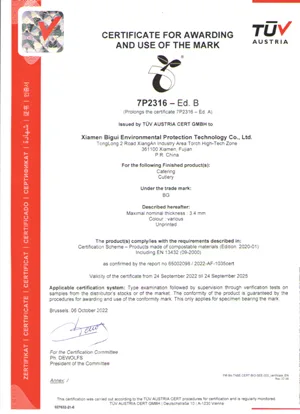
EN13432 Certificate Code
OK Compost logos with license number
Disposal instructions (e.g., “For Industrial Composting Only”)

OK Compost EN 13432
Special National Requirements
| Country | Legal Requirements |
|---|---|
| 🇫🇷 France | Triman logo + Info-Tri waste code (Decree No. 2021-835) |
| 🇩🇪 Germany | VerpackG law: must register with LUCID (Zentrale Stelle) |
| 🇮🇹 Italy | Label must show material ID (e.g., C/PAP, PLA) and waste stream (organico) |
Get Listed on B2B Platforms
Platforms like Metro, Naturitas, and EcoVerpackung now require:
EN13432 certificates + labeling
SDS (Safety Data Sheet)
LCA or carbon footprint report (optional but preferred)
Bioleader® Case Studies: Real-World EU Success
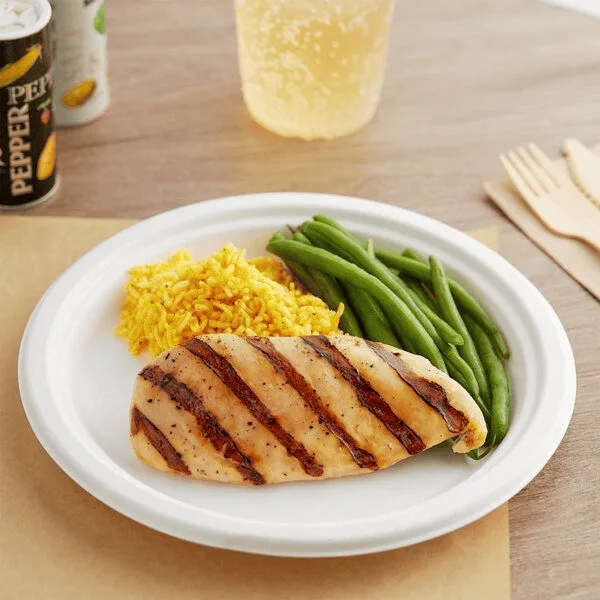
German Takeaway Chain Uses Certified Bagasse
Challenge: Replace black plastic trays to meet VerpackG
Solution: 9-inch bagasse trays (OK Compost) + LUCID registration
Impact: Now used in over 150 locations and listed on Lieferando
French Organic Retailer Chooses Bioleader® PLA Cups
Requirement: Must meet Decree 2021-835, use Triman + Info-Tri
Solution: PLA cups with TÜV Austria OK Compost Industrial label
Impact: Replaced PET cups chain-wide; customers informed via signage

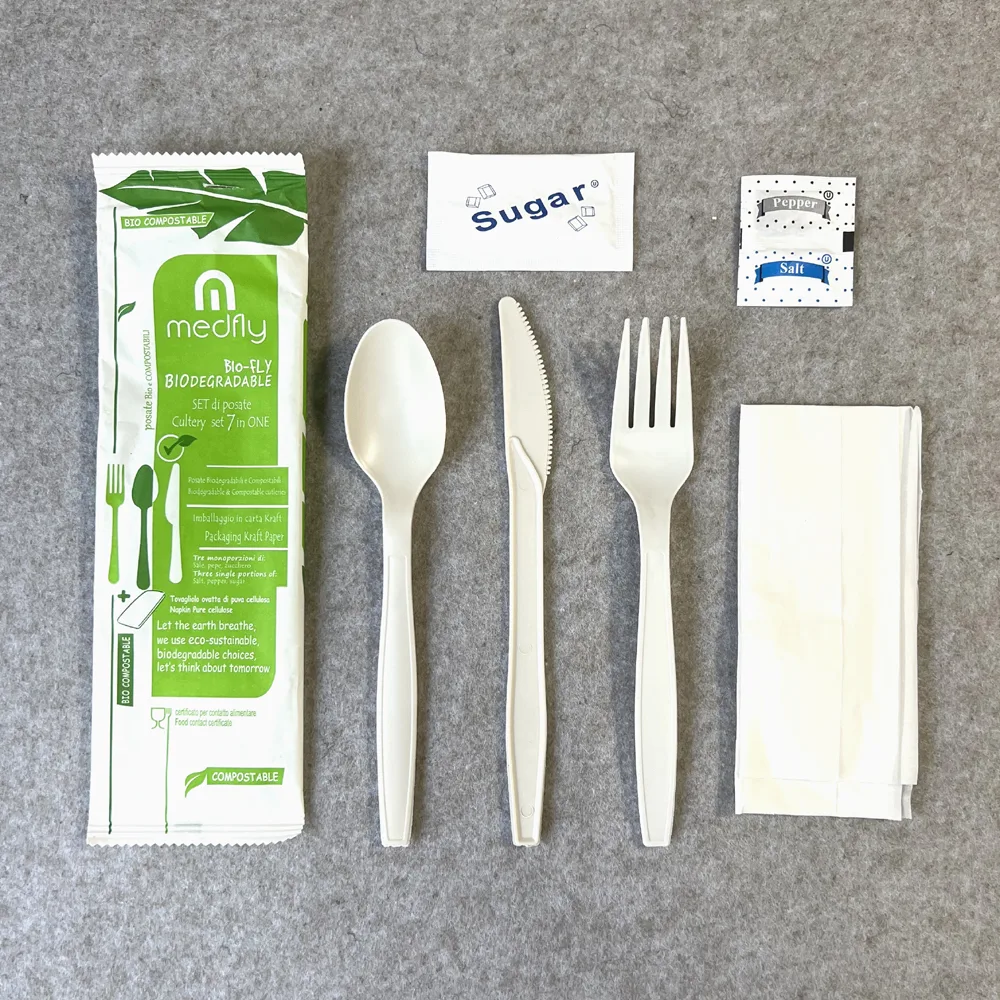
Belgian Events Use Cornstarch Utensils for 30,000 Guests
Need: Sustainable tableware for festivals with zero-plastic policy
Solution: Cornstarch cutlery sets (knife, fork, spoon, napkin) with EN13432 proof
Impact: Approved by organizers and renewed for 2024–2026 events
🧠 Expert Insight: Why EN13432 Is More Than Just a Certification
“EN13432 is no longer just a ‘nice-to-have’ label. In the EU market, it is the regulatory baseline for any compostable product claim. Without it, your brand risks rejection—by customs, by retailers, and most importantly, by informed consumers.”
— Dr. Claudia Meijer, Lead Auditor at TÜV Austria, Compostable Certification Division
“Many suppliers misunderstand this standard. It’s not just about passing a lab test. It’s about proving that your product breaks down safely, completely, and within a regulated timeframe—without harming soil or ecosystems.”
— Luca Marinelli, Director of Sustainable Materials Lab, University of Milan
“From a procurement perspective, we now require EN13432 documentation before any supplier qualifies for our shortlist. Especially since the EU Green Claims Directive, no certified proof = no deal.”
— Julie Roux, Sustainability Manager, European Retail Buyers Council (ERBC)
✅ Final Thoughts: EN13432 Is the Legal Gateway to Europe
The European compostable packaging market is expected to surpass €11.4 billion by 2026. EN13432 is not just a technical standard—it’s a legal passport into that future.
✅ Certified = Compliant
✅ Labeled = Trustworthy
✅ Documented = Exportable
Bioleader® is ready to support global buyers with certified bagasse containers, custom PLA cups, and export-ready cornstarch utensils, all backed by full documentation and a proven EU track record.
FAQ
1. What is EN13432 certification and why is it important for eco-friendly tableware?
EN13432 is the European standard for industrial compostability of packaging and disposable products. It ensures that certified items biodegrade under controlled composting conditions without leaving toxic residues. For businesses exporting to Europe, EN13432 is often a legal and commercial requirement for labeling products as “compostable.”
2. Can bagasse packaging be exported to the EU without EN13432?
Technically, yes—but practically, no. While bagasse is a natural fiber, it must pass all EN13432 tests (biodegradability, disintegration, eco-toxicity, and heavy metals) if labeled compostable. Without certification, customs or retailers may reject the shipment or prohibit its marketing as “eco-friendly.”
3. Is PLA tableware considered compostable under EU regulations?
Only under specific conditions. PLA (polylactic acid) must be certified under EN13432 and labeled for industrial composting only. The EU does not accept home composting claims for PLA unless separately certified (e.g., OK Compost HOME by TÜV). Products must also carry the correct label to avoid greenwashing penalties.
4. What is the difference between EN13432 and ASTM D6400?
EN13432 is the compostability standard used in Europe, while ASTM D6400 is primarily used in the U.S. Both require biodegradability, disintegration, and eco-toxicity tests—but EN13432 includes stricter thresholds for heavy metals and requires full packaging-level compliance. Exporters targeting both markets may need dual certification.
5. How can I verify if a supplier’s compostable claim is legitimate?
Request the official EN13432 certificate issued by a notified body such as TÜV Austria or DIN CERTCO. Look for legitimate logos like OK Compost INDUSTRIAL or BPI (for North America). Also ensure that the product labeling aligns with Directive (EU) 2019/904 and avoids generic or misleading environmental claims.
References
European Commission – Directive (EU) 2019/904 on the reduction of the impact of certain plastic products on the environment
URL: https://eur-lex.europa.eu/legal-content/EN/TXT/?uri=CELEX:32019L0904TÜV Austria – OK Compost: Certification for industrial and home compostability
URL: https://www.tuv-at.be/green-marks/ok-compost/DIN CERTCO (Germany) – Certification of biodegradable products according to EN 13432
URL: https://www.dincertco.de/din-certco/en/main-navigation/products-and-services/certification-of-products/biodegradable-products/ASTM International – ASTM D6400-23 Standard Specification for Labeling of Plastics Designed to be Aerobically Composted in Municipal or Industrial Facilities
URL: https://www.astm.org/d6400-23.htmlMinistry of the Environment Japan – Plastic Resource Circulation Act (2022)
URL: https://www.env.go.jp/en/laws/recycle/plastic.htmlFrench Government (Legifrance) – Decree No. 2021-835 of June 29, 2021 on environmental labeling of waste sorting (Triman)
URL: https://www.legifrance.gouv.fr/jorf/id/JORFTEXT000043743365Bioleader® Official Website – Certified Compostable Tableware for Export
URL: https://www.bioleaderpack.com/product-category/biodegradable-compostable-cutlery/Wikipedia – EN 13432 – Requirements for packaging recoverable through composting and biodegradation
URL: https://en.wikipedia.org/wiki/EN_13432
How EN13432 Certification Enables Export of Compostable Tableware to Europe
What is EN13432? It’s the European standard specifying that packaging must biodegrade ≥90% within 180 days, disintegrate into ≤10 mm² fragments, and pass eco-safety/toxicity tests—certified by bodies like TÜV Austria or DIN CERTCO.
Why it matters to exporters: Without EN13432 or the OK Compost Industrial label, packaging may be rejected at customs, fail waste sorting, or violate EU Single-Use Plastic rules and EPR mandates.
How to comply:
- Use bagasse or PLA tableware carrying valid EN13432 or OK Compost certification.
- Apply packaging labels in local languages, include disposal icons, traceable QR codes, and EPR information.
- Register in relevant EPR systems (e.g., Germany’s LUCID, France’s Triman) and retain compliance documentation for audits.
Best practices for design & exports:
- Ensure certification covers your specific product category and substrate.
- Match label layout and disposal instructions to EU visual standards.
- Bundle export documentation in QR-linked dashboards for customs review and customer reassurance.
Final insight: EN13432 ensures legal access and brand trust in Europe. For bagasse and PLA tableware, certification plus clear labeling and EPR compliance is the exporter’s fastest path to market success and regulatory alignment.