In 2026, eco-friendly tableware is no longer just a trend—it is becoming the new operating standard for takeout, catering, events, and modern foodservice. As governments tighten plastic regulations and consumers demand more responsible packaging, biodegradable tableware has moved from a niche option into a mainstream procurement category. But it is not just about what the product is made of—style, functionality, compliance, and brand identity matter too.
From round plates for fast food to premium palm-leaf trays for high-end catering, the market is full of options. In this guide, we explore the 12 most popular biodegradable tableware styles for takeout, catering, and events—each with its own design appeal, material strengths, foodservice use cases, and buyer considerations.

Quick Summary: Top Biodegradable Tableware Styles for Foodservice Buyers
The most popular biodegradable tableware styles in 2026 include bagasse plates, clamshell containers, bowls with lids, kraft salad bowls, compostable cutlery, PLA cups, multi-compartment trays, sauce cups, cornstarch bento boxes, palm leaf or bamboo tableware, kraft soup containers, and biodegradable straws.
Best use match: bagasse is strong for hot meals and takeaway boxes, kraft paper works well for branded bowls and soup containers, PLA is best for cold drink visibility, cornstarch and CPLA support cutlery and bento-style formats, while palm leaf and bamboo suit premium event presentation.
Buyer note: Biodegradable does not automatically mean home-compostable, microwave-safe, PFAS-free, or suitable for every food type. Buyers should verify material composition, food-contact reports, compostability certification, heat resistance, lid fit, and local disposal infrastructure before bulk ordering.
Why Biodegradable Tableware Matters in 2026
Across global foodservice, single-use plastic restrictions, ESG targets, corporate procurement policies, and consumer expectations are pushing restaurants, cafés, hotels, caterers, supermarkets, and food delivery brands toward better packaging materials. Biodegradable tableware has become a practical way to reduce reliance on conventional plastic while maintaining disposable convenience.
However, biodegradability is not just about “breaking down in soil.” For professional buyers, today’s top biodegradable tableware products should also be:
PFAS-free or PFAS-tested where required by target markets and customer specifications.
Microwave-suitable and leak-resistant when the exact product has been tested for the intended food application.
Made from renewable or lower-plastic materials such as sugarcane bagasse, cornstarch, kraft paper, bamboo, palm leaf, or PLA.
Supported by credible documentation, such as BPI, OK Compost, EN13432, ASTM D6400, food-contact reports, or product-specific test data.
And perhaps most importantly, they are finally well-designed: strong enough for real meals, attractive enough for branded foodservice, and flexible enough for different business channels.
Let’s dive into the styles that define sustainable food service in 2026.
Top 12 Popular Biodegradable Tableware Styles
1. Round Bagasse Plates (With or Without Compartments)
Still a favorite for food courts, cafeterias, BBQs, and catering, round plates made from sugarcane bagasse come in one-piece or three-compartment styles. They are rigid, grease-resistant, and suitable for many hot meal applications when product specifications support the use case. They remain a go-to option for quick-service restaurants and event catering.
Material: Sugarcane bagasse
Sizes: 6″ to 10.25″
Best for: Rice meals, barbecue combos, school lunches, buffets, and casual catering

2. Square or Rectangular Clamshell Boxes
These hinged-lid containers are the gold standard for takeaway and delivery. Whether serving a burger, rice box, street food combo, pasta, or meal-prep dish, sturdy clamshell boxes help close securely, stack efficiently, and protect food during transport.
Material: Bagasse or cornstarch
Common options: 1-compartment, 2-compartment, or 3-compartment
Best for: Street food, to-go meals, delivery packaging, and eco-friendly combo meals
|
|


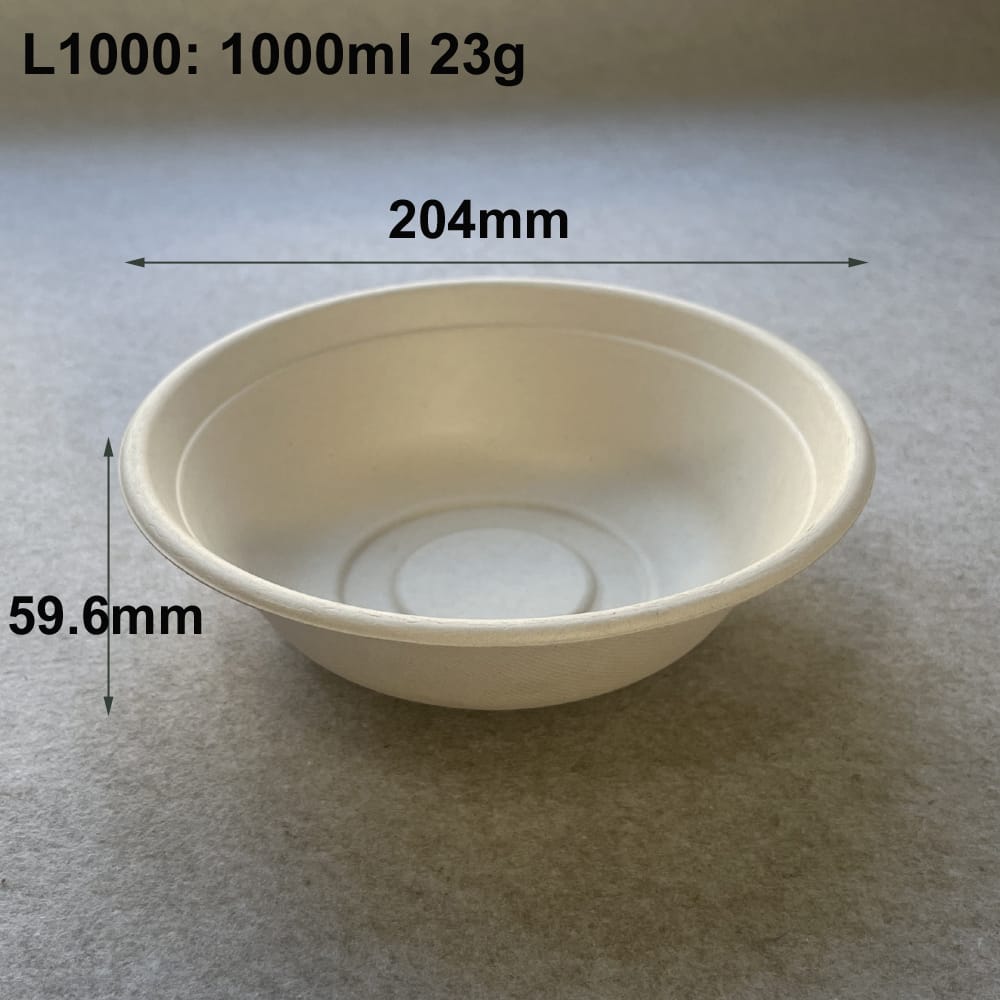
3. Biodegradable Bowls with Lids
From poke bowls to ramen, these are among the most in-demand formats for both hot and cold foods. Common lid options include PLA transparent lids, PET/PP lids, or paper fiber lids depending on food temperature, visibility needs, and disposal goals.
Material: Bagasse, PLA-lined paper, or kraft
Sizes: 8oz, 12oz, 16oz, 24oz, 32oz
Best for: Salads, soups, grain bowls, poke, noodles, desserts, and ice cream
|
|

4. Kraft Paper Salad Bowls
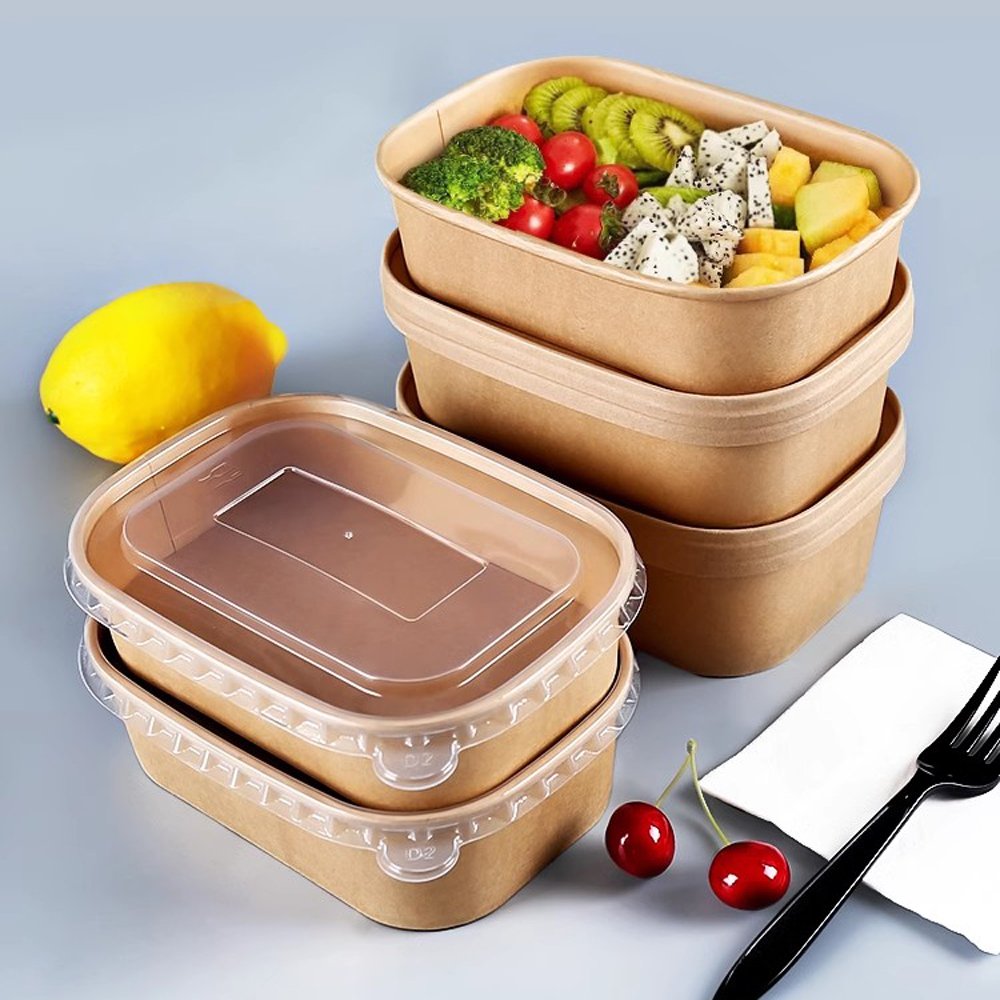
Perfect for modern cafés, salad bars, and health-focused brands, kraft salad bowls combine rustic texture with strong branding potential. Many use PE, PLA, or water-based coatings to improve moisture and oil resistance, so buyers should verify the coating type and disposal pathway.
Material: Kraft paper with PLA lining
Customization: Full-color print and brand logo
Best for: Salads, poke, grain bowls, chilled meals, retail display meals
5. Biodegradable Cutlery Sets
Spoons, forks, knives, and sporks made from cornstarch or CPLA are must-have items for takeaway orders. Many CPLA and cornstarch cutlery options are designed for better heat resistance and strength than paper utensils, but specifications should still be checked for hot-food use.
Material: Cornstarch, PLA, or CPLA
Packaging: Bulk or individually wrapped
Best for: Takeaway, delivery, catering, airlines, cafeterias, and event foodservice

6. Compostable Cups (Hot & Cold)
From coffee shops to smoothie bars, compostable cups are everywhere. Hot cups may use PLA lining, water-based coating, or other barrier systems, while cold cups can be clear and made from PLA bioplastic. The best choice depends on beverage temperature, composting access, and market regulations.
Material: PLA-coated paper or PLA bioplastic
Sizes: 8oz, 12oz, 16oz, 20oz
Best for: Coffee, tea, juices, iced drinks, smoothies, cold brew, and takeaway beverages
|
|


7. Multi-Compartment Trays
Ideal for bento meals, cafeterias, airlines, school lunches, and ready-meal programs, these trays help separate wet and dry foods. Often made with molded fiber or cornstarch-based materials, they reduce the need for multiple packaging pieces.
Material: Bagasse or cornstarch
Designs: 3 to 5 compartments
Best for: Combo meals, institutional food service, ready-to-eat trays, airline meals, and school lunches
|
|


8. Biodegradable Sauce Cups & Lids
Small but essential, sauce and dressing cups are often overlooked—but in 2026, even these small packaging items are becoming part of the sustainability upgrade. Available in 2oz to 4oz sizes, they are ideal for sides, dips, sauces, condiments, and sample portions.
Material: Bagasse, PLA-coated paper, or clear PLA
Options: With or without lids
Best for: Salad dressing, ketchup, soy sauce, butter portions, dips, tastings, and condiments

9. Cornstarch Bento Boxes
These lightweight biodegradable containers mimic the functionality of plastic bento boxes while supporting lower-plastic foodservice programs. They are available in multiple compartment configurations, and many are designed for heat resistance and freezer use when confirmed by product specifications.
Material: Cornstarch-based bioplastic
Features: Leak-resistant, heat-resistant, freezer-suitable, depending on product specification
Best for: Asian cuisine, airline meals, catering, bento meals, and ready-meal packaging

10. Palm Leaf and Bamboo Tableware
Natural palm leaf plates and bamboo trays offer a premium, earthy presentation. No two pieces look exactly alike, making them especially suitable for events, weddings, outdoor catering, boutique hotels, and upscale eco dining.
Material: Naturally fallen palm leaves or compressed bamboo
Designs: Plates, trays, square or round platters
Best for: Outdoor parties, luxury eco events, buffet service, wedding catering, and premium presentation

11. PLA-Lined Kraft Soup Containers
For hot soups, stews, congee, noodles, and sauce-based dishes, these kraft paper bowls with PLA linings provide a strong balance of insulation, branding, and moisture resistance. Lid options may include vented paper lids or clear PLA tops depending on temperature and display needs.
Material: Kraft paper + PLA inner lining
Sizes: 8oz to 32oz
Best for: Hot liquids, thick sauces, stew-based dishes, soup delivery, and takeaway meals

12. Biodegradable Drinking Straws
Plastic straws are being replaced by paper, PLA, and cornstarch alternatives in many foodservice channels. The best option depends on beverage type, drinking time, texture requirements, and local composting or recycling rules.
Material: Paper, PLA, or cornstarch
Packaging: Individually wrapped or bulk
Best for: Beverages, takeaway drinks, juice bars, bubble tea, smoothies, and quick-service restaurants

How to Choose the Right Style for Your Business
Choosing the right biodegradable tableware is not only about sustainability. It is about fit, function, food safety, cost control, and brand impact. Here are practical selection rules for buyers:
By food type:
Hot oily meals → bagasse plates or clamshells
Soups → kraft bowls with PLA lids
Salads/grain bowls → kraft or bagasse bowls with clear lids
By channel:
Takeout/delivery → clamshells, cutlery sets, soup cups
In-store dining → palm leaf plates, bamboo trays
Events → biodegradable straws, elegant cutlery, custom printed bowls
By branding need:
Custom print → kraft paper or PLA-coated tableware
Embossed logo → bagasse molded items from OEM suppliers
And if you need a manufacturer with broad style options, fast delivery, and certification-ready products—Bioleader® offers a full portfolio of biodegradable packaging solutions customized for your foodservice, retail, catering, or private-label needs.

Buyer Checklist Before Ordering Biodegradable Tableware
Before placing a bulk order, foodservice buyers should verify the product beyond appearance and price. The following checklist helps reduce sourcing risk and improves compliance readiness.
| Buyer Checkpoint | Why It Matters | What to Request |
|---|---|---|
| Material confirmation | Bagasse, PLA, CPLA, cornstarch, kraft, bamboo, and palm leaf perform differently. | Material specification sheet and product photos. |
| Food-contact safety | Tableware must be safe for direct food contact in the target market. | FDA, LFGB, EU food-contact, SGS, or relevant third-party reports. |
| Compostability claim | Biodegradable and compostable are not the same claim. | EN13432, ASTM D6400, BPI, TÜV, OK Compost, or local certification. |
| PFAS status | Some molded fiber products may need oil-resistant treatment. | PFAS, PFOA, PFOS, or total fluorine reports where required. |
| Food performance | Hot soup, oily meals, sauces, and delivery time stress packaging differently. | Real food sample testing and supplier use guidance. |
| Lid fit and packaging | Delivery failures often come from poor lid matching. | Samples of container + lid combinations, carton details, and loading plan. |
Final Thoughts: Design Meets Compostability
Gone are the days when “eco-friendly” meant plain brown boxes with limited performance. Today’s biodegradable tableware is versatile, stylish, functional, and commercially scalable—fit for street vendors, cafés, delivery brands, hotels, event caterers, supermarkets, and premium restaurants alike.
As sustainability becomes non-negotiable, these 12 styles represent the intersection of innovation and impact. Whether you are building a brand, launching a new menu, responding to plastic restrictions, or replacing conventional disposable packaging, upgrading to biodegradable tableware is a smart, future-ready move.
FAQs
1. What is the most popular biodegradable tableware in 2026?
Round bagasse plates, clamshell food containers, biodegradable bowls with lids, and compostable cutlery remain among the most popular biodegradable tableware styles in 2026 due to their versatility, durability, and broad foodservice applications.
2. Are biodegradable bowls and plates microwave-safe?
Many bagasse and selected cornstarch-based tableware products can be microwave-suitable, but buyers should always check product specifications, test reports, and supplier use instructions before heating.
3. What materials are used to make compostable tableware?
Common materials include sugarcane bagasse, cornstarch, PLA, CPLA, kraft paper, bamboo, and palm leaf. Each material has different performance, disposal conditions, and best-use scenarios.
4. Can biodegradable food containers be customized with logos?
Yes. Many manufacturers offer custom printing, embossing, sleeve printing, carton branding, or private-label packaging on kraft, bagasse, or PLA-coated items, depending on MOQ and production method.
5. Which biodegradable tableware is best for hot liquids like soup?
PLA-lined kraft soup containers and thick bagasse bowls with compatible lids are common options for hot liquids. Buyers should confirm heat resistance, leakage performance, lid fit, and food-contact safety before bulk ordering.
6. Is biodegradable tableware always compostable?
No. Biodegradable and compostable are different claims. Compostability should be supported by certification such as EN13432, ASTM D6400, BPI, TÜV, or OK Compost, depending on the product and target market.
References
- U.S. Environmental Protection Agency (EPA)
Sustainable Management of Materials – Plastics
https://www.epa.gov/smm/sustainable-management-materials-plastics - European Bioplastics Association
Bioplastics Market Data and Compostability Resources
https://www.european-bioplastics.org/market - Biodegradable Products Institute (BPI)
Certified Compostable Products Catalog
https://bpiworld.org/ - ASTM International
ASTM D6400 Standard Specification for Compostable Plastics
https://www.astm.org/ - TÜV Austria
OK Compost HOME and OK Compost INDUSTRIAL Certification Guidance
https://www.tuv-at.be/ - Bioleader® Official Website
Bagasse Food Containers – Sustainable, Customizable, Compostable
https://www.bioleaderpack.com/about-sugarcane-bagasse-clamshell-boxes/ - Global Market Insights
Biodegradable Tableware Market Size Report 2024–2032
https://www.gminsights.com/industry-analysis/biodegradable-tableware-market