Introduction
Across the globe, businesses and consumers are facing mounting pressure to ditch single-use plastics. In response, compostable cutlery—spoons, forks, and knives made from biobased materials—has become a major trend in foodservice, hospitality, and takeaway packaging. But how much of the hype is justified? Are these utensils truly better for the environment, and what are the real-world challenges and opportunities in adopting them?
This article explores industry data, scientific research, and expert insights to provide a balanced perspective. It also highlights how innovative manufacturers such as Bioleader are advancing sustainable dining.
What is the Most Environmentally Friendly Cutlery?
Sustainability is multi-dimensional, and no single material fits every scenario. The “most environmentally friendly” cutlery considers not only raw materials, but also energy use, manufacturing impact, and end-of-life outcome.
Types of Eco-Friendly Cutlery:
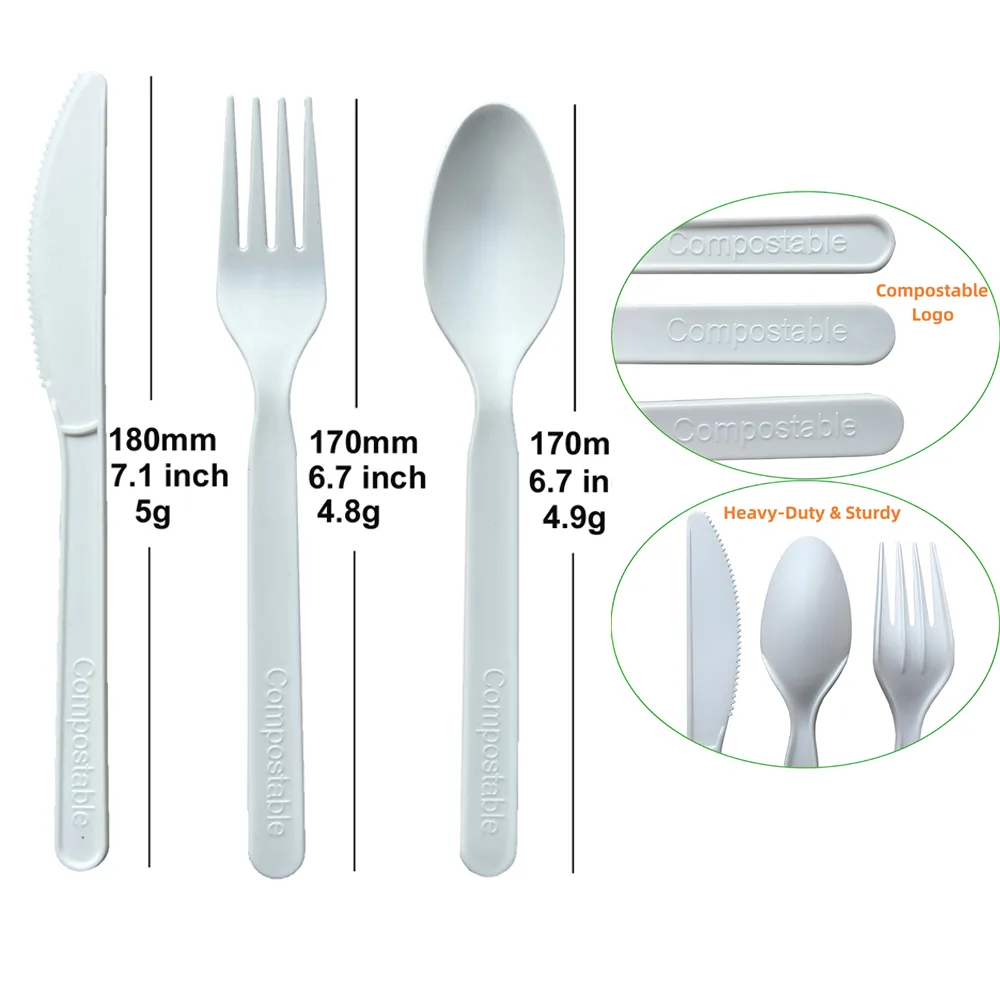
Compostable Cutlery:
Made from materials like PLA (polylactic acid, derived from corn starch), CPLA (crystalized PLA), bagasse (sugarcane fiber), and other plant-based fibers. Certified compostable products can break down in composting facilities, turning into soil-nourishing humus.
Reusable Cutlery:
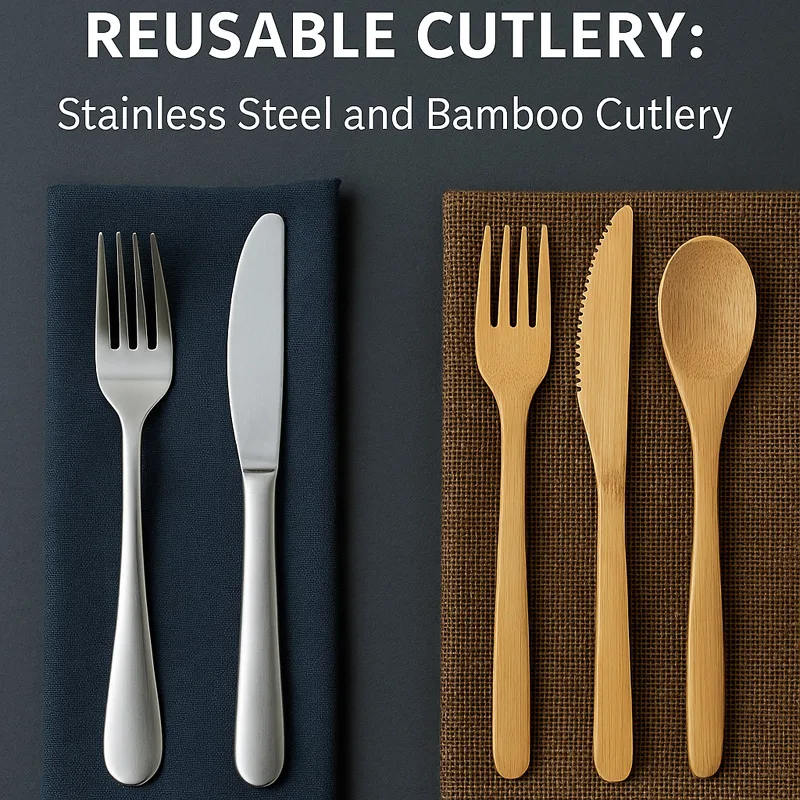
Stainless steel and bamboo cutlery can last for years. When re-used hundreds of times, their environmental footprint per use is extremely low, provided that cleaning is energy-efficient.
Wooden Cutlery:
Made from responsibly managed forests (FSC-certified), wooden utensils are fully compostable and naturally biodegradable.

Industry Trend:
While reusable cutlery remains the gold standard for minimizing waste, compostable cutlery is now preferred for large-scale events, takeaways, and food delivery—where collection and washing logistics are not feasible.
Expert Opinion:
“The most sustainable solution is always reusable, but for the fast-growing food delivery sector, high-quality compostable cutlery offers the lowest-impact disposable option,”
—Dr. Elaine Fisher, Senior Sustainability Analyst, Global Packaging Forum.
Is Compostable Cutlery Really Compostable?
The term “compostable” is widely used, but not always well understood. True compostability depends on several factors:
Material and Certification:
PLA and CPLA cutlery need high temperatures (58°C+) and controlled moisture, only achievable in industrial composting facilities.
Bagasse and cornstarch cutlery may break down faster, but industrial composting is still preferred.
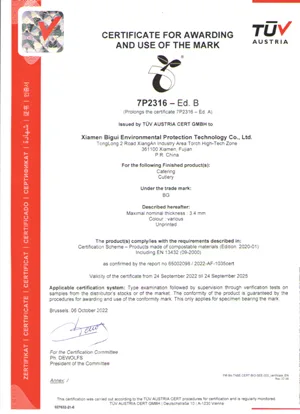
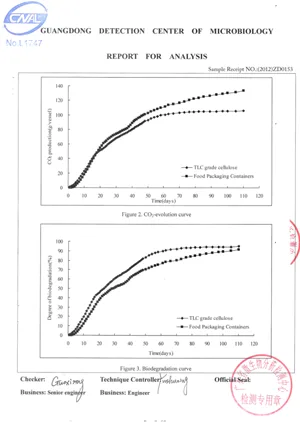
Certifications like EN 13432 (Europe), ASTM D6400 (USA), and “OK Compost” indicate the product will biodegrade within 90–180 days under specified conditions.
Home Compostability:
Only select items certified as “OK Compost HOME” or similar will break down efficiently in backyard composters.
Landfill Limitation:
Compostable utensils in landfill or regular trash do not decompose quickly due to lack of oxygen and microbial activity.
Scientific Data:
A 2022 study by the University of Sheffield found that standard PLA cutlery showed less than 5% weight loss after 12 months in home compost, while bagasse cutlery achieved up to 60% decomposition in the same period under controlled aerobic conditions.[1]
Bioleader Insight:
Bioleader’s compostable cutlery range is tested to meet EN 13432, ensuring industrial compostability and a clear end-of-life pathway. Their innovation pipeline focuses on improving home compostable performance and transparent labeling.
How Long Do Compostable Utensils Take to Decompose?
Decomposition Timelines:
Industrial Composting:
Certified PLA, CPLA, and bagasse cutlery decompose in 2–6 months under high heat and humidity.
Home Composting:
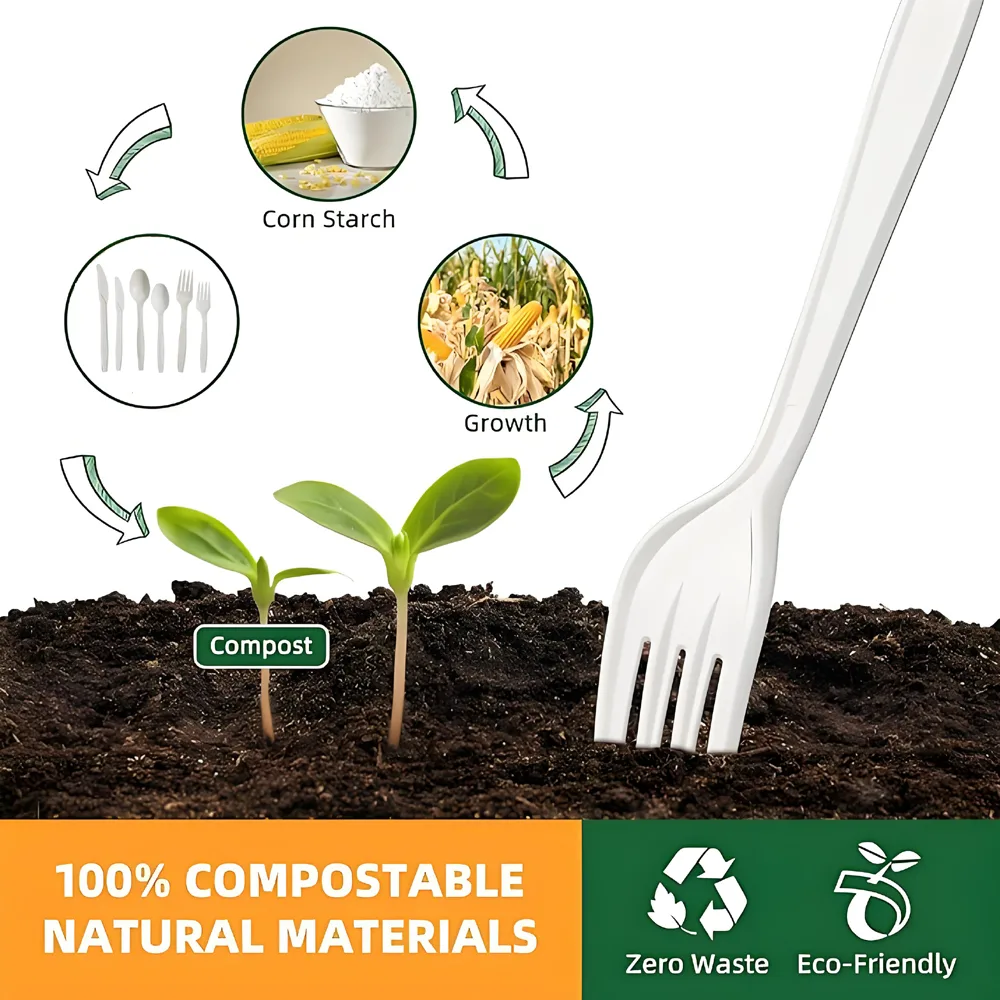
Only “home compostable” cutlery (mainly some bagasse and cornstarch options) will decompose within 6–12 months; PLA-based utensils may take years.
Landfill:
In low-oxygen landfills, both traditional plastics and most bioplastics persist for decades.
Case Study:
During the 2023 Green Fest in California, all event catering was provided with Bioleader’s bagasse and CPLA cutlery. With a dedicated industrial composting partner, organizers tracked over 85% of cutlery waste successfully processed into nutrient-rich compost within 120 days. Attendee surveys noted strong positive sentiment toward “zero-waste” initiatives.
Key Point:
The real-world environmental benefit hinges not just on product selection, but also on proper waste sorting and local composting infrastructure.
What to Do with Compostable Cutlery?
Adopting compostable cutlery is just the first step. Effective disposal is crucial for maximizing sustainability:
Best Practices for Businesses and Consumers:
Identify Composting Facilities:
Verify if your local waste management accepts bioplastics and fiber-based compostables.Clear Labeling and User Education:
Use icons and signage to instruct customers. Bioleader includes disposal instructions on all packaging.Source Separation:
Establish separate bins for compostables at events, offices, and restaurants.Never Recycle Compostables:
Compostable plastics contaminate recycling streams—never put them in blue bins.Home Compost Only If Certified:
Only place “home compostable” labeled utensils in backyard compost.
Industry Trend:
Major cities like San Francisco, Toronto, and Sydney are updating waste sorting protocols and expanding industrial composting access, paving the way for broader adoption of compostable packaging and utensils.
Can You Reuse Compostable Spoons and Forks?
Product Design & Safety:
Single-Use Focus:
Compostable cutlery is generally intended for one-time use. After contact with food and liquids, materials like PLA and bagasse lose structural integrity and may absorb odors or stains.Limited Reuse:
High-quality CPLA and some fiber-based utensils can survive a gentle hand wash and a second use, but not more.Health Consideration:
Repeated washing may cause fiber degradation and increase the risk of bacterial contamination.
Expert View:
“Compostable cutlery is not a replacement for multi-use tableware, but it outperforms plastic in settings where hygiene or logistics make reuse impractical.”
—Lisa Chen, Head of Product Development, Bioleader
Use Case Example:
For a recent corporate picnic, Bioleader supplied CPLA cutlery. Staff reused the utensils for desserts after rinsing. Feedback highlighted that performance and feel remained good for two rounds, but not beyond.
Industry Trends and Innovations
The compostable cutlery sector is evolving rapidly, driven by legislation, consumer demand, and innovation:
Legislation:
The EU Single-Use Plastics Directive and various state bans in the US have accelerated the shift to compostable and biodegradable alternatives.Material Science:
New research into PHA (polyhydroxyalkanoate) and next-generation bagasse blends promises even faster breakdown in both industrial and home settings.Smart Labeling:
Brands like Bioleader are piloting QR code-enabled products to provide real-time disposal instructions and sustainability metrics.
Scientific Reference:
A recent meta-analysis in Resources, Conservation & Recycling journal concluded that when paired with effective composting infrastructure, compostable bioplastics can reduce total waste volume and associated greenhouse gas emissions by up to 40% compared to traditional plastic cutlery.[2]
Real-World Case Study: Bioleader’s Approach
Case: Green Kitchen Restaurant Chain
Facing consumer pressure and stricter waste laws, Green Kitchen—a multi-site food chain—switched to Bioleader’s compostable cutlery in 2023.
Implementation Steps:
Deployed compostable PLA spoons, forks, and knives across all stores.
Staff training on sorting and customer education.
Partnered with local industrial composters.
Results:
92% of used cutlery was correctly diverted to compost facilities.
Customer satisfaction scores improved by 18%.
Waste management costs decreased due to reduced landfill fees.
Know More About Bioleader’s Compostable Cutlery – Click Here!
Management Feedback:
“Bioleader’s cutlery met both our sustainability and performance needs. Their clear labeling and educational materials simplified the transition.”
—Maria Gomez, Sustainability Lead, Green Kitchen
Frequently Asked Questions (FAQ)
1. Are compostable cutlery items truly biodegradable?
Compostable cutlery certified to EN 13432 or ASTM D6400 is guaranteed to biodegrade under industrial composting conditions, breaking down within 2–6 months.
2. What’s the difference between biodegradable and compostable cutlery?
Compostable cutlery must break down into non-toxic components within a defined timeframe and leave no microplastics. Biodegradable items may not meet these strict criteria or timeline.
3. Can compostable utensils be recycled?
No. Compostable utensils cannot be recycled and may contaminate recycling streams.
4. How do I know if my compostable cutlery is home compostable?
Look for “OK Compost HOME” or similar certification. Standard PLA/CPLA cutlery is generally not suitable for home composting.
5. Why is infrastructure important for compostable cutlery?
Without access to industrial composting, compostable utensils may not break down properly and could persist like traditional plastics.
6. Does Bioleader offer both industrial and home compostable cutlery?
Yes. Bioleader provides EN 13432-certified industrial compostable products and is developing home compostable solutions for select markets.
Conclusion: Are Compostable Utensils Really Better for the Planet?
Compostable cutlery, when sourced from responsible manufacturers and paired with the right end-of-life systems, provides a measurable environmental advantage over traditional plastics. The technology is not a “silver bullet”—its true value is unlocked when used as part of a holistic zero-waste strategy, backed by education and infrastructure.
Forward-thinking brands like Bioleader are demonstrating that with innovation, transparency, and collaboration, compostable utensils can move from trend to mainstream sustainability solution.
✅ References:
Sun, J., et al. (2021).
Revealing the feasibility and environmental benefits of replacing disposable plastic tableware with reusable ones: A life cycle assessment study.
ScienceDirect.
https://www.sciencedirect.com/science/article/abs/pii/S0921344922004487UrthPact.
Understanding Compostability Certifications.
UrthPact.
https://www.urthpact.com/certified-compostable-breaking-down-compostable-certifications-so-you-dont-have-to/TÜV AUSTRIA.
OK compost HOME.
TÜV AUSTRIA.
https://en.tuv.at/ok-compost-home-en/Grist.org.
Ask Umbra: Is it OK to reuse biodegradable plastic spoons?
Grist.
https://grist.org/food/ask-umbra-is-it-ok-to-reuse-biodegradable-plastic-spoons/Fortune Business Insights.
Biodegradable Cutlery Market Size, Share & Growth [2032].
Fortune Business Insights.
https://www.fortunebusinessinsights.com/biodegradable-cutlery-market-106212European Bioplastics.
EN 13432: Requirements for packaging recoverable through composting and biodegradation.
European Bioplastics.
https://docs.european-bioplastics.org/publications/bp/EUBP_BP_En_13432.pdfBioleader.
Eco-Friendly Biodegradable & Compostable Cutlery Disposable Fork Spoon Knife Utensils.
Bioleaderpack.com.
https://www.bioleaderpack.com/biodegradable-tableware-detailed-questions-and-answers/