FAQ of Bioleader's Eco-friendly Disposable Tableware
What is BPI compostable cutlery made from?
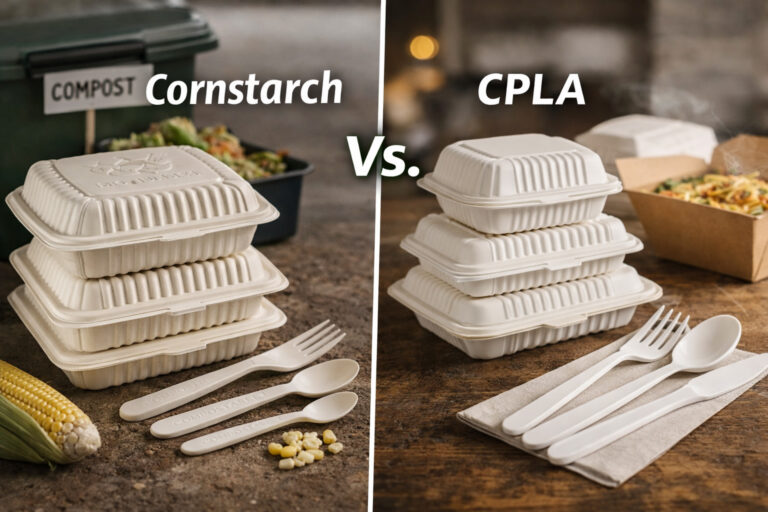
BPI compostable cutlery is typically made from plant-based materials such as cornstarch, PLA, or other renewable bioplastics that fully biodegrade under commercial composting conditions , Takeout Food Packaging.
How long does it take for a cornstarch spork to decompose?
A cornstarch-based compostable spork will generally decompose within 90–180 days in commercial composting conditions, depending on local temperature and humidity.
How long does it take for a PLA spoon to decompose?
Under industrial composting conditions, PLA spoons typically decompose within 90 to 180 days, depending on the environment and local composting facilities.
4.3 Cornstarch / PLA Bioplastic
Cornstarch Clamshell Boxes Strengths. Bio-based narrative; clarity (useful for lids); good dimensional stability for cold and some warm items; certified industrial compostability is achievable for certain SKUs. Limitations , Takeout Food Packaging. Requires industrial composting; in ambient environments PLA behaves like conventional plastic and does not readily degrade; heat resistance is limited; litter risks microplastic narratives.
What makes the waste invisible?
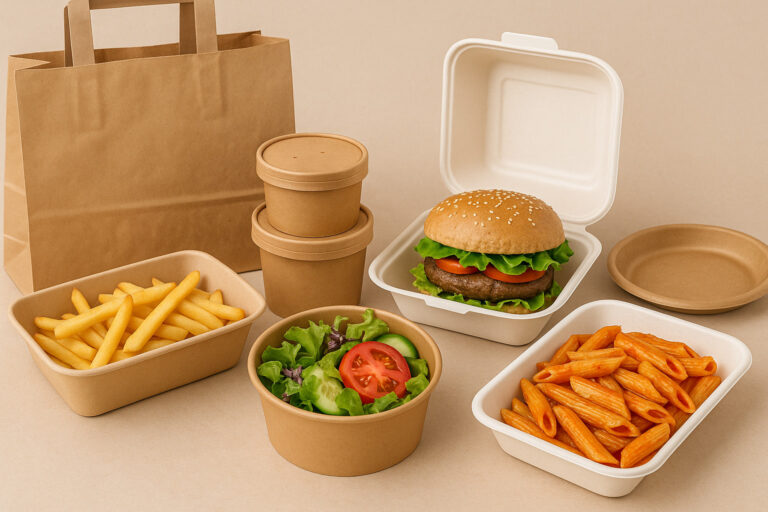
Distributed disposal: Packaging is dispersed across thousands of households, not concentrated in a back-of-house bin. Aesthetic camouflage: Clean, premium-looking fiberware suggests recyclability or compostability even when coatings negate both. Label ambiguity: “Biodegradable,” “eco,” and leaf icons often imply outcomes that local infrastructure cannot deliver , Takeout Food Packaging.