Starch Based Food Containers: Material & Performance Insights | Bioleader®

Actionable coverage of starch based food containers: eco-friendly, biodegradable, compostable materials, performance data, and compliance under EN13432 & ASTM D6400. Includes BPI/TÜV references and Food-Contact Tested guidance for safe deployment. Buyer-focused: manufacturer insights, bulk/wholesale buying playbooks, OEM/ODM customization tips, full size range selection.
starch based food containers — Quick Summary
  • Items displayed (articles): 12
  • Last updated: 2026-03-25
  • Includes test data, compliance guides, buyer FAQs, and real-world use cases.

Editor’s Picks: Top Starch Based Food Containers Guides 2026

FAQ of Bioleader's Eco-friendly Disposable Tableware

2. Are compostable food trays microwave-safe?

Yes, most compostable food trays made from bagasse or sugarcane pulp are microwave-safe — starch based food containers. They can safely withstand typical microwave heating conditions without releasing harmful substances or losing structural integrity — starch based food containers.

1. What are disposable bagasse food trays made of?

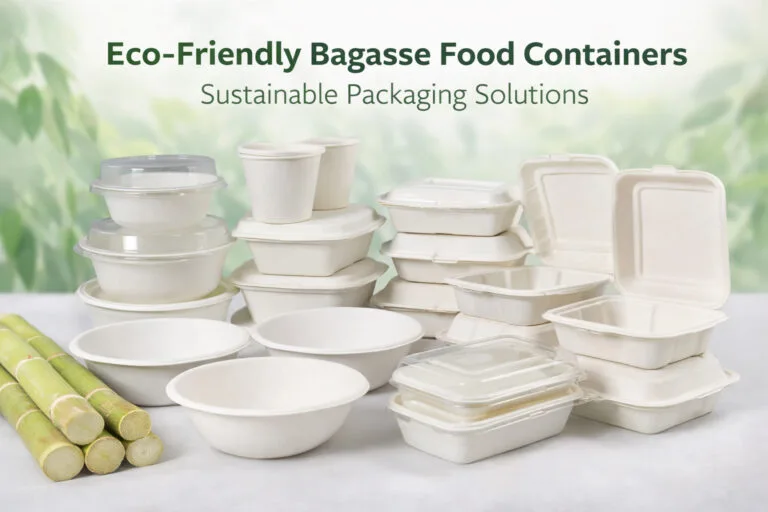
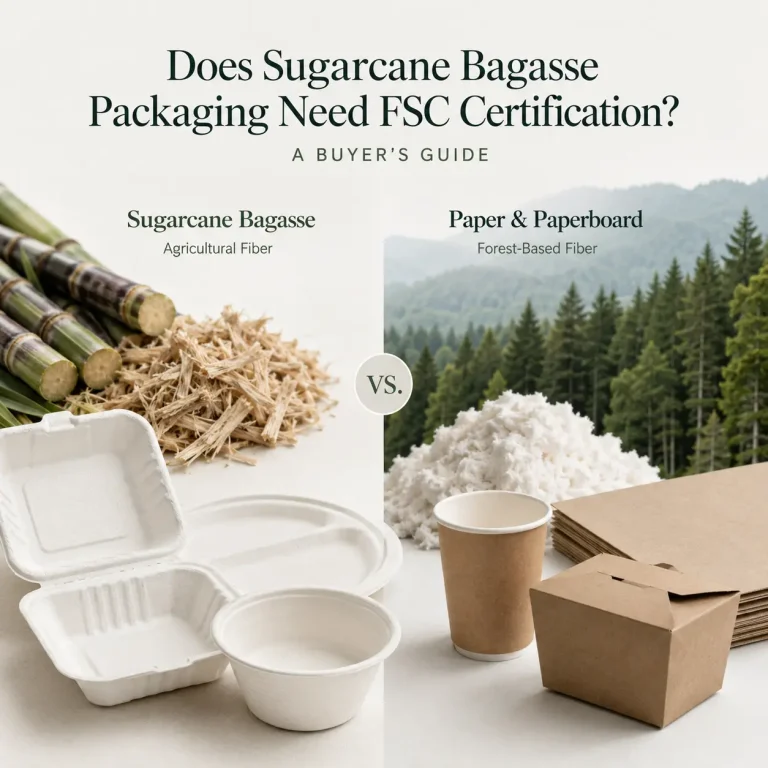
They are made from sugarcane bagasse—the fibrous byproduct left after extracting juice from sugarcane. This renewable material is molded into durable trays that are compostable, biodegradable, and plastic-free.

Why Choose Sugarcane Bagasse?

Renewable Resource: Since sugarcane is harvested and grown repeatedly, the containers become eco-friendly, and more products can be produced using bagasse fiber , starch based food containers. This approach in a holistic way starts reducing waste entirely. Decomposable & Environment Friendly: Because of the usage of bagasse containers eliminate the need for plastic and styrofoam bowls. This approach further helps eliminate waste from dumping/filling grounds and further helps the environment while everything decomposes into compost materials.

2.2.3 Mineral System

Functional minerals are not automatically a warning sign. Used properly, they can help tune rigidity, improve dimensional stability, and support process consistency. Used badly, they can become a cost-down shortcut that weakens the article. In our project reviews, one of the easiest ways to spot trouble is when a supplier keeps talking about “high starch content” but refuses to explain the reinforcement system behind the number.

2.1 Commercial Naming vs. Material Identity

Global buyers will see multiple terms used almost interchangeably in catalogs and online listings: corn starch tableware, starch-based utensils, bio-based cutlery, and plant-based tableware. From a procurement perspective, these are often commercial naming choices, not precise legal or technical identities. This distinction matters because a product may be marketed under a plant-based message while still relying on a synthetic carrier phase or additive system that changes both its performance profile and its regulatory exposure. That is exactly why broad wording such as “plant-based” or “eco-friendly” should never be accepted as a substitute for document review.

Related Insights

🚀Ready to Go Green and Choose ?

Join the global movement toward zero-waste packaging.


Bioleader® offers:

  • 📦 Bulk order support & fast delivery

  • ✍️ Custom branding and OEM solutions

  • 🌍 Worldwide eco-packaging compliance

Get the Catalogue Products List  & Contact Us Now! 👉

Contact us Below

Click or drag files to this area to upload.You can upload up to 5 files.
The more details you share, the faster and more accurate our quotation will be.