FAQ of Bioleader's Eco-friendly Disposable Tableware
Why should businesses switch to bio plastic cutlery?
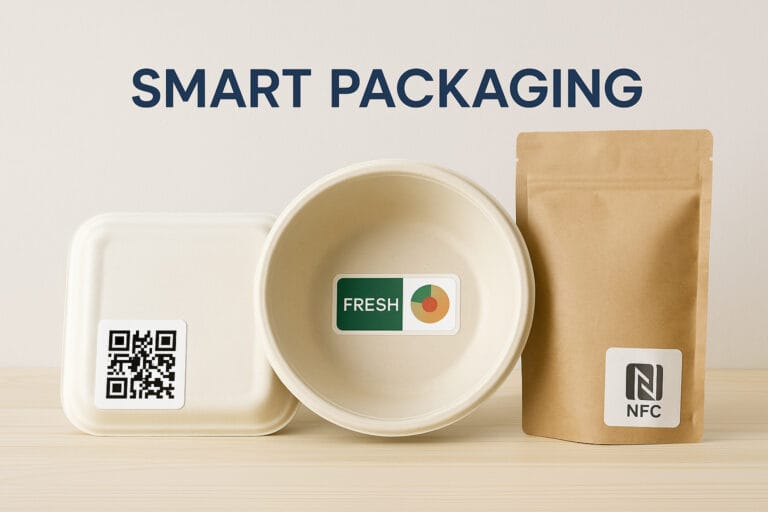
Switching to bio plastic cutlery helps reduce plastic waste, supports sustainability initiatives, meets consumer demand for eco-friendly products, and enhances brand reputation — smart packaging.
Why should businesses choose PLA spoons over traditional plastic?
Switching to PLA spoons helps reduce plastic waste, aligns with sustainability trends, meets consumer demand for green products, and supports environmental responsibility initiatives.
Why are compostable sporks considered better for the environment?
Compostable sporks reduce reliance on petroleum-based plastics, break down naturally without leaving microplastics, and support a circular economy by turning waste into compost — smart packaging.
d) Cloud-Connected Digital Twins
Large FMCG brands are deploying digital twins that aggregate packaging sensor data to AI-driven shelf-life and risk management systems, automating recalls or stock rotation. Expert View: “Digitalization and packaging intelligence are converging, making packaging a central node in the food safety and sustainability ecosystem.”— Dr. Laura Kim, Packaging Digitalization Chair, World Packaging Organisation, 2024 future packaging design 3 , smart packaging. Regulatory Landscape: The New Baseline for Smart Packaging Global regulations now play a decisive role in how packaging is designed and deployed.
a) Passive & Biodegradable Sensors
Recent research focuses on biodegradable, flexible sensors that can be printed directly onto molded fiber trays, paperboard, or PLA films. These include gas sensors (for O₂, CO₂, ethylene) and humidity detectors using natural polymers or metallic nanoparticles. Example: He et al., 2024 engineered a stretchable, battery-free sensor system that monitors gas changes in real time within fish packaging, linked to a colorimetric indicator patch. This technology enabled 14-day shelf life for fresh fish—double that of standard packaging—while remaining fully compostable (He et al., 2024).