The 2025 Buyer’s Guide To Packaging Carbon Emissions | Bioleader® Sustainable Packaging

Actionable coverage of Packaging Carbon Emissions: eco-friendly, biodegradable, compostable materials, performance data, and compliance under EN13432 & ASTM D6400. Includes BPI/TÜV references and Food-Contact Tested guidance for safe deployment. Buyer-focused: manufacturer insights, bulk/wholesale buying playbooks, OEM/ODM customization tips, full size range selection.
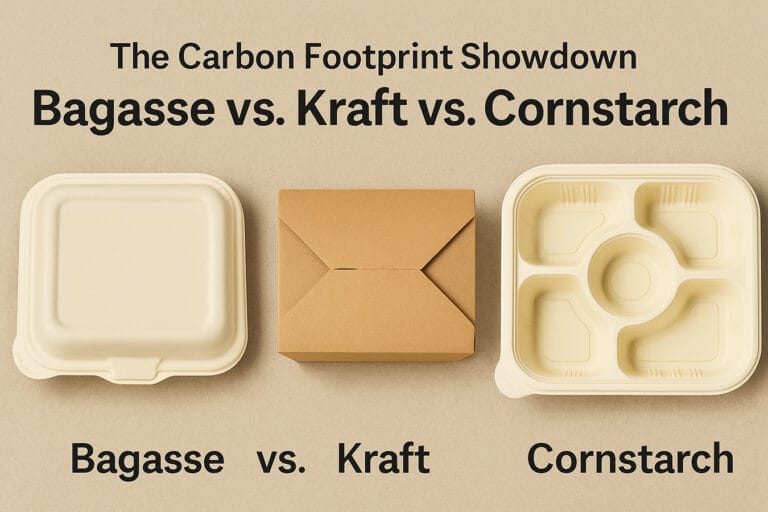
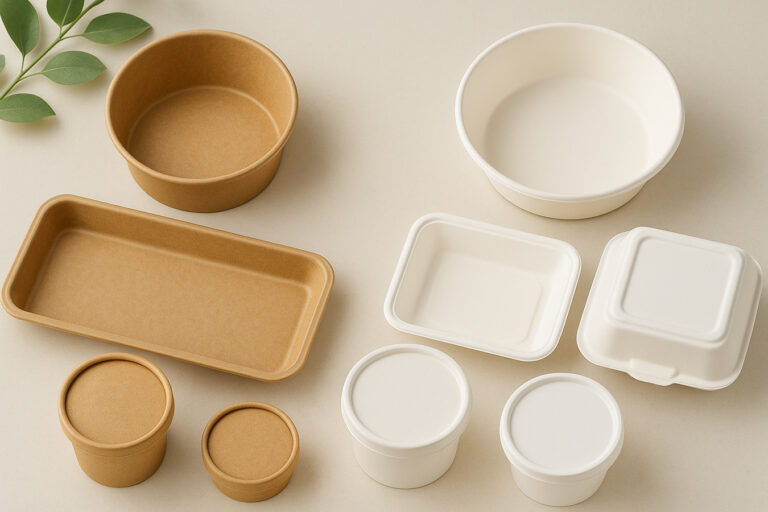
Quick Summary: In recovery-friendly markets and standard applications, choose Bagasse first. For general hot/cold foods—across high-moisture and dry goods—Kraft is the most universal option. When you specifically require microwaveability, extra rigidity, or special form factors (e.g., clear/contoured pieces), evaluate Cornstarch. Pair material choice with end-of-life (EoL) pathways and 2025–2027 regulatory timelines to minimize lifecycle CO₂e and compliance risk.
Packaging Carbon Emissions — Quick Summary
  • Items displayed (articles): 12
  • Last updated: 2025-10-25
  • Includes test data, compliance guides, buyer FAQs, and real-world use cases.

Editor’s Picks: Top Packaging Carbon Emissions Guides 2026

FAQ of Bioleader's Eco-friendly Disposable Tableware

Meal Prep and Ready Meals

Prepared meal brands and supermarket food counters can use this tray for organized, stackable, and easy-to-handle packaging. The square format also supports cleaner shelf presentation.

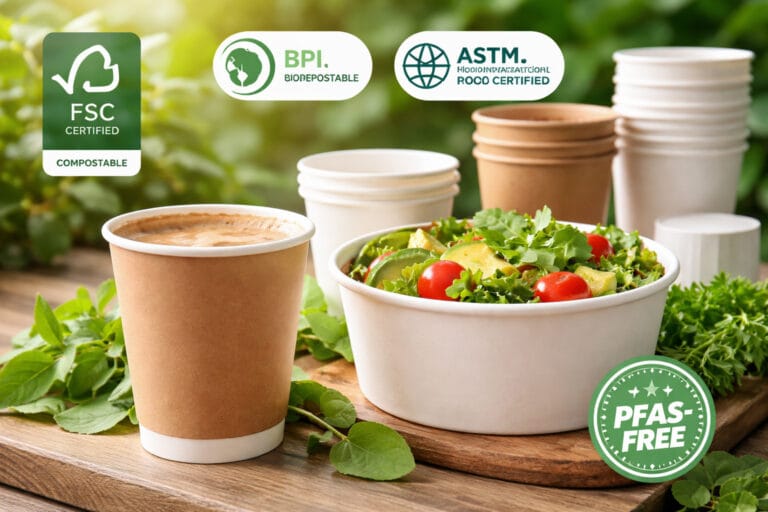
Ensure safety with products that are free of PFAS and BPA

Health comes first , Packaging Carbon Emissions. Safety is further guaranteed when you’ve got our trays with lids that don’t have PFAS and BPA in them, two neatly packed chemicals that bring peace to the consumer as they do not have any synthetic materials that pose health risks. So, you know that our products are safe and clean when it comes to packaging and using them.

Institutional Foodservice

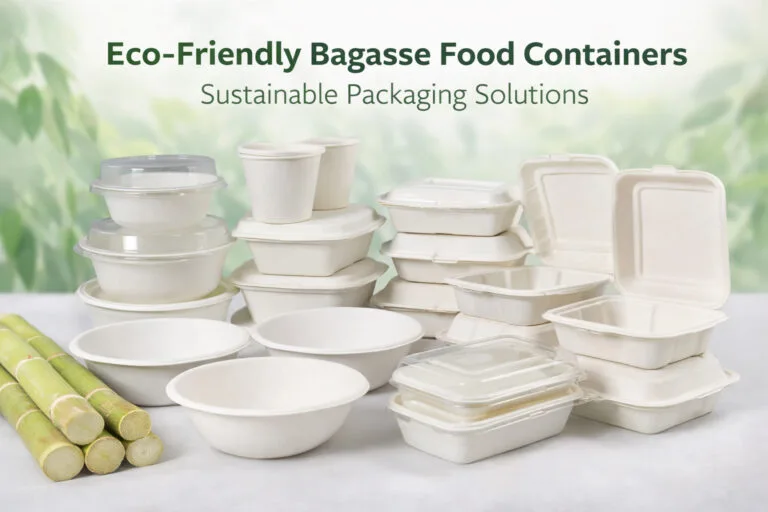
Schools, offices, hospitals, and canteens can use this bagasse tray for everyday meal distribution. It combines convenience, disposable efficiency, and better environmental positioning.

Table 1. LCA Master Table (kg CO₂e per 1,000 pcs)

Material Raw Materials Manufacturing Transport Use Phase End-of-Life Total CO₂e Bagasse 18 kg 12 kg 4 kg −2 kg 5 kg 37 kg Kraft Paper 22 kg 15 kg 5 kg −1 kg 10 kg 51 kg Cornstarch Biopolymer 30 kg 20 kg 6 kg 0 kg 12 kg 68 kg Totals reflect cradle-to-grave emissions for ~1,000 units (≈900 ml bowl + lid), assuming typical transport by sea and truck, and region-averaged end-of-life outcomes. Negative “Use Phase” values represent avoided extra packaging and avoided food-loss — Packaging Carbon Emissions.

Cornstarch-Based Biopolymers

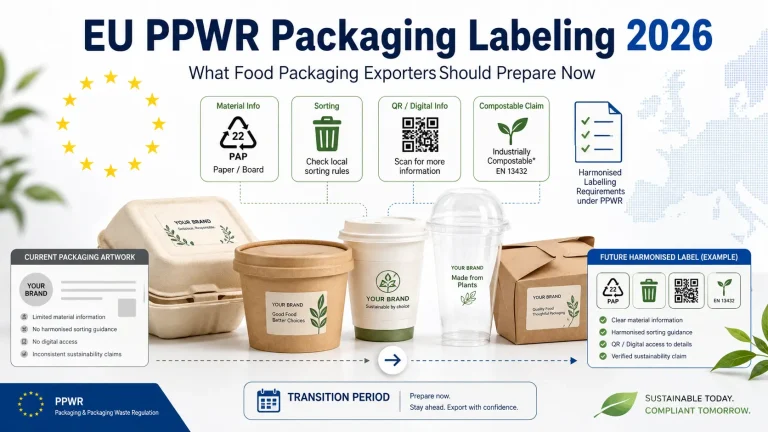
Starch-based bioplastics (and blends) enable microwaveable, stiff, and sometimes transparent or contoured designs. However, compostability claims must anchor to recognized standards (e.g., ASTM D6400 for US markets; EN 13432 for EU) and to infrastructure reality—i.e., whether municipal/industrial composting exists and accepts the article. Without access to appropriate composting, nominal “compostable” advantages may not materialize; labeling must not overpromise , Packaging Carbon Emissions. LCA Results: CO₂e by Life-Cycle Stage

Related Insights

🚀Ready to Go Green and Choose ?

Join the global movement toward zero-waste packaging.


Bioleader® offers:

  • 📦 Bulk order support & fast delivery

  • ✍️ Custom branding and OEM solutions

  • 🌍 Worldwide eco-packaging compliance

Get the Catalogue Products List  & Contact Us Now! 👉

Contact us Below

Click or drag files to this area to upload.You can upload up to 5 files.
The more details you share, the faster and more accurate our quotation will be.