FAQ of Bioleader's Eco-friendly Disposable Tableware
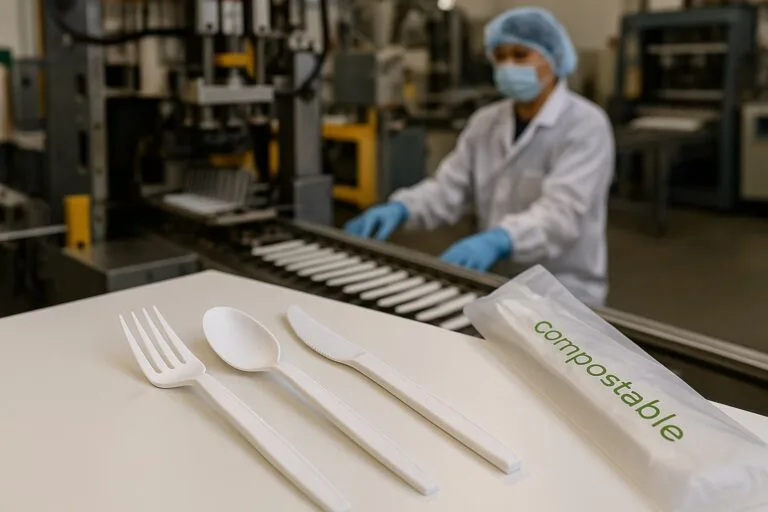
1. Bioleader® CPLA Fork Spoon Knife—(7 inch): Embossed “Compostable” Logo
Item Name / Material Weight Size(mm) PCS/CTN Carton Size(cm) CPLA-02 CPLA Fork 4.8g 7inch/ 170mm 1000 44 18 23.5 CPLA-03 CPLA Spoon 4.9g 7inch/ 170mm 1000 34.5 19 19 CPLA-01 CPLA Knife 5g 7inch/ 180mm 1000 47.5 18 22.5 About CPLA : CPLA (Crystallized Polylactic Acid) represents a derivative of PLA (Polylactic Acid), of which bioplastics can be obtained from easily renewable resources like corn starch or sugarcane. Due to the crystallization process in CPLA, the material’s toughness and heat resistance are increased, allowing this bioplastic to be used for high-temperature applications such as cutlery; otherwise, the regular PLA would soften or deform. Biodegradable and Compostable BPI Certified Eco-Friendly CPLA Utensils : CPLA cutlery is made from plant-based resources like corn starch, BPI-certified 100% industrial-compostable in 90 days, and can break down entirely in industrial composting facilities. Each of our Non-plastic fork, spoon, and knife has “compostable” embossed on it.
How long does it take for eco-friendly cutlery to decompose?
Under industrial composting conditions, most eco-friendly cutlery decomposes within 90 to 180 days, depending on the material and local composting standards.
Are compostable cutlery items accepted in commercial composting facilities?
Most compostable plastic spoons and forks are accepted at commercial composting sites, provided they meet relevant standards such as ASTM D6400 or EN 13432. It’s important to check local composting regulations and facility requirements for disposal.
2.1 Why Clear Product Classification is Crucial
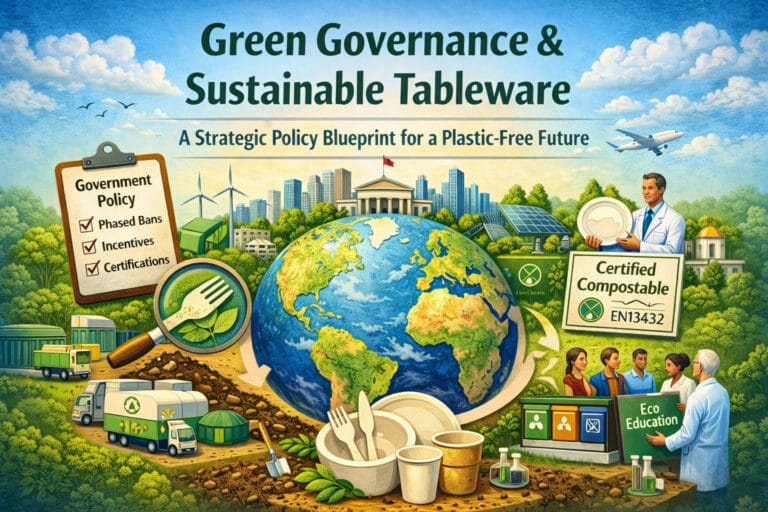
Effective policymaking begins with clarity — eco‑friendly tableware. Governments need to define and categorize the specific single-use tableware products that will be regulated. Without clear classifications, regulations can become ambiguous, and enforcement can be challenging , eco‑friendly tableware. By categorizing products based on material composition, biodegradability, and recyclability, governments can create targeted policies that address each product’s unique environmental impact — eco‑friendly tableware.
1.1 The Global Crisis of Plastic Pollution
The proliferation of single-use plastics has become one of the most urgent environmental crises of our time. Recent reports indicate that nearly 8 million metric tons of plastic enter the oceans every year, with disposable plastics from tableware being one of the largest contributors. These plastics not only pollute our oceans but also infiltrate our food systems as microplastics, affecting biodiversity and human health. The need for alternative, biodegradable, and compostable tableware has never been more critical.