FAQ of Bioleader's Eco-friendly Disposable Tableware
Are compostable cutlery items safe for hot and cold foods?
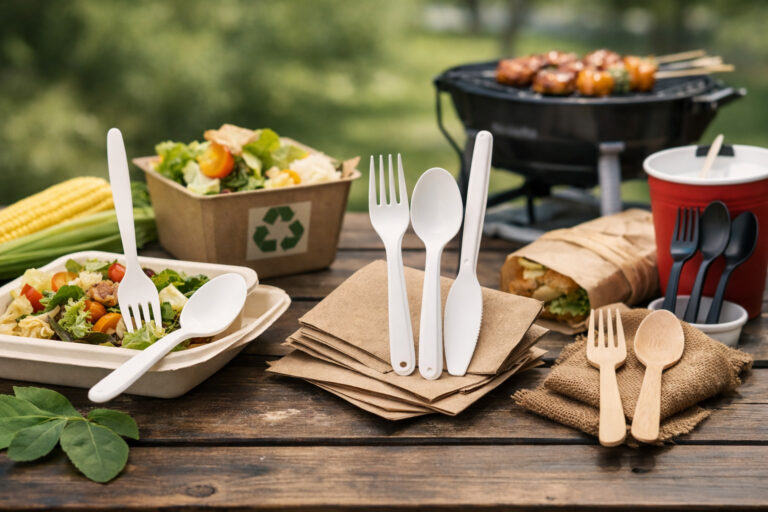
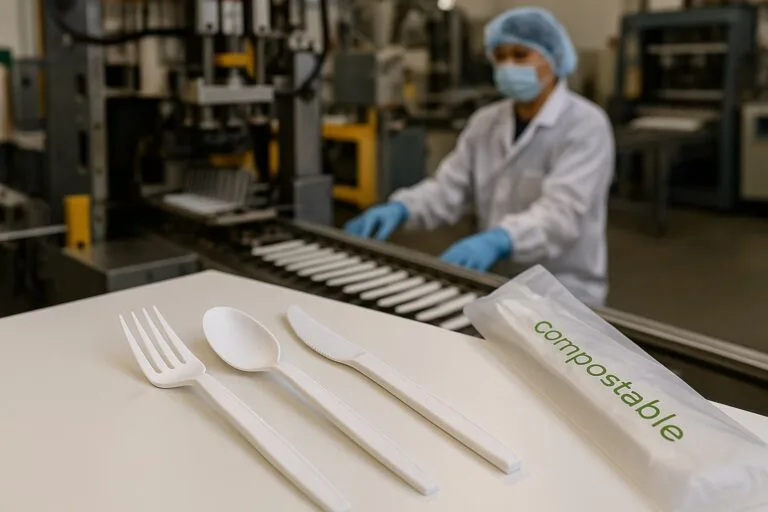
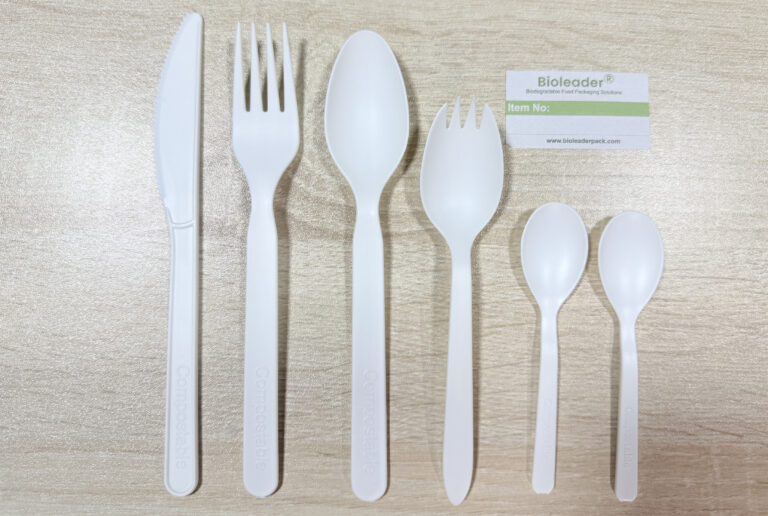
Yes, most compostable cutlery can safely handle both hot and cold foods. CPLA cutlery, in particular, is engineered for higher heat resistance, making it suitable for soups and hot meals.
Why are compostable sporks considered better for the environment?
Compostable sporks reduce reliance on petroleum-based plastics, break down naturally without leaving microplastics, and support a circular economy by turning waste into compost.
Are earth friendly disposable utensils safe for hot and cold foods?
Yes, these utensils are designed to be strong and heat-resistant, suitable for serving both hot and cold foods in restaurants, catering, and events.
Common Non-Biodegradable Materials
Plastics: Petroleum-based plastics persist for centuries, fragmenting into microplastics — biodegradable materials supplier. Metals: Metals like aluminum and steel corrode slowly but do not biodegrade. Glass: Chemically inert, glass remains intact for thousands of years without degradation. Synthetic Fibers: Polyester, nylon, and acrylic remain indefinitely in ecosystems.
Biodegradation Process
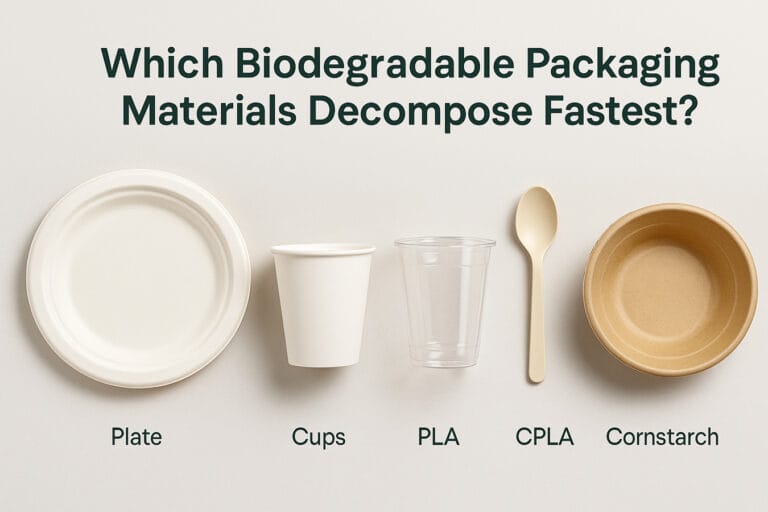
Biodeterioration: Initiated by environmental elements like ultraviolet radiation, moisture, and physical abrasion, breaking down material integrity. Biofragmentation: Microorganisms secrete enzymes, fragmenting complex materials into smaller, simpler molecules — biodegradable materials supplier. Assimilation: Microbes uptake these fragmented molecules for energy and growth — biodegradable materials supplier. Mineralization: Final transformation into fundamental natural elements like carbon dioxide and water.