FAQ of Bioleader's Eco-friendly Disposable Tableware
Why should businesses switch to bio plastic cutlery?
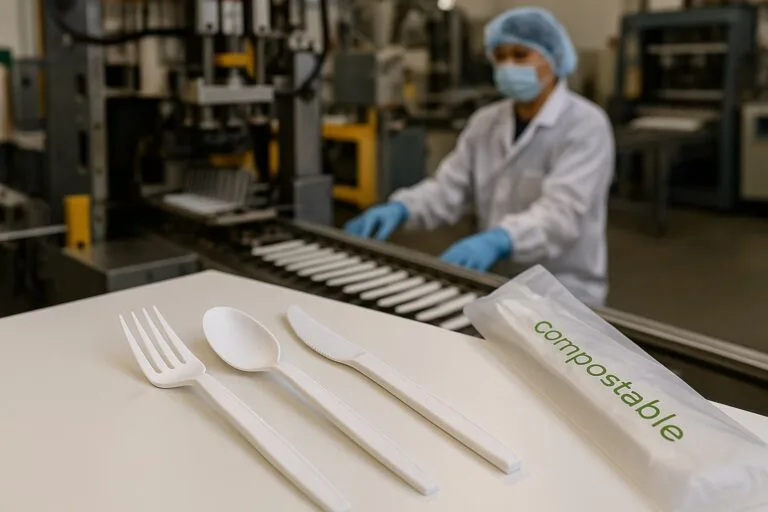
Switching to bio plastic cutlery helps reduce plastic waste, supports sustainability initiatives, meets consumer demand for eco-friendly products, and enhances brand reputation — biodegradable bags wholesale.
Are compostable cutlery items safe for hot and cold foods?
Yes, most compostable cutlery can safely handle both hot and cold foods. CPLA cutlery, in particular, is engineered for higher heat resistance, making it suitable for soups and hot meals.
How long does it take for a PLA spoon to decompose?
Under industrial composting conditions, PLA spoons typically decompose within 90 to 180 days, depending on the environment and local composting facilities.
Factors Influencing Biodegradability
Material Composition: Natural polymers degrade faster than synthetic ones. Environmental Conditions: Temperature, moisture, oxygen levels, and microbial activity play pivotal roles , biodegradable bags wholesale. Industrial Compost vs Home Compost.png Types of Biodegradable Materials
Common Non-Biodegradable Materials
Plastics: Petroleum-based plastics persist for centuries, fragmenting into microplastics — biodegradable bags wholesale. Metals: Metals like aluminum and steel corrode slowly but do not biodegrade. Glass: Chemically inert, glass remains intact for thousands of years without degradation. Synthetic Fibers: Polyester, nylon, and acrylic remain indefinitely in ecosystems.