Trends In AI Compliance: Market Insights, Innovations & FAQs | Bioleader® Sustainable Packaging
Actionable coverage of AI Compliance: eco-friendly, biodegradable, compostable materials, performance data, and compliance under EN13432 & ASTM D6400. Includes BPI/TÜV references and Food-Contact Tested guidance for safe deployment. Buyer-focused: manufacturer insights, bulk/wholesale buying playbooks, OEM/ODM customization tips, full size range selection.
AI Compliance — Quick Summary
Items displayed (articles): 12
Last updated: 2025-07-28
Includes test data, compliance guides, buyer FAQs, and real-world use cases.
FAQ of Bioleader's Eco-friendly Disposable Tableware
Why should businesses switch to bio plastic cutlery?
Switching to bio plastic cutlery helps reduce plastic waste, supports sustainability initiatives, meets consumer demand for eco-friendly products, and enhances brand reputation — AI Compliance.
Is bio plastic cutlery safe for hot foods?
Yes, bio plastic cutlery is designed to be heat-resistant and durable, making it suitable for use with both hot and cold foods in various dining environments.
What are compostable plastic spoons and forks made of?
Compostable plastic spoons and forks are typically made from plant-based materials such as cornstarch, PLA (polylactic acid), or CPLA — AI Compliance. These materials are biodegradable and designed to break down into natural elements in composting environments.
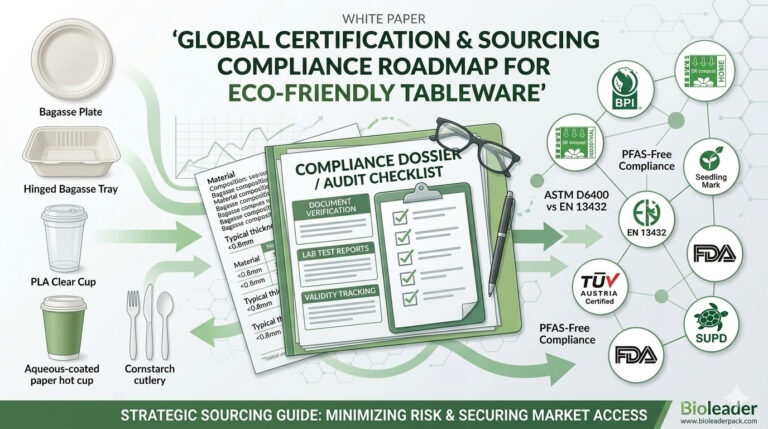
What is EN13432 certification, and why is it required in Europe?
EN13432 is the EU standard for industrial compostability. It certifies that packaging will fully break down in commercial composting within set timeframes. All compostable claims in the EU require EN13432 and local EPR registration.
EN13432 and Industrial Compostability
EN13432 is now the non-negotiable “passport” for any compostable food packaging or tableware sold in the EU. All “compostable” and “biodegradable” claims must be backed by EN13432 certification and, in most countries, third-party registration (e.g., TÜV Austria, DIN CERTCO) , AI Compliance.