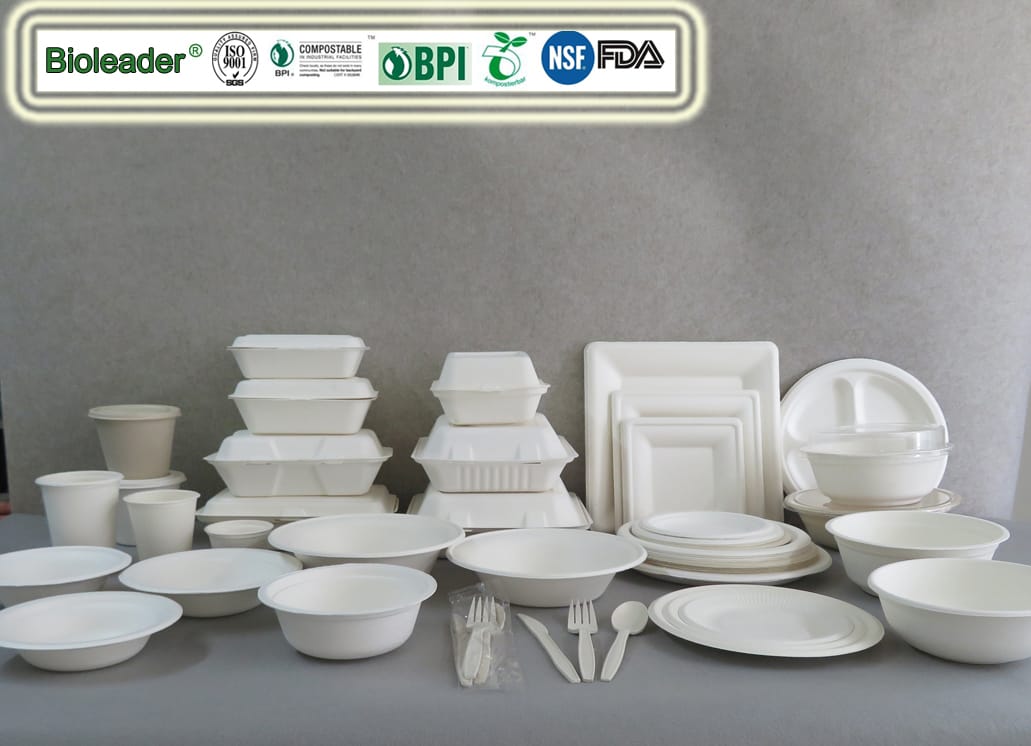
Introduction: The Urgent Need for Action in Russia’s Environmental Shift
Russia’s environmental shift isn’t just about ‘going green’—it’s about legal survival. With the 2027 EPR milestone looming, where 100% of packaging must be recycled or heavily taxed, procurement managers in Moscow and St. Petersburg are no longer asking if they should switch materials but which one will protect their margins. The timeline for adapting to Russia’s stricter packaging regulations is short, and failure to comply could result in significant financial penalties.
For foodservice businesses, the challenge is even greater. The Russian food delivery sector is growing at an unprecedented pace, driven by Yandex Food, Mealguru, and other delivery platforms. But with rising consumer demand for eco-friendly options, foodservice packaging must meet not only thermal stability and strength but also the demand for recyclability. As Russia enforces Extended Producer Responsibility (EPR) laws, packaging materials like Cornstarch, Bagasse, and Kraft Paper are becoming essential choices for food delivery operations.
In this guide, we’ll break down why Cornstarch is dominating Russia’s delivery packaging and how it stacks up against Bagasse and Kraft Paper. Performance, cost, and compliance are key drivers for procurement decisions, and we’ll explore them all.
Physical Performance Comparison: Beyond Heat Resistance—Why Material Integrity Matters
When it comes to packaging for Russia’s extreme climates and diverse foodservice needs, procurement decisions cannot rely solely on cost. It’s essential to understand how each material performs under real-world conditions, particularly in the context of heat resistance, compression strength, and oil and water resistance.
Cost Comparison
Bagasse: Slightly more expensive than Cornstarch, but a viable choice for higher-end foodservice applications. Bagasse is derived from sugarcane pulp, making it a sustainable and renewable resource. However, its cost is higher due to the intricate production process and its premium positioning in eco-friendly packaging.
Cornstarch: By far the most cost-effective option, Cornstarch-based packaging materials offer the best value for large-scale applications such as cornstarch takeout containers and cornstarch cutlery. It is a blend of biodegradable materials and polypropylene (PP), ensuring both biological content and physical support.
Kraft Paper: Typically the most expensive option in high-end applications, Kraft Paper offers a unique aesthetic and sustainable appeal but is not as robust in comparison to the other materials.
Heat Resistance
Cornstarch: Heat resistance is one of its standout features. Cornstarch bioplastic containers can withstand temperatures up to 100°C, which makes them ideal for hot meals and high-temperature delivery. This characteristic is particularly important in Russia’s hot soup and meat-based dishes.
Bagasse: Tolerates heat up to 85°C, which is suitable for most conventional foodservice needs but may not hold up as well under higher temperatures or in long-duration deliveries.
Kraft Paper: The heat tolerance of Kraft Paper can vary depending on its coating. While PLA-coated Kraft Paper can withstand temperatures up to 80°C-90°C, uncoated paper is vulnerable to thermal deformation under high heat.
Oil & Water Resistance
Cornstarch: Known for its excellent fat resistance, Cornstarch tableware maintains its structure when in contact with greasy or oily foods, making it ideal for Russia’s oil-rich dishes like borscht and other stews.
Bagasse: Exhibits good water resistance but struggles with oily substances unless treated with a protective coating. It’s effective in holding soups or sauces for short periods but may break down with prolonged contact with greasy foods.
Kraft Paper: While Kraft Paper offers decent water resistance, its performance with oils is generally weaker than Cornstarch. It can soften when exposed to prolonged oil exposure, which is why it’s often combined with PLA or PE coatings for better performance.
Compression Resistance and Deformation
Cornstarch: A highly resistant material in terms of compression, it can endure pressure and high stacking, which is essential in Russia’s food delivery system. It prevents deformation even under the weight of multiple stacked containers.
Bagasse: While somewhat durable, Bagasse tends to break down under heavy compression when exposed to moisture or high temperatures.
Kraft Paper: The compression resistance of Kraft Paper is relatively low unless reinforced with external coatings. It is suitable for short-distance retail or café use but may not withstand the pressure stacking in food delivery as well as Cornstarch.

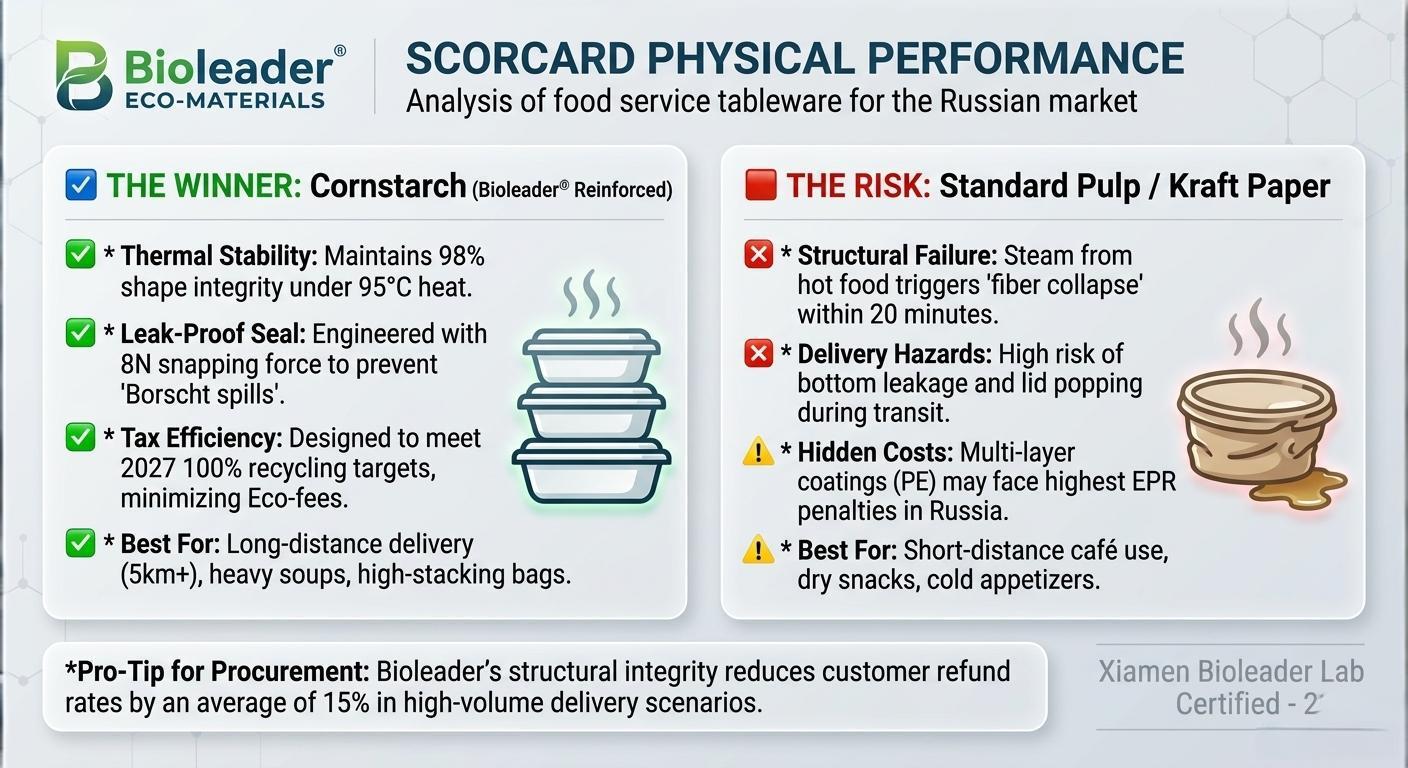
📊 2026 Russian Market: Material Performance Scorecard
Tested for 45-minute Delivery Simulation at 95°C
| Feature | Cornstarch (Bioleader® Reinforced) | Standard Pulp / Kraft Paper |
| Heat Stability | ✅ 95°C No Deformation | ❌ Steam Softening & Sagging |
| Structural Integrity | ✅ 8N Locking Strength (Secure) | ❌ Leakage Risk (Structural Failure) |
| Oil Resistance | ✅ Excellent (Perfect for Borscht) | ⚠️ Moderate (Softens with fat) |
| Russian EPR Status | ✅ EPR Compliant (Lower Fees) | ⚠️ High Fees (If multi-layer/PE) |
| Extreme Cold (-20°C) | ✅ Anti-Cracking Formula | ✅ Naturally Insulating |
Pro-Tip for Procurement: Bioleader’s structural integrity reduces customer refund rates by an average of 15% in high-volume delivery scenarios.
The Real Delivery Pain Points:
In Russia, a delivery courier might carry up to 10 orders in a single thermal backpack. Under the weight and the 95°C steam of a Borscht soup, traditional pulp containers often soften and collapse. This is where Cornstarch changes the game.
It’s about reliability and material integrity. Cornstarch containers don’t collapse under the heat or pressure—ensuring that customers receive their meals intact. In contrast, many Bagasse and Kraft Paper containers, despite being eco-friendly, fail to handle the thermal stress required for high-performance food delivery in Russia’s harsh winter and steamy delivery environments.
Why Cornstarch is the Leading Choice for Delivery Packaging in Russia
The Russian food delivery system is challenging. In Moscow and Saint Petersburg, where food delivery is the backbone of daily dining, packaging must handle stacking, thermal heat, and pressure. Cornstarch-based packaging holds up in high-temperature environments and is perfectly suited for delivering hot soups and oil-heavy dishes like Borscht.
Bioleader’s Lab Testing: The 95°C Gold Standard for Russian Delivery Packaging

Case Study: Borscht Delivery Simulation
Test Material: Bioleader reinforced Cornstarch containers
Test Conditions: 95°C mixture of plant-based oils and water, ambient temperature 5°C, delivery time 45 minutes
Test Results:
Heat Deformation Rate: < 2%, no visible sidewall deformation.
Leak Resistance: No leakage from the bottom, and no softening of the outer walls due to condensation.
Sealing Strength: Opening force maintained between 5-8N, ensuring lids don’t pop open during delivery.
This performance test not only proves the strength and resilience of Cornstarch but also showcases its real-world application in a challenging delivery environment.

The Hybrid Model: Why “Cornstarch + Resin” is the Russian Market’s Secret to Survival
Pro-Tip: Don’t Be Fooled by 100% Cornstarch Claims
Pure Cornstarch is brittle. The key to the Russian market is the hybrid balance of bio-content and food-grade resins. This combination ensures the box doesn’t crack in -20°C Siberian winters while still maintaining compostable certification. Many suppliers overlook the fact that hybrid models provide superior performance at lower environmental tax rates.
This is critical for businesses that are looking to reduce their EPR tax footprint while still ensuring their packaging withstands the extreme temperatures and high-fat foods that characterize the Russian foodservice industry.
EPR Compliance: Procurement Strategies to Reduce Tax Burden
With EPR becoming law, Russia will soon require 100% recyclability of all packaging materials by 2027. Cornstarch-based packaging materials, while compostable, are particularly well-positioned to offer lower EPR fees compared to other materials, like multi-layer plastics.
Material Identification Codes: Make sure the packaging clearly identifies its material content. This will make it easier for Russian sorting centers to classify and process the material, reducing EPR compliance costs.
Hybrid Materials Compliance: Cornstarch packaging, which includes 40%-60% bio-content, is not only effective for foodservice needs but also qualifies for EPR compliance, making it a cost-effective choice as Russian waste regulations tighten.
Conclusion: Why Cornstarch is the Future of Russian Delivery Packaging
Russia’s transition to sustainable packaging is non-negotiable. With EPR regulations ramping up and packaging compliance becoming increasingly strict, the focus for foodservice companies will be on the performance of their materials. Cornstarch-based tableware offers superior performance under heat, pressure, and oil exposure, making it the material of choice for delivery packaging in Russia.
At Bioleader, we are dedicated to providing sustainable and compliant packaging solutions tailored to the Russian market. Our Cornstarch products are designed to reduce EPR tax liabilities while withstanding extreme temperatures and pressure during food delivery.
FAQ
1. Why is Cornstarch the preferred material for food delivery packaging in Russia?
Answer: Cornstarch-based packaging offers exceptional heat resistance (up to 100°C), making it ideal for Russia’s hot soups and meat-based dishes like Borscht. It maintains its integrity under pressure, even in long-duration deliveries, unlike Bagasse or Kraft Paper, which may lose their structure when exposed to moisture and heat.
2. What makes Cornstarch-based containers superior to Kraft Paper and Bagasse in Russia’s cold temperatures?
Answer: Cornstarch containers are designed to withstand extreme temperatures, even in Russia’s harsh winters. Unlike Kraft Paper, which can lose its structural integrity when exposed to moisture or high pressure, Cornstarch maintains its rigidity and fat resistance, making it perfect for hot oil-based foods in cold environments.
3. What are the advantages of hybrid Cornstarch products in Russia’s market?
Answer: Hybrid Cornstarch products that combine bio-content with food-grade resins offer superior compression resistance, especially during long-distance deliveries in Russia. These products are not only cost-effective but also help businesses reduce EPR tax fees by meeting the 100% recyclability requirement set by Russia’s EPR laws.
4. How can businesses prepare for Russia’s 2027 EPR regulations?
Answer: Businesses can prepare by choosing packaging materials that are biodegradable and easily recyclable, like Cornstarch-based containers. Additionally, ensuring that packaging clearly identifies material content will reduce EPR compliance costs in Russia. Utilizing hybrid materials and providing certifications like EN13432 will also help avoid higher environmental taxes.
5. What is the role of EPR (Extended Producer Responsibility) in Russia’s packaging regulations?
Answer: EPR is a policy that requires packaging manufacturers and importers to manage the waste their products generate. By 2027, all packaging materials entering Russia must be 100% recyclable or face hefty environmental taxes. Materials like Cornstarch are an excellent choice for EPR compliance due to their low environmental footprint and recyclability.
Copyright Notice:
© 2026 Bioleader®. If you wish to reproduce or reference this content, you must provide the original link and credit the source. Any unauthorized copying will be considered an infringement.