Introduction
Choosing the right packaging size is a vital part of foodservice, delivery, and retail success—especially as the market moves toward sustainability and global trade. Among all the units in use, “pint” and “quart” are the most frequently confused, leading to costly mistakes in packaging, labeling, and even customer satisfaction. If your business exports, sources, or designs biodegradable packaging for food and beverage, understanding these volume units is essential.
This article will clarify pint and quart definitions, show conversion tables, break down their pros and cons, highlight typical use cases, and provide actionable tips for international brands and eco-friendly suppliers.
1. What Is a Pint? What Is a Quart?
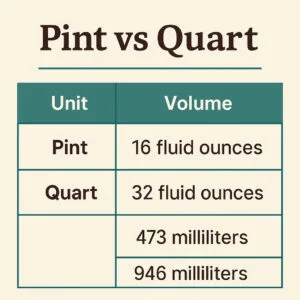
Pint and quart are customary volume units widely used in the United States, UK, Canada, and other English-speaking markets. Their definitions differ between the US Customary and Imperial (UK/CA/AU) systems:
| Unit | US Customary (Liquid) | Imperial (UK/CA/AU) | Metric Equivalent |
|---|---|---|---|
| 1 Pint | 16 fl oz (473 ml) | 20 fl oz (568 ml) | 473–568 ml |
| 1 Quart | 32 fl oz (946 ml) | 40 fl oz (1,136 ml) | 946–1,136 ml |
| 1 Gallon | 128 fl oz (3.785 L) | 160 fl oz (4.546 L) | 3.785–4.546 L |

Key Facts:
Both systems: 1 Quart = 2 Pints
US units are about 20% smaller than their Imperial counterparts
Metric labeling is required in the EU and increasingly expected for export globally
2. Conversion Chart: Pint and Quart in Global Packaging
| Size | US Pint | Imperial Pint | US Quart | Imperial Quart |
|---|---|---|---|---|
| Ounces | 16 oz | 20 oz | 32 oz | 40 oz |
| Milliliters | 473 ml | 568 ml | 946 ml | 1,136 ml |
| Liters | 0.473 L | 0.568 L | 0.946 L | 1.136 L |
Packaging Tip:
For international customers or markets, always print both local units and metric volumes (e.g., “473 ml / 1 US Pint”) on your packaging.
3. Practical Applications: When to Use a Pint vs a Quart?
Pint (473ml / 568ml)
Best for:
Single-serve desserts (ice cream, pudding, fruit)
Individual takeaway soups and stews
Salad portions for one
Small drink cups (coffee, juice)
Why brands love it:
Minimizes food waste for individuals
Ideal for convenience and impulse sales
Easier inventory management for quick-service brands
Quart (946ml / 1,136ml)
Best for:
Family-sized meals, shared salads, or large drinks
Meal kits for groups
Bulk side dishes for catering
Packaging sauces, stocks, or soups for home cooks
Why brands choose it:
Adds value for families and sharing
Supports meal-prep and large-order segments
Suitable for delivery and foodservice bulk needs
Key Compliance Notes:
In the US: “Pint” is 16oz by default; “Quart” is 32oz.
In the UK and Canada: “Pint” is 20oz; “Quart” is 40oz, and laws may require accuracy (e.g., bar draft beer must be 568ml per pint).
For export: Always double-check local legal standards, and include metric for clarity.
4. Pros and Cons: Pint vs Quart in Food Packaging
| Pint (473ml/568ml) | Quart (946ml/1,136ml) | |
|---|---|---|
| Pros | Portion control; convenience; easy for single use; reduces leftovers | Economical for families; fewer containers; suits meal sharing; cost-effective for bulk |
| Cons | Not suitable for group meals; higher packaging per serving | Can lead to food waste if not finished; less portable; may be too large for single use |
5. Sustainable Packaging: Why Size Matters for Eco-Friendliness
Material Efficiency:
Choosing the right size reduces raw material use (less over-packaging)
Compostable options (bagasse, cornstarch, kraft paper) are available in both pint and quart sizes
Environmental Impact:
Smaller containers: lower total volume of packaging waste
Larger containers: fewer items transported, reduced shipping emissions per meal
Consumer Perception:
Clear, honest labeling helps consumers choose responsibly and trust your brand
“Eco-friendly,” “compostable,” and volume/unit icons can boost shelf appeal and confidence
6. Common Questions (FAQ)
1. Are US and UK pints/quarts the same?
No. US pints/quarts are about 20% smaller than UK/Imperial versions. Always check your market’s standard.
2. Can I use “pint” or “quart” labels for both liquids and solids?
Generally yes, but local regulations may differ for dry goods. Always specify “liquid” or “dry” if required.
3. What’s the best way to label food containers for export?
Use dual labeling (e.g., “473 ml / 1 US Pint”) and make sure local regulatory language is visible and accurate.
4. Are compostable pint/quart containers widely available?
Yes. Bioleader® and top global suppliers offer certified compostable paper, bagasse, and cornstarch containers in all major sizes.
5. How does container size affect food safety and freshness?
Right-sizing helps keep foods fresher longer, prevents spoilage, and ensures consistent quality during delivery.
7. Industry Insights: Trends in Sustainable Food Packaging
Global Demand:
With rising demand for healthy, ready-to-eat foods and food delivery, pint and quart containers are now essential in almost every major food market.
Sustainability Shift:
Eco-conscious brands are phasing out plastic, opting for bagasse, cornstarch, and recycled paper. Many now offer both pint and quart options to match diverse customer lifestyles.
Case Example:
A US fast-casual chain switched from generic plastic pints to custom-labeled, compostable bagasse pints—improving customer perception and winning local sustainability awards.
8. Visual Summary: Pint vs Quart At a Glance
Infographic: Side-by-side comparison of US and Imperial pints/quarts (with fluid oz, ml, L)
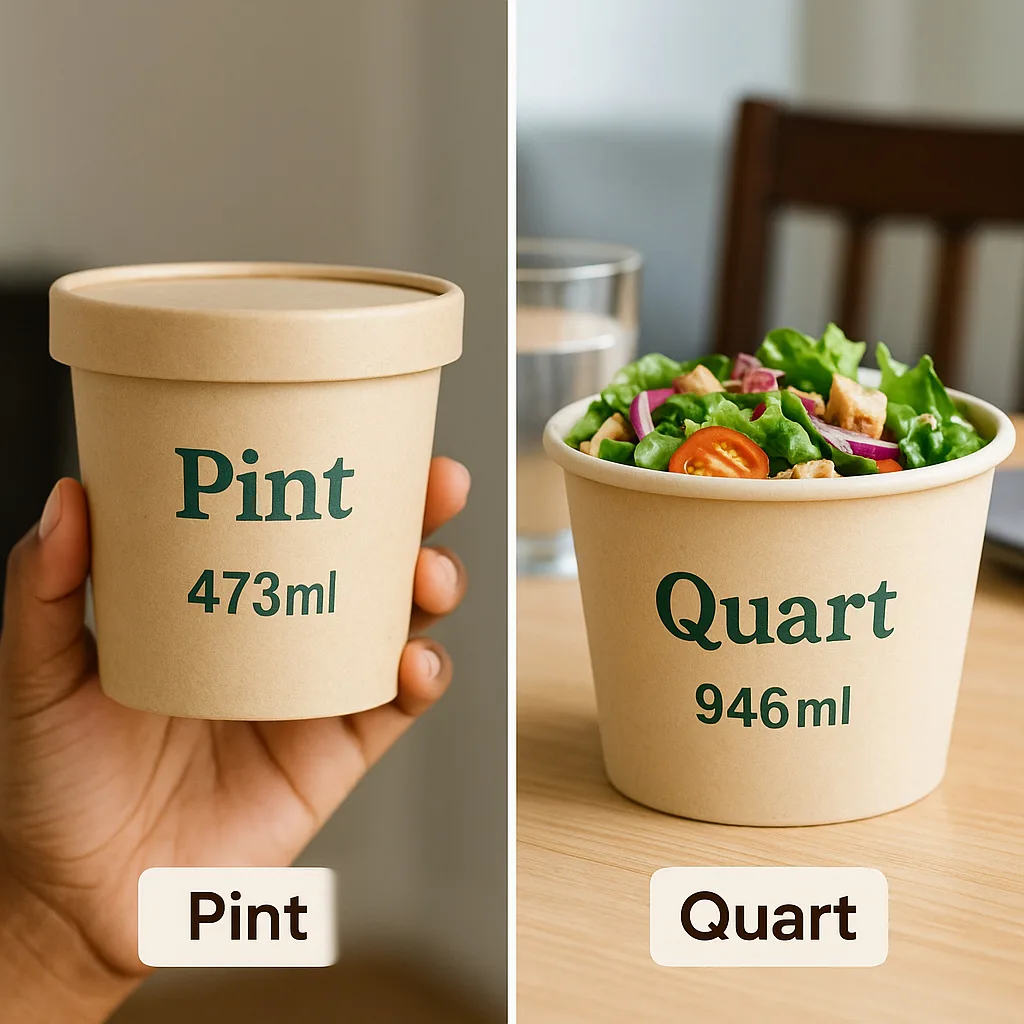
Photo: Single-serve pint and family-size quart container in realistic serving scenarios
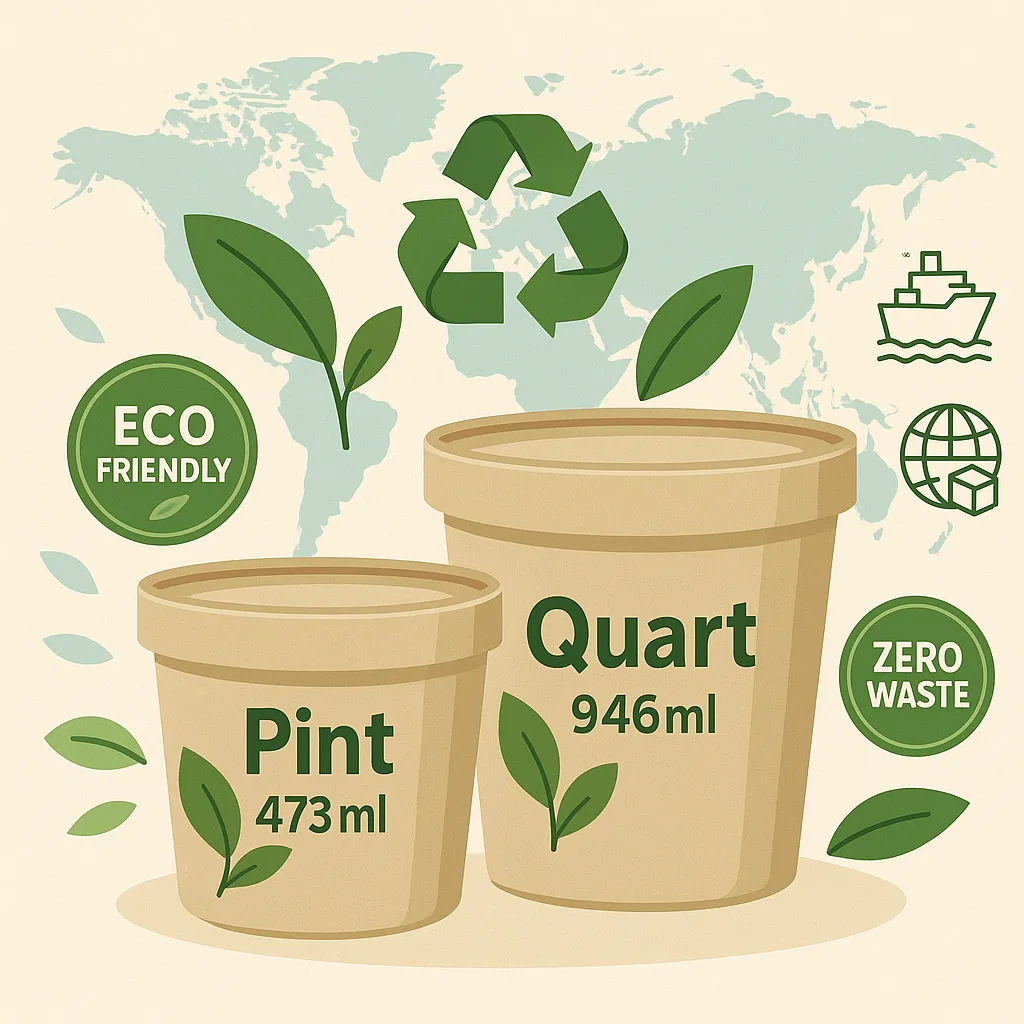
Sustainability Visual: Eco-friendly containers with green “Compostable” and “Zero Waste” badges
(See generated images above for inspiration.)
Conclusion & Action Steps
Choosing the right packaging size is a strategic business decision.
For single-serve convenience, pint containers are unbeatable.
For families, meal kits, or catering, quart containers maximize value.
Dual labeling and compliance are key for exports and international sales.
Sustainable, compostable materials enhance brand reputation and meet regulatory trends.
Pro Tip:
Work with an experienced supplier like Bioleader® to customize eco-friendly pint and quart containers for your market, and always stay updated on local and international standards.
{
“@context”: “https://schema.org”,
“@type”: “FAQPage”,
“mainEntity”: [
{
“@type”: “Question”,
“name”: “Are US and UK pints/quarts the same?”,
“acceptedAnswer”: {
“@type”: “Answer”,
“text”: “No. US pints/quarts are about 20% smaller than UK/Imperial versions. Always check your market’s standard.”
}
},
{
“@type”: “Question”,
“name”: “Can I use “pint” or “quart” labels for both liquids and solids?”,
“acceptedAnswer”: {
“@type”: “Answer”,
“text”: “Generally yes, but local regulations may differ for dry goods. Always specify “liquid” or “dry” if required.”
}
},
{
“@type”: “Question”,
“name”: “What’s the best way to label food containers for export?”,
“acceptedAnswer”: {
“@type”: “Answer”,
“text”: “Use dual labeling (e.g., “473 ml / 1 US Pint”) and make sure local regulatory language is visible and accurate.”
}
},
{
“@type”: “Question”,
“name”: “Are compostable pint/quart containers widely available?”,
“acceptedAnswer”: {
“@type”: “Answer”,
“text”: “Yes. Bioleader® and top global suppliers offer certified compostable paper, bagasse, and cornstarch containers in all major sizes.”
}
},
{
“@type”: “Question”,
“name”: “How does container size affect food safety and freshness?”,
“acceptedAnswer”: {
“@type”: “Answer”,
“text”: “Right-sizing helps keep foods fresher longer, prevents spoilage, and ensures consistent quality during delivery.”
}
}
]
}