1. Risposta rapida: come devono essere dichiarati gli imballaggi per il foodservice?
Ai fini del PPWR dell'UE PPWR ai sensi del Regolamento (UE) 2025/40, i prodotti monouso per il foodservice non devono essere dichiarati semplicemente trattando il prodotto, il sacchetto interno e il cartone ondulato come un unico materiale di imballaggio. Ogni articolo deve essere prima valutato in base a ciò che è, alla funzione che svolge e a come l'unità commerciale viene effettivamente fornita all'acquirente o all'utente finale. Gli acquirenti che necessitano del quadro più ampio di produttore, importatore e documentazione possono anche consultare la sezione di Bioleader® Guida UE PPWR 2026 per gli imballaggi per il foodservice.
Una tipica spedizione all'ingrosso per il foodservice può contenere 50 o 100 bicchieri di carta, ciotole di carta, piatti in bagassa di canna da zucchero, contenitori alimentari o posate all'interno di un sacchetto interno trasparente PE, PP o compostabile, con più sacchetti confezionati in un unico cartone ondulato. In molti ordini B2B per il foodservice, il ristorante, il bar, l'operatore di asporto o il distributore acquista l'intero cartone piuttosto che le singole confezioni interne.
In questo comune modello di fornitura all'ingrosso, il sacchetto interno trasparente viene normalmente utilizzato per igiene, protezione dall'umidità, protezione dalla polvere, separazione del prodotto e movimentazione. Può non avere codice a barre, grafica al dettaglio o etichetta rivolta al consumatore e può non essere mai venduto separatamente. Tuttavia, l'assenza di stampa non significa che il sacchetto non rientri nel campo di applicazione del PPWR. Un articolo utilizzato da un operatore economico per contenere, proteggere, maneggiare, consegnare o presentare prodotti può comunque svolgere una funzione di imballaggio.
- Non contare automaticamente l'articolo per il foodservice stesso come imballaggio. Bicchieri, ciotole, piatti, contenitori e posate monouso devono essere valutati in base all'uso previsto. Ad esempio, un bicchiere progettato e destinato a essere riempito con una bevanda nel punto vendita può qualificarsi come imballaggio per il servizio, mentre lo stesso tipo di bicchiere vuoto venduto come prodotto domestico autonomo può essere trattato diversamente.
- Non classificare automaticamente un sacchetto interno trasparente come imballaggio per la vendita. Se il sacchetto esiste principalmente come strato igienico e protettivo all'interno di un'unità B2B a cartone pieno e non viene normalmente venduto separatamente, la sua funzione differisce da quella di una confezione al dettaglio rivolta al consumatore.
- Non classificare automaticamente ogni cartone ondulato come imballaggio per il trasporto. Se l'intero cartone è concepito e fornito come normale unità commerciale acquistata da un ristorante o altro utente finale, la sua funzione PPWR deve essere valutata di conseguenza. Un cartone master utilizzato solo per spostare più unità di vendita al dettaglio presenta un caso diverso.
- Registrare i materiali di imballaggio separatamente. Il film PE o PP, i sacchetti in polimero compostabile, le fascette di carta, le etichette, il nastro e il cartone ondulato non devono essere fusi in un'unica descrizione generica come “imballaggi alimentari sostenibili”.”
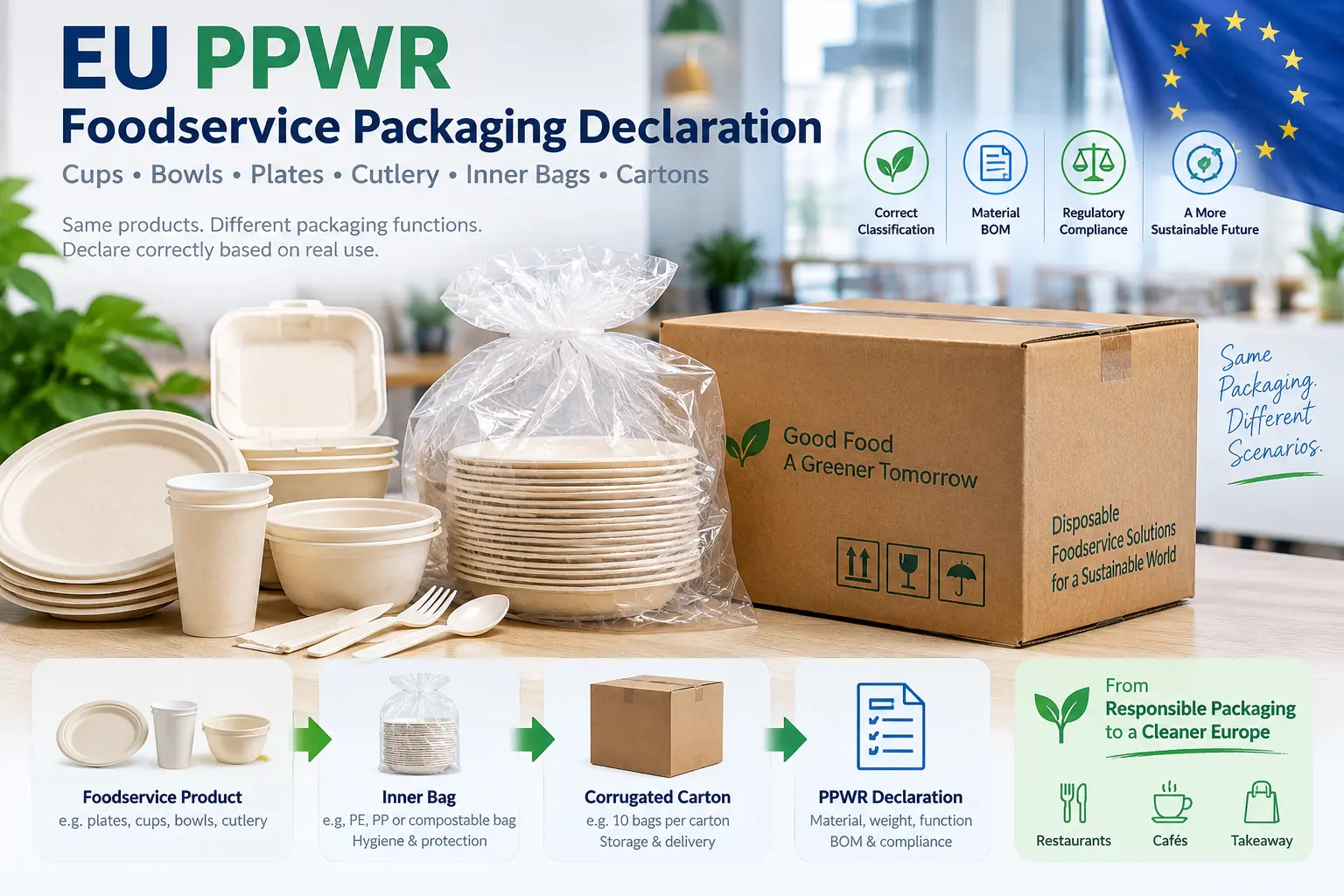
Punto chiave: La classificazione PPWR dipende dalla funzione effettiva e dall'uso previsto di ciascun componente, non semplicemente dal fatto che venga chiamato sacchetto interno, confezione al dettaglio o cartone da spedizione. Lo stesso formato di imballaggio fisico può richiedere una valutazione diversa quando cambia il modello di vendita commerciale.
2. Perché lo stesso formato di imballaggio può avere funzioni PPWR diverse
Una delle questioni PPWR più importanti per gli acquirenti di imballaggi per il foodservice è che formato di imballaggio e funzione di imballaggio non sono la stessa cosa. Due fornitori possono entrambi descrivere una spedizione come “50 pcs per sacchetto, 10 sacchetti per cartone”, ma quei sacchetti e cartoni possono svolgere ruoli diversi a seconda di come i prodotti vengono commercializzati, venduti e utilizzati a valle.
Il regolamento (UE) 2025/40 distingue funzioni di imballaggio come imballaggio per la vendita, imballaggio raggruppato e imballaggio per il trasporto. L'imballaggio per la vendita è concepito per costituire un'unità di vendita di prodotti e imballaggio per l'utente finale. L'imballaggio raggruppato riunisce un certo numero di unità di vendita per la vendita, il rifornimento, la gestione delle scorte o la distribuzione. L'imballaggio per il trasporto facilita la movimentazione e il trasporto di una o più unità di vendita o unità raggruppate e aiuta a prevenire danni durante il trasporto.
Questo approccio funzionale è particolarmente importante per le forniture monouso per il foodservice perché i prodotti Bioleader® si muovono comunemente attraverso due diversi modelli commerciali. Il La guida PPWR della Commissione europea del 2026 sottolinea inoltre che lo stato di un articolo deve essere valutato rispetto alla definizione di imballaggio dell'articolo 3 e alla sua funzione effettiva, piuttosto che sulla base di un semplice esempio illustrativo.
Scenario A: fornitura all'ingrosso in cartoni pieni agli operatori del foodservice
Questo è il modello più comune per gli ordini B2B Bioleader®. Un ristorante, un bar, un'azienda di catering, un operatore di asporto o un distributore per il foodservice può acquistare cartoni completi contenenti più sacchetti interni trasparenti.
| Componente di esempio | Configurazione tipica | Funzione pratica principale | Punto di valutazione PPWR |
|---|---|---|---|
| Piatti in bagassa di canna da zucchero | 50 pcs per sacchetto interno | Prodotto per il foodservice | Determinare se l'articolo stesso svolge una funzione di imballaggio o di imballaggio per il servizio nell'uso a valle previsto. |
| Sacchetto interno trasparente PE | 50 piatti per sacchetto | Igiene, protezione dall'umidità, protezione dalla polvere e separazione | È comunque un imballaggio quando svolge una funzione di contenimento o protezione, ma non deve essere automaticamente trattato come una confezione al dettaglio solo perché contiene una quantità fissa. |
| Cartone ondulato | 10 sacchetti / 500 piatti | Fornitura commerciale, movimentazione, stoccaggio e trasporto | Valutare se il cartone è concepito come unità di vendita fornita all'utente finale o principalmente come imballaggio utilizzato per raggruppare o trasportare altre unità di vendita. |
In questa situazione, un sacchetto interno trasparente senza logo o codice a barre potrebbe non raggiungere mai il mercato come confezione venduta autonomamente. Il suo scopo principale può essere semplicemente quello di mantenere i prodotti puliti, asciutti e protetti fino al loro utilizzo da parte dell'operatore del foodservice. L'intero cartone può essere la quantità normalmente ordinata e ricevuta dal cliente.
Scenario B: confezioni al dettaglio individuali all'interno di un cartone master
È richiesta una valutazione diversa quando la stessa quantità 50-piece viene preparata come unità al dettaglio individuale. Ad esempio, 50 piatti in bagassa di canna da zucchero possono essere confezionati in un sacchetto stampato o etichettato con nome del marchio, codice a barre, descrizione del prodotto e informazioni per il consumatore, con 10 di queste confezioni inserite in un cartone master.
| Componente di esempio | Configurazione tipica | Funzione pratica principale | Punto di valutazione PPWR |
|---|---|---|---|
| Confezione interna al dettaglio | 50 pcs per sacchetto stampato o etichettato | Vendita individuale, protezione e presentazione | Se il prodotto e il sacchetto sono concepiti come unità fornita all'utente finale, l'imballaggio ha una chiara funzione di imballaggio per la vendita. |
| Cartone da spedizione | 10 confezioni retail per cartone | Raggruppamento, stoccaggio, distribuzione e trasporto | Il cartone deve essere valutato in base al fatto che raggruppi unità di vendita, faciliti il trasporto o svolga entrambe le funzioni commerciali e logistiche all'interno della catena di fornitura. |
Importante: La stampa, il marchio o un codice a barre possono fornire prova che una confezione interna è destinata alla vendita al dettaglio individuale, ma queste caratteristiche non costituiscono da sole il test legale. Un sacchetto trasparente 50-piece semplice può comunque essere l'unità di vendita se è così che viene concepito e fornito all'utente finale. Al contrario, un sacchetto stampato utilizzato solo come confezione di distribuzione interna non deve essere classificato esclusivamente in base al suo aspetto.
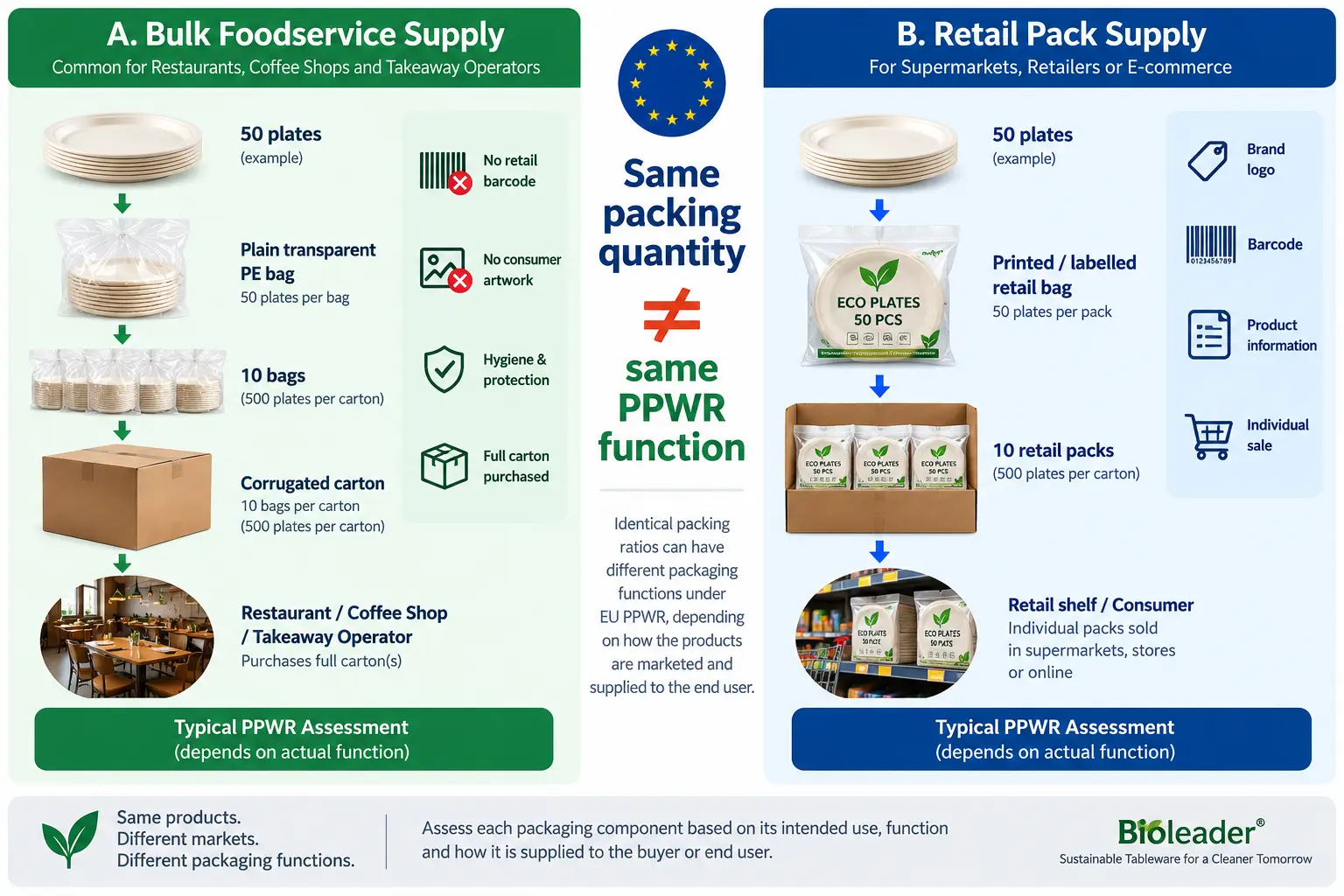
Approfondimento del produttore: iniziare dal modello di vendita, non dal nome dell'imballaggio
Per le esportazioni di foodservice sfuso Bioleader®, i sacchetti interni semplici sono comunemente usati come imballaggio protettivo e igienico, mentre il cartone ondulato completo è spesso la normale quantità di acquisto B2B per ristoranti, coffee shop, operatori di asporto e distributori. Sono disponibili anche confezioni pronte per il retail per progetti che richiedono vendite individuali di sacchetti o scatole. Gli acquirenti dovrebbero quindi comunicare al fornitore come ogni confezione sarà venduta a valle prima di finalizzare la classificazione dell'imballaggio PPWR e la dichiarazione dei materiali di imballaggio.
Regola pratica: Non classificare l'imballaggio esclusivamente in base all'aspetto. Identificare prima l'effettiva unità di vendita, poi determinare quali componenti proteggono tale unità, quali raggruppano più unità di vendita e quali sono utilizzati principalmente per la movimentazione e il trasporto.
3. Scenario A: Fornitura in cartoni pieni a ristoranti, coffee shop e operatori di asporto
Per molti prodotti monouso per il foodservice, il modello di fornitura B2B più comune non è una confezione retail esposta singolarmente. Ristoranti, coffee shop, operatori di asporto, aziende di catering e altri utenti del foodservice spesso acquistano cartoni completi contenenti più sacchetti interni semplici.
Una configurazione tipica può essere la seguente:
Esempio tipico di confezionamento sfuso per il foodservice
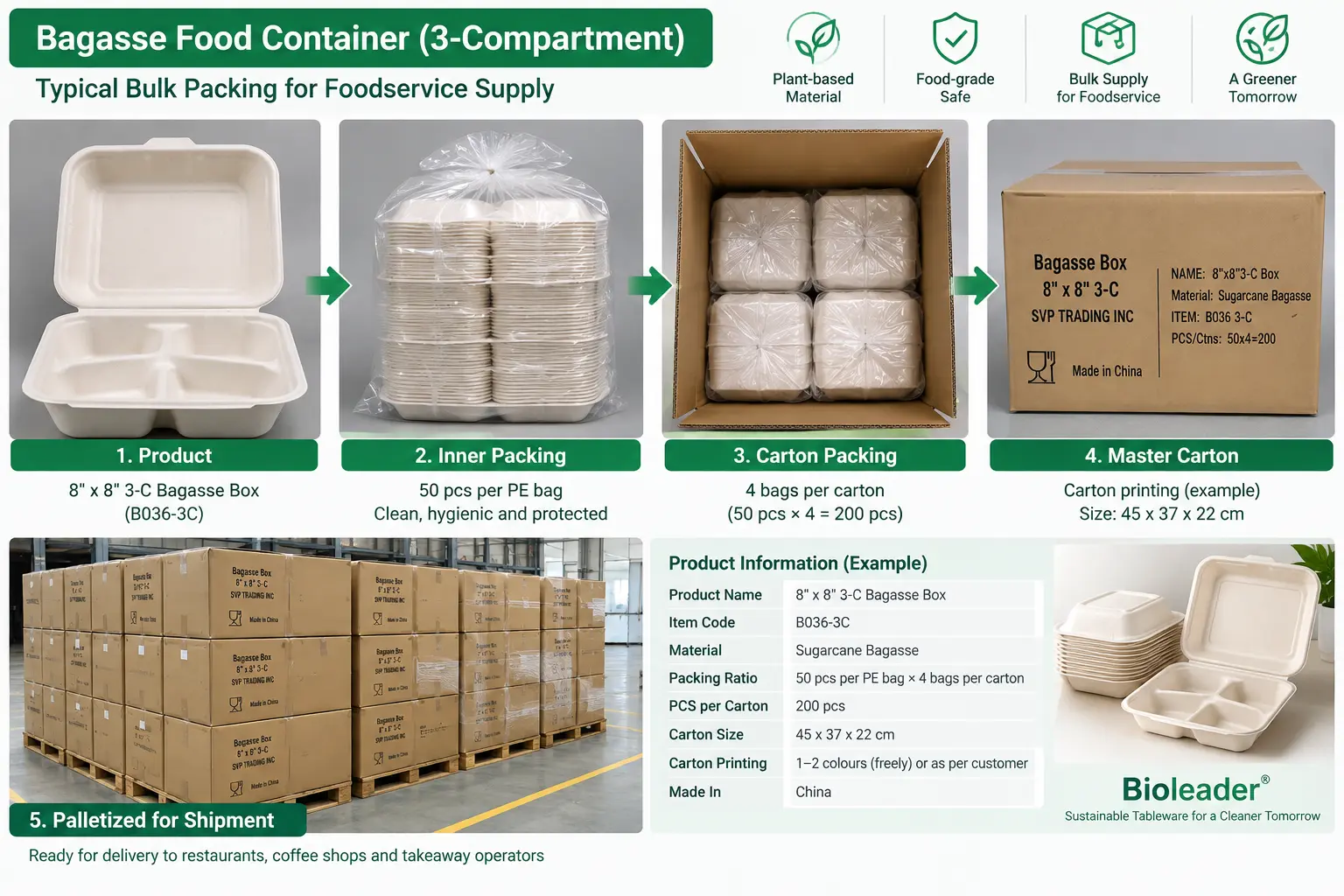
- Prodotto: 8-inch × 8-inch 3-compartment contenitore alimentare in bagassa di canna da zucchero
- Confezione interna: 50 contenitori per sacchetto PE semplice
- Confezione esterna: 4 sacchetti per cartone ondulato
- Quantità totale: 200 contenitori per cartone
- Acquirente tipico: Ristorante, operatore di asporto, azienda di catering o distributore per il foodservice
- Unità di acquisto tipica: Uno o più cartoni completi anziché singoli sacchetti 50-piece
In questo modello, il sacchetto interno ha normalmente una funzione pratica di protezione. Mantiene i prodotti puliti, riduce l'esposizione a polvere e umidità, separa quantità gestibili all'interno del cartone e aiuta a mantenere l'igiene durante lo stoccaggio e la movimentazione. Il sacchetto può essere completamente trasparente e può non riportare grafica rivolta al consumatore, codice a barre o etichetta retail.
Il cartone ondulato svolge un ruolo commerciale e logistico più ampio. Può proteggere i prodotti durante il trasporto di esportazione, rendere le merci più facili da impilare e movimentare e rappresentare anche la normale quantità ordinata dal cliente del foodservice. Questo è il motivo per cui l'intero sistema di imballaggio deve essere valutato in base a come ogni strato è effettivamente destinato a funzionare, piuttosto che assegnare una categoria basata solo sulla sua posizione fisica.
| Strato | Formato sfuso tipico Bioleader® | Funzione principale | Cosa deve valutare l'acquirente |
|---|---|---|---|
| Articolo per il foodservice | Piatto, bicchiere, ciotola, contenitore o posate | Uso nel foodservice | Determinare se l'articolo stesso è un prodotto o svolge una funzione di imballaggio per il servizio nell'uso a valle previsto. |
| Sacchetto interno semplice | 50–100 pcs per PE, PP o altro sacchetto in film | Igiene, protezione, contenimento e separazione delle quantità | Verificare se il sacchetto è solo uno strato di imballaggio interno o se è anche destinato a costituire un'unità di vendita fornita separatamente. |
| Cartone ondulato | 10–20 sacchetti interni per cartone | Protezione, stoccaggio, movimentazione, consegna e fornitura commerciale | Determinare se il cartone costituisce l'unità di vendita normale, raggruppa altre unità di vendita o facilita principalmente la movimentazione e il trasporto. |
Questa distinzione è importante perché un ordine foodservice a cartone pieno è commercialmente diverso da un multipack pronto per la vendita al dettaglio. Se un ristorante ordina normalmente 500 piatti come un cartone completo e i sacchetti interni 50-piece non vengono mai offerti separatamente, le funzioni dell'imballaggio non dovrebbero essere valutate automaticamente allo stesso modo di una configurazione da supermercato in cui ogni confezione 50-piece viene venduta singolarmente.
Approfondimento del produttore: i cartoni sfusi sono comuni nella fornitura foodservice
Per gli ordini di esportazione Bioleader®, la fornitura a cartone pieno è comune in contenitori alimentari in bagassa, piatti in bagassa di canna da zucchero, bicchieri di carta, ciotole di carta e posate monouso. I sacchetti interni semplici sono spesso scelti per igiene e protezione piuttosto che per la presentazione al dettaglio. Confezioni stampate o etichettate pronte per il retail possono anche essere prodotte, ma rappresentano una configurazione commerciale diversa e dovrebbero essere documentate separatamente quando si valutano le funzioni dell'imballaggio PPWR.
Punto chiave: In una spedizione foodservice sfusa, partire dall'unità di acquisto reale. Se il cliente normalmente acquista e utilizza cartoni completi, non dare per scontato che ogni sacchetto interno sia una confezione di vendita al dettaglio indipendente solo perché contiene un numero fisso di prodotti.
4. I sacchetti interni in PE o PP semplici sono imballaggio ai sensi del PPWR?
Sì. Un sacchetto interno in PE o PP semplice può essere comunque imballaggio ai sensi del PPWR dell'UE anche se non presenta stampa, branding, codice a barre o etichetta di vendita al dettaglio. PPWR definisce l'imballaggio in base alle sue funzioni previste, tra cui contenimento, protezione, movimentazione, consegna e presentazione. L'aspetto al dettaglio non è quindi un prerequisito affinché un articolo svolga una funzione di imballaggio.
Questo è direttamente rilevante per i prodotti foodservice monouso. Un sacchetto trasparente in PE contenente 50 piatti in bagassa di canna da zucchero può esistere solo per mantenere puliti i piatti, ridurre l'esposizione all'umidità, proteggerli da contaminazione e abrasione e rendere la quantità più facile da gestire all'interno di un cartone più grande. Queste sono funzioni di imballaggio genuine anche se il sacchetto non è progettato per l'esposizione al dettaglio.
Terminologia importante: In questo articolo, l'espressione “imballaggio interno protettivo” è usata come descrizione pratica della catena di fornitura. Non è una categoria statutaria separata di imballaggio creata dal PPWR. Per la classificazione formale, la funzione effettiva del sacchetto deve ancora essere valutata rispetto alle definizioni applicabili del PPWR, inclusi imballaggio per la vendita, imballaggio raggruppato e imballaggio per il trasporto.
Un sacchetto interno semplice non è automaticamente una confezione di vendita al dettaglio
Anche l'errore opposto è comune. Poiché un sacchetto interno contiene una quantità fissa come 50 o 100 pezzi, gli acquirenti possono presumere che debba essere automaticamente imballaggio per la vendita. Questa conclusione è troppo semplicistica.
Se l'acquirente acquista normalmente cartoni completi, il sacchetto interno non è prezzato o commercializzato separatamente e il sacchetto esiste principalmente per proteggere e separare i prodotti all'interno del cartone, il suo ruolo commerciale è diverso da una confezione al dettaglio commercializzata individualmente.
Confrontare i due esempi seguenti:
| Caratteristica | Sacchetto interno igienico semplice | Confezione interna pronta per il retail |
|---|---|---|
| Quantità | 50 piatti per sacchetto | 50 piatti per sacchetto |
| Materiale | Film in PE | Film in PE |
| Stampa | Di solito nessuna | Marchio e informazioni sul prodotto possono essere stampati |
| Codice a barre | Di solito nessuna | Spesso incluso |
| Normalmente venduto separatamente | No | Sì |
| Scopo pratico principale | Igiene, protezione e separazione | Vendita, presentazione e protezione |
| Approccio PPWR | Valutare il suo ruolo effettivo all'interno del sistema di imballaggio a cartone pieno | Svolge più chiaramente una funzione di imballaggio per la vendita quando è concepito come unità fornita all'utente finale |
E se il sacchetto semplice viene effettivamente venduto separatamente?
La stampa non è il fattore decisivo. Un sacchetto trasparente semplice può comunque costituire un'unità di vendita se il fornitore o il distributore concepisce e fornisce effettivamente quella confezione 50-piece come unità venduta all'utente finale.
Ad esempio, un grossista potrebbe ricevere cartoni master contenenti 20 sacchetti trasparenti da 50 forchette ciascuno e poi vendere quei singoli sacchetti 50-piece direttamente ai ristoranti. Anche senza stampa, la funzione commerciale di quel sacchetto interno può quindi differire da un sacchetto dall'aspetto identico che non viene mai separato da una vendita a cartone pieno.
Regola pratica: “Niente logo” non significa “non imballaggio”, e “50 pcs per sacchetto” non significa automaticamente “imballaggio per la vendita”. Determinare come la confezione è concepita, fornita e utilizzata nella catena commerciale reale.
5. Qual è il ruolo del cartone ondulato nella fornitura foodservice sfusa?
Un cartone ondulato è uno dei componenti di imballaggio più comuni nei prodotti foodservice esportati, ma non dovrebbe essere etichettato automaticamente come imballaggio per il trasporto semplicemente perché è un cartone di esportazione.
Ai sensi del PPWR, l'imballaggio per il trasporto è un imballaggio concepito per facilitare la movimentazione e il trasporto di una o più unità di vendita o di unità raggruppate e per contribuire a prevenire danni durante la movimentazione e il trasporto. L'imballaggio raggruppato, al contrario, raggruppa un certo numero di unità di vendita per la vendita, lo stoccaggio, il riassortimento o la distribuzione. L'imballaggio per la vendita è concepito per costituire l'unità di vendita dei prodotti e degli imballaggi forniti all'utente finale.
La valutazione corretta dipende quindi da cosa c'è all'interno del cartone e da come il cartone stesso viene utilizzato commercialmente.
Caso 1: Il cartone pieno è l'unità commerciale normale
Si consideri un ristorante che ordina un cartone contenente 500 piatti in bagassa di canna da zucchero:
- 50 piatti per sacchetto semplice PE
- 10 sacchetti semplici PE per cartone ondulato
- 500 piatti per cartone
- Il ristorante ordina e riceve cartoni completi
- I sacchetti interni non sono normalmente offerti come unità di vendita separate
In questa situazione, il cartone fa più che semplicemente avvolgere confezioni di vendita singole esposte singolarmente. È anche la quantità commerciale normale fornita all'operatore della ristorazione. L'acquirente dovrebbe quindi valutare se il cartone stesso fa parte della configurazione dell'unità di vendita piuttosto che registrarlo automaticamente come imballaggio per il trasporto.
Caso 2: Il cartone contiene più unità di vendita al dettaglio
Si consideri ora una configurazione diversa:
- 50 piatti per sacchetto al dettaglio stampato
- Ogni sacchetto riporta marchio, codice a barre e informazioni sul prodotto
- 10 sacchetti al dettaglio per cartone master ondulato
- Il distributore apre il cartone e vende le confezioni 50-piece singolarmente
Qui, i singoli sacchetti sono molto più chiaramente concepiti come unità di vendita. Il cartone master può quindi svolgere un ruolo di imballaggio raggruppato o di imballaggio per il trasporto a seconda che il suo scopo primario sia raggruppare quelle unità di vendita per la distribuzione, facilitare il trasporto, o entrambi all'interno della catena di approvvigionamento.
Caso 3: Il cartone è utilizzato principalmente per la spedizione e la movimentazione
Alcuni cartoni sono chiaramente aggiunti principalmente per proteggere unità di vendita o raggruppate già definite durante il magazzinaggio, il carico del container e il trasporto. Laddove il cartone è concepito principalmente per facilitare la movimentazione e il trasporto e per prevenire danni al prodotto, la definizione di imballaggio per il trasporto diventa più direttamente rilevante.
| Situazione commerciale | Cosa c'è all'interno del cartone? | Domanda principale | Direzione di valutazione PPWR probabile |
|---|---|---|---|
| Il ristorante acquista il cartone completo | Sacchetti interni protettivi semplici | Il cartone stesso è concepito come unità fornita all'utente finale? | Valutare la funzione di unità di vendita prima di chiamarlo imballaggio per il trasporto. |
| Il rivenditore acquista il cartone master | Più confezioni al dettaglio vendute singolarmente | Il cartone raggruppa un numero di unità di vendita esistenti? | L'imballaggio raggruppato può essere rilevante. |
| Cartone da spedizione aggiuntivo protegge unità di vendita o raggruppate esistenti | Unità di vendita o raggruppate già definite | Il suo scopo primario è la movimentazione, il trasporto e la prevenzione dei danni? | L'imballaggio per il trasporto può essere rilevante. |
Domande da porsi prima di classificare il cartone
- Quale quantità ordina normalmente il ristorante, il bar, il distributore o il rivenditore?
- I sacchetti interni sono commercializzati o venduti indipendentemente?
- Il cliente riceve normalmente il cartone completo come unità commerciale?
- Il cartone raggruppa diverse unità di vendita già definite?
- Un cartone o strato di spedizione aggiuntivo è aggiunto solo per il trasporto?
- Il cartone può essere rimosso senza modificare le caratteristiche dei prodotti o delle unità di vendita all'interno?
Approfondimento del produttore: “Master carton” è un nome logistico, non una classificazione PPWR
I produttori per l'esportazione usano comunemente termini come “cartone esterno”, “cartone master” o “cartone di esportazione” su liste di imballaggio e preventivi. Questi termini descrivono il formato fisico di imballaggio ma non stabiliscono da soli se il cartone è imballaggio per la vendita, imballaggio raggruppato o imballaggio per il trasporto ai sensi del PPWR. Per la documentazione di conformità, la funzione commerciale a valle dovrebbe essere confermata separatamente.
Punto chiave: Un cartone ondulato dovrebbe essere classificato in base alla sua funzione reale nella catena di approvvigionamento. Un cartone acquistato come normale unità a cartone pieno da un operatore della ristorazione non è automaticamente equivalente a un cartone da spedizione utilizzato solo per spostare più confezioni di vendita al dettaglio.
6. Scenario B: Confezioni al dettaglio vendute singolarmente
Non tutti i prodotti monouso per la ristorazione sono forniti solo in cartoni pieni. Alcuni acquirenti richiedono confezioni pronte per la vendita al dettaglio che possono essere venduti singolarmente a famiglie, piccoli ristoranti, minimarket, supermercati, clienti e-commerce o altri utenti finali.
Una configurazione tipica al dettaglio può ancora utilizzare lo stesso rapporto di imballaggio di base di un ordine all'ingrosso per la ristorazione, ma la funzione commerciale è diversa:
Esempio tipico di confezione al dettaglio
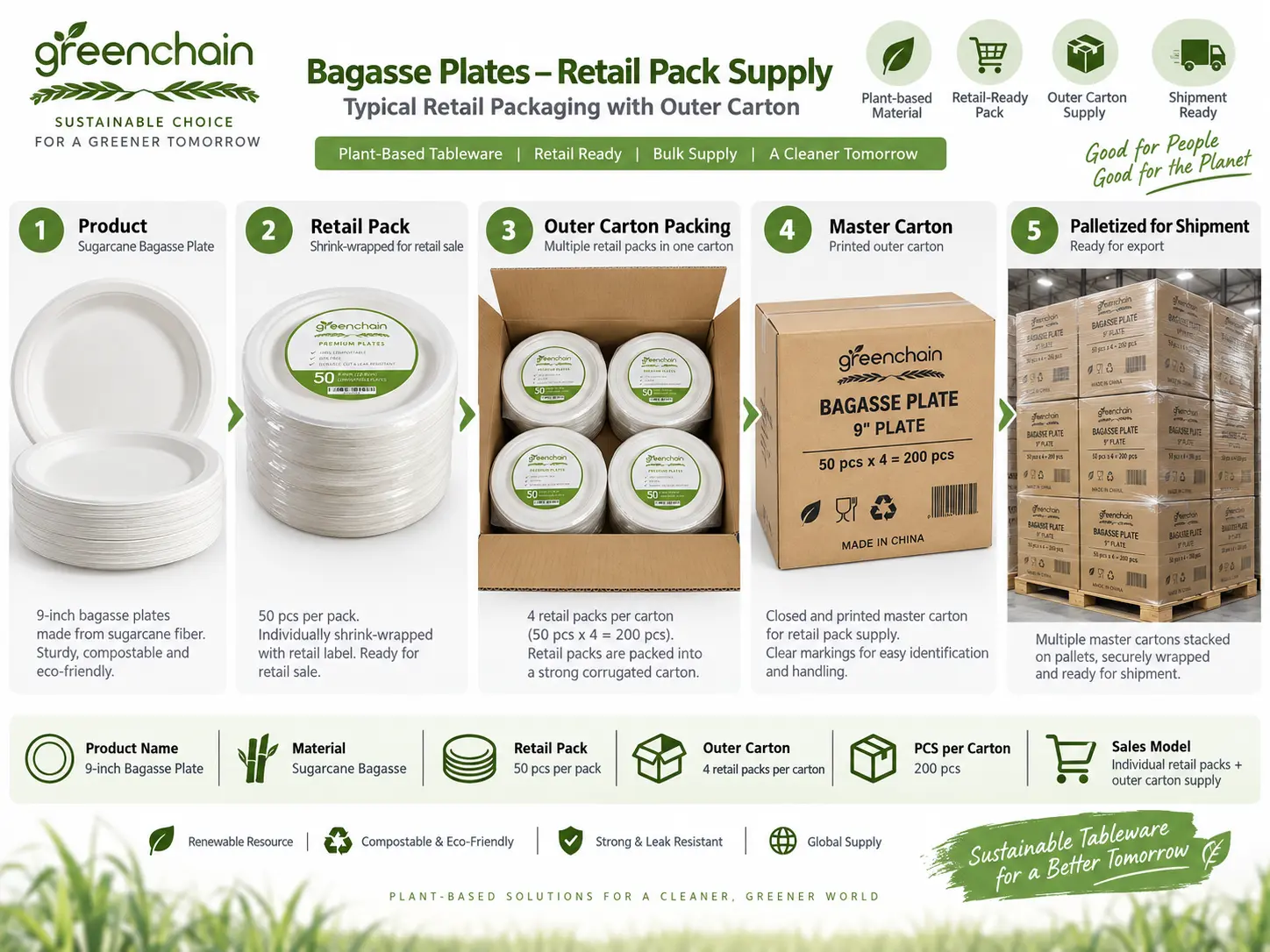
- Prodotto: Piatti in bagassa di canna da zucchero
- Confezione al dettaglio: 50 piatti per PE, PP o sacchetto compostabile
- Informazioni al dettaglio: Marchio, nome del prodotto, quantità, codice a barre, informazioni sullo smaltimento o altre informazioni richieste dal mercato
- Cartone principale: 10 confezioni al dettaglio per cartone in cartone ondulato
- Quantità totale: 500 piatti per cartone principale
- Modello a valle: Le singole confezioni 50-piece vengono vendute separatamente agli utenti finali
In questo scenario, il sacchetto 50-piece non è più semplicemente uno strato igienico interno all'interno di un cartone sfuso. Se il prodotto e il sacchetto sono concepiti insieme come unità fornita all'utente finale nel punto vendita, il sacchetto svolge una chiara funzione di imballaggio per la vendita ai sensi del PPWR.
Il cartone esterno in cartone ondulato ha quindi un ruolo diverso. Poiché contiene più unità di vendita già definite, può svolgere una funzione di imballaggio raggruppato, una funzione di imballaggio per il trasporto o una combinazione di funzioni pratiche di distribuzione e trasporto che devono essere valutate in base all'effettiva catena di approvvigionamento.
| Strato di imballaggio | Esempio di fornitura al dettaglio | Funzione principale | Valutazione PPWR |
|---|---|---|---|
| Articolo per il foodservice | 50 piatti vuoti in bagassa | Prodotto di stoviglie monouso | Valutare l'articolo stesso separatamente dall'imballaggio che lo circonda. |
| Sacchetto al dettaglio singolo | 50 pcs per sacchetto con marchio o etichetta | Contenimento, protezione, presentazione e vendita individuale | Se concepito come unità prodotto-imballaggio fornita all'utente finale, svolge una funzione di imballaggio per la vendita. |
| Cartone da spedizione | 10 confezioni retail per cartone | Raggruppamento, gestione delle scorte, distribuzione e trasporto | Valutare se la sua funzione primaria è raggruppare unità di vendita, facilitare il trasporto, o entrambe in diverse fasi della catena di approvvigionamento. |
L'imballaggio al dettaglio non richiede un prodotto completamente diverso
L'articolo per il foodservice stesso può essere identico sia nei progetti all'ingrosso che al dettaglio. Lo stesso piatto in bagassa 9-inch, bicchiere di carta o forchetta monouso può essere fornito in una confezione igienica semplice per un progetto di ristorazione o in una confezione al dettaglio stampata per la vendita al supermercato. Ciò che cambia è la configurazione dell'imballaggio e la funzione commerciale a valle.
Questo è importante per importatori e acquirenti di private label perché il passaggio da un programma di cartoni sfusi a un programma al dettaglio può modificare le informazioni sull'imballaggio che devono essere documentate. Composizione del materiale, peso unitario, etichette, stampa, quantità per confezione e ruolo del cartone principale dovrebbero quindi essere rivisti quando cambia il formato commerciale.
Approfondimento del produttore: i progetti al dettaglio dovrebbero essere identificati prima dell'approvazione finale dell'imballaggio
Bioleader® fornisce comunemente imballaggi per il foodservice B2B in cartoni pieni, ma configurazioni pronte per il dettaglio possono essere sviluppate anche per distributori, supermercati e programmi private label. Gli acquirenti dovrebbero specificare se la confezione interna sarà venduta indipendentemente prima di confermare file grafici, etichette, materiale del sacchetto, quantità per confezione e struttura del cartone. Ciò consente alla distinta base dell'imballaggio e alla documentazione di conformità di riflettere l'effettiva configurazione di mercato piuttosto che un metodo di confezionamento generico di fabbrica.
Punto chiave: Quando una confezione interna è concepita come unità venduta all'utente finale, dovrebbe essere valutata come unità di imballaggio per la vendita anche se lo stesso prodotto è disponibile anche in una configurazione B2B completamente diversa in cartoni pieni.
7. Scenario C: sacchetti interni semplici venduti comunque come confezioni singole
Un caso intermedio particolarmente importante si verifica quando il sacchetto interno sembra un normale imballaggio sfuso ma viene comunque venduto singolarmente.
Ad esempio, un grossista può importare un cartone principale contenente 20 sacchetti trasparenti PE da 100 forchette monouso. I sacchetti non hanno stampa personalizzata, nessun marchio e nessun file grafico al dettaglio. Tuttavia, il grossista apre il cartone principale e vende ogni sacchetto 100-piece separatamente a ristoranti, piccoli rivenditori o altri utenti finali.
In questa situazione, l'assenza di stampa non impedisce al sacchetto semplice di costituire l'unità di vendita commerciale.
Esempio di sacchetto semplice, vendita individuale
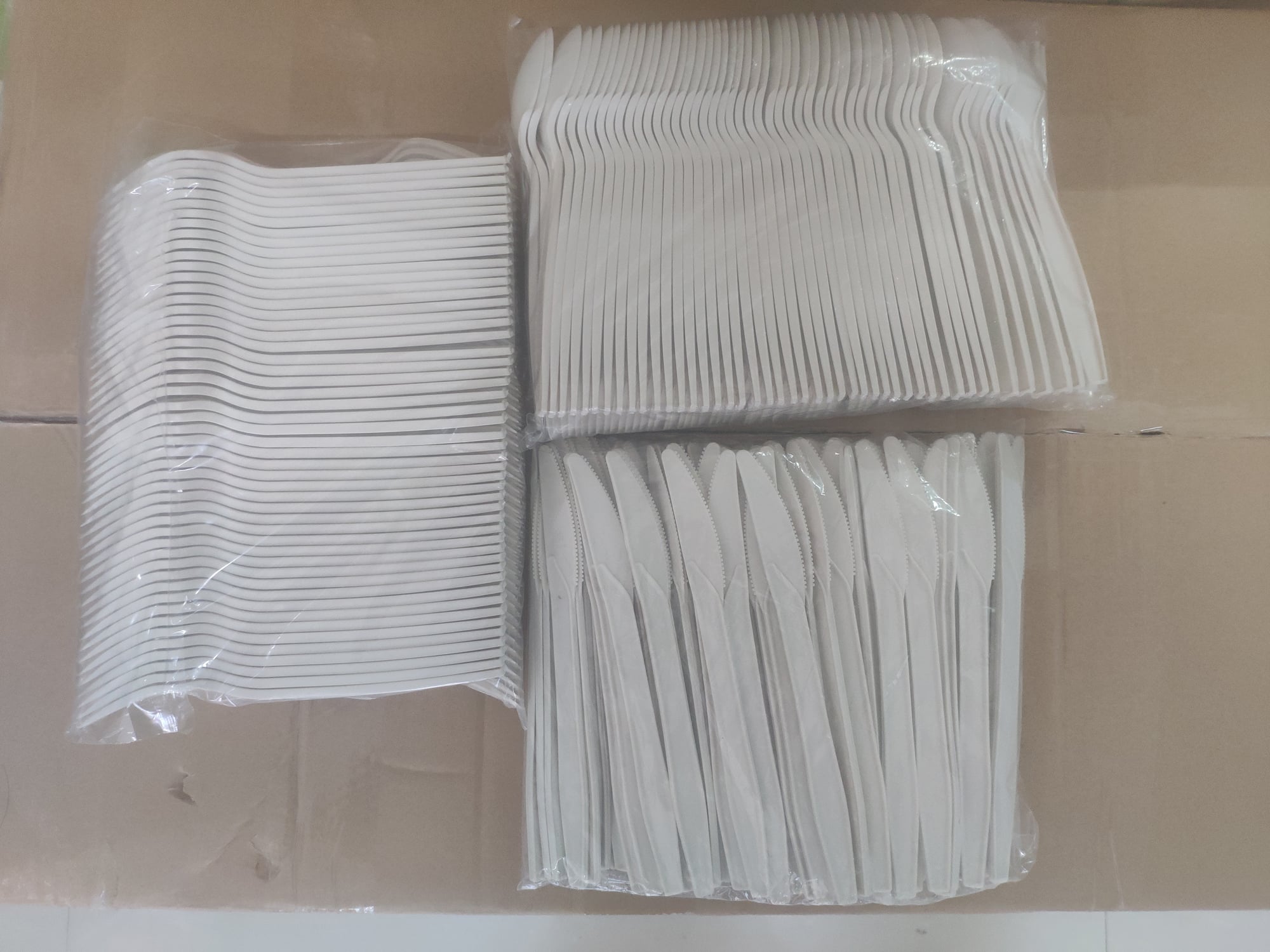
- Prodotto: 100 forchette monouso
- Sacchetto: Sacchetto trasparente semplice PE
- Stampa: Nessuna
- Codice a barre: Nessuna
- Cartone principale: 10 sacchetti
- Modello di vendita effettivo: Ogni sacchetto 100-piece viene fornito separatamente a un utente finale
La valutazione corretta dovrebbe quindi iniziare dalla realtà commerciale: quale unità è effettivamente concepita e fornita come unità di vendita? Se la confezione 100-piece è l'unità normalmente offerta all'utente finale, il suo ruolo di imballaggio può essere quello di imballaggio per la vendita anche se il suo aspetto è quasi identico a un semplice sacchetto igienico utilizzato all'interno di un ordine in cartone pieno.
| Domanda | Sacchetto igienico sfuso | Sacchetto semplice venduto singolarmente |
|---|---|---|
| Stampato? | No | No |
| Contiene una quantità fissa? | Sì | Sì |
| Normalmente venduto separatamente? | No | Sì |
| Ruolo commerciale principale | Igiene e protezione interna | Fornitura individuale all'utente finale |
| Implicazione PPWR | Valutare all'interno del sistema di imballaggio del cartone pieno | Il sacchetto può costituire l'unità di imballaggio per la vendita nonostante non abbia grafica retail |
Non utilizzare l'aspetto come criterio di classificazione. Due sacchetti PE trasparenti possono sembrare identici ma svolgere funzioni PPWR diverse. Uno può rimanere uno strato protettivo interno all'interno di un ordine B2B in cartone pieno, mentre l'altro può essere l'effettiva unità di vendita fornita indipendentemente all'utente finale.
Regola pratica: Il modello di vendita effettivo è più importante del fatto che il sacchetto assomigli a un imballaggio retail. Una confezione semplice può comunque essere imballaggio per la vendita quando quella confezione è concepita e fornita come unità di vendita individuale.
8. La stampa, l'etichettatura o il codice a barre cambiano la funzione dell'imballaggio?
Risposta rapida: È una prova dell'uso al dettaglio, ma non è l'unico fattore decisivo.
La stampa, un logo del marchio, un codice a barre, la descrizione del prodotto, la dichiarazione della quantità o un'etichetta rivolta al consumatore possono indicare fortemente che un sacchetto o una scatola è stato progettato per la vendita al dettaglio individuale. Tuttavia, la classificazione PPWR non dipende da nessuna singola caratteristica grafica o di etichettatura.
La domanda più importante è se l'imballaggio è stato concepito per costituire l'unità di vendita fornita all'utente finale. Un sacchetto stampato può essere utilizzato come confezione di vendita, ma la stampa da sola non crea la funzione legale. Allo stesso modo, un sacchetto trasparente completamente semplice può comunque essere l'unità di vendita se è effettivamente progettato e fornito in quel modo.
Cosa possono dirti stampa ed etichette
| Caratteristica dell'imballaggio | Cosa può indicare | Decide da sola la funzione PPWR? |
|---|---|---|
| Logo del marchio | Presentazione al consumatore o a marchio privato | No |
| Codice a barre EAN / UPC | La confezione può essere destinata all'inventario e alla vendita individuale | No |
| Nome del prodotto e numero di pezzi | La confezione può funzionare come unità commerciale definita | No |
| Istruzioni per il consumatore | La confezione è probabilmente destinata a raggiungere l'utente finale | No |
| Nessuna stampa | Potrebbe essere un sacchetto igienico o una confezione di vendita a basso costo | No |
Per questo motivo, una valutazione PPWR non dovrebbe basarsi solo su una fotografia dell'imballaggio. L'acquirente o il fornitore dovrebbe anche confermare come l'unità viene ordinata, fatturata, immagazzinata, distribuita e fornita a valle. Per la questione separata delle etichette, dei simboli e dei tempi di attuazione armonizzati, vedere la guida di Bioleader® su Requisiti di etichettatura degli imballaggi PPWR dell'UE.
Domande che contano più della grafica
- Alla confezione interna è assegnato un proprio SKU commerciale?
- La confezione interna può essere ordinata o venduta separatamente?
- Il cartone completo è l'unità di acquisto normale?
- Un distributore apre il cartone e rivende le confezioni singole?
- Il codice a barre è utilizzato per la scansione al dettaglio individuale o solo per la logistica interna?
- La confezione interna raggiunge l'utente finale nella stessa forma?
- Il cartone esterno è utilizzato solo per raggruppamento e trasporto, o è esso stesso l'unità di vendita normale?
Approfondimento del produttore: la stampa personalizzata è una modifica dell'imballaggio, non solo una modifica grafica
Quando un cliente Bioleader® trasforma un imballaggio sfuso semplice in una confezione retail brandizzata, il progetto dovrebbe essere rivisto come un cambiamento del sistema di imballaggio piuttosto che solo un aggiornamento del file grafico. Il fornitore dovrebbe confermare il materiale del sacchetto o della scatola, la quantità per confezione, la struttura di stampa o etichetta, il peso della singola confezione, la configurazione del cartone da spedizione e il canale di vendita previsto, affinché la documentazione dell'imballaggio rifletta la SKU finale immessa sul mercato.
9. Cosa succede se il sacchetto interno è compostabile?
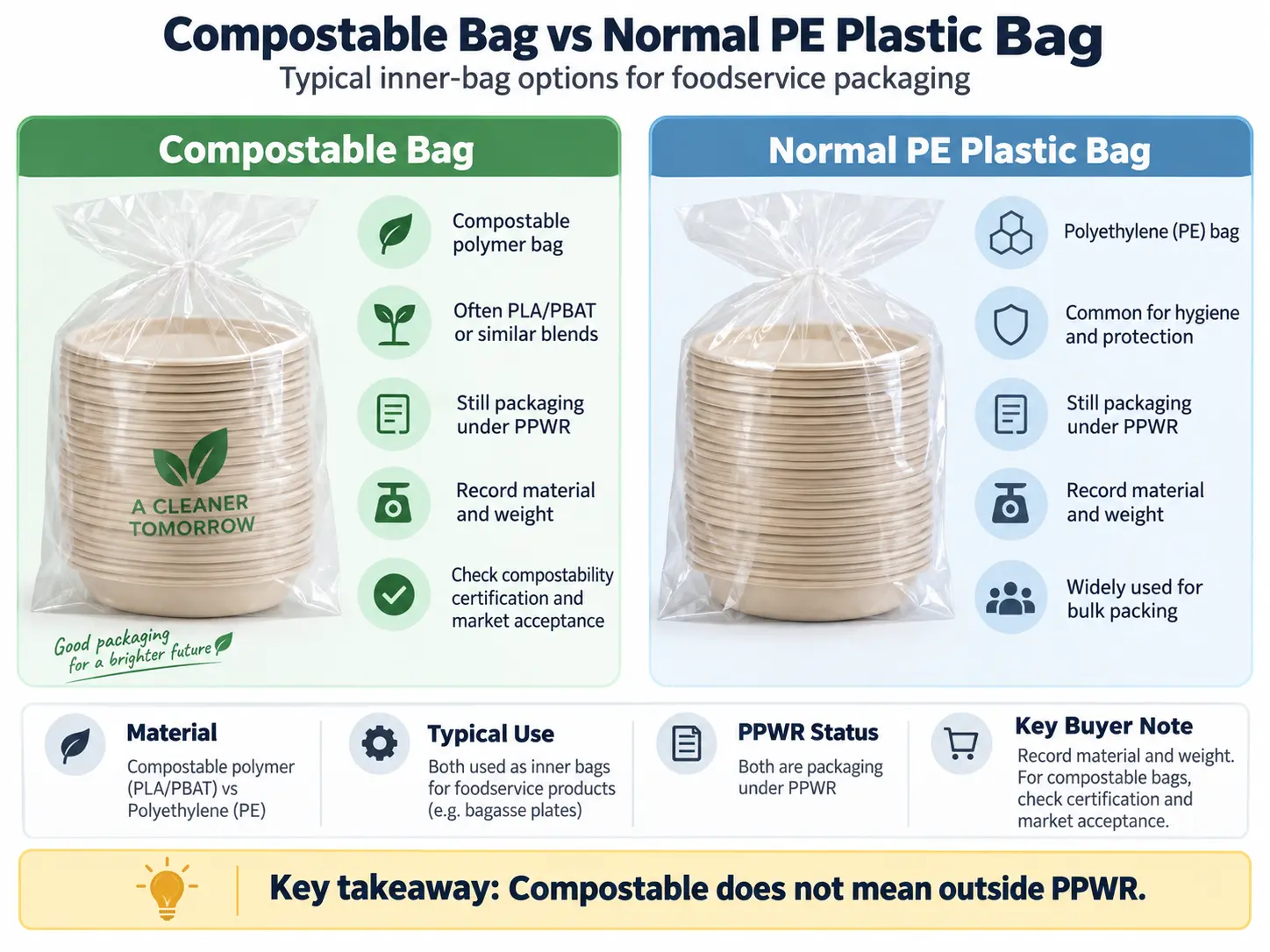
Sostituire un sacchetto interno convenzionale in PE o PP con un sacchetto compostabile può modificare la specifica del materiale e il percorso di fine vita, ma non cambia automaticamente la funzione di imballaggio del sacchetto ai sensi del PPWR.
Se un sacchetto compostabile viene utilizzato per contenere 50 piatti per igiene e protezione, è comunque un imballaggio. Se lo stesso sacchetto compostabile è concepito come una confezione retail venduta singolarmente, può comunque svolgere una funzione di imballaggio per la vendita. La valutazione funzionale rimane quindi la stessa: determinare come il sacchetto contiene, protegge, raggruppa, consegna o presenta i prodotti e come l'unità viene fornita a valle.
Compostabile non significa “fuori dalle regole sulla plastica”
Questa distinzione è particolarmente importante per i sacchetti realizzati con materiali come PLA, PBAT o miscele contenenti amido e polimeri compostabili. Ai sensi del PPWR, una plastica è definita dalla sua struttura a base di polimeri, e le plastiche biobased rimangono plastiche indipendentemente dal fatto che siano biodegradabili o non biodegradabili. La Commissione europea distingue inoltre plastiche biobased, biodegradabili e compostabili come concetti diversi piuttosto che affermazioni intercambiabili. Una dichiarazione di compostabilità non dovrebbe quindi essere utilizzata come sostituto di una dichiarazione accurata del materiale.
| Descrizione del sacchetto interno | Registrazione del materiale consigliata | Cosa non dovrebbe essere usato come unica descrizione |
|---|---|---|
| Sacchetto trasparente convenzionale | PE o PP, a seconda dei casi | Sacchetto di plastica |
| Sacchetto compostabile PLA/PBAT | Composizione effettiva del polimero o specifica del materiale dichiarata dal fornitore | Materiale biodegradabile |
| Sacchetto in polimero compostabile a base di amido | Categoria effettiva di formulazione amido/polimero supportata da documentazione tecnica | Sacchetto a base vegetale |
| Sacchetto compostabile certificato | Composizione del materiale più eventuali prove di compostabilità e ambito del certificato | Sacchetto ecologico |
Importante: Un sacchetto interno compostabile non dovrebbe essere automaticamente trattato come esente dai normali requisiti PPWR semplicemente perché è dotato di una certificazione di compostabilità industriale. PPWR Articolo 9 stabilisce regole specifiche di compostabilità per formati di imballaggio definiti e consente determinati requisiti nazionali aggiuntivi a condizioni specifiche. Gli acquirenti dovrebbero pertanto verificare se il particolare formato di sacchetto rientra in un requisito di compostabilità a livello UE, in una norma di uno Stato membro o nei requisiti generali di PPWR applicabili alla sua categoria di imballaggio. Per un contesto più ampio di certificazione mercato per mercato, vedere Bioleader®. guida 2026 alle normative globali sugli imballaggi compostabili.
Compostabilità industriale e compostabilità domestica non sono la stessa cosa
PPWR distingue l'imballaggio compostabile da quello compostabile a casa. La compostabilità industriale si basa su condizioni di trattamento controllate, mentre il compostaggio domestico avviene in condizioni molto meno controllate. Un certificato di compostabilità industriale non dovrebbe quindi essere presentato automaticamente come prova che lo stesso imballaggio si biodegradherà completamente nel compostaggio domestico.
Un acquirente dovrebbe sostituire PE con un sacchetto compostabile?
Non necessariamente. La decisione sull'imballaggio dovrebbe considerare il mercato di destinazione, il sistema di raccolta, le infrastrutture di compostaggio, i requisiti di certificazione, le prestazioni di protezione del prodotto, le condizioni di stoccaggio, i costi e il rischio di contaminare altri flussi di rifiuti. PPWR stesso riconosce che gli imballaggi in plastica compostabile possono creare confusione o contaminazione incrociata quando entrano in un flusso di rifiuti inadatto.
Prima di specificare un sacchetto interno compostabile
- Confermare il materiale esatto del sacchetto piuttosto che accettare solo la parola “biodegradabile”.”
- Confermare se il sacchetto è compostabile industrialmente, compostabile a casa o nessuno dei due.
- Verificare l'ambito e la validità di qualsiasi certificazione di compostabilità.
- Confermare se lo Stato membro di destinazione richiede, consente o limita gli imballaggi compostabili per il formato pertinente.
- Verificare se le strutture locali di raccolta dei rifiuti organici accettano effettivamente tale imballaggio.
- Confrontare la protezione dall'umidità, le prestazioni di sigillatura e la stabilità di stoccaggio con l'alternativa convenzionale in PE o PP.
- Registrare il peso del sacchetto compostabile separatamente nella distinta base dell'imballaggio.
Approfondimento del produttore: scegliere il sacchetto interno in base al mercato, non solo alla dichiarazione di sostenibilità
Bioleader® può supportare diverse configurazioni di confezionamento interno a seconda del prodotto e dei requisiti del progetto, inclusi film protettivi convenzionali e opzioni di sacchetti compostabili dove tecnicamente e commercialmente adatti. Per i progetti UE, gli acquirenti dovrebbero selezionare il sacchetto solo dopo aver considerato il sistema di gestione dei rifiuti del mercato di destinazione, i requisiti di documentazione e il modello di vendita effettivo. Cambiare il materiale del sacchetto non elimina la necessità di documentarne funzione, composizione e peso.
Punto chiave: Un sacchetto interno compostabile è comunque un imballaggio. La compostabilità cambia il materiale e il possibile percorso di fine vita; non cancella il sacchetto dalla valutazione PPWR né trasforma automaticamente una confezione igienica sfusa in una confezione retail.
10. Come registrare materiali e pesi degli imballaggi
Una volta identificata la funzione dell'imballaggio, il passo successivo è costruire un distinta base dell'imballaggio (BOM) per ogni SKU. Questo è più utile di una dichiarazione generale come “confezionato in sacchetti PE e cartoni” perché la rendicontazione PPWR e EPR dipende sempre più dalla conoscenza di quale imballaggio viene immesso sul mercato, quale materiale contiene e quanto pesa. La BOM dovrebbe anche essere collegata al fascicolo tecnico per lo SKU esatto; la guida di Bioleader® PPWR Dichiarazione di conformità per imballaggi per il foodservice spiega come i dati SKU e le prove a supporto possono essere mappati in un flusso di lavoro di conformità.
Nel quadro di rendicontazione per i produttori di PPWR, le quantità di imballaggio sono riportate per peso e per categoria di imballaggio applicabile. L'allegato II e l'allegato IX del regolamento (UE) 2025/40 forniscono le categorie di materiale e il quadro di rendicontazione per i produttori pertinenti. Per un importatore del foodservice, ciò significa che film plastico, carta o cartone, plastica biodegradabile e altri materiali di imballaggio non dovrebbero essere combinati in un unico peso indifferenziato di imballaggio.
Regola pratica: Costruisci la BOM dell'imballaggio a partire dai singoli componenti dell'imballaggio, non dal peso lordo del cartone. Registra separatamente il peso di ogni sacchetto, cartone, coperchio, fascetta, etichetta o altro componente pertinente e moltiplicalo per la quantità utilizzata nella configurazione commerciale.
Campi consigliati per la BOM dell'imballaggio
| Campo | Cosa registrare | Perché è importante |
|---|---|---|
| SKU / Codice articolo | Riferimento esatto del prodotto | Evita che i dati sull'imballaggio vengano applicati alla specifica di prodotto sbagliata. |
| Uso previsto | Foodservice all'ingrosso, riempimento al punto vendita, vendita al dettaglio o altro uso | Aiuta a determinare se l'articolo stesso per il foodservice rientra nella definizione di imballaggio di PPWR. |
| Componente dell'imballaggio | Imballaggio del prodotto o del servizio, sacchetto interno, confezione per il dettaglio, coperchio, cartone, nastro, etichetta o fascetta | Separa i diversi strati del sistema di imballaggio. |
| Funzione dell'imballaggio | Vendita, raggruppamento, trasporto o altra funzione applicabile | Supporta la classificazione PPWR. |
| Materiale | PE, PP, carta/cartone, fibra stampata, miscela PLA/PBAT o altro materiale effettivo | Supporta la rendicontazione per categoria di materiale e la revisione della conformità. |
| Peso per componente | Peso effettivo verificato in grammi | Fornisce la base per i calcoli del peso dell'imballaggio. |
| Quantità per confezione | Numero di componenti utilizzati in ogni confezione interna o per il dettaglio | Consente il calcolo a livello di confezione. |
| Quantità per cartone | Numero di sacchetti, confezioni, coperchi o altri componenti in ogni cartone | Consente il calcolo a livello di cartone. |
| Peso totale per cartone | Peso del componente moltiplicato per la quantità del componente | Fornisce una base pratica per i calcoli di spedizione e EPR. |
| Versione della specifica | Data o numero di revisione | Evita che dati obsoleti sull'imballaggio vengano riutilizzati dopo una modifica al materiale o alla confezione. |
Usa il peso effettivo del componente, non una stima dal peso lordo
Il metodo preferito è pesare separatamente ogni componente dell'imballaggio. Ad esempio, pesa un sacchetto PE vuoto, un cartone ondulato vuoto e le etichette o altri componenti pertinenti. Dove esistono tolleranze di produzione, il fornitore può documentare il peso medio nominale o verificato e la tolleranza di specifica applicabile.
Sottrarre semplicemente il peso netto del prodotto dal peso lordo del cartone di spedizione è meno affidabile perché il risultato può includere variazioni di confezionamento, umidità, pallet, fogli protettivi o altri materiali che non fanno parte dello stesso livello di imballaggio.
Importante: Non escludere automaticamente l'articolo stesso per il foodservice dalla BOM dell'imballaggio. Un bicchiere, un piatto o un contenitore alimentare monouso progettato e destinato a essere riempito al punto vendita può qualificarsi esso stesso come imballaggio per il servizio. Le posate monouso, al contrario, sono specificamente elencate come articolo non di imballaggio e non dovrebbero essere conteggiate come imballaggio solo perché sono monouso.
Calcolo semplice del peso
Se un sacchetto interno PE pesa 5 g e un cartone contiene 10 sacchetti, il contributo di imballaggio PE è 50 g per cartone. Se il cartone ondulato pesa 650 g, il cartone contribuisce con altri 650 g. Questi pesi dei materiali dovrebbero rimanere separati piuttosto che essere riportati come un'unica cifra di imballaggio 700 g senza identificazione del materiale.
Per spedizioni più grandi, la stessa BOM verificata può essere moltiplicata per il numero di cartoni immessi sul mercato pertinente. Questo offre agli importatori un metodo di calcolo ripetibile invece di ricostruire i dati sull'imballaggio spedizione per spedizione.
11. PPWR Esempio di BOM di imballaggio per piatti in bagassa di canna da zucchero
Stoviglie monouso in bagassa di canna da zucchero illustra perché la rendicontazione PPWR richiede sia dati sui materiali che informazioni sull'uso previsto, e i piatti in bagassa di canna da zucchero forniscono un chiaro esempio a livello SKU. Un piatto monouso progettato e destinato a essere riempito con cibo nel punto vendita può rientrare nella definizione di imballaggio per il servizio. Se lo stesso piatto viene venduto vuoto per un uso finale diverso e non è destinato a essere riempito nel punto vendita, il suo status può essere diverso.
Esempio puramente illustrativo: I pesi sottostanti sono esempi semplificati utilizzati per dimostrare il metodo di calcolo. Non sono specifiche standard Bioleader®, preventivi o pesi del prodotto garantiti.
Configurazione di esempio
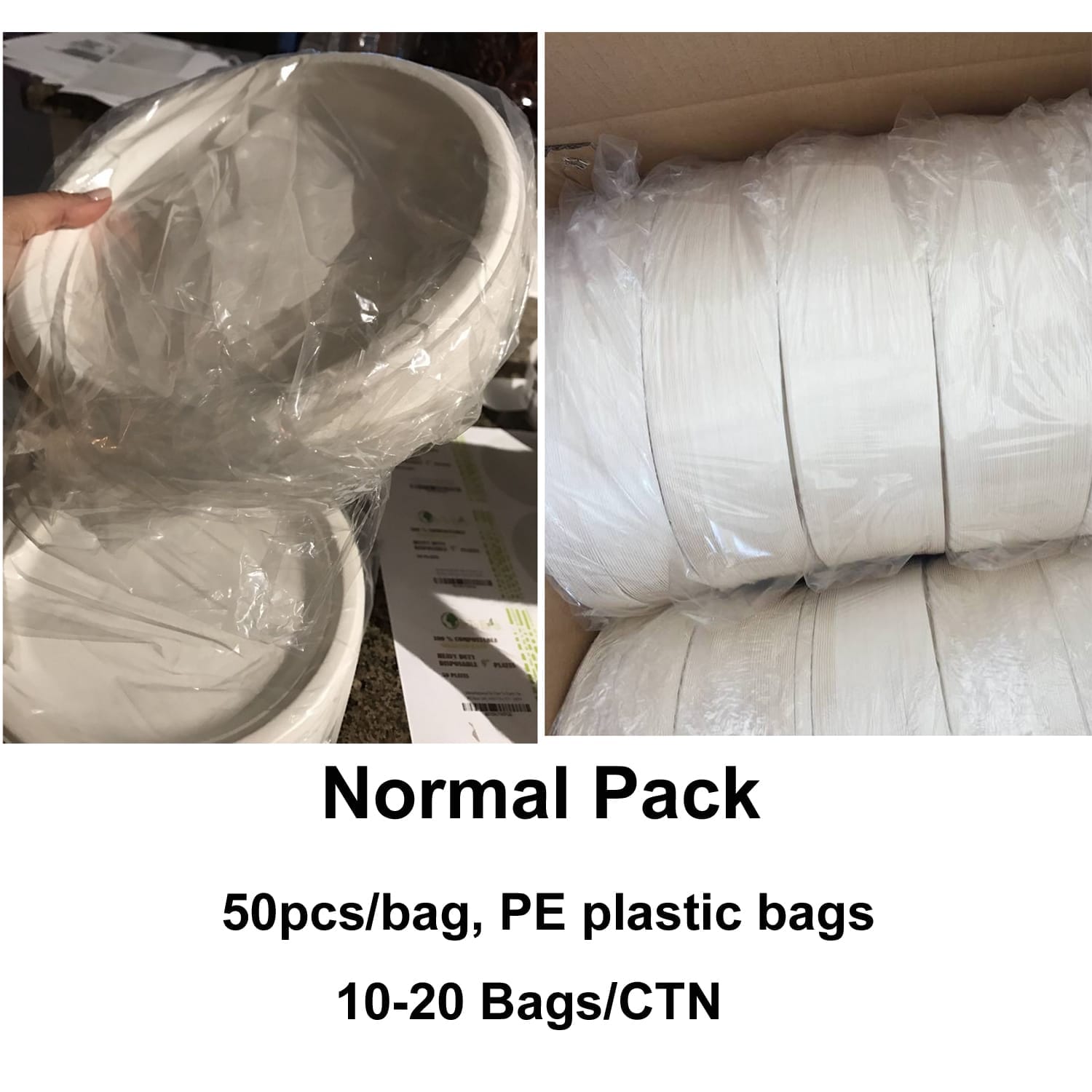
- 500 piatti in bagassa di canna da zucchero per cartone da spedizione
- 50 piatti per sacchetto interno PE semplice
- 10 sacchetti PE per cartone da spedizione
- Peso illustrativo del piatto: 18 g
- Peso illustrativo del sacchetto PE: 5 g
- Peso illustrativo del cartone da spedizione ondulato: 650 g
- Peso illustrativo di nastro ed etichetta del cartone da spedizione: 15 g
| Componente | Materiale | Quantità | Peso unitario illustrativo | Peso totale per cartone | Trattamento PPWR |
|---|---|---|---|---|---|
| Piatto in bagassa di canna da zucchero | Fibra di canna da zucchero stampata | 500 pcs | 18 g | 9,000 g | Includere come imballaggio dove i piatti sono progettati e destinati a essere riempiti nel punto vendita. Confermare la categoria di materiale di rendicontazione applicabile per il mercato di destinazione. |
| Sacchetto interno semplice | Film da imballaggio flessibile PE | 10 sacchetti | 5 g | 50 g | Imballaggio; registrare separatamente come imballaggio in plastica flessibile. |
| Cartone ondulato | Carta/cartone ondulato | 1 carton | 650 g | 650 g | Imballaggio; valutare la funzione di vendita, raggruppamento o trasporto in base al modello commerciale effettivo. |
| Nastro / etichetta | Come specificato | Per cartone da spedizione | 15 g totale | 15 g | Registrare i componenti di imballaggio pertinenti in base ai loro materiali effettivi. |
Se i piatti in bagassa di canna da zucchero qualificano come imballaggio per il servizio in questo esempio, il sistema di imballaggio totale rappresentato nel cartone da spedizione è di circa 9.715 kg, ma quel numero non dovrebbe essere riportato come un unico materiale. L'articolo in fibra stampata, il film PE, il cartone ondulato e altri componenti dovrebbero rimanere identificabili nella BOM sottostante.
Se i piatti stessi non qualificano come imballaggio nell'uso a valle effettivo, il loro peso del prodotto 9,000 g non dovrebbe essere semplicemente aggiunto al tonnellaggio di imballaggio. L'imballaggio che circonda il prodotto dovrebbe quindi essere valutato separatamente.
Punto chiave: Per i piatti in bagassa di canna da zucchero, determinare prima se il piatto stesso è imballaggio per il servizio. Solo dopo che tale classificazione è chiara, l'importatore dovrebbe calcolare il peso dell'imballaggio immesso sul mercato UE pertinente.
12. PPWR Esempio di BOM di imballaggio per bicchieri o ciotole di carta
di Bioleader® imballaggi in carta per alimenti la gamma include bicchieri di carta, contenitori per zuppa e ciotole per insalata che sono esempi comuni di articoli per il foodservice che possono essi stessi essere imballaggio. Dove sono progettati e destinati a essere riempiti con bevande o cibo nel punto vendita, normalmente svolgono una funzione di imballaggio per il servizio.
Anche la descrizione del materiale è importante. Un bicchiere di carta con PE o un altro rivestimento polimerico non dovrebbe essere semplicemente registrato come “carta” senza documentare la costruzione effettiva. PPWR Allegato II riconosce specificamente l'imballaggio composito carta/cartone, inclusi i bicchieri di carta laminati.
Esempio puramente illustrativo: Le dimensioni, i pesi e i rapporti di imballaggio sottostanti sono utilizzati solo per mostrare il metodo BOM e non sono specifiche fisse Bioleader®.
Esempio di configurazione di bicchieri di carta
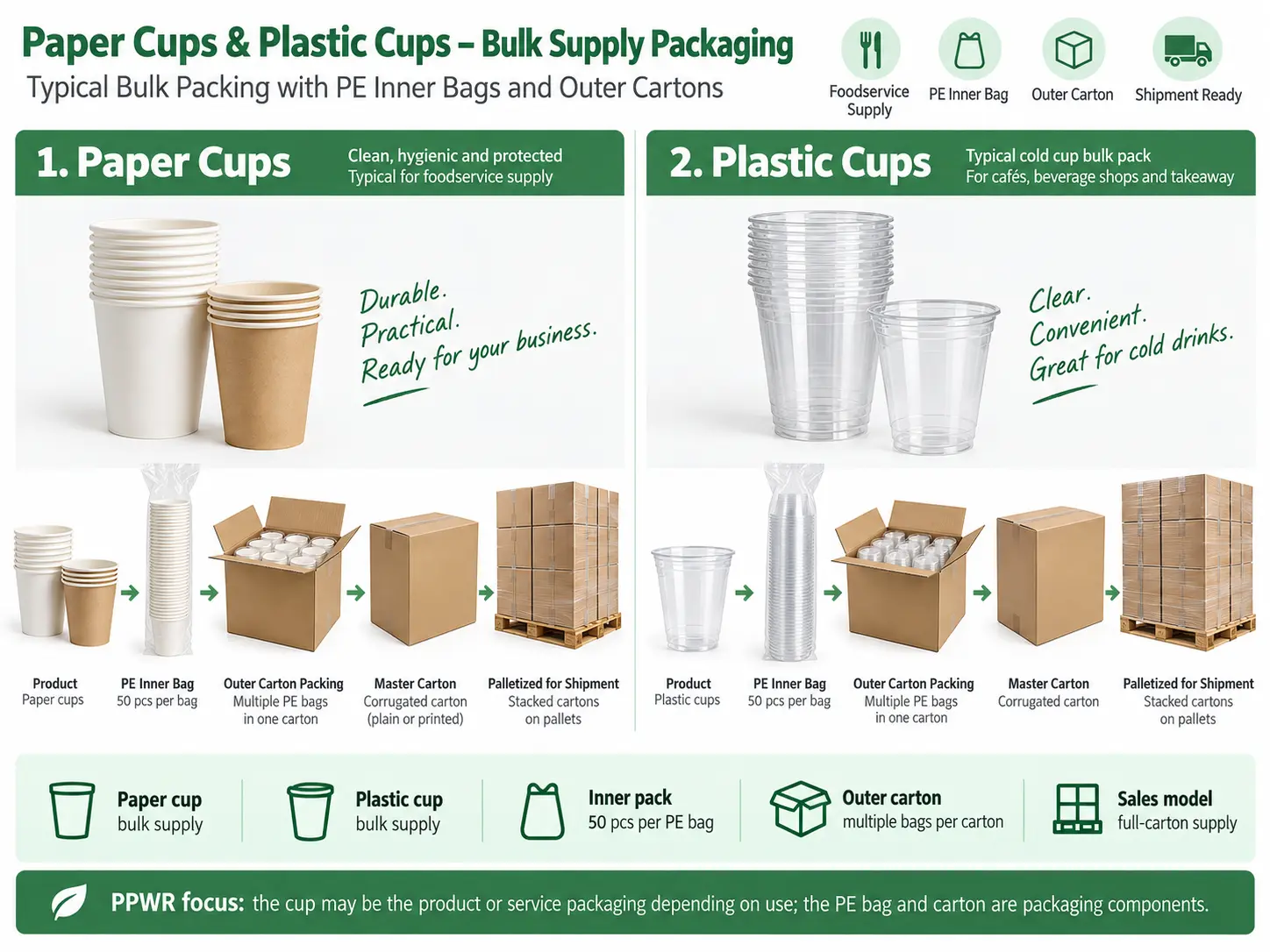
- 1.000 bicchieri per cartone
- 50 bicchieri per PE sacchetto interno
- 20 sacchetti per cartone
- Peso indicativo del bicchiere: 10 g
- Peso indicativo del sacchetto PE: 6 g
- Peso indicativo del cartone ondulato: 750 g
- Peso indicativo di nastro ed etichetta: 15 g
| Componente | Materiale / Struttura | Quantità | Peso unitario illustrativo | Peso totale per cartone | Nota di segnalazione |
|---|---|---|---|---|---|
| Bicchiere di carta | Cartoncino da imballaggio con barriera o rivestimento polimerico applicabile | 1,000 pcs | 10 g | 10,000 g | Se destinato al riempimento nel punto vendita, registrare come imballaggio per il servizio e documentare la struttura materiale effettiva. |
| PE sacchetto interno | Film da imballaggio flessibile PE | 20 sacchetti | 6 g | 120 g | Registrare separatamente come imballaggio in plastica flessibile. |
| Cartone ondulato | Carta/cartone | 1 carton | 750 g | 750 g | Registrare separatamente e determinare la sua funzione di imballaggio in base al modello di vendita e distribuzione. |
| Nastro / etichetta | Secondo la specifica effettiva | Per cartone da spedizione | 15 g totale | 15 g | Includere i componenti di imballaggio pertinenti nella distinta base (BOM). |
In questo esempio, il sistema di imballaggio fisico totale peserebbe circa 10.885 kg per cartone dove i bicchieri stessi qualificano come imballaggio per il servizio. Il record di segnalazione sottostante dovrebbe comunque distinguere la struttura del bicchiere a base di carta, i sacchetti interni in plastica flessibile, il cartone ondulato e qualsiasi altro componente pertinente.
E se viene fornito un coperchio?
Se il bicchiere o la ciotola viene venduto con un PP, PET, PLA, coperchio di carta o altro, il coperchio deve essere aggiunto come componente separato nella distinta base (BOM). Gli acquirenti non dovrebbero presumere che la classificazione del materiale del bicchiere copra automaticamente il coperchio.
Ad esempio, una ciotola di carta per zuppa o ciotola di carta per insalata con un coperchio PP crea almeno due record di materiale diversi: la struttura prevalentemente di carta/cartone della ciotola e il coperchio rigido PP. Il sacchetto interno e il cartone ondulato aggiungono poi ulteriori strati di imballaggio. La stessa logica BOM a livello di componente si applica anche a bicchieri trasparenti PLA quando vengono forniti con coperchi, fascette, sacchetti o cartoni separati.
Punto chiave: “1.000 bicchieri di carta per cartone” non è un dato PPWR sufficiente. Gli acquirenti hanno bisogno della struttura del bicchiere, del peso del bicchiere, del materiale e del peso del sacchetto interno, del peso del cartone e di qualsiasi imballaggio di coperchi o accessori che faccia parte della configurazione commerciale finale.
13. PPWR Esempio di distinta base (BOM) di imballaggio per posate
di Bioleader® posate biodegradabili e compostabili fornisce un utile contrasto con bicchieri e piatti perché le posate monouso stesse sono elencate come articolo non di imballaggio ai sensi del PPWR. Una forchetta, un coltello o un cucchiaio non dovrebbero quindi essere conteggiati come imballaggio solo perché sono monouso o forniti a un ristorante.
L'imballaggio attorno alle posate deve comunque essere valutato.
Esempio puramente illustrativo: I pesi seguenti dimostrano il metodo di calcolo dell'imballaggio e non sono Bioleader® specifiche di prodotto fisse.
Esempio di configurazione delle posate
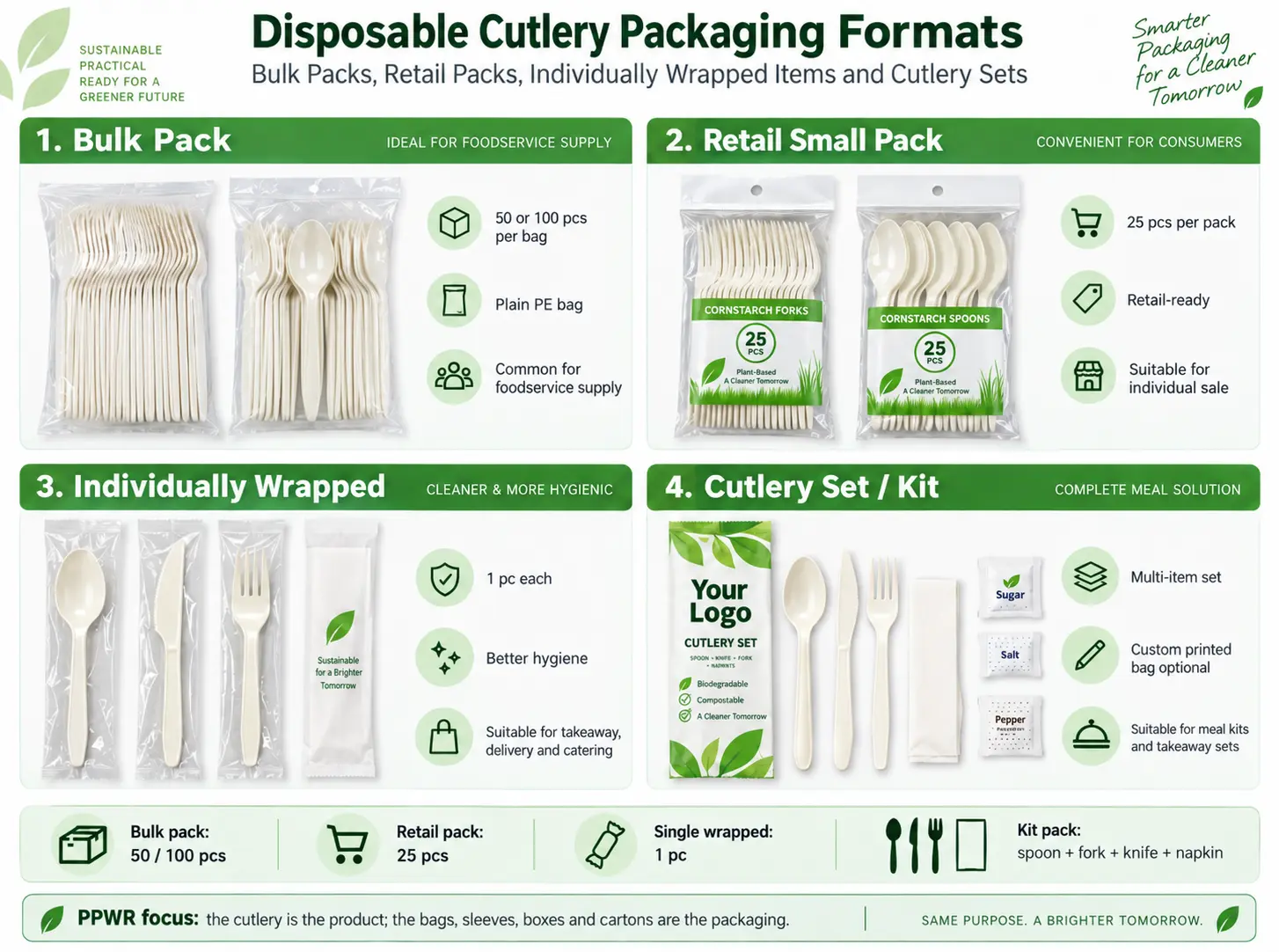
- 1.000 forchette per cartone
- 50 forchette per sacchetto PE semplice
- 20 sacchetti PE per cartone
- Peso indicativo del sacchetto PE: 4 g
- Peso illustrativo del cartone da spedizione in cartone ondulato: 700 g
- Peso indicativo di nastro ed etichetta: 15 g
| Componente | Materiale | Quantità | Peso unitario illustrativo | Peso dell'imballaggio per cartone | Trattamento PPWR |
|---|---|---|---|---|---|
| Forchette usa e getta | posate in CPLA, posate in amido di mais, in legno o altro materiale specificato | 1,000 pcs | Specifica del prodotto | Non incluso nel peso dell'imballaggio | Le posate usa e getta stesse sono elencate come non imballaggio. |
| Sacchetti semplici PE | Film da imballaggio flessibile PE | 20 sacchetti | 4 g | 80 g | Imballaggio; classificare la sua funzione commerciale in base a come vengono fornite le confezioni. |
| Cartone ondulato | Carta/cartone | 1 carton | 700 g | 700 g | Imballaggio; valutare la funzione di vendita, raggruppata o di trasporto. |
| Nastro / etichetta | Secondo specifica | Per cartone da spedizione | 15 g totale | 15 g | Registrare separatamente i componenti di imballaggio pertinenti. |
In questo esempio semplificato, l'imballaggio che circonda 1.000 forchette contribuisce con circa 795 g di imballaggio per cartone. Il peso delle forchette stesse è peso del prodotto e non deve essere erroneamente aggiunto al tonnellaggio dell'imballaggio.
Se le forchette sono confezionate singolarmente, imballate in set per la vendita al dettaglio, fornite con tovaglioli o inserite in manicotti di carta stampati, questi componenti aggiuntivi dovrebbero essere aggiunti alla distinta base dell'imballaggio in base al loro materiale e peso effettivi. Gli acquirenti che confrontano materiali, formati di confezione e opzioni di approvvigionamento possono anche consultare la Bioleader® di soluzioni di posate compostabili panoramica.
Punto chiave: Non applicare lo stesso calcolo PPWR a ogni prodotto foodservice. Una tazza o un piatto destinato al riempimento al punto vendita può essere esso stesso imballaggio, mentre le posate usa e getta non lo sono. I sacchetti, gli involucri e i cartoni attorno alle posate rimangono imballaggio e devono comunque essere registrati.
14. Conformità PPWR vs. Segnalazione EPR Nazionale
La conformità PPWR e la segnalazione EPR sono correlate, ma non sono la stessa attività. Questa distinzione è importante per i produttori cinesi, gli importatori UE, i distributori e gli acquirenti private label perché una specifica di imballaggio tecnicamente conforme non completa da sola gli obblighi di registrazione, segnalazione o pagamento del produttore in ogni Stato membro. La guida della Commissione europea del 2026 distingue i ruoli PPWR del produttore e del fabbricante, mentre la panoramica sui rifiuti di imballaggio fornisce il più ampio contesto politico dell'UE.
| Domanda | Conformità del prodotto/imballaggio PPWR | Registrazione e segnalazione EPR |
|---|---|---|
| Questione principale | L'imballaggio immesso sul mercato UE soddisfa i requisiti PPWR applicabili? | Chi è il produttore responsabile e quanta parte dell'imballaggio viene messa a disposizione per la prima volta in un determinato Stato membro? |
| Evidenza tipica | Documentazione tecnica, informazioni sui materiali, prove, valutazione della conformità e documentazione applicabile della Dichiarazione di conformità | Registrazione del produttore, quantità di imballaggio, categorie di imballaggio, periodo di segnalazione e accordi di adempimento EPR |
| Focus della misurazione | Conformità della specifica dell'imballaggio | Quantità di imballaggio pertinente immesso sul mercato nazionale, generalmente segnalate per peso e categoria applicabile |
| Livello geografico | Quadro normativo UE | La registrazione e l'adempimento operano attraverso i sistemi degli Stati membri pertinenti |
| Chi può essere responsabile? | Dipende dal ruolo legale del produttore, dell'importatore, del distributore o del proprietario del marchio ai sensi del PPWR | La parte che si qualifica come produttore ai fini EPR nello Stato membro pertinente, che può dipendere dallo stabilimento, dall'importazione, dal marchio e dal modello di vendita |
L'articolo 44 e l'allegato IX del PPWR richiedono al produttore pertinente di registrarsi e segnalare secondo il regolamento e il quadro dello Stato membro applicabile, incluso il periodo di segnalazione e le quantità per peso delle categorie di imballaggio applicabili. Per un confronto più ampio dei sistemi EPR e della preparazione dei fornitori, Bioleader® mantiene anche una guida alle normative globali sull'imballaggio EPR.
Ciò significa che non esiste una base valida per cui un fornitore dica a ogni cliente UE che un generico “certificato PPWR” completa automaticamente gli obblighi EPR in tutta Europa. L'azienda responsabile deve comunque determinare il proprio ruolo legale e utilizzare la procedura nazionale applicabile di registrazione, organizzazione di responsabilità del produttore o segnalazione per ogni mercato interessato.
Importante: L'esportatore cinese dovrebbe fornire dati accurati sulla composizione e sul peso dell'imballaggio, ma non dovrebbe presumere automaticamente di essere la parte responsabile della registrazione EPR nazionale dell'acquirente. Il produttore legale può variare a seconda di come le merci sono marchiate, importate e messe a disposizione sul mercato.
Perché la distinta base dell'imballaggio aiuta con EPR
Una buona distinta base dell'imballaggio crea il livello di dati fattuali necessario all'operatore UE responsabile. Se un importatore introduce 100 cartons di un SKU in uno Stato membro, l'importatore può moltiplicare i pesi verificati dei componenti per il numero di cartoni e quindi mappare tali quantità nelle categorie di segnalazione nazionali applicabili.
Ad esempio, se ogni cartone contiene 50 g di film per sacchetto interno PE e 650 g di cartone ondulato, 100 cartons contengono circa 5 kg di film PE e 65 kg di cartone ondulato, prima di considerare qualsiasi altro componente dell'imballaggio o qualsiasi articolo per il foodservice che a sua volta qualifichi come imballaggio.
Punto chiave: PPWR risponde se e come l'imballaggio deve essere conforme. La segnalazione EPR risponde a chi deve registrarsi e segnalare l'imballaggio immesso in un determinato mercato nazionale, in quale quantità e sotto quale categoria di segnalazione applicabile.
15. Quali informazioni dovrebbero fornire i fornitori agli acquirenti UE?
Per i prodotti ordinari per il foodservice, gli acquirenti UE di solito non hanno bisogno di un documento inutilmente complicato dalla fabbrica. Hanno bisogno di informazioni sull'imballaggio accurate, specifiche per SKU e tracciabili che può essere collegato alla configurazione commerciale finale. Laddove le prove di test o certificazione siano pertinenti, gli acquirenti possono esaminare i Bioleader® certificati e rapporti di prova come punto di partenza, confermando che ogni documento si applica allo specifico SKU ordinato e alla configurazione di imballaggio.
Una scheda dati pratica del fornitore dovrebbe normalmente includere le seguenti informazioni, ove applicabile:
| Informazione | Esempio | Perché l'acquirente ne ha bisogno |
|---|---|---|
| Prodotto / SKU | Piatto in bagassa di canna da zucchero 9-inch | Collega la distinta base dell'imballaggio al prodotto esatto. |
| Uso previsto | Piatto per il foodservice destinato al riempimento nel punto vendita | Aiuta a determinare se l'articolo stesso è imballaggio per il servizio. |
| Rapporto di confezionamento | 50 pcs/sacchetto × 10 sacchetti/cartone | Definisce la configurazione commerciale completa. |
| Materiale del sacchetto interno | Film in PE | Consente la corretta identificazione del materiale. |
| Peso del sacchetto interno | Grammi verificati per sacchetto | Consente il calcolo del peso dell'imballaggio. |
| Stato di vendita al dettaglio | Confezione igienica semplice / confezione al dettaglio venduta singolarmente | Supporta la valutazione della funzione di imballaggio del sacchetto. |
| Materiale del cartone | Cartoncino da imballaggio ondulato | Supporta la segnalazione del materiale. |
| Peso del cartone vuoto | Grammi verificati per cartone | Fornisce la tara dell'imballaggio. |
| Componenti aggiuntivi | Coperchio, fascetta, etichetta, nastro o involucro | Evita che componenti di imballaggio piccoli ma ricorrenti vengano omessi. |
| Struttura del materiale del prodotto | Fibra di bagassa, cartoncino da imballaggio + PE, cartoncino da imballaggio + PLA, coperchio in PP, coperchio in PET | Importante quando il prodotto stesso qualifica come imballaggio. |
| Evidenze di conformità pertinenti | Contatto alimentare, PFAS, compostabilità o altri documenti applicabili | Supporta il fascicolo tecnico di conformità dell'acquirente. |
| Data di revisione | AAAA-MM-GG | Mostra a quale configurazione dell'imballaggio si applicano i dati. |
Scarica il modello di dichiarazione di conformità UE PPWR
Gli acquirenti UE e gli importatori di imballaggi per il foodservice possono utilizzare il modello di dichiarazione di conformità UE di Bioleader® PPWR come riferimento pratico quando organizzano informazioni specifiche per SKU, specifiche di imballaggio, prove a supporto e documentazione di conformità.
Scarica il modello di dichiarazione di conformità UE di PPWR (PDF)
Approfondimento del produttore: una distinta base di imballaggio deve corrispondere a una configurazione finale di SKU
Gli acquirenti di Bioleader® possono utilizzare lo stesso articolo per il foodservice in diversi formati commerciali: imballaggio sfuso in cartone pieno, confezioni singole semplici, confezioni retail stampate o sacchetti interni compostabili alternativi. Queste configurazioni non dovrebbero condividere una dichiarazione di imballaggio generica se i materiali, i pesi o le funzioni di vendita sono diversi. La distinta base di imballaggio finale dovrebbe corrispondere allo SKU effettivamente fornito.
Gli acquirenti dovrebbero inoltre informare il fornitore quando modificano il materiale del sacchetto interno, la dimensione del cartone, il coperchio, la confezione retail stampata, la struttura dell'etichetta o la quantità di confezione. Tali modifiche possono influire sia sulla distinta base di imballaggio sia sulle prove di conformità associate alla configurazione finale.
16. Checklist per l'acquirente
Checklist di PPWR per bicchieri, ciotole, piatti e posate
- Confermare l'uso previsto: Determinare se il bicchiere, la ciotola, il piatto o il contenitore è destinato a essere riempito nel punto vendita o venduto vuoto per un altro uso.
- Separare il prodotto dall'imballaggio: Non dare per scontato che ogni articolo monouso per il foodservice sia un imballaggio. Le posate monouso stesse non sono imballaggio secondo gli esempi indicativi di PPWR.
- Identificare l'unità di vendita effettiva: Confermare se l'acquirente acquista normalmente un cartone completo o confezioni interne singole.
- Identificare la funzione del sacchetto interno: Determinare se è principalmente uno strato igienico/protettivo, una confezione venduta separatamente o entrambi.
- Non classificare in base alla sola stampa: Una confezione semplice può essere un'unità di vendita, mentre una confezione stampata non è automaticamente classificata solo in base al suo file grafico.
- Verificare la funzione del cartone: Determinare se costituisce l'unità di vendita commerciale, raggruppa unità di vendita esistenti o facilita principalmente il trasporto.
- Registrare ogni materiale separatamente: Mantenere identificabili nella distinta base di imballaggio PE, PP, plastica biodegradabile, carta/cartone e altri materiali.
- Misurare i pesi effettivi dei componenti: Utilizzare pesi verificati di sacchetti, cartoni, coperchi, fascette ed etichette invece di affidarsi solo al peso lordo della spedizione.
- Aggiungere coperchi e accessori: PP, PET, PLA o coperchi di carta dovrebbero essere registrati separatamente dove forniti.
- Non descrivere i sacchetti compostabili solo come “biodegradabili”: Registrare la composizione effettiva del materiale e l'ambito di certificazione applicabile.
- Mantenere separate le configurazioni retail e sfuse: Una confezione igienica semplice di 50-piece e una confezione retail di 50-piece possono sembrare simili ma svolgono funzioni commerciali diverse.
- Mantenere il controllo delle revisioni: Aggiornare la distinta base quando cambiano materiali, fornitori, pesi, stampa, etichette o rapporti di confezionamento.
- Confermare il produttore responsabile di EPR: Determinare chi immette per la prima volta l'imballaggio sul mercato dello Stato membro pertinente secondo le definizioni applicabili di PPWR.
- Verificare il processo di rendicontazione del paese di destinazione: Il PPWR UE fornisce il quadro normativo, ma la registrazione nazionale dei produttori e l'adempimento di EPR devono ancora essere gestiti per lo Stato membro pertinente.
Supporto dati di imballaggio di Bioleader® per acquirenti UE
Per progetti di foodservice sfusi, Bioleader® può supportare gli acquirenti confermando i rapporti di confezionamento del prodotto, i materiali di confezionamento interno, le configurazioni dei cartoni e la documentazione di conformità specifica del prodotto disponibile. Laddove siano richiesti dati di PPWR o EPR, la specifica di imballaggio dovrebbe basarsi sullo SKU finale ordinato piuttosto che su una configurazione generica da catalogo.
Per confezioni retail personalizzate, gli acquirenti dovrebbero confermare il canale di vendita, la quantità di confezione, i requisiti di stampa o etichettatura e il mercato di destinazione prima dell'approvazione finale dell'imballaggio. Ciò consente di allineare la struttura dell'imballaggio e la documentazione di supporto prima della produzione in serie. Per una revisione più ampia degli acquisti che copra imballaggi da asporto senza PFAS, a base di fibre e compostabili, vedere la checklist di Bioleader® PPWR per acquirenti di imballaggi per il foodservice.
Raccomandazione finale per gli acquisti
Per le esportazioni ordinarie nel foodservice, la rendicontazione di PPWR non deve iniziare con un sistema di conformità complicato. Iniziare con una distinta base di imballaggio affidabile a livello di componente: identificare cosa è imballaggio, determinare la funzione di ogni strato, documentare il materiale effettivo, verificare il peso unitario e calcolare la quantità immessa sul mercato pertinente. Una volta che questi fatti sono corretti, l'acquirente UE può mappare i dati nei requisiti applicabili di PPWR e nazionali di EPR con un rischio molto più basso di doppio conteggio o errata classificazione dei materiali.
17. Domande frequenti
I semplici sacchetti interni in PE o PP contano come imballaggio ai sensi del PPWR dell'UE?
Sì. Un sacchetto semplice in PE o PP può essere considerato imballaggio anche se non presenta logo, codice a barre o stampa per la vendita al dettaglio. Se viene utilizzato per contenere, proteggere, maneggiare o consegnare prodotti, svolge una funzione di imballaggio. Tuttavia, un sacchetto interno semplice non dovrebbe essere automaticamente classificato come imballaggio per la vendita al dettaglio. La sua specifica funzione di PPWR dipende da come l'imballaggio viene concepito e fornito nell'effettiva catena commerciale.
Se un ristorante acquista il cartone completo, il cartone ondulato è automaticamente imballaggio per la vendita?
No. L'acquisto in cartoni pieni è un fatto commerciale importante, ma non risolve da solo la classificazione legale. Il cartone dovrebbe essere valutato in base alla sua funzione prevista. Può far parte della configurazione dell'unità di vendita, raggruppare altre unità di vendita o facilitare principalmente la movimentazione e il trasporto. Gli acquirenti dovrebbero quindi documentare come il cartone viene normalmente fornito e quale funzione svolge piuttosto che classificarlo solo in base al suo aspetto.
I piatti in bagassa di canna da zucchero sono essi stessi imballaggio ai sensi del PPWR?
Possono esserlo. PPWR include piatti monouso progettati e destinati a essere riempiti nel punto vendita nell'ambito della definizione di imballaggio. Un piatto in bagassa di canna da zucchero fornito a un ristorante per servire cibo può quindi avere una funzione di imballaggio per il servizio. Un piatto monouso venduto vuoto per un altro uso finale può essere trattato diversamente. L'uso finale previsto deve essere documentato prima che il suo peso sia incluso nella rendicontazione degli imballaggi.
I bicchieri di carta e le ciotole di carta sono imballaggi ai sensi del PPWR?
Quando bicchieri o ciotole sono progettati e destinati a essere riempiti con bevande o alimenti nel punto vendita, possono qualificarsi come imballaggio per il servizio. Il loro stesso peso e la struttura del materiale possono quindi essere rilevanti per la rendicontazione PPWR. Gli acquirenti dovrebbero inoltre registrare separatamente coperchi, sacchetti interni e cartoni da spedizione, piuttosto che trattare l'intera spedizione come un unico materiale di imballaggio in carta.
Le posate monouso sono considerate imballaggio?
No. Le posate monouso sono specificamente elencate come articolo non di imballaggio negli esempi indicativi di PPWR. La forchetta, il coltello o il cucchiaio stesso non dovrebbero quindi essere aggiunti al tonnellaggio di imballaggio solo perché sono monouso. Tuttavia, i sacchetti di PE, gli involucri individuali, le fascette di carta, le scatole retail e i cartoni ondulati utilizzati attorno alle posate sono imballaggio e dovrebbero essere documentati separatamente.
L'uso di un sacchetto interno compostabile elimina la necessità di segnalare gli imballaggi in plastica?
No. Un sacchetto compostabile rimane imballaggio, e gli imballaggi in polimeri biodegradabili o biobased non scompaiono dalla valutazione di PPWR semplicemente perché sono compostabili. L'acquirente dovrebbe registrarne la composizione effettiva del materiale, il peso e lo stato di certificazione. L'allegato II di PPWR riconosce anche le plastiche biodegradabili come categoria di materiale di imballaggio, quindi “compostabile” non dovrebbe essere usato come sostituto dell'identificazione del materiale.
Come dovrebbe un importatore UE calcolare il peso dell'imballaggio per la rendicontazione di EPR?
L'importatore dovrebbe iniziare con una distinta base di imballaggio verificata per ogni SKU finale. Registrare il peso e la quantità di ogni componente pertinente, come imballaggio di servizio, sacchetti interni, coperchi, confezioni retail e cartoni. Moltiplicare quei pesi dei componenti per il numero di unità o cartoni immessi sul mercato nazionale pertinente, quindi mappare i totali nelle categorie di imballaggio applicabili richieste dal sistema di rendicontazione di quello Stato membro.
Riferimenti e fonti ufficiali
Questo articolo è inteso come guida pratica B2B per imballaggio e acquisti. La classificazione di PPWR e la responsabilità di EPR dovrebbero essere confermate rispetto allo SKU finale, al modello di vendita effettivo e ai requisiti dello Stato membro di destinazione. Le seguenti fonti ufficiali UE supportano il quadro normativo discusso sopra:
- Regolamento (UE) 2025/40 su imballaggi e rifiuti di imballaggio (PPWR) — EUR-Lex. Testo giuridico ufficiale che copre la definizione di imballaggio, imballaggi per la vendita, raggruppati e per il trasporto, imballaggi compostabili, obblighi di produttori e fabbricanti, esempi nell'allegato I, categorie di materiali nell'allegato II e informazioni di registrazione/segnalazione nell'allegato IX.
- Comunicazione della Commissione europea C/2026/3084 — Documento di orientamento per il regolamento (UE) 2025/40. Orientamenti interpretativi della Commissione che coprono la valutazione dello status di imballaggio, l'esempio del bicchiere vuoto rispetto all'imballaggio per il servizio, i ruoli di fabbricante e produttore e le questioni pratiche di attuazione del PPWR.
- Commissione europea — Nuove norme UE sugli imballaggi in vigore. Aggiornamento ufficiale sull'attuazione 2026 che conferma che il PPWR si applica generalmente dal 12 agosto 2026 e descrive l'applicazione graduale delle misure chiave.
- Commissione europea — Rifiuti di imballaggio. Panoramica ufficiale del quadro PPWR, degli obiettivi sui rifiuti di imballaggio, dei requisiti di progettazione e della politica di gestione dei rifiuti.
- Commissione europea — Plastiche biobased, biodegradabili e compostabili. Guida politica ufficiale che spiega le differenze tra plastiche biobased, biodegradabili e compostabili e l'importanza di sistemi di fine vita adeguati.