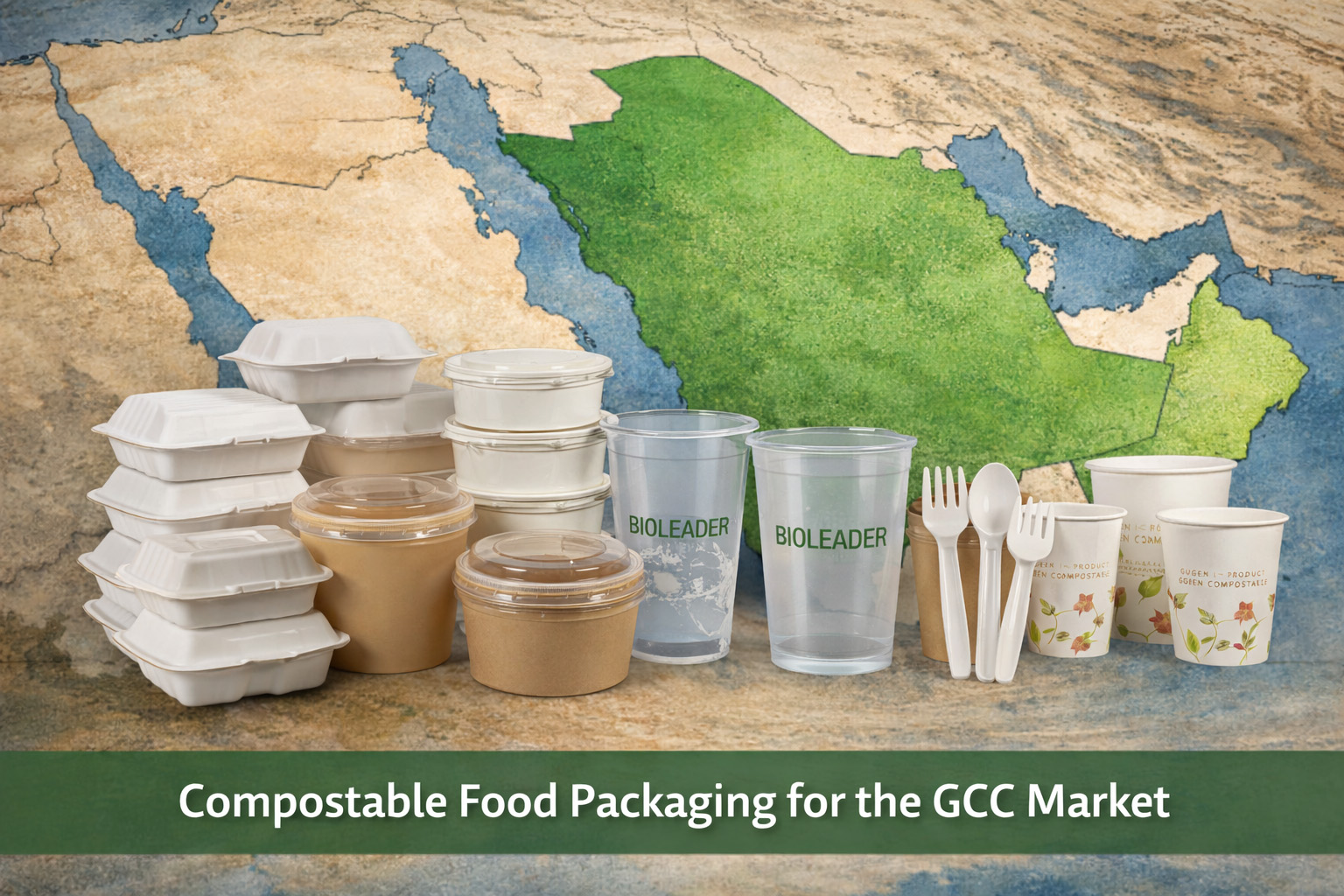
Step 1: Product Selection, Supplier Evaluation, and Contract Confirmation
The import process begins with clear product definition. Saudi authorities evaluate disposable tableware primarily by material composition and food-contact risk, not by appearance or packaging.
Importers should first confirm:
Product category (cutlery, cups, bowls, containers)
Intended use (hot food, cold beverages, takeaway, catering)
Material type (CPLA, PLA, bagasse pulp, coated paper, etc.)
Supplier evaluation is a compliance-critical step. A qualified Chinese manufacturer should be able to provide:
Stable material formulations
Previous export experience to GCC or Middle East markets
Factory qualification documents and food safety systems
Cooperation on SABER documentation and audits
A formal sales contract should clearly define material type, compliance responsibilities, HS code reference, and certification cooperation, as these elements directly affect SABER approval outcomes.
Step 2: Mandatory Product Testing and Material Compliance
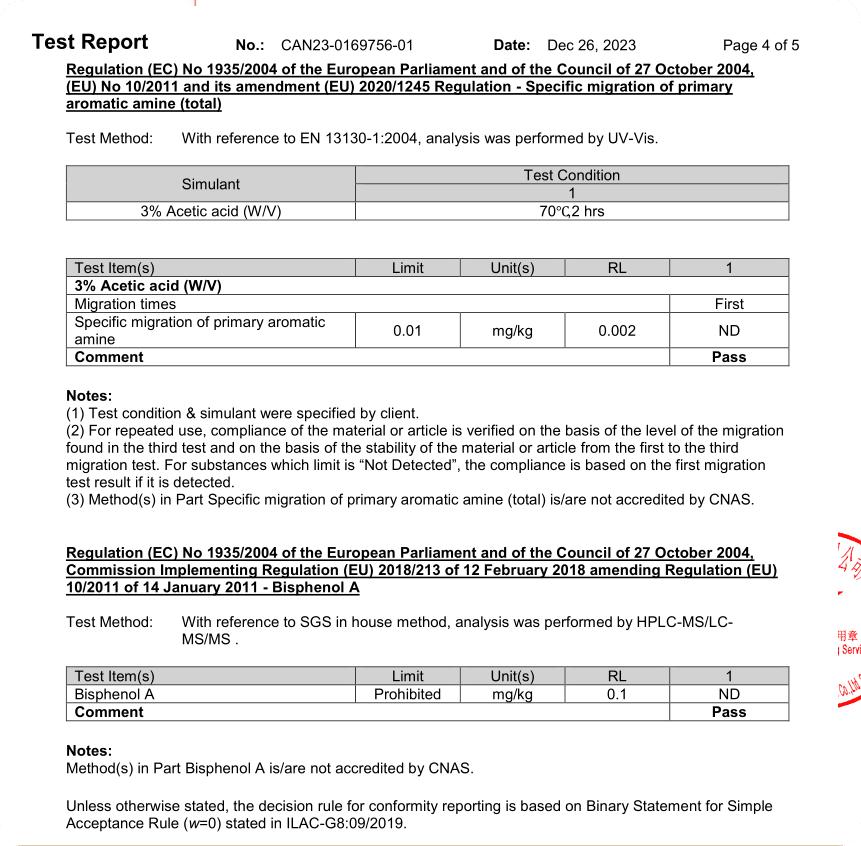
Disposable tableware must undergo material-specific testing. Different materials cannot share the same test report, even if products look similar.
Testing Standards and Scope
Applicable standards
Saudi local standard: SASO 2677
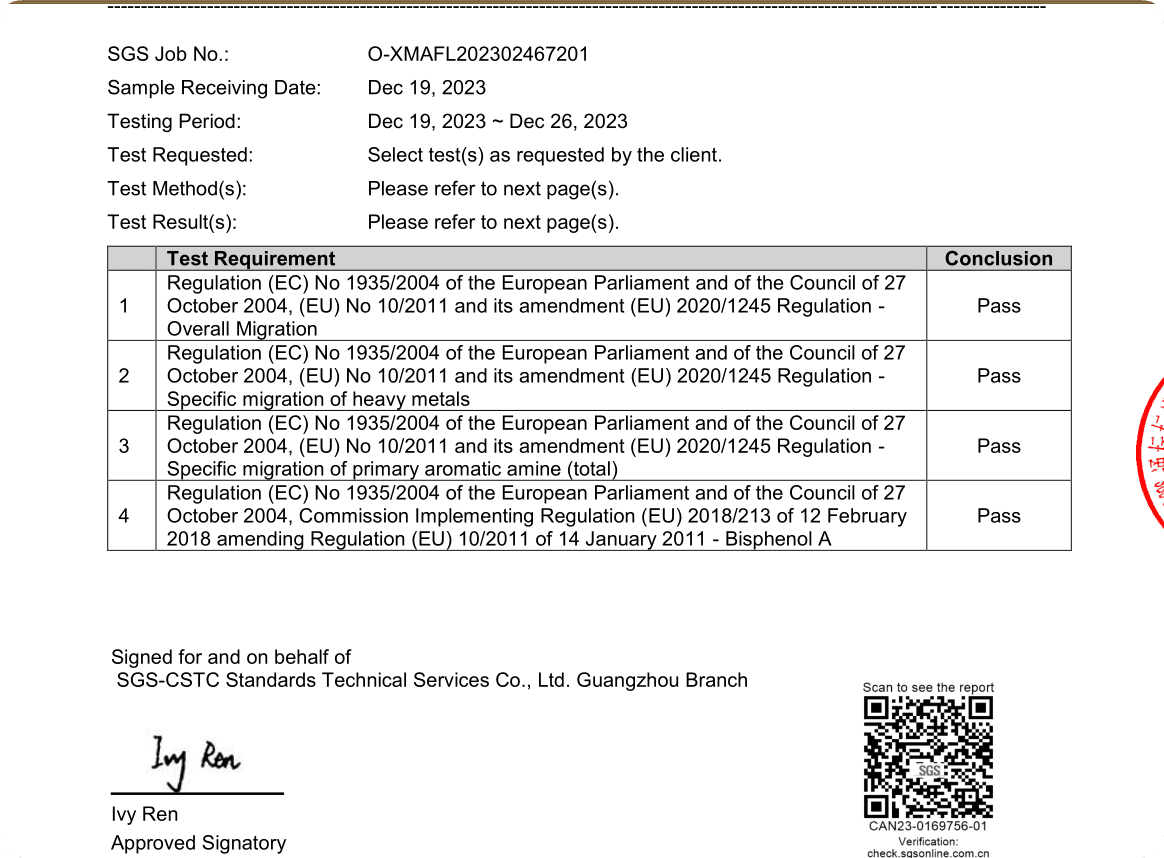
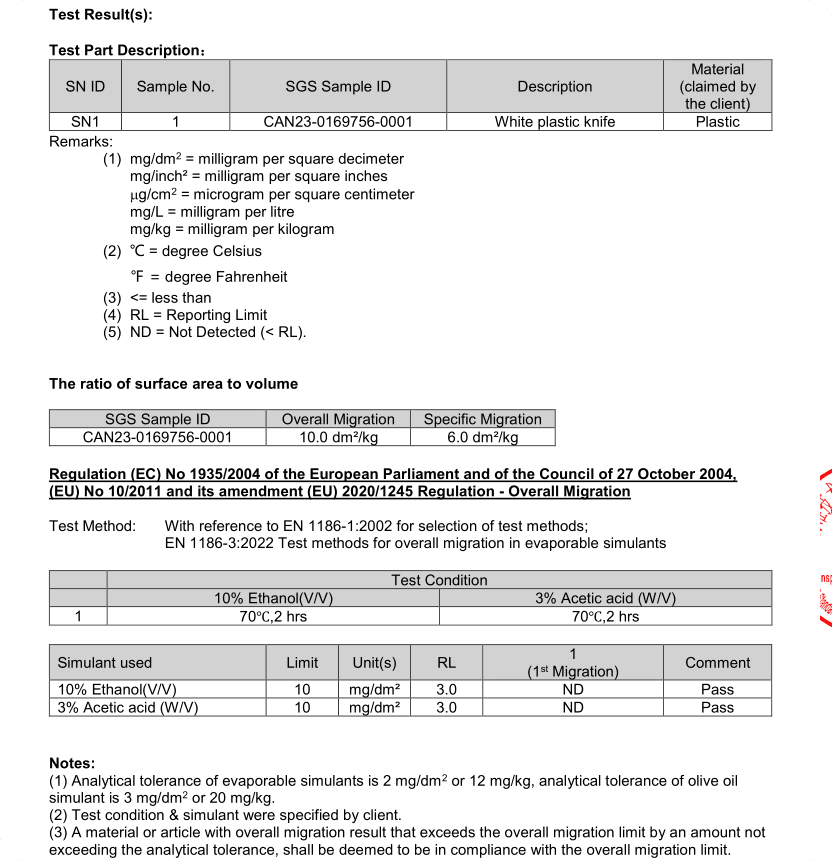
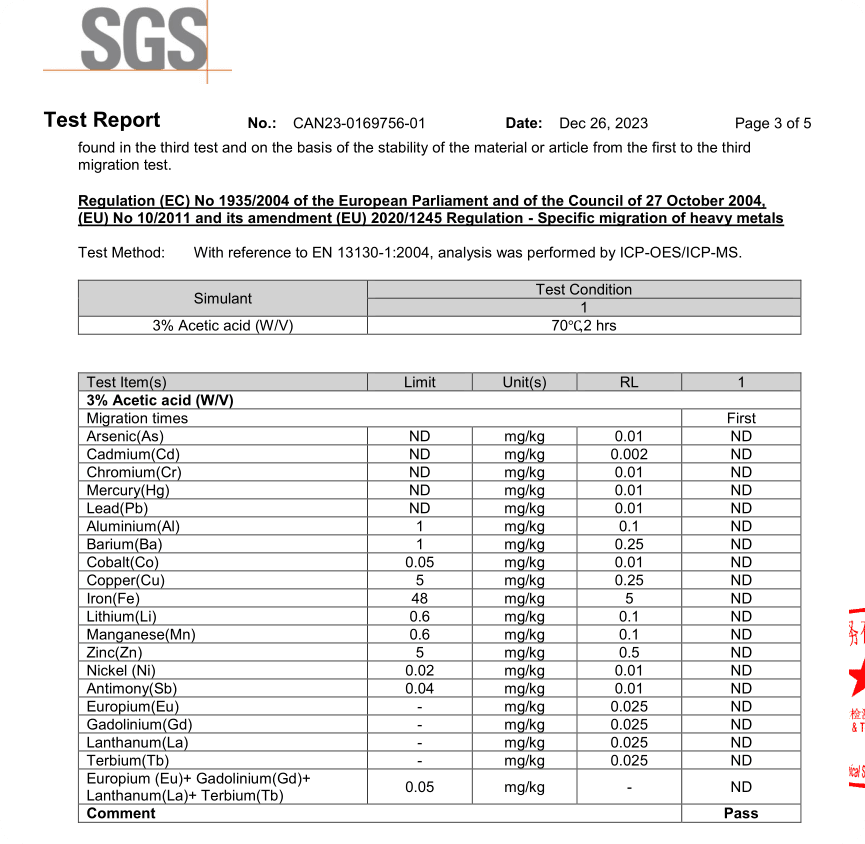
Or EU food-contact regulation: EU 10/2011 (widely accepted in practice)
Laboratory requirement
Testing must be conducted by a CNAS-accredited laboratory
 |  |
 |  |
Core Test Items
Overall migration using food simulants
Specific migration of aromatic amines
Heavy metal migration limits
Sensory evaluation (odor, taste, appearance)
Test reports are typically valid for 2 years.
For biodegradable disposable tableware, additional biodegradability registration certificates (such as BPI or OK Compost) are required to support environmental claims.
Cost reference:
Approx. USD 450 per test report (single material category)
Material-Level Compliance Examples Commonly Seen in Saudi Imports
Example 1: CPLA Cutlery for Hot Food Applications
CPLA cutlery (forks, spoons, knives) is commonly used for hot food takeaway and catering, placing it under higher regulatory scrutiny.
From a compliance perspective:
CPLA cutlery must be tested separately from PLA cups or cold-use items
Testing typically focuses on:
Overall migration under high-temperature food simulants
Aromatic amine specific migration
Heavy metal migration
During SABER PC application, Saudi auditors often request clear confirmation of heat-resistance claims and supporting technical documentation
In practice, CPLA cutlery is frequently reviewed during factory audits, especially when biodegradability or heat-resistance claims appear on labels or product descriptions.
Example 2: PLA Cups for Cold Beverage Use
PLA cups designed exclusively for cold beverages are generally considered lower risk than hot-food tableware.
Typical compliance characteristics include:
Separate EU 10/2011 or SASO-compliant testing for PLA material
Overall migration testing using cold food simulants
Clear labeling stating “cold use only”, with no hot-fill or heat-resistance claims
When product use is clearly defined, PLA cups often experience faster SABER PC approval cycles and fewer follow-up questions from auditors.
Material Risk & SABER Overview
| Material Type | Typical Use | Risk Level | Key Compliance Focus | SABER Notes |
|---|---|---|---|---|
| CPLA Cutlery | Hot food | High | High-temp migration, aromatic amines | Frequently reviewed during audits |
| PLA Cups | Cold drinks | Medium–Low | Overall migration (cold simulants) | Faster approval if use is limited |
| Bagasse Tableware | Hot & cold food | Medium | Heavy metals, sensory testing | Stable approval with consistent pulp |
| Kraft Paper Bowls | Soups & takeaway | Medium | Coating migration safety | Coating must be clearly declared |
Step 3: SABER PC Certificate (Product Conformity Certificate)
Saudi Arabia requires regulated products to be registered in the SABER system.
PC Certificate Key Points
Applicant: Saudi importer (SABER account required)
Documents required:
Product technical description
Valid test reports
Factory qualification documents
Product and label photos
Disposable tableware is classified as a high-risk food-contact product, which often triggers factory inspection.
Factory Audit
Conducted by Saudi-appointed auditors at the Chinese factory
Audit validity: 1 year
Cost reference: approx. USD 350 per audit
Once approved, the PC certificate is valid for 1 year and can be reused for multiple shipments of the same product and material.
Step 4: Shipping Planning and SABER SC Certificate
Bulk disposable tableware shipments are typically transported by sea freight, while samples or urgent orders may use air freight.
SC Certificate (Shipment Certificate)
Required for each shipment
Importer binds the valid PC certificate in SABER
Submits bill of lading, commercial invoice, and packing list
2025 regulatory update:
SC certificate must be issued before cargo arrival
SC must be linked to the bill of lading
Cost reference:
USD 260 (PC + SC per product line)
PC: valid 1 year
SC: single shipment only
Step 5: Port Arrival, Customs Clearance, and Duties
When goods arrive at Saudi ports (such as Jeddah Islamic Port), importers submit:
PC certificate
SC certificate
Original bill of lading
Commercial invoice
Packing list
Certificate of origin (if required)
Biodegradability certificates (if applicable)
Saudi Customs may verify documents, inspect labeling and material claims, or conduct random sampling.
Import duties:
Non-GCC origin goods generally face at least 5% customs duty, depending on HS code
Once duties and fees are paid, compliant goods are released.
Step 6: Bioleader® – Reliable Disposable Biodegradable Tableware Supply from China
Bioleader® provides export-ready biodegradable tableware solutions tailored for Saudi and GCC markets.

Product Portfolio
Sugarcane bagasse plates, bowls, and clamshell containers
Kraft paper bowls and takeaway packaging
Value for Saudi Importers
Material-specific testing aligned with Saudi and EU standards
SABER PC & SC documentation support
Factory audit coordination
Stable supply for 20ft and 40HQ container orders
Understanding the Full Import Logic Behind Saudi-Compliant Disposable Tableware
Why: Saudi Arabia emphasizes food safety and material traceability for disposable products.
What Options: Materials such as CPLA cutlery, PLA cups, bagasse pulp, and coated paper each follow distinct testing and risk review paths.
Considerations: Early audits, accurate material classification, and correct shipment timing are decisive for smooth clearance.
FAQ – Importing Biodegradable Disposable Tableware into Saudi Arabia
1. How do you import biodegradable disposable tableware into Saudi Arabia?
To import biodegradable disposable tableware into Saudi Arabia, the Saudi importer must classify the product by material, complete material-specific food contact testing, register the product in the SABER system, obtain a Product Conformity Certificate (PC), and apply for a Shipment Certificate (SC) before shipment arrival. Customs clearance is completed after document verification and payment of applicable duties.
2. What qualifications are required to import biodegradable tableware into Saudi Arabia?
The importer must be a Saudi-registered company with a valid commercial registration and an active SABER account. Only the Saudi importer is authorized to apply for SABER certification, while overseas manufacturers provide test reports, factory documents, and technical support.
3. What certificates are required to import biodegradable disposable tableware into Saudi Arabia?
The required certificates typically include:
SABER Product Conformity Certificate (PC) – valid for one year
SABER Shipment Certificate (SC) – required for each shipment
Material-specific food contact test reports (SASO standards or EU 10/2011)
Factory qualification documents
Biodegradability certificates (such as BPI or OK Compost) for products making environmental claims
All certificates must match the declared material type and intended use of the product.
4. How much does certification and compliance typically cost in Saudi Arabia?
Typical reference costs include approximately USD 450 per material-specific laboratory test report, around USD 350 for a factory audit when required, and about USD 260 for SABER certification per product line, with the PC certificate valid for one year and the SC certificate valid for a single shipment.
5. How does customs clearance work for biodegradable tableware in Saudi Arabia?
After arrival at a Saudi port such as Jeddah, the importer submits the PC certificate, SC certificate, bill of lading, commercial invoice, packing list, and supporting documents to Saudi Customs. Customs may inspect the shipment, and once duties—generally at least 5% for non-GCC origin goods—are paid, the goods are released.
6. What are the most common compliance risks when importing biodegradable tableware into Saudi Arabia?
The most common compliance risks include incorrect material classification, missing or expired test reports, late issuance of the SABER SC certificate, and unclear food-contact or biodegradability labeling, which may result in shipment delays or customs rejection.
Copyright Notice:
© 2026 Bioleader®. If you wish to reproduce or reference this content, you must provide the original link and credit the source. Any unauthorized copying will be considered an infringement.