Disposable soup containers have become indispensable for foodservice, from quick-serve restaurants to home meal delivery. Among these, the 12 oz capacity paper bowl is a workhorse: large enough for a hearty serving yet compact enough for portability. This guide explores everything you need to know about the 12 oz paper soup bowl—its dimensions, volume, and ideal applications—while highlighting two leading materials: kraft paper soup bowls and biodegradable sugarcane (bagasse) bowls.
The Importance of the 12 oz Paper Bowl
Portion control: A 12 oz bowl holds a standard single-serve portion of hot soup, stew, chili, or pasta.
Versatility: Perfect for both liquid and semi-solid meals—think ramen, chowder, smoothie bowls, and poke.
Convenience: Fits in most cup holders, lunch bags, and delivery carriers.
Cost-effectiveness: Balances material cost and customer satisfaction better than oversized or undersized containers.
Whether labeled “paper soup bowls,” “disposable hot soup bowls,” or “best paper bowls for hot soup,” the 12 oz form factor dominates the market.
Typical Dimensions of a 12 oz Paper Bowl / Cup
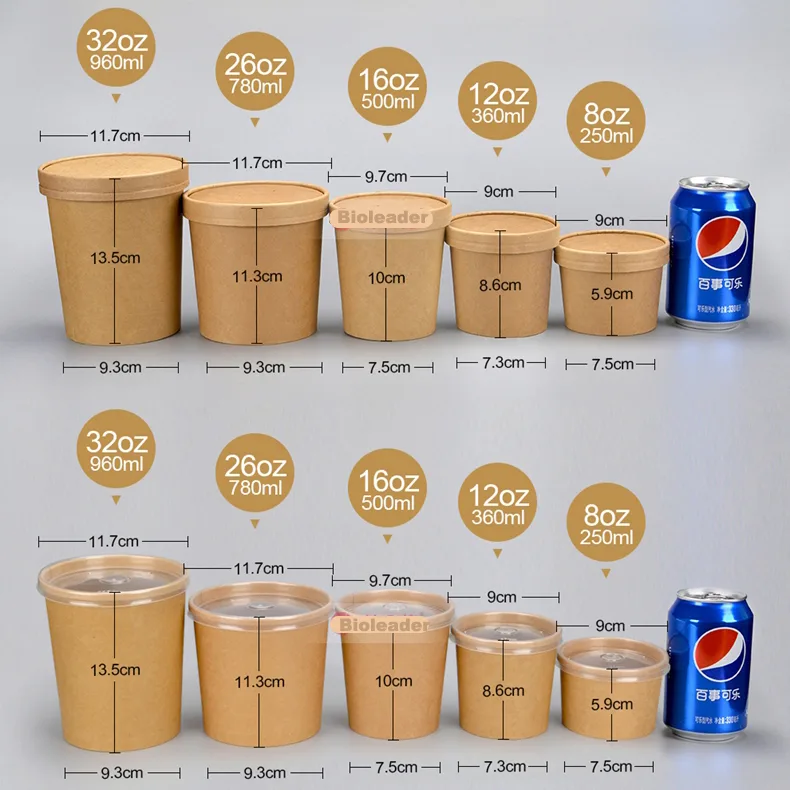
A 12 oz (≈355 ml) paper bowl is designed for single-serving portions—soups, salads, desserts or sides—and typically has the following physical dimensions. Although sizes vary slightly by manufacturer, a standard 12oz paper bowl typically measures:
12oz paper soup bowl size:
| Types | Top diameter | Bottom diameter | Height | Wall thickness |
| Cup 1(dia 90mm) | 90mm≈3.54 inch | 73mm≈2.87 inch | 86mm≈3.39 inch | 0.012–0.015 inches (0.3–0.38 mm) |
| Cup 2(dia 98mm) | 98mm≈3.86 inch | 81mm≈3.19 inch | 70mm≈2.76 inch | 0.012–0.015 inches (0.3–0.38 mm) |
12oz paper bowl size for salad & ice cream…
| Types | Top diameter | Bottom diameter | Height | Wall thickness |
| Cup 1(dia 90mm) | 98mm≈3.86 inch | 80mm≈3.15 inch | 72mm≈2.83 inch | 0.012–0.015 inches (0.3–0.38 mm) |
| Cup 2(dia 98mm) | 100mm≈3.94 inch | 80mm≈3.15 inch | 80mm≈3.15 inch | 0.012–0.015 inches (0.3–0.38 mm) |
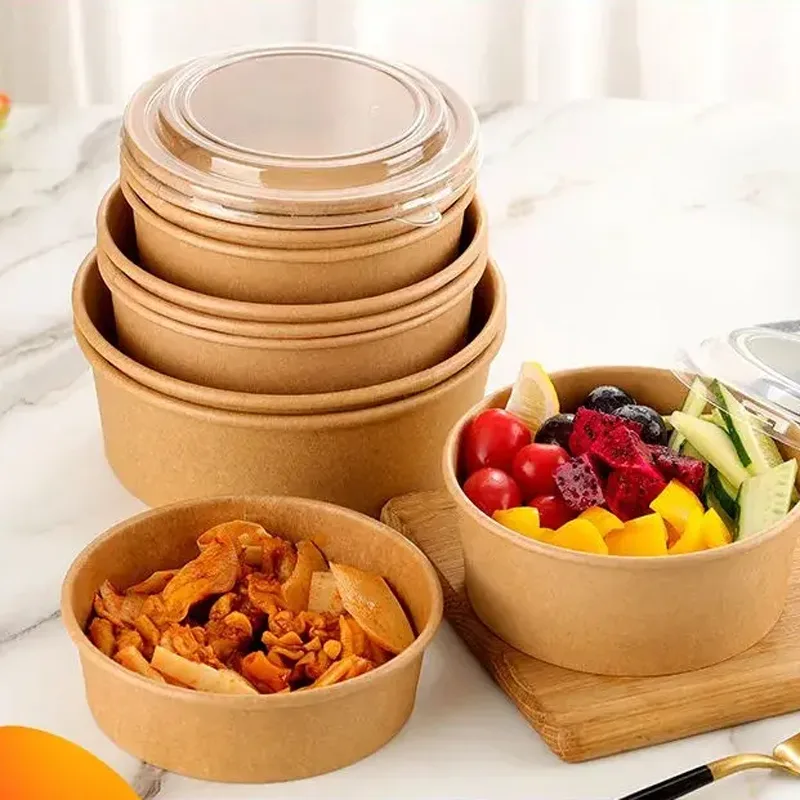
A standard 12 oz paper bowl will be roughly 3½″–4″ in diameter at the top, about 2½″–3½″ tall, with capacity for 355 ml of product. Always check your supplier’s exact spec sheet to ensure compatibility with your filling, sealing, and presentation requirements.
Paper Bowl Formats and Features
Single-Wall vs. Double-Wall
Single-Wall Paper Bowls
Construction: One ply of paperboard with a PE or PLA liner.
Pros: Lightweight, low cost; suitable for quick consumption.
Cons: Limited insulation; hot liquids transfer heat to the hand.
Double-Wall (Insulated) Paper Bowls
Construction: Two plies of board separated by an air gap.
Pros: Superior insulation; eliminates the need for sleeves.
Cons: Higher material cost; slightly bulkier.
Lids and Accessories
Flat paper lids: Snap-on design, stackable; ideal for soups-to-go.
Dome paper lids: Accommodate toppings like croutons or herbs.
Sleeves: Kraft sleeves add insulation for single-wall bowls.
Look for paper soup bowls with lids if you offer delivery or mobile service.
Why Kraft Paper Soup Bowls Excel
Kraft paper soup bowls are made from unbleached, high-strength kraft board (300–400 gsm). Key benefits:
Natural aesthetic: Brown finish conveys eco-friendliness.
Grease & heat resistance: Plant-wax or water-based liners keep liquids in and hands cool.
Customization: Soy-based ink prints enhance branding.
Home compostability: Unlined kraft bowls break down in 60–90 days.
Recyclability: Accepted by many curbside paper recycling programs when clean.
As best paper bowls for soup, kraft bowls combine performance and sustainability.
Why Bagasse Bowls Shine
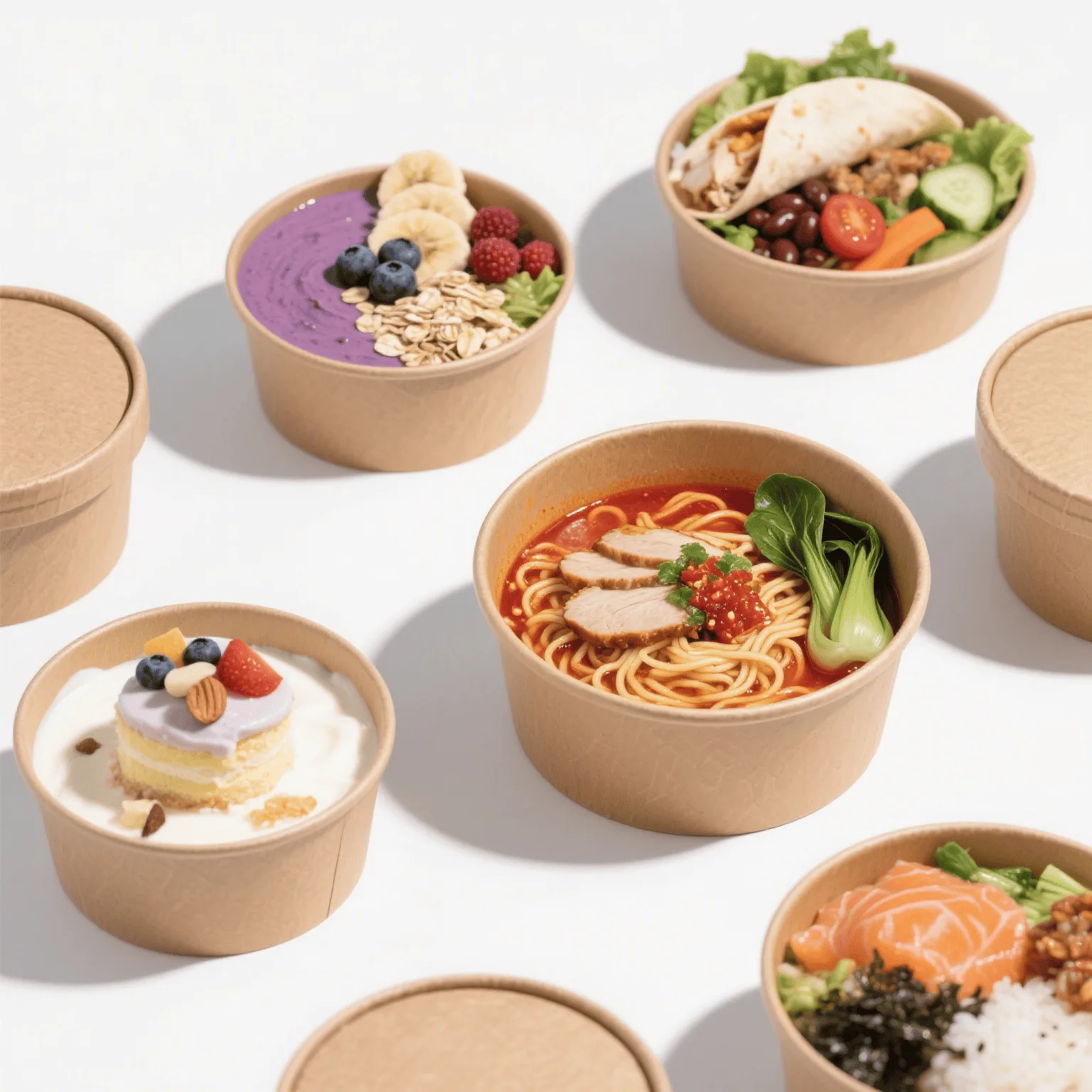
Biodegradable sugarcane bagasse bowls leverage agricultural waste:
Zero plastic: No PE/PLA liners needed.
Sturdy form: Matches plastic’s rigidity in drop and crush tests.
High heat tolerance: Safe to microwave and serve up to 120 °C.
Compostable everywhere: 85–90% breaks down in home and industrial compost in 75 days.
Closed-loop economy: Upcycles sugarcane byproduct, reducing waste streams.
For high-volume operations, bagasse bowls are the top choice among Disposable hot Soup Bowls.

Practical Applications for 12 oz Bowls
Quick-Serve Restaurants: Standard menu item for chowders, ramen, and bisques.
Food Trucks & Cafés: Portable servings for on-the-go customers.
Meal-Kit Services: Pre-filled noodle or grain bowls for home assembly.
Food Delivery Platforms: Ensures spill-free transport with paper bowls with lids.
Catering & Events: Lightweight, stackable, and compostable at festivals or corporate functions.
From casual lunches to upscale pop-ups, 12 oz paper bowls adapt seamlessly.
Expert Insights, Industry Trends & Case Studies
The shift toward fiber-based disposable soup bowls isn’t just driven by marketing buzz—it reflects deep changes in regulation, consumer behavior, and proven operational success.
1. Industry Perspectives
“Fiber soup bowls are the fastest-growing category in disposable foodware,” says Dr. Elena Ramos, Packaging Sustainability Lead at the Foodservice Packaging Institute. “By 2026, over 70% of quick-serve chains in North America will have phased out polystyrene in favor of kraft or bagasse bowls.”
Dr. Ramos’s forecast aligns with regulatory momentum: more than 30 U.S. states and several EU member countries have enacted bans or restrictions on foam food containers, accelerating the move to renewable alternatives. Meanwhile, a Sustainable Packaging Coalition survey finds that 68% of diners are willing to pay a 5% premium for compostable packaging, and 75% of quick-serve operators plan to switch to fiber bowls by 2025.
2. Market Growth Data
The global disposable bowl market reached $5.3 billion in 2023 and is projected to grow to $7.1 billion by 2028 (CAGR 6.2%).
Fiber bowls (paper and bagasse) now command 42% of total volume, up from 27% in 2018.
Quick-serve, meal-kit, and catering segments are the fastest adopters, citing waste-cost savings and brand differentiation.
3. Case Study A – Urban Soup Chain
In mid-2023, a 60-location soup franchise transitioned from polystyrene to Bioleader’s kraft paper soup bowls. Within six months:
Microwave Reliability: 100% of reheated soups showed no leakage or bowl deformation.
Operational Savings: Waste-hauling fees dropped by 34% thanks to composting partnerships.
Customer Satisfaction: On a 5-point scale, heat retention scored 4.9, and hand comfort 4.8, driving an 18% increase in repeat hot-soup sales.
4. Case Study B – University Dining Services
A major Midwestern university replaced plastic bowls in its eight dining halls with Bioleader’s bagasse bowls during Fall 2023:
Landfill Diversion: 52 tons of waste rerouted to compost instead of landfill.
Thermal Performance: 85% of surveyed students agreed the bowls kept soups sufficiently hot between serving and consumption.
Service Efficiency: Complaints about leaks and soggy bowls fell by 25%, streamlining cleanup and improving overall guest experience.
FAQ
Conclusion
A 12 oz paper bowl is more than just a container—it’s a vessel for flavor, convenience, and sustainability. Kraft paper soup bowls and biodegradable sugarcane (bagasse) bowls stand out as leading materials that balance performance with eco-credentials. From quick-serve chains to campus dining and home delivery, the 12 oz paper bowl is the best paper bowl for soup in today’s market. By choosing fiber-based soup bowls, you serve hot soups with confidence, comfort, and conscience.
References
Foodservice Packaging Institute. “Disposable Paper vs. Foam Foodware Market Report.” FPI.org
GreenTech Labs. “Thermal Retention of Disposable Bowls.” GreenTechLabs.org
World Health Organization. “Food Contact Materials: Safety Considerations.” WHO.int
HomeCompost.org. “Backyard Composting Trials of Fiber Bowls.” HomeCompost.org
Wikipedia Contributors. “Disposable Food Packaging.” en.wikipedia.org/wiki/Disposable_food_packaging