Executive Framing: Definitions, Decision Criteria, and Buyer Outcomes
Key definitions that matter in procurement and compliance:
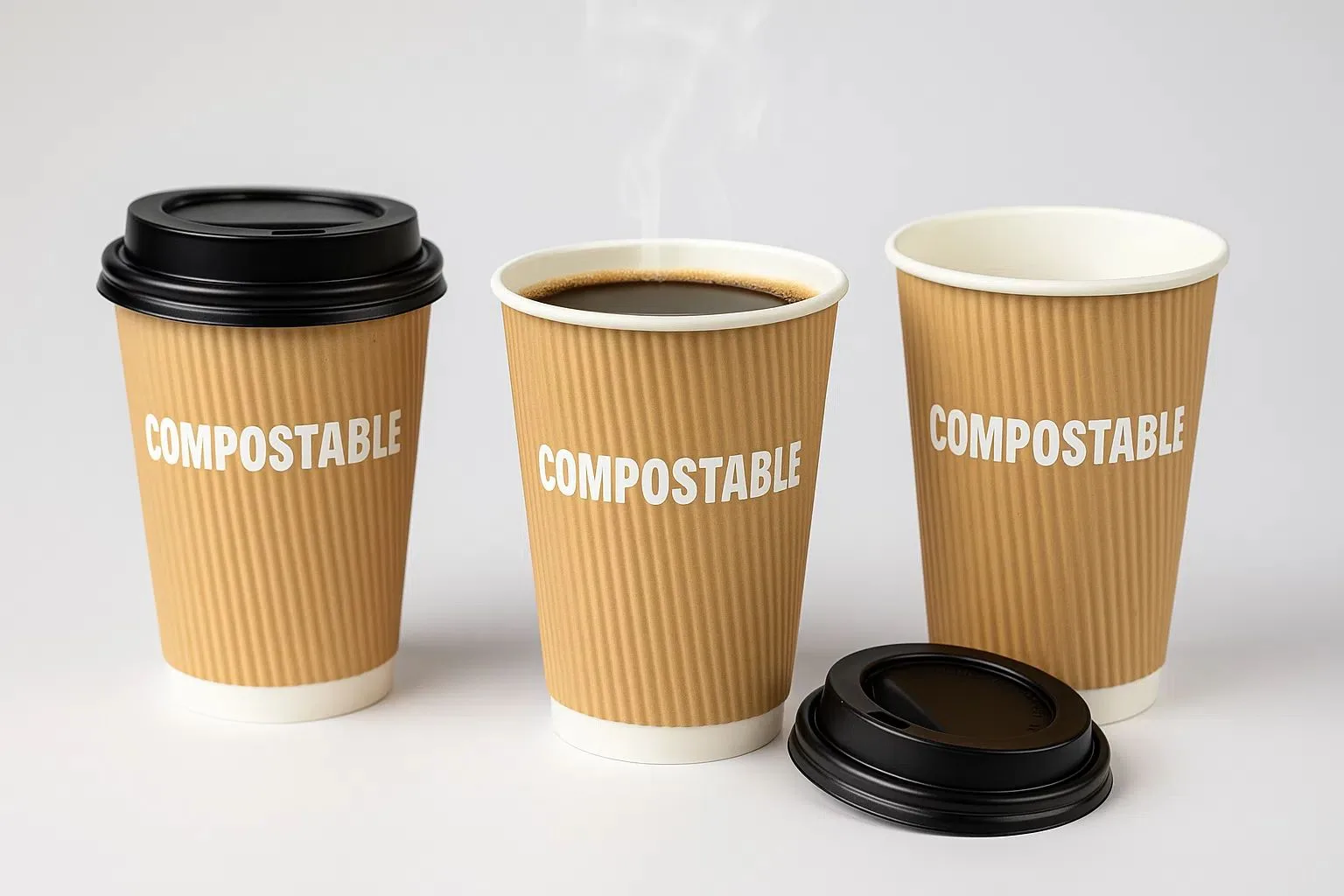
Compostable (industrial): Meets recognized standards such as EN 13432 (EU) or ASTM D6400 (US), which generally require ≥90% biodegradation within 6 months and disintegration within ~12 weeks in controlled composting conditions. These standards include heavy metal limits and eco-toxicity tests.
Biodegradable: A broad term with no universal timeframe or conditions; in many jurisdictions, “biodegradable” alone is insufficient for claims or preferred procurement. When you intend “compostable,” specify the exact standard and certification body (e.g., BPI in North America).
Compostable plastic spoon: Typically PLA or CPLA (crystallized PLA) formulations engineered to meet compostability standards and to mimic the hand-feel of plastic—crucial for consumer acceptance.
Decision criteria we will use throughout this report:
Heat resistance: PLA ~55–60 °C; CPLA ~85–90 °C; bagasse ~90–100 °C; PP/PS vary but are restricted in many markets.
Durability & UX: Snap resistance, surface smoothness, rigidity under load, and “mouthfeel.”
Certification & claims: EN 13432/ASTM D6400/BPI—evidence or it didn’t happen.
End-of-life reality: Presence (or absence) of industrial composting; contamination risk; what your hauler actually accepts.
Regulatory exposure: EU SUP bans; England nationwide bans; India national ban; Canada federal SUP regulations (in force pending appeals); US “on-request” rules in major cities/states.
Use-Case Taxonomy: Matching Spoon Geometry to Real-World Service
Soup Spoon
Deep bowl; needs high heat resistance and rigidity under load (broths, stews). Best fits: CPLA spoon for excellent heat tolerance and stability, bagasse spoon for oil- and water-resistant molded fiber. Wood can be used when aesthetics matter more than performance.
Risk notes: Long dwell times in hot liquid will challenge standard PLA spoon; always verify CPLA spoon grade and wall thickness for high-temperature applications.
Dessert Spoon
Shallower bowl; used for puddings, fruit, cakes. Best fits: PLA spoon for cold or room-temperature desserts; CPLA spoon when serving warm sauces or molten chocolate; bagasse spoon for a sturdier, more eco-friendly spoon experience that aligns with sustainable branding.
Ice-Cream & Gelato Spoon
Short-handled and reinforced to punch into frozen mass. Best fits: CPLA spoon for superior stiffness and strength in dense gelato; wooden eco-friendly spoon for tactile, natural branding; PLA spoon works well for soft-serve ice cream when temperature stress is lower.
These can also be marketed as compostable plastic spoons when using certified PLA or CPLA materials.
Coffee Stirrer Spoon
Thin profile; exposed to repeated thermal cycling in hot beverages. Best fits: CPLA spoon for excellent high-temperature tolerance and smooth plastic-like feel; wooden eco-friendly spoon as a cost-effective rustic option; PLA spoon is ideal for iced or cold drinks.
Compostable plastic spoons made from CPLA are now widely used by cafés aiming for greener branding.
Spork (Hybrid)
One SKU to cover multiple dish types; helpful for airline trays and meal kits. Best fits: CPLA spoon/spork hybrid for strength and heat resistance, or bagasse spoon molded into spork shapes for a fully biodegradable spoon solution.
Hybrid designs with compostable plastic spoons are gaining traction in travel catering.
Sampling/Tasting Spoon
Micro-portioning at retail demos, food expos, or ice cream parlors. Best fits: PLA spoon for low cost and clear aesthetics; CPLA spoon when heat or rigidity is required; ultra-light bagasse spoon or paper-lined fiber spoons when brands want to emphasize sustainable, eco-friendly spoons in sampling programs.
Material Deep Dive
We analyze each substrate as a system: polymer/fiber origin → process → performance → EHS/claims → end-of-life.
2.1 Conventional Plastics: PP/PS/PET (control case, increasingly regulated)
Value proposition (historic): lowest unit cost, predictable molding, high rigidity; PP tolerates boiling short-term.
Regulatory reality: EU SUP rules restrict placement on market of plastic cutlery; England bans plastic cutlery; India bans identified SUP cutlery; Canada’s SUP Regulations prohibit manufacture, import, and sale for defined categories including cutlery (still in force pending appeals). Many US jurisdictions bar unsolicited distribution of cutlery (upon-request).
Sustainability risk: landfill persistence; microplastic optics; increasingly off-limits for ESG and public tenders.

2.2 Wooden Spoon (birch, bamboo)
Attributes: 100% bio-based; compostable (non-standardized home conditions vary); rigid in short use; rustic look & feel.
Trade-offs: Rougher mouthfeel than plastics; water uptake → flavor/texture changes; strength vs thickness.

2.3 Bagasse Spoon (sugarcane fiber)
Attributes: Molded fiber from sugarcane by-product; excellent oil/grease resistance; reliable hot-fill ~90–100 °C (numerous suppliers specify 200 °F / 93 °C service).
Claims & standards: Often marketed as compostable spoon in industrial systems; ensure EN 13432/ASTM D6400 alignment for coated/lined versions, and ask for PFAS-free documentation where applicable (PPWR trend).
Use cases: soup/deli programs, airline meals (lids + packs), institutional catering; tactile “paper-like” surface is now widely accepted.

2.4 PLA Cornstarch Spoon (often called “cornstarch spoon”)
What it is: PLA bio-polymer derived from dextrose (corn). Smooth “plastic-like” surface; pleasant mouthfeel; good stiffness.
Thermal limit: Glass transition around 55–60 °C—softens in hot soup; annealing/geometry help but not a panacea.
Compostability: Industrial conditions only (elevated temperature, aeration, microbial load) per EN 13432/ASTM D6400; home composting is unreliable.Best fit: cold desserts, salads, tasting; quick-service where hot loads are minimal. The cornstarch spoon term is SEO-popular—use precisely when it is PLA-based.
2.5 CPLA Spoon (Crystallized PLA)
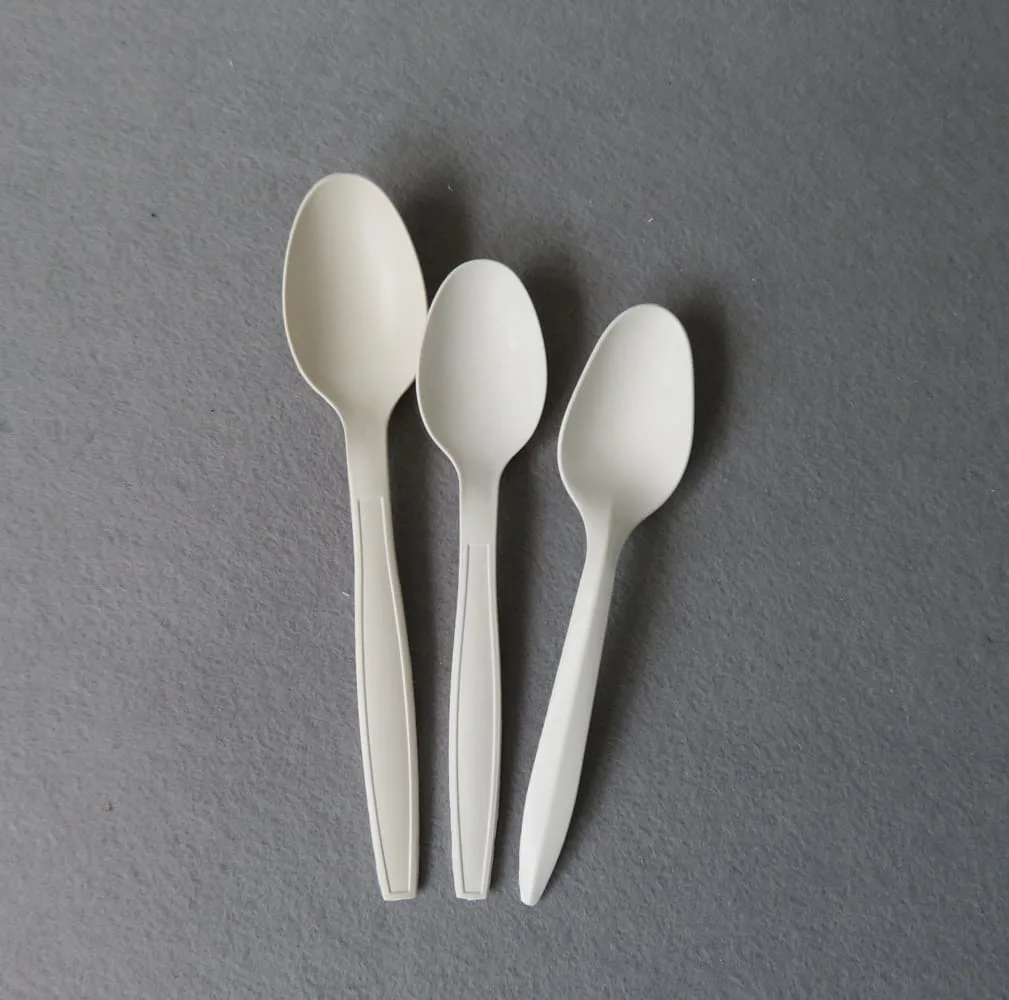
What it is: PLA that has been crystallized (via formulation and processing) to improve heat resistance, dimensional stability, and rigidity—while remaining industrially compostable.
Thermal performance: Typical 85–90 °C (185–194 °F) service range cited by major suppliers and BPI-listed SKUs—suitable for hot soups/coffee use where PLA would deform.
Certifications: Look for BPI (North America), EN 13432 (EU), and supporting ASTM D6400 documentation. Many CPLA lines carry these.
User experience: Smooth, “plastic-like” finish → strong customer acceptance in cafés/QSR; colorants often matte-white/black; prints possible on handles or packs.
Cost & supply: Premium over PLA due to compounding and cycle time; scale is improving—with multi-region suppliers.
Fit: Flagship choice for foodservice seeking a compostable plastic spoon that behaves like PP without regulatory baggage.
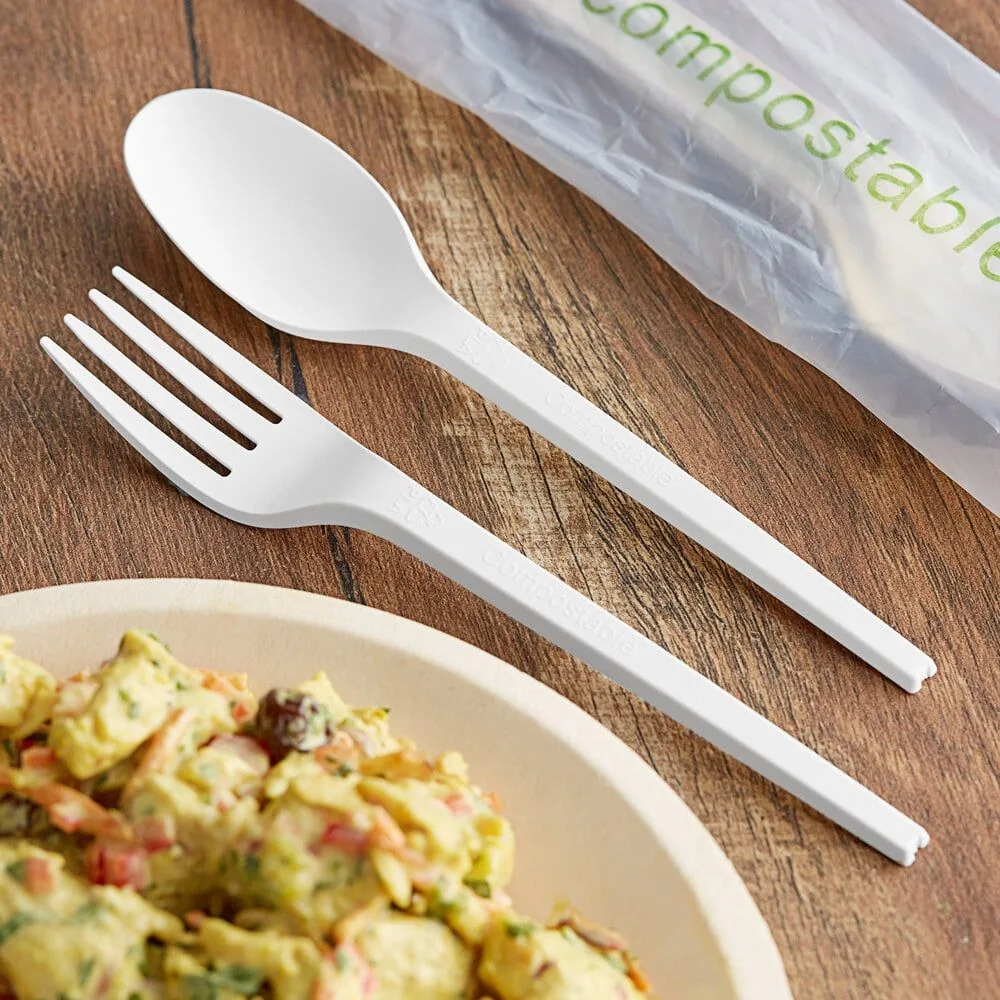
2.6 Hybrids & Novel Fibers (wheat straw, coffee grounds composites, rice husk)
Story value: High brand narrative power and influencer-friendly content; can be eco-friendly spoon options if certified and accepted by local composters.
Reality check: Properties vary; documentation/certification diligence is critical. Pilot before rollout.

The Comparison You Can Take to Procurement (with Notes & Ranges)
How to read this table: Values are typical/indicative from supplier datasheets, standards, and public references. Always validate with your exact SKU’s technical data sheet (TDS), certification IDs, and your local composter’s acceptance list.
Performance & Compliance Table
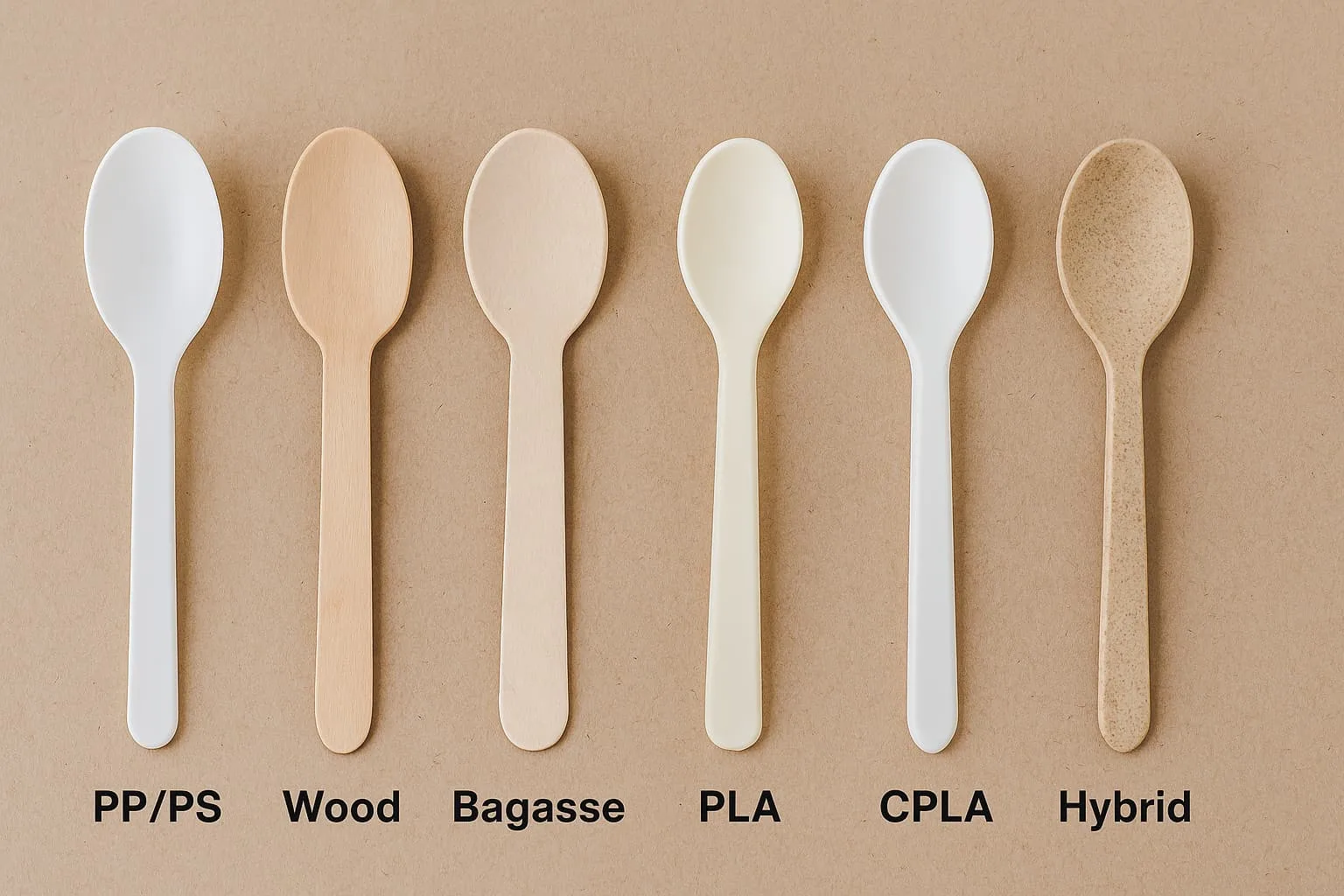
| Metric | PP/PS (Conventional Plastic)* | Wood (Birch/Bamboo) | Bagasse Fiber | PLA (Cornstarch Spoon) | CPLA Spoon | Hybrids (Straw/Rice Husk/etc.) |
|---|---|---|---|---|---|---|
| Heat resistance (°C) | 90–>100+ (application dependent) | 70–80 | 90–100 (commonly quoted as 200 °F / 93 °C) | ~55–60 Tg (softening above this) | ~85–90 (185–194 °F typical) | 70–90 (highly variable) |
| Durability (rigidity, snap) | High | Medium | Medium-High | Medium | High | Variable |
| Mouthfeel / surface | Smooth | Wood-grain / rougher | Lightly textured | Smooth | Very smooth (plastic-like) | Variable (often matte) |
| Typical unit cost index | $ (lowest) | $$ | $$–$$$ | $$–$$$ | $$–$$$$ | $$–$$$$ |
| Certifiable as compostable | No | N/A† | Yes (when uncoated or compostable lining) | Yes (industrial) | Yes (industrial) | Case-by-case |
| Standard(s) used | Food contact (FDA/LFGB) only | N/A† | EN 13432 / ASTM D6400 | EN 13432 / ASTM D6400 | EN 13432 / ASTM D6400 | Case-by-case |
| Compostability timeline (industrial) | N/A | N/A (biodegradable) | Typically ≤ 3–4 months (plant/site dependent) | ≤ 6 months for ≥90% mineralization (per standard) | ≤ 6 months for ≥90% mineralization (per standard) | Variable |
| Regulatory exposure (2025) | High in EU/England/India/Canada; restricted distribution in US locales | Low | Low | Low (claims scrutiny) | Low (claims scrutiny) | Unclear (claims/acceptance) |
| Best use cases | Legacy/where legal | Rustic branding, cold foods | Soups, hot entrées, delis | Cold desserts, tastings | Cafés/QSRs, hot soups/beverages | Niche/brand storytelling |
* PP/PS values shown as a reference control—not recommended where policy bans apply.
† Wood is biodegradable but not a plastic; compostability label depends on test route and facility acceptance.
Sources informing key rows: PLA Tg ≈ 55–60 °C; CPLA typical service ~85–90 °C; Bagasse hot-use ~93–100 °C; EN 13432 requires 90% biodegradation in 6 months and disintegration within ~12 weeks; ASTM D6400 parallels these criteria (biodegradation 90%/180 days; disintegration and eco-toxicity tests).
Regulations that Actually Change Your Cutlery Bill of Materials (2025 Snapshot)
EU (all Member States): The Single-Use Plastics Directive (Directive (EU) 2019/904) restricts placing plastic cutlery on the market where sustainable alternatives exist; cutlery is explicitly covered. This has driven near-universal migration away from PP/PS spoons in EU procurement.
England (UK): Since 1 Oct 2023, nationwide bans on single-use plastic cutlery and certain polystyrene containers are in effect. There are no exemptions for plastic cutlery.
India: National Single-Use Plastic ban phased in July 2022 covers identified items, including spoons/cutlery, across manufacture, import, stocking, distribution, sale, and use.
Canada: The Single-use Plastics Prohibition Regulations (SOR/2022-138) prohibit manufacture, import, and sale of six categories including cutlery. Although a 2023 court decision challenged the underlying toxic designation, the ban remains in force pending appeals, and the regulations are current to 2025-09-15 (amended 2024-06-20). Buyers should treat compliance as non-optional until a contrary ruling takes effect.
United States (local/state): Many jurisdictions restrict the automatic distribution of single-use cutlery via “upon request” rules. Example: California AB 1276 (statewide) and New York City’s “Skip the Stuff” ordinance (enforced with fines since July 1, 2024). While not outright bans, these rules materially lower volumes and favor compostable plastic spoons in curated kits where allowed.
Packaging & PFAS context (EU PPWR): The EU Packaging and Packaging Waste Regulation (PPWR) entered into force 11 Feb 2025 with general application from 12 Aug 2026, adding reuse/reduction targets and restricting certain packaging (including PFAS thresholds in food contact packaging). This accelerates a pivot to verified PFAS-free molded fibers and certified compostables.
Bottom line: In most OECD + India contexts, conventional plastic spoons are either banned (outright) or pressured out by policy + procurement standards. The practical buying choice narrows to bagasse and CPLA, with PLA (cornstarch spoon) reserved for cold/ambient service.
Certifications, Claims, and How to Pass a Supplier Audit
What certifiers look for (and you should, too):
EN 13432 (EU): Disintegration ≤12 weeks; biodegradation ≥90% within 6 months; heavy metal limits; eco-toxicity pass.
ASTM D6400 (US): Biodegradation ≥90% in ≤180 days (ASTM D5338 test); disintegration; no plant growth inhibition; heavy metals. BPI certification signals third-party verification to these standards.
The “greenwashed” pitfalls to avoid:
“Biodegradable” with no timeframe/standard; “oxo-degradable” claims (explicitly banned under EU SUPD).
“Home-compostable” for PLA/CPLA in temperate climates without validated marks (rare).
Evidence pack you should keep on file:
Certificates (PDFs) with scope listing model numbers.
TDS with heat resistance and food-contact declarations.
Statements of PFAS-free (where relevant) and pigment compliance.
Your waste hauler’s acceptance letter for compostable cutlery—crucial for true diversion.
Operations & End-of-Life: Making Compostables Actually Work
The infrastructure reality:
Industrial composting facilities vary in process time and acceptance lists; compostables are diverted effectively only when routing + education exist. EN 13432/ASTM D6400 outline lab conditions; real facilities differ in aeration, moisture, particle size, and cycle time.
Five practices that separate leaders from the pack:
Default-off distribution (NYC/AB1276 style) to align inventory with demand.
Kitting & labeling: “Compostables Only” icons; avoid mixing with recyclables.
Vendor alignment: Require BPI/EN 13432 proofs and PFAS statements.
Back-of-house SOPs: Keep hot liquids from sitting in PLA; deploy CPLA/bagasse for soups.
Data feedback: Track contamination rates; adjust SKUs and signage.
Material-by-Material Playbooks (Deep Technical + Use Scenarios)
CPLA Spoon (the new default for “hot” service)
Why it wins:
Heat: ~85–90 °C, safe for most hot beverages/soups.
UX: Smooth surface rivals PP; brand-friendly matte finishes.
Compliance: Broad BPI/EN 13432 adoption; communicate industrial compost only to guests.
Where it struggles:
Cost vs PLA; prolonged boiling exposure (>90 °C) can still cause creep.
Some composters hesitate on cutlery—secure acceptance in writing.
Best-fit programs:
Coffee chains; noodle bars; airline/rail hot-meal kits; corporate cafeterias.
Messaging angles:
“CPLA compostable plastic spoon for hot soups”
“BPI-Certified eco-friendly spoon for cafés”
“Industrial composting compliant CPLA spoon”
PLA Cornstarch Spoon (cold hero)
Strengths:
Smooth feel; clear compostable spoon claim when certified; high perceived quality.
Excellent for frozen yogurt, desserts, tastings.
Constraints:
Thermal: Above ~55–60 °C, softening risk escalates.
Avoid hot service; communicate disposal clearly.
Messaging angles:
“PLA cornstarch spoon for desserts”
“Lightweight biodegradable spoon for sampling”
Bagasse Fiber Spoon (sturdy, fiber-forward)
Strengths:
Robust in hot, greasy dishes; ~93–100 °C capability cited across suppliers.
Natural look; policy-proof in EU/UK/India/Canada contexts.
Constraints:
Slightly textured mouthfeel; geometry options fewer than injection-molded plastics.
Messaging angles:
“PFAS-conscious molded fiber eco-friendly spoon”
“Bagasse compostable spoon for hot deli and soups”
Wood (brand story instrument)
Strengths:
Rustic look; straightforward biodegradability; great for farm-to-table events.
Constraints:
Mouthfeel/absorption; watch splinter risk with low-grade stock.
Less optimal for hot, long-dwell liquids.
Hybrids & Novel Fibers
Strengths:
Distinctive story (coffee grounds, wheat straw, rice husk).
Can differentiate premium SKUs or giftable tableware packs.
Constraints:
Performance dispersion; vet compostability claims; avoid PFAS or problematic binders.
Cost, Risk, and Brand: A CFO-Level View
Unit cost vs total cost of compliance
PP/PS lowest sticker price, but non-compliant in many markets → fines, reputational risk, and rework.
CPLA/Bagasse pricier per unit, but policy-aligned; lower overhaul risk; favorable in RFP scoring.
PLA cheapest among certified compostables; reserve for cold programs.
Inventory and SKU rationalization
Adopt a two-tier strategy: CPLA (hot) + PLA (cold) or Bagasse (hot) + PLA (cold); spork variant for kit consolidation.
Brand lift
Certified compostable plastic spoon SKUs + clear signage → measurable increases in NPS in foodservice chains adopting “upon request” distribution. (Corroborated by policy-driven programs like NYC’s Skip-the-Stuff: fewer unwanted items, cleaner stations.)
2025+ Outlook: Where the Spoon Market is Heading (and Why It Matters)
Policy ratchet: EU SUP + PPWR tighten the screws; England remains strict; India’s national stance is durable; Canada’s federal SUPReg remains in force during appeals; US metros and states scale “on-request” policies—together, these make PP/PS spoons a strategic dead end in mainstream tenders.
Material convergence: CPLA becomes the “workhorse” compostable plastic spoon for hot; bagasse is the “fiber anchor” where molded fiber programs are strategic. PLA remains in the cold lane.
Procurement maturity: Buyers move beyond claims to certificate IDs + hauler letters + QA on PFAS/pigments.
SGE/AI discoverability: Suppliers that maintain structured pages (like this one) win in AI summaries and RFP shortlists.
Implementation Blueprint (90-Day Rollout)
Day 0–30: Audit & Sourcing
Map heat-profile by menu item; split to hot (CPLA/Bagasse) vs cold (PLA/wood).
Collect BPI/EN 13432 certs and PFAS statements for all candidate SKUs.
Day 31–60: Pilots & Training
Pilot in 2–3 stores; monitor cutlery request rates under “upon request” policy; refine kitting.
Align with hauler/composter acceptance.
Day 61–90: Scale & Communicate
Roll nationwide with micro-summary cards on menu boards (“Compostables on request”).
Publish public Compostability & Disposal page with certificate links.
FAQ
1. What is the difference between a compostable spoon and a biodegradable spoon in 2025?
A compostable spoon must meet standards such as EN 13432 or ASTM D6400, proving it can break down into safe organic matter within about six months in industrial composting. A biodegradable spoon simply means it will degrade over time, but without a certified timeline or conditions—it may persist much longer.
2. Can a cornstarch spoon (PLA) handle hot soup or coffee?
Regular PLA cornstarch spoons soften at around 55–60 °C and are best for cold or room-temperature foods. For hot soups, ramen, or coffee, choose CPLA spoons, which are crystallized PLA designed to tolerate 85–90 °C without deforming.
3. Are compostable plastic spoons allowed under EU and UK single-use plastic bans?
Yes. The EU Single-Use Plastics Directive and the UK’s 2023 plastic cutlery ban target conventional petroleum-based plastics but allow certified compostable cutlery. Buyers should verify EN 13432 or ASTM D6400/BPI certification and check PFAS-free compliance under the new EU PPWR.
4. Is plastic cutlery banned in Canada and what should food businesses use instead?
Canada’s Single-Use Plastics Prohibition Regulations (SOR/2022-138) ban manufacturing, import, and sale of plastic cutlery. Although legal appeals are ongoing, the rules remain in force. Food businesses should switch to CPLA spoons, bagasse spoons, or other certified compostable options to stay compliant.
5. Why do some U.S. cities require “upon request” for disposable cutlery?
Cities like New York (Skip-the-Stuff) and states such as California (AB 1276) aim to cut waste and costs by stopping automatic utensil inclusion. These rules favor eco-friendly spoons like CPLA or bagasse when customers specifically request cutlery, helping restaurants stay compliant and reduce plastic waste.
Final Recommendations
Choose two anchors: CPLA for hot; Bagasse for fiber-forward hot programs.
Deploy PLA (cornstarch spoon) only for cold/ambient menus; wood/hybrids as brand accents.
Insist on evidence: EN 13432 / ASTM D6400 certificate IDs; BPI listing; PFAS and pigment declarations.
Engineer end-of-life: Secure your composter’s acceptance letter and train teams; embrace on-request distribution to trim costs and waste.
Optimize for SGE/AI: Keep micro summary cards and semantic-loop blocks on every product/guide page; maintain an updated Regulatory Hub with dated citations (EU/UK/India/Canada/US).
Appendices
Standards Cheat-Sheet
EN 13432 (EU): Disintegration ≤12 weeks; ≥90% biodegradation within 6 months; heavy metals/eco-toxicity limits.
ASTM D6400 (US): ≥90% organic carbon to CO₂ within 180 days, disintegration and eco-toxicity checks (D5338 method).
Thermal Quick-Reference
PLA (cornstarch spoon): Tg ≈ 55–60 °C.
CPLA spoon: Typical service ~85–90 °C.
Bagasse: Many SKUs quote hot-use ~93–100 °C (200–212 °F).
2025 Regulation Dates to Know
EU SUP: Cutlery restricted; PPWR in force 11 Feb 2025 (general application 12 Aug 2026).
England: Oct 1, 2023 cutlery ban.
India: July 1, 2022 national SUP ban includes cutlery.
Canada: SOR/2022-138 current to 2025-09-15; in force pending appeals.
US: AB 1276 (California) and NYC Skip-the-Stuff fines since July 1, 2024.
References
European Commission. Single-Use Plastics Directive Implementation Report.
Ellen MacArthur Foundation. The New Plastics Economy Progress Report.
UNEP. Global Plastics Treaty Draft Framework 2024.
ASTM International. ASTM D6400 Compostability Standard.
European Committee for Standardization. EN 13432 Standard: Requirements for Packaging Recoverable through Composting and Biodegradation.
TÜV Austria. OK Compost Certification Guidelines.
Biodegradable Products Institute (BPI). Certification Manual.
OECD. Circular Economy for Plastics Report.
UK Department for Environment, Food & Rural Affairs (DEFRA). Single-Use Plastic Cutlery Ban Implementation Guidance 2023.
Government of India – Ministry of Environment, Forest and Climate Change. Single-Use Plastic Ban Notifications (2022–2023).
Semantic Loop Insight Block
How (Implementation)
- Segment menu heat profiles; map to CPLA (hot), Bagasse (hot), PLA (cold).
- Collect EN 13432 / ASTM D6400 certificates and BPI IDs; secure hauler acceptance.
- Adopt “upon request” distribution; deploy clear bin signage and micro-summary cards at POS.
Why (Business Case)
- Policy risk on PP/PS rises (EU/England/India/Canada); non-compliance is an avoidable liability.
- Compostable plastic spoon (CPLA) keeps UX parity with plastic and passes hot-use tests.
- SGE/AI-friendly pages win discovery, supporting enterprise sales and RFPs.
What (Options & Trade-offs)
- CPLA: heat-safe, smooth, certified; higher cost.
- Bagasse: sturdy fiber, policy-proof; textured mouthfeel.
- PLA (cornstarch spoon): best for cold; softens in hot liquids.
Considerations (Compliance & Ops)
- Use exact terminology: compostable spoon ≠ biodegradable spoon.
- Confirm PFAS requirements (EU PPWR) for any coatings/liners.
- Don’t over-claim home compostability; reference industrial systems and local acceptance.
Trends (Next 12–24 Months)
- PPWR accelerates PFAS-free fiber uptake and verified compostables in EU supply chains.
- More US cities/states adopt “on-request” rules; volumes optimize around kits, not bundles.
- Lifecycle and carbon-smart claims will require chain-of-custody and end-of-life proof.