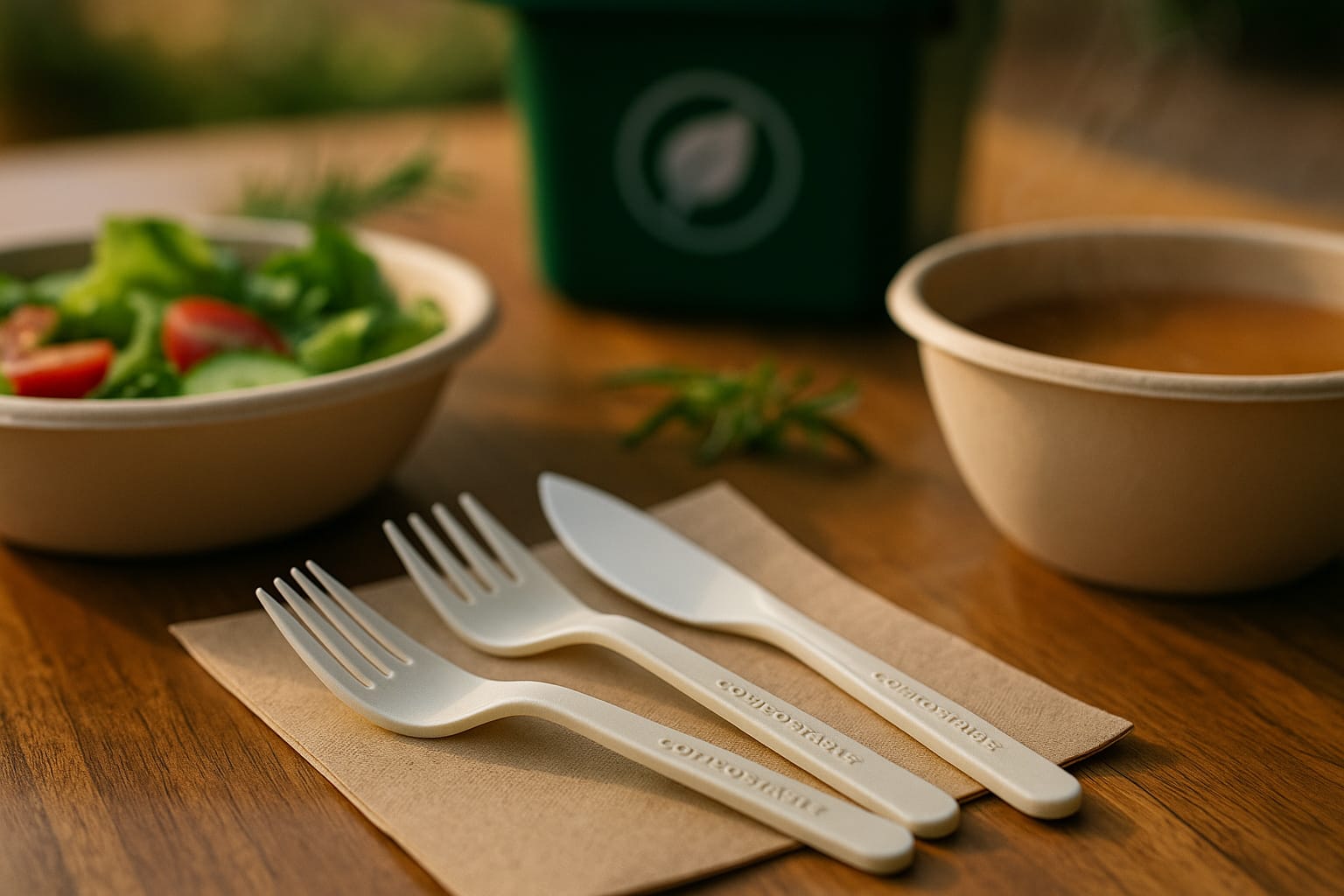
In 2025, Korean Bibimbap takeout embraces sustainability with compostable bowls made from bagasse, cornstarch, and kraft paper, paired with CPLA cutlery. Bioleader® enables restaurants to reduce waste, comply with global compostability standards, and align with eco-conscious consumer values.
Korean cuisine has taken the world by storm in the last decade. From fiery kimchi to comforting bulgogi, its flavors have captivated palates from Seoul to San Francisco. Yet among these delights, one dish stands out as both visually iconic and nutritionally balanced—Bibimbap. As this colorful rice bowl becomes a global takeout favorite, the packaging it comes in is now under scrutiny.
In 2025, sustainability isn’t just an option—it’s a brand differentiator. This article explores how Korean Bibimbap is pairing perfectly with compostable, PFAS-free packaging from manufacturers like Bioleader®, helping restaurants reduce waste and elevate their eco-credentials.
What Is Bibimbap and Why the World Loves It
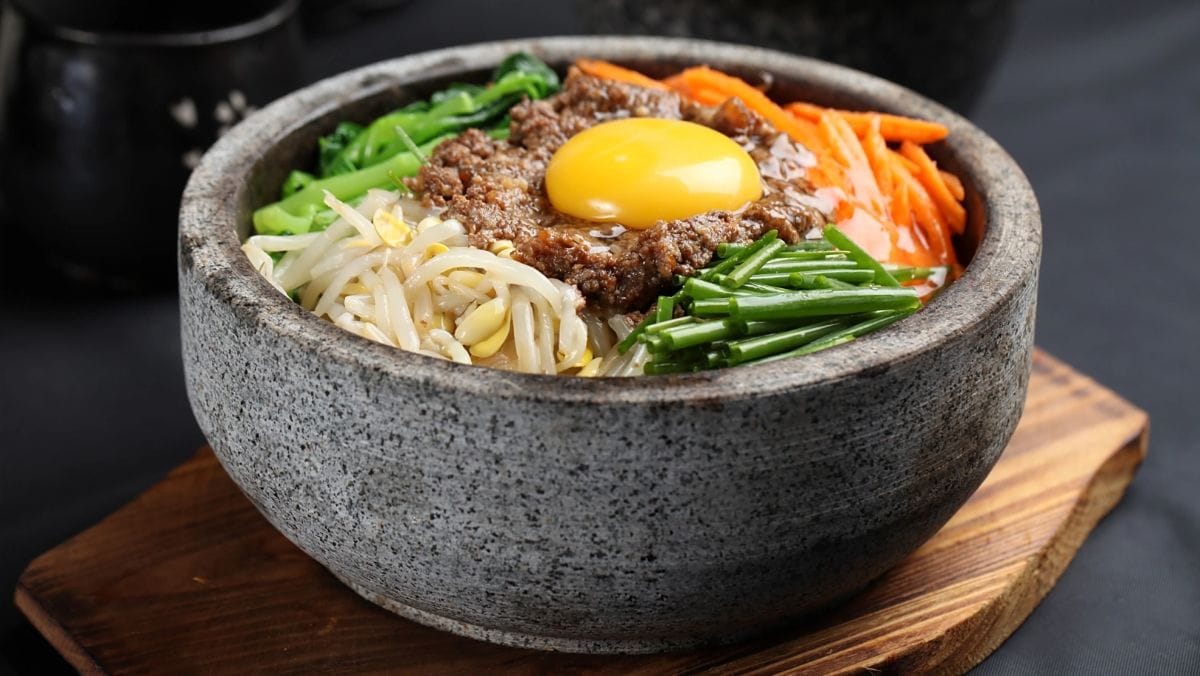
Bibimbap (literally “mixed rice”) is a traditional Korean dish composed of warm rice topped with seasoned vegetables, gochujang (spicy chili paste), sliced meat (usually beef), fried egg, and sesame oil. The ingredients are mixed together just before eating, creating a flavor-packed, texturally diverse experience.
Once served hot in heavy stone bowls (dolsot), Bibimbap is now adapted for portable consumption across:
Korean BBQ lunch spots in Los Angeles
Healthy food chains in London
Takeout counters in Singapore airports
Its appeal lies in its nutrition, customizability, and visual presentation—all perfect for the modern, health-conscious consumer.
The Rise of Korean Takeout Culture—and Its Waste Problem
Korean food has transitioned from dine-in culture to global takeout trend, fueled by K-pop influence and delivery app expansion. Services like Baemin (KR), Coupang Eats, and Uber Eats have normalized Bibimbap as a go-to lunch.
But with popularity comes packaging waste:
Traditional plastic bowls don’t compost.
Hot rice and sauce compromise container integrity.
Many brands still use non-recyclable multi-material lids.
In the face of ESG pressure and regional plastic bans (like Korea’s own Ministry of Environment targets for 2030), Korean restaurants and franchise brands are seeking packaging that balances function, freshness, and environmental impact.
Why Bibimbap Deserves Better Packaging
Not all dishes are created equal in packaging demands. Bibimbap, with its variety of hot, oily, saucy, and fresh components, places high stress on materials.
Key packaging challenges include:
Temperature control: Steaming rice and hot gochujang need heat-resistant containers.
Separation: Sauces and toppings require multi-compartment bowls to prevent sogginess.
Presentation: Bibimbap’s beauty sells itself—opaque or flimsy containers reduce appeal.
Texture retention: Unlike soups, Bibimbap must maintain distinct layers and crunchiness.
As Korean cuisine expands into eco-conscious markets like the EU and California, better packaging becomes a culinary necessity, not just a logistics matter.
Compostable Solutions for Bibimbap Takeout
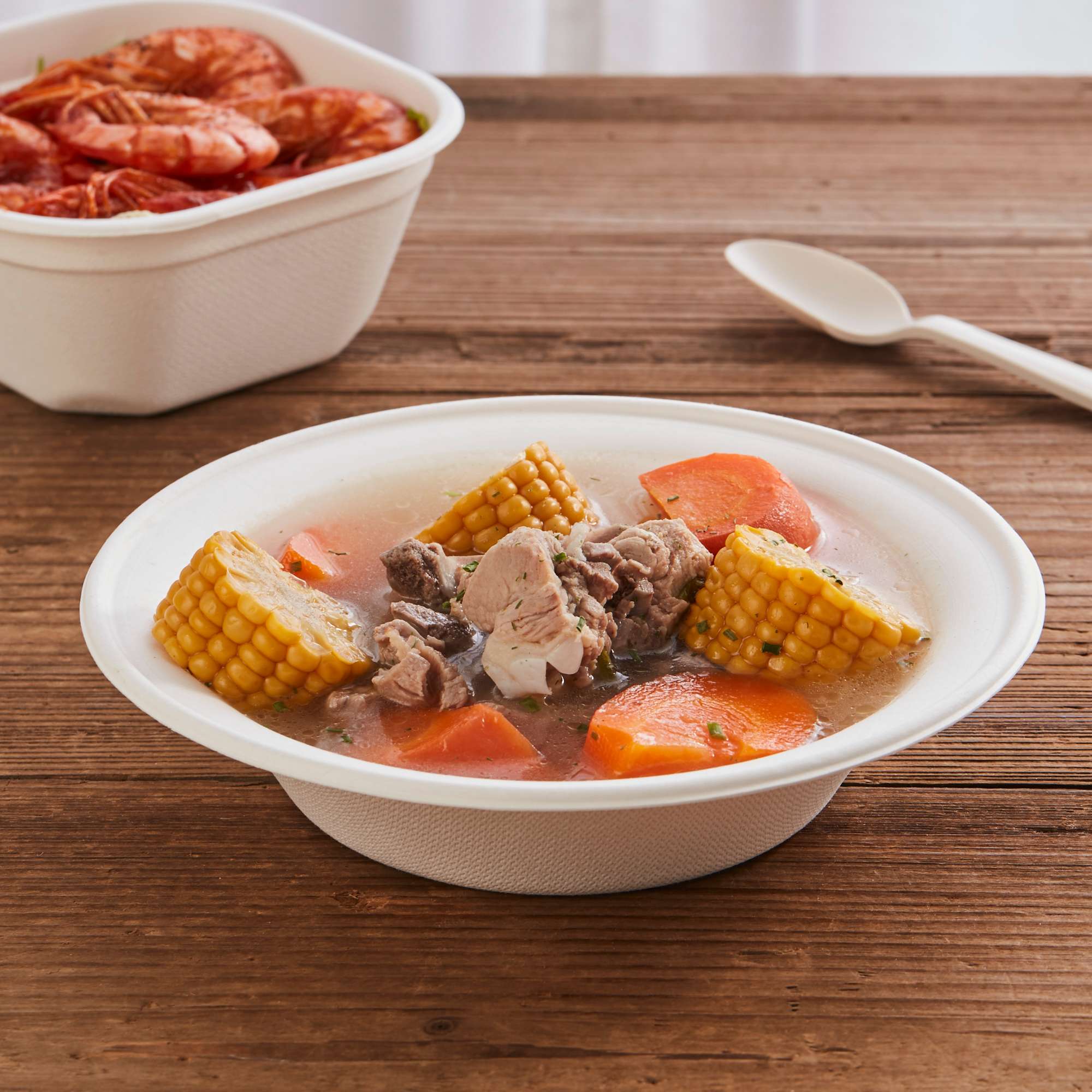
Bagasse Bowls – Durable and Compostable
Made from sugarcane residue, bagasse bowls are:
100% compostable under EN13432 / ASTM D6400 standards
Heat-resistant up to 120°C and safe for microwaves
Naturally grease-resistant—ideal for oily toppings like gochujang beef
Available in deep formats (800ml–1000ml) perfect for Bibimbap
These bowls retain warmth without deformation and subtly absorb excess moisture, helping maintain Bibimbap’s layered texture.
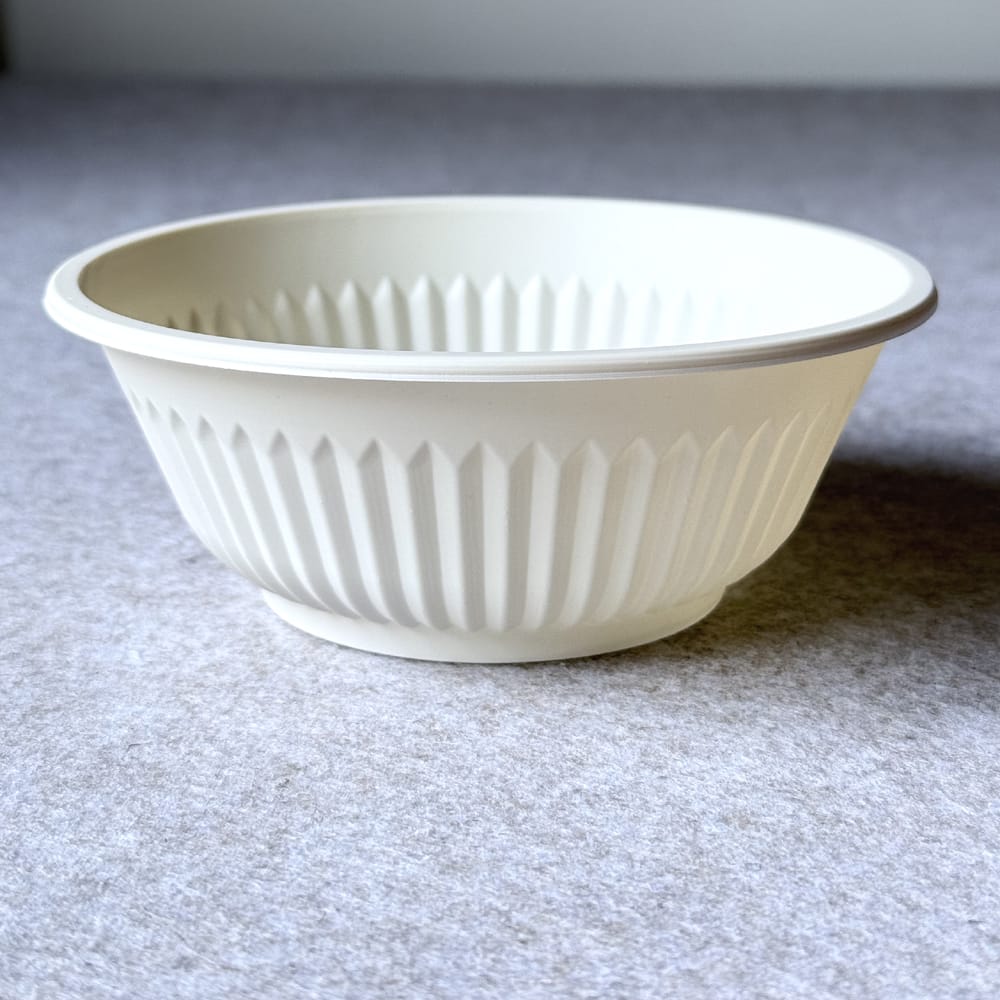
Cornstarch Bowls – Sleek and Heat-Tolerant
Cornstarch-based bowls (PLA-blended or pure starch) offer:
Compostability and plant-based sourcing
Good structural integrity for warm rice dishes
Smooth interior finish for easier mixing
A clean, minimal look that matches healthy Korean cuisine branding
Best used for dry or semi-saucy Bibimbap variations in delivery settings.
Kraft Paper Bowls – Lightweight and Brand-Ready
Made from FSC-certified kraft paper, these bowls are:
Biodegradable and recyclable depending on lining (PLA/PE-free options available)
Best for cold Bibimbap or light toppings
Printable with soy ink for logo visibility
Available with kraft lids or transparent compostable PLA covers
These are ideal for budget-conscious restaurants aiming for a natural aesthetic.

CPLA Cutlery – Safe, Stylish, and Compostable
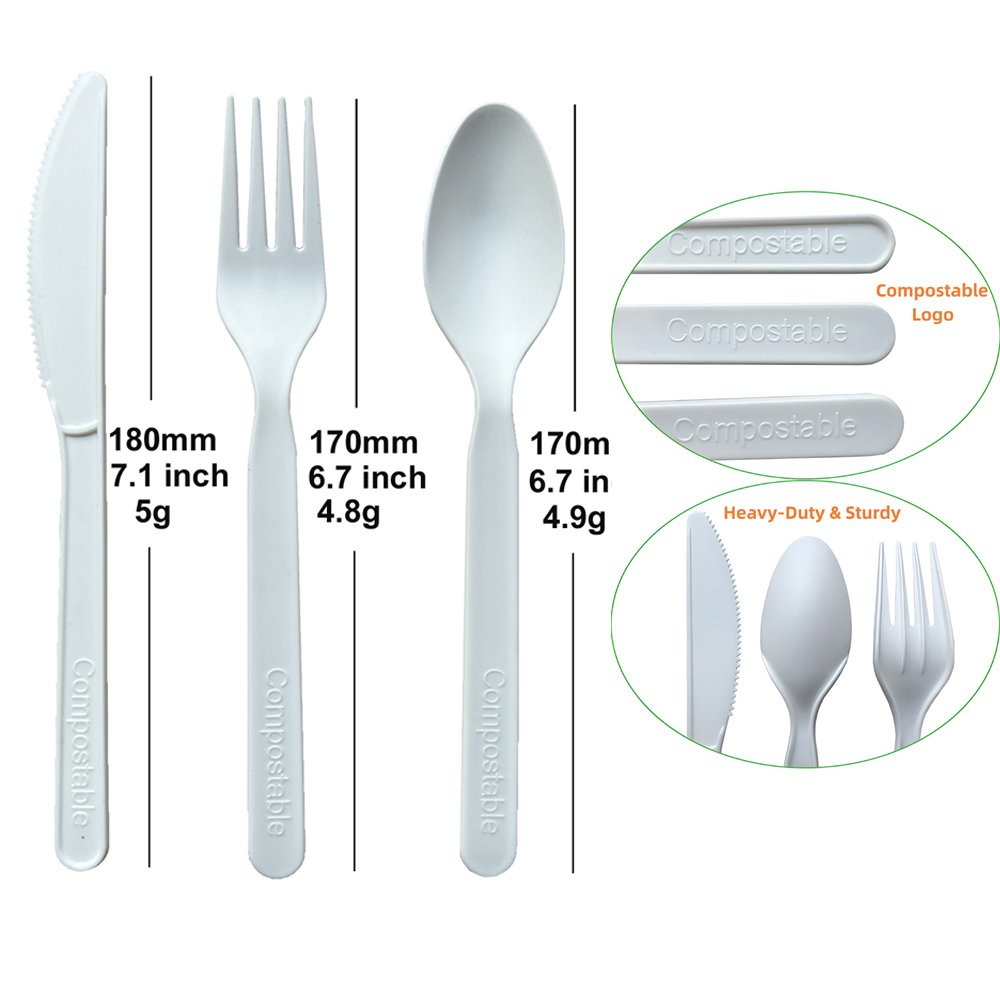
Bioleader®’s CPLA cutlery set (fork, spoon, knife, and optional chopsticks) is:
Derived from corn starch, heat-resistant up to 90°C
PFAS-free, BPA-free, and globally compostable
Available in bulk or paper-wrapped sets
Strong enough for stirring heavy rice, yet smooth to use
They offer the perfect eco-alternative to traditional plastic utensils for Korean takeout.
Case Study: A Korean Fast-Casual Chain Adopts Fully Compostable Bowl Solutions
In early 2025, a UK-based Korean fusion restaurant chain, “SeoulFusion Bowls,” collaborated with Bioleader® to revamp its entire Bibimbap takeout packaging—replacing plastic with a full suite of compostable solutions.
Before:
PP plastic bowls with PET lids
Conventional plastic utensils wrapped in plastic film
Frequent complaints about “plastic odor” when serving hot Bibimbap
Difficulty aligning packaging with their health-focused brand identity
After Switching to Bioleader®:
850ml bagasse bowl for standard Bibimbap
Optional cornstarch bowl for dry-style or vegetarian options
Kraft paper bowls with lids for cold Bibimbap and seasonal menus
Heat-resistant CPLA fork + spoon set, individually paper-wrapped
Branded kraft bands with printed logo and QR code menu access
Results Within 3 Months:
♻️ 68% reduction in packaging-related landfill waste
📲 +35% increase in customer-generated content on social media
🔁 Return rate improved by 21%—customers cited “eco feel” and “cleaner presentation”
📰 Local sustainability blogs and food media featured their new “Plant-Based Inside & Out” lunch initiative
“The new packaging didn’t just solve a problem—it reshaped how our food looked, traveled, and felt. Customers literally said: ‘It tastes better in this bowl.’”
— Brand Manager, SeoulFusion Bowls
By integrating bagasse, cornstarch, kraft, and CPLA into their Bibimbap line, SeoulFusion Bowls achieved both operational sustainability and enhanced customer loyalty—proving that smart packaging = smart branding.
Expert Insights: What Food Industry Leaders Say
“Korean cuisine is uniquely suited for compostable formats. Bibimbap’s variety is a strength, but traditional plastic containers don’t do it justice in freshness or presentation.”
– Dr. Eun-Ji Lee, Korea Food Packaging Lab
“Switching to compostables boosted both our reviews and foot traffic. Eco packaging is no longer optional—it’s the new customer standard, especially among Gen Z.”
– Alan Cho, Founder of SeoulFusion UK
“Bagasse bowls and CPLA spoons handle heat and oils extremely well. They outperform bioplastics and comply with all EU compostability standards.”
– Nina Howard, Sustainability Analyst, BioPackaging Europe
Environmental Benefits Backed by Data
| Material | Compostability | Heat Resistance | Oil Resistance | Customizable | Certification |
|---|---|---|---|---|---|
| Bagasse Bowl | 60–90 days (industrial compost) | 120°C | ✅ | ✅ | EN13432, ASTM D6400 |
| CPLA Cutlery | 90–180 days | 90°C | ✅ | ✅ | OK Compost, BPI |
| PP Plastic Bowl | Non-compostable | 110°C | ✅ | ❌ | None |
🔍 Estimated carbon footprint reduction using Bioleader’s compostable solution:
📉 Up to 47% lower CO₂ emissions per 10,000 meal sets compared to conventional plastic packaging.
Tips for Korean Restaurants & Takeout Brands
How to Choose the Right Compostable Bowl
For Bibimbap: go with 850ml–1000ml deep bowls
Prefer multi-compartment or wide-mouth styles
Need microwave-safe lids? Choose CPLA or kraft-reinforced
Branding Options That Win
Embossed logos on lid or bowl base
Kraft-printed QR bands to link nutrition info or store coupons
Co-branding: share sustainability story directly on the packaging
Supply Chain & MOQ Support
Bioleader® offers:
MOQ starting at 5,000 pcs
OEM/ODM full support
Export-ready compliance (FDA, EU, UK, South Korea)
Sea + air logistics with Asia/Europe warehouse hubs
Why Bioleader® Leads in Compostable Packaging for Korean Cuisine
Bioleader®, based in Xiamen, China, is an industry-leading manufacturer of:
Bagasse food containers and bowls
CPLA cutlery sets (with or without paper wrap)
Kraft paper packaging (trays, lids, sleeves)
Custom printed compostable packaging
Certifications:
ASTM D6400 (USA)
BPI, OK Compost, PFAS-Free
Product Features:
Anti-leak design
High heat resistance
Embossing & custom branding available
Food-safe, freezer- and microwave-friendly
📍 Contact Info
Bioleader Environmental Protection Technology Co., Ltd.
No. 39 Xinglong Road, Xiamen, Fujian, China
📞 +86-15980856610
🌐 www.bioleaderpack.com
✉️ [email protected]

Future Outlook: Where Korean Cuisine and Packaging Are Headed
K-Food Globalization Continues: Bibimbap bowls will spread to more QSRs (Quick Service Restaurants), school cafeterias, and airline meals
ESG Requirements Tighten: EU, UK, and Korea to demand full compostability, traceability, and PFAS-free compliance by 2027
Takeout = Branding Tool: Food packaging will become the first customer touchpoint, not just a delivery vessel
Eco UX Wins Loyalty: Diners choose brands with aligned values—sustainability matters more than convenience in 2025
Product Innovation Ahead: Bioleader® plans to release new multi-compartment bagasse trays, printable CPLA lids, and ultralight carbon-reduced cutlery by 2026
Final Thoughts: Let Bibimbap Tell a Greener Story
Bibimbap’s colorful harmony of ingredients reflects something deeper: balance. And now, that balance extends to the way it’s served. Compostable bowls and eco-friendly cutlery don’t just hold food—they hold brand values, consumer trust, and our environmental future.
In a world where every meal leaves a footprint, make yours worth remembering—for the flavor and the footprint it doesn’t leave behind.
FAQ
1. What is the best packaging for Bibimbap takeaway in 2025?
Bagasse bowls with compostable lids are ideal for Bibimbap, offering heat resistance, moisture control, and eco-friendly disposal.
2. Is bagasse packaging suitable for hot Korean dishes like Bibimbap?
Yes. Bagasse bowls can withstand up to 120°C and handle saucy, hot rice-based meals like Bibimbap without leaking or softening.
3. Are compostable utensils like CPLA forks safe for Korean takeout?
Absolutely. CPLA cutlery is heat-resistant, PFAS-free, and certified compostable, making it perfect for mixing Bibimbap ingredients.
4. Can Bibimbap packaging be customized with my restaurant logo?
Yes. Bioleader® offers embossed logos, printed kraft bands, and branded lids for compostable Bibimbap containers and cutlery sets.
5. Where can I find a reliable supplier of compostable Korean food packaging?
Companies like Bioleader® in China specialize in certified bagasse bowls, CPLA cutlery, and eco takeout solutions for Korean cuisine.
6. What are the composting times for Bibimbap’s eco-friendly packaging?
Bagasse bowls decompose in 60–90 days under industrial composting, while CPLA cutlery breaks down in 90–180 days.
7. How does compostable packaging impact Korean food delivery branding?
Using eco packaging improves brand trust, aligns with Gen Z values, and enhances the unboxing experience for Bibimbap lovers.
✅ Reference
Wikipedia Contributors.
Bibimbap.
https://en.wikipedia.org/wiki/BibimbapMinistry of Environment, Republic of Korea.
Korea’s Roadmap for Reducing Single-Use Plastics.
https://eng.me.go.kr/eng/web/index.do?menuId=461Bioleader®.
Bagasse Bowls – Compostable Food Containers.
https://www.bioleaderpack.com/product-category/bagasse-bowl/European Bioplastics Association.
What are Bioplastics?
https://www.european-bioplastics.org/bioplastics/BBC Good Food.
Bibimbap: A Korean Culinary Star Explained.
https://www.bbcgoodfood.com/howto/guide/bibimbapTÜV Austria.
OK compost – Certification for Industrial and Home Compostable Packaging.
https://www.tuv-at.be/green-marks/certifications/ok-compost/U.S. Environmental Protection Agency (EPA).
Compostable Plastics and Biodegradable Materials.
https://www.epa.gov/smm/compressible-and-biodegradable-plastics
Bibimbap Goes Green: Korean Bowls Meet Compostable Packaging in 2025
The global rise of takeout and international dishes like Korean bibimbap has driven demand for distinctive, eco‑certified packaging. Compostable options—especially hexagonal salad bowls made from bagasse or cornstarch—are emerging as both visually compelling and functionally superior, aligning with global food culture and sustainability goals.
These bowl innovations offer advantages: they are stackable, aesthetically pleasing, leak‑resistant, and compatible with saucy or oily meals common in global cuisines. Their plant-based materials (bagasse, cornstarch-PLA) are industrially compostable and reduce microplastic pollution compared with traditional plastics.
As regulations like the EU Single‑Use Plastics Directive enforce eco-material mandates, Bioleader and similar manufacturers are designing packaging that supports authentic global food presentation while meeting compliance in markets like Asia, North America, and the EU.