Quick Summary: Bagasse and cornstarch are two of the most widely adopted plant-based materials in 2025’s takeout sector. Bagasse excels in heat resistance, oil stability, and structural integrity, making it ideal for hot and heavy foods. Cornstarch offers cost efficiency, smooth texture, and suitability for cold and warm meals. This guide breaks down material origins, real-world food applications, compostability, regulatory alignment, and decision frameworks for fast-food chains, QSR operators, meal-kit brands, and delivery platforms.
Introduction: Why Takeout Brands Must Compare Bagasse and Cornstarch in 2025
The global takeout ecosystem has shifted dramatically in the last three years, driven by consumer expectations for safe, sustainable packaging, and an expanding wave of plastic bans across North America, Europe, and Asia-Pacific. As fast-food chains, delivery-first restaurants, meal-kit brands, and cloud kitchens scale operations, the question is no longer “Should we switch to biodegradable packaging?” but rather “Which biodegradable material delivers consistent performance under real operating conditions?”
Among the many plant-based materials available today, bagasse and cornstarch stand out as the two most common choices. Both are renewable, compostable alternatives to traditional plastics—but their behavior under heat, oil, moisture, and pressure reveals major performance differences that directly influence customer experience and operational reliability.
This comprehensive 2025 guide evaluates both materials through the lens of real-world takeout demands: hot vs cold foods, delivery duration, cost structure, regulatory expectations, and the rising requirement for PFAS-free and industrial-compostable packaging. By understanding their differences, takeout brands can make informed, cost-efficient, and compliance-ready decisions.

1. Material Origins and Composition
1.1 What Bagasse Is: Natural Sugarcane Fiber Pulp
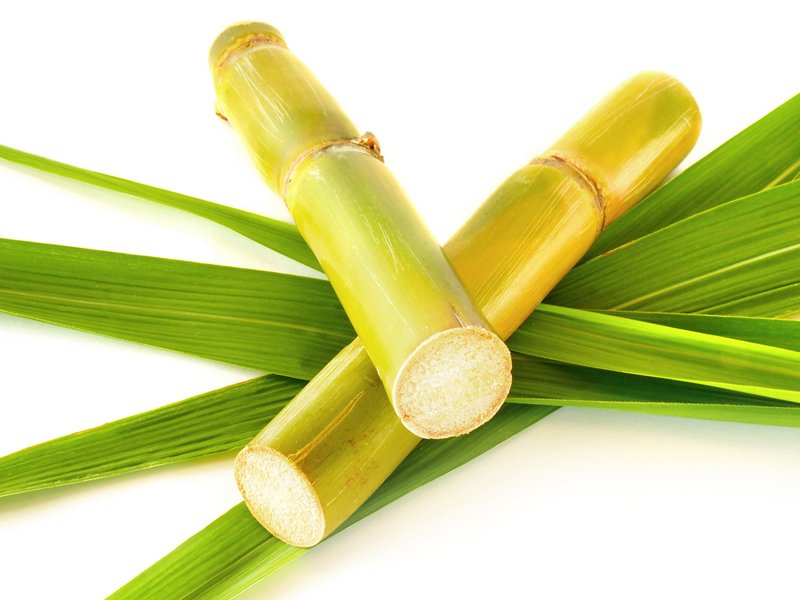
Bagasse is the fibrous by-product left after sugarcane juice extraction. Rather than being discarded or burned, these fibers are processed into molded pulp, creating bowls, clamshells, trays, plates, and bagasse food containers. Bagasse’s high fiber density results in:
natural structural strength
excellent rigidity under pressure
stable performance with hot and oily dishes
low thermal conductivity
eco-friendly credibility due to waste-stream repurposing
The material is inherently heat-resistant, typically tolerating 100–120°C, making it suitable for hot soups, stir-fried dishes, curries, ramen, and oven-safe packaging when laminated appropriately.
1.2 What Cornstarch Material Is: Starch-Based Bioplastic Formulations
Cornstarch packaging is made from processed corn starch blended with biodegradable polyesters such as PBAT or PLA. The material is smooth, slightly glossy, and carries a distinctive pale yellow tone. It is often used for:
cutlery
small bowls
dessert containers
salad packaging
economy meal sets
Cornstarch performs well for warm and cold foods but becomes unstable under high heat or extended exposure to oil. Most commercially available cornstarch packaging softens at temperatures above 65–70°C, limiting its suitability for hot entrées.
Its affordability makes it appealing for budget-sensitive foodservice segments, particularly cafeterias, schools, light-meal cafés, and short-haul delivery.
2. Performance Differences That Matter for Takeout
2.1 Strength & Structural Integrity
Bagasse’s long natural fibers create a durable matrix capable of withstanding:
heavy rice meals
stews and thick sauces
pressure from stacking
long delivery durations
accidental squeezing during transport
Cornstarch, as a starch/polyester blend, provides moderate strength but can deform when overloaded or when liquids accumulate. While suitable for salads, pastries, and low-density meals, it may not retain rigidity in more demanding scenarios such as noodles, curries, or oily rice bowls.
2.2 Heat Resistance: Hot Meals vs. Warm Meals
Heat tolerance is one of the most critical differentiators in takeout operations.
Bagasse food containers tolerate 100–120°C, supporting hot fills, microwave reheating, and mild steaming.
Cornstarch weakens above 65–70°C and may warp, discolor, or soften when exposed to steam or hot oil.
This performance gap becomes crucial for foodservice brands offering:
ramen
pho
congee
wok-fried meals
braised dishes
stir-fries
hot snacks
Brands operating in these categories overwhelmingly select bagasse for food-contact containers, reserving cornstarch for eco-friendly cutlery or cold-dish applications.
2.3 Oil & Moisture Behavior
Bagasse’s dense fiber structure offers natural oil resistance, especially when combined with PFAS-free barrier coatings. This reduces leakage and preserves product integrity.
Cornstarch reacts differently: prolonged exposure to oil or acidic food accelerates softening. For warm salads or bakery items, it performs well; for oily stir-fries, its limitations become more visible.
3. Food Applications: Which Material Fits Which Type of Takeout Dish?
3.1 Best for Hot Meals: Why Bagasse Leads
Hot meals represent the most demanding category of takeout performance. Foods stored at high temperature exert simultaneous heat, moisture, steam pressure, and oil exposure—conditions that require materials with thermal stability and strong fiber structure.
Bagasse excels in scenarios such as:
noodle soups, ramen, and pho
curries, stews, braised meats
dumplings with hot broth
fried rice and stir-fry bowls
roasted or grilled meats
steamed buns or dim sum
Its thermal stability above 100°C prevents deformation. Its natural rigidity supports stacking, and its fibers remain intact even with high oil content. Many fast-food chains have transitioned their hot entrée categories to bagasse bowls, 9×9 clamshells, and compartment trays because they offer the closest performance to plastic without compromising sustainability credentials.

3.2 Best for Cold & Warm Meals: Where Cornstarch Performs Well
Cornstarch-based packaging thrives in low-heat, low-fat applications such as:
mixed salads and vegetable meals
bakery items, pastries, desserts
fruit bowls and yogurt sets
sandwiches and cold side dishes
cafeterias serving warm—not hot—items
Operators choose cornstarch tableware because it provides:
a smooth, clean visual appearance
a budget-friendly option for large-volume serving
adequate strength for lightweight food
a familiar tactile experience for consumers
It remains stable for foods that do not exceed 70°C. For most cold-food brands and light-meal operators, cornstarch offers a pragmatic balance between cost and eco-friendly positioning.

3.3 Where Mixed Use Works: Hybrid Strategy for Takeout
A growing number of foodservice operators now combine bagasse containers with cornstarch cutlery to achieve both performance and cost optimization.
Typical hybrid structures include:
bagasse bowl + cornstarch fork
bagasse clamshell + cornstarch spoon
bagasse tray + cornstarch disposable cutlery set
This approach performs well for:
meal-kit brands
cloud kitchens offering mixed menus
bakeries with hot and cold categories
lunchbox manufacturers
corporate canteens
The hybrid model keeps cost lower than full bagasse solutions while providing better structural and thermal performance than using only cornstarch containers.
4. Environmental & Compostability Differences
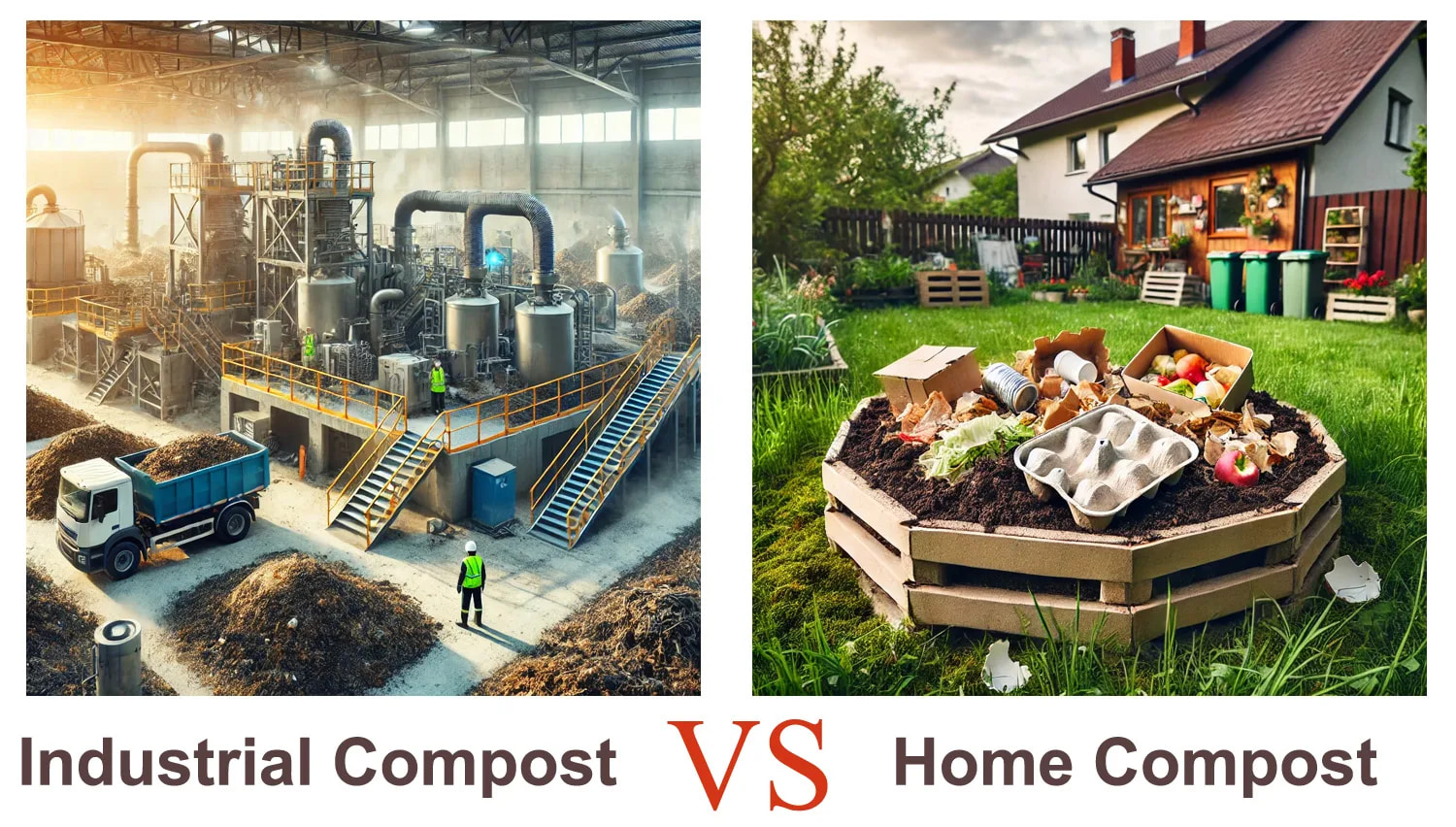
4.1 Composting Requirements: Industrial vs Home Composting
Bagasse is widely recognized as a material compatible with both home composting and industrial composting, depending on the thickness and coating used. Its natural fiber composition allows it to degrade efficiently under controlled moisture and microbial conditions, often reaching full decomposition in 60–90 days in industrial facilities.
Cornstarch typically requires industrial composting conditions because the starch blends need elevated temperatures to biodegrade efficiently. While fully compostable under ASTM D6400 or EN13432, cornstarch tends not to break down reliably in home compost settings.
4.2 Carbon Footprint & Material Sourcing
Bagasse has a distinct sustainability advantage: it repurposes agricultural waste that would otherwise be burned. This reduces net carbon emissions and strengthens circular economy metrics.
Cornstarch, derived from food crops, carries an environmental debate related to land use, water consumption, and fertilizer reliance. However, it remains a renewable resource and a more sustainable option compared to petroleum-based plastics.
A key takeaway for eco-driven takeout brands:
Bagasse supports a waste-to-value model; cornstarch supports a bio-based, renewable resource model.
4.3 PFAS-Free, Food Safety, and Global Compliance
With more than 30 countries implementing PFAS bans and tightening food-contact rules, choosing compliant-certified materials has become critical.
Bagasse and cornstarch can both be PFAS-free, but bagasse manufacturers often implement more mature, stable PFAS-free coatings.
Key standards relevant in 2025 include:
ASTM D6400 (U.S.)
FDA / LFGB food-contact certification
EU PPWR packaging requirements
Singapore 2025 packaging guidelines
California AB1200 PFAS disclosure rules
Japan FCM restructuring
Bagasse’s higher heat stability puts it in a stronger position in regions where hot-food packaging is strictly regulated.
5. Cost Structure & Supply Chain Considerations
5.1 Material Cost Differences: Trends for 2025
Cornstarch packaging generally offers a lower entry price. Its raw materials are widely available and production scale is large.
Bagasse pricing is influenced by:
seasonality of sugarcane harvest
pulp availability
fiber processing steps
regional shipping costs
While historically slightly more expensive, bagasse prices have stabilized with global demand growth. In high-volume takeout categories, many operators find the performance advantages offset the marginal cost difference.
5.2 Packaging Efficiency & Logistics
Sugarcane bagasse containers have:
superior stackability
less warping during transport
better crush resistance
higher freight efficiency for hot-food chains
Cornstarch offers:
lower weight per unit
consistent dimensions
smooth surface for retail-ready presentation
Both materials pack efficiently, but bagasse’s rigidity provides logistical advantages in dense meals or long-haul delivery.
5.3 Branding & Customization
Bagasse supports:
embossing
debossing
custom mold development
CMYK printing (with proper lamination)

Cornstarch supports:
cutlery set customization
retail packaging variations
economical bulk branding
For takeout brands emphasizing aesthetic consistency, bagasse’s textured surface provides a premium look aligned with eco-forward positioning.
6. Global Regulations Driving Material Selection in 2025
6.1 EU PPWR and PFAS-Free Requirements
Under the evolving EU Packaging and Packaging Waste Regulation (PPWR), high heat resistance and verified PFAS-free materials are increasingly preferred for hot-food categories. Bagasse aligns well with these requirements due to its natural fiber structure and compatibility with PFAS-free coatings.
Cornstarch remains acceptable but may require industrial composting infrastructure to satisfy regional waste processing rules.

6.2 U.S. State-Level Enforcement
States including California, Washington, New York, Vermont, and Maine are aggressively phasing out single-use plastics, enforcing:
PFAS restrictions
mandatory compostability labeling
hot-food packaging performance thresholds
Bagasse is increasingly adopted by fast-casual and QSR chains due to its strong heat and oil performance. Cornstarch is used for sides, salads, and light meals when cost constraints are stronger.
6.3 Asia-Pacific 2025 Regulations
APAC markets, including Singapore, Japan, Malaysia, Thailand, and South Korea, are moving toward sustainability-driven packaging mandates.
Japan’s FCM reforms favor heat-resistant, fiber-based materials.
Singapore’s 2025 transition plan encourages PFAS-free molded fiber.
Malaysia is promoting compostable alternatives with enhanced labeling rules.
Bagasse again gains traction due to heat and oil safety, while cornstarch remains popular in retail and cafeteria programs.
7. Buyer’s Decision Guide: Choosing the Right Material in 2025
7.1 Choose Bagasse If…
Your menu contains hot foods above 70°C
Dishes include oil, soup, broth, or sauces
Delivery times exceed 15–20 minutes
Brand positioning emphasizes premium sustainability
You need PFAS-free, high-performance packaging
You operate in regions with strict food-contact regulations
7.2 Choose Cornstarch If…
Your menu is primarily cold or warm
You serve salads, fruits, desserts, or bakery
Your brand is sensitive to cost
You need lightweight, economical cutlery or bowls
You operate in cafeteria or canteen environments
7.3 The 2025 Hybrid Strategy
The most efficient model for many fast-food and QSR chains:
Bagasse containers for hot and oily foods
Cornstarch cutlery for light meals
Bagasse trays paired with cornstarch lids or sets
CPLA upgrades for premium or hot-meal cutlery
This hybrid configuration balances durability, compliance, sustainability, and cost.

8. Bioleader® Soft Mention: A Trusted Global Supplier
Bioleader® provides a full product range that supports both strategies:
bagasse bowls, clamshells, trays, and plates
cornstarch cutlery sets for cold and warm dishes
PFAS-free, food-contact-certified materials
support for QSR chains, cafés, and delivery-focused brands
With consistent production standards and export experience across 60+ markets, Bioleader® supplies packaging solutions aligned with 2025 regulatory and operational demands.

Real Operator Feedback: What Foodservice Teams Report in Daily Use
Foodservice operators across QSR chains, airline catering units, and corporate cafeterias report clear practical differences. Cooks and pack-out teams prefer bagasse for its dependability under heat, especially for soups and entrées. Meanwhile, cafeteria managers highlight cornstarch’s appeal for fruits, salads, and economy meal sets. Meal-kit brands find that a hybrid strategy dramatically improves customer satisfaction while controlling costs.
FAQ
What are the key differences between bagasse and cornstarch takeout packaging?
Bagasse delivers higher heat resistance, stronger rigidity, and natural oil stability, making it ideal for hot and heavy meals. Cornstarch is better suited for cold or warm foods and offers a lower-cost solution for salads, desserts, and cafeteria meals.Can cornstarch packaging safely hold hot meals or liquids?
Cornstarch softens around 65–70°C and is not suitable for soups, curries, noodles, or steaming dishes. It performs well only with low-temperature, low-oil foods where structural pressure is minimal.Is bagasse compostable at home while cornstarch requires industrial composting?
Bagasse can break down in both home and industrial composting environments because it is made from natural sugarcane fiber. Cornstarch usually needs industrial composting due to its starch-polyester blend that requires higher processing temperatures.Which material is more cost-effective for large foodservice and takeout chains?
Cornstarch is generally more cost-efficient and is widely used for cutlery, side dishes, and warm-meal programs. Bagasse may cost slightly more but provides superior performance for hot entrées, oily foods, and premium delivery categories.Which material aligns better with global food packaging regulations in 2025?
Regions like the EU, U.S. states, and Singapore increasingly favor heat-resistant, PFAS-free molded fiber packaging—positioning bagasse as the stronger option for hot-food compliance. Cornstarch remains compliant for cold and warm foods when certified under EN13432 or ASTM D6400.
References
Thermal Behavior of Molded Fiber Packaging — Sustainable Materials Review, 2024
Biopolymer Heat Resistance and Decomposition Study — Food Packaging Science Journal, 2023
Bio-Based Materials for Foodservice Applications — Global Packaging Institute, 2025
EU PPWR Draft and Heat-Contact Food Regulations — European Commission Technical Brief, 2024
Compostability Requirements of Bioplastics — ASTM Working Group Publication, 2023
Carbon Footprint Assessment of Agro-Waste Packaging — Environmental Life Cycle Reports, 2024
Market Trends in Takeout Packaging Post-PFAS Regulation — APAC Packaging Outlook, 2025
Heat & Oil Resistance Test Report for Bagasse Containers — EcoLab Packaging Assessment, 2024
Essential Insights: How to Make the Right Choice Between Bagasse and Cornstarch in 2025
How do food brands decide between bagasse and cornstarch in real-world applications?
The decision depends on temperature, oil content, delivery distance, and the operational demands of each meal program. Hot and oily foods require structural rigidity, while cold meals prioritize cost efficiency and visual presentation. Understanding these variables helps companies align packaging choices with performance needs.
Why is bagasse gaining stronger regulatory momentum worldwide?
Bagasse aligns naturally with PFAS-free regulations and heat-safety requirements adopted by the EU, Singapore, and multiple U.S. states. Its ability to withstand boiling temperatures without coatings makes it a future-proof option for brands preparing for 2025–2030 plastic-phaseout timelines.
What performance gaps emerge when comparing both materials under stress?
Cornstarch softens when exposed to heat above 70°C and loses structural integrity with oily foods. Bagasse, however, maintains durability at high temperatures, even when used for soups, curries, and steamed dishes. These gaps significantly impact customer experience, spill rates, and operational efficiency.
What options do manufacturers offer for brands needing mixed hot and cold meal programs?
A hybrid model is emerging across global QSR and meal-kit operators: bagasse containers for hot entrées and cornstarch cutlery or lids for lighter, cost-sensitive items. This balanced approach enables brands to meet performance requirements while optimizing budget allocations.
Key considerations for 2025 procurement teams evaluating sustainable packaging:
Decision-makers must assess heat resistance, compostability certifications, supply-chain stability, PFAS-free compliance, cost-to-performance ratios, and alignment with national regulations. The optimal solution is rarely a single material—it is a system designed for safety, operational efficiency, and brand sustainability goals.
Strategic takeaway for global buyers:
Bagasse offers the strongest performance for hot and premium food categories, while cornstarch enables cost-effective scalability for warm or cold meals. Brands achieving top operational efficiency in 2025 will rely on a material mix built on data-driven evaluation, not assumptions.